This is investigative journalism at its finest. Find a remote corrupt area of the world, larger than Belgium, with an interesting, largely unknown history and an immense impact on the present day world, examine it in great detail, at considerable personal risk, then tell the world about it and you’ve got it made. I asked six well-educated people at our Friday Luncheon Discussion Club what they knew about the Wa nation, and they all confessed that they had never heard of it. If you can expose the CIA complicity in various nefarious deeds and embarrass them, so much the better. This American journalist based in Bangkok does this and a lot more.
In Book One, he manages to get a lengthy interview with Saw Lu, a kingpin of the Wa, an almost totally independent state within Burma, (now called Myanmar), which interview covers most of the history of the feuding highland headhunters and drug lords providing opioids in vast quantities to China, Vietnam, Thailand and beyond up to the early 80s, with the CIA helping out by supplying arms, more concerned with fighting Maoist communism than stemming the tide of narcotics floating around the world. Saw Lu’s efforts to educate the Wa, and to convert them to Christianity (he was a Baptist) were largely unsuccessful, but he was willing to overlook their funding from narcotics and had more success uniting the diverse mountain top tribes against communists. Several maps at the front of the book are very helpful references for those of us unfamiliar with the vast territory.
In Book Two, starting in the early 1980s, a rebellion against the ruling communists in the highlands, led to new loyalties and warlords, aided by radio communication systems supplied by the CIA, that ensured safe passage of the drugs to markets worldwide. Nixon’s War On Drugs is shown to be largely ineffective in part because of feuding between the Drug Enforcement Agency and the CIA. One in six returning Vietnam War veterans was addicted to heroin and new supply routes from largely autonomous Shanland (ever hard of it?) developed to maintain the flow to America. It was eventually almost completely extinguished and dispersed by the powerful UWSA, the United Wa State Army.
By the early 1990s, Saw Lu had become a local legend, the foreign minister of the Wa nation. He tried hard to develop a secret master plan to burn drugs and drug factories with DEAs help and no explicit help from the Burmese ruling military junta. In exchange the U.S. would help ease the extreme poverty and stop villainizing the dictators of Burma. Only one such burning took place before the CIA, traitors within the DEA, and lobbyists for the “War on Drugs” in America sabotaged the plan, and imprisoned and tortured him.
The new drug tzar of South Wa, Wei Xuegang, jettisoned any attempts to christianize the Wa, replaced most of the heroin production with meth-amphetamine, and focused on appeasing China rather than America, smuggling 90 million methamphetamine tablets a year to Thailand a U.S. ally. 90 % of the heroin production shifted to Afghanistan warlords fighting the Taliban and supported by the CI A. In addition, exporting rubber to China became a thriving business.
The Wa remain an independent state with profound poverty but with some aid in the form of roads, schools and hospitals supplied by China. Officially a part of Myanmar, no one is keen to change the status quo, least of all the United States.
Very informative and well researched, my one criticism of this book is that it is often difficult to determine what time period he is discussing. A linear time line chart with major events plotted would have made a useful reference.
In the first chapter of this dense treatise by the Stanford philosopher, he clearly states that he aims to convince the reader the free will does not exist. In this he agree with a few other thinkers like Sam Harris, but not with the majority of philosophers, perhaps most notably Daniel Dennett.
“Saying that a gene determines when to generate its associated protein is like saying that the recipe decides to bake the cake that it codes for. Instead, genes are turned on and off by environment.”
“Nothing just got it into its head to be a causeless cause.”
There are two chapters devoted to chaos theory and the complex mathematics involved with that left me baffled and seemed somehow peripheral to the argument for or against the existence of free will. The chapter on Emergent Complexity and fractals, with its reliance on power law distributions also was beyond me. Ditto, the long discussion of quantum mechanics, entanglement of electrons over vast distances and traveling faster than the speed of light.
The more straightforward chapter comparing the altruism of atheists vs theists is enlightening and well worth reading before delving back into the neuronal circuitry of the sea slug and its relevance to human decision making, a chapter that I only partially understand.
The 44 pages devoted to the evolution of thinking about epilepsy, schizophrenia, PTSD, and autism are exceptionally informative and almost convinced me about the absence of free will.
In the penultimate chapter, Sapolsky makes a strong but hopelessly optimistic case for quarantine rather than punishment for all misdeeds, evoking Scandinavian models that largely avoid any attribution of blame for any criminal behaviour. Just after reading this, I read a long blurb in the New Yorker about a 15 year old mass school shooter who remains in jail 25 years later, deeply regretting that the voices in his head ordered him to do it, now with his schizophrenia under complete control.
In the final chapter Sapolsky acknowledges that he has suffered from depression intermittently for most of his adult life, and that, although he does not believe in free will, we may benefit from believing that it exists in some form. Almost as an addendum he then discusses the complex causes of obesity.
The real life examples of decision-making throughout this book are generally realistic, sometimes heart wrenching, and often humorous.
I was about to write that I admired the author’s vast knowledge about a vast array of subjects, when I realized that if he is right about determinism, it logically follows that admiration, guilt, responsibility and a lot of other engrained words such as good, evil, blame, liberty, ethics, justice, morality and equality, used in everyday language become meaningless. The same conclusion applies to praise for this book.
I have difficulty rating this book as it is thought-provoking and erudite; in some places it is impossible to understand, but in other places it is superb.
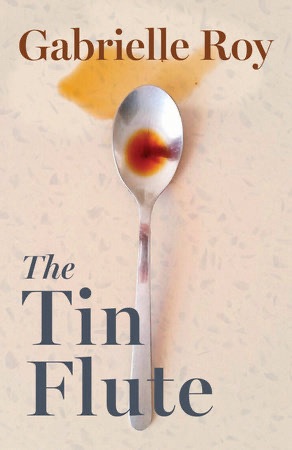
In this classic debut by the French Canadian author, Florentine Lacasse 19, and Jean Levesque, a bit older, are in the slums of St Henri, part of Montreal in 1940. There are endless scenes depicting the awkwardness of young dating. I won’t give away much of the fairly simple plot but the characters never cease to be interesting from the eternally optimistic Azarius to the equally pessimistic Rose-Anna, his wife. They uniformly struggle with poverty moving frequently with their huge family. The pervasive influence of the Catholic Church is well portrayed.
There are lively arguments about the war and conscription, with know-it-all men spouting nonsense to whoever would listen and eternally optimistic men always scheming to make a dollar out of it. The war becomes the default way out of poverty for many young men, not out of any sense of patriotism, but purely to make a living wage.
The writing is graphic, describing scenes clearly. “The hum of the sewing machine nibbled at the silence. It stopped at times and then you could hear the kettle whistling” One old lady “…seemed to have been transmuted into the negation of all hope…she liked to think that she was on her way to her Creator laden with indulgences…she saw herself achieving paradise like a traveler who had taken lifelong precautions to ensure herself a comfortable stay in that last resort. She had put up with her purgatory here on earth.”
The latter part of the book becomes distinctly darker, with a child dying, even worse poverty and malnutrition, and two unwanted pregnancies even though the sex is only alluded to obliquely. The tin flute of the title is barely mentioned but may be somehow a vague symbol of what the child wants but can’t afford. There is no time shift and the entire book covers less than one year.
The plot is not complex and there are no loose ends but the vivid description of the lives of the poverty-stricken people of St. Henri reflect a reality that no longer exists. St Henri has now become largely gentrified.
I suspect that this book appeals more to older readers than the young who may have trouble relating to the era. In the interest of domestic tranquility, I need to give it it a high rating as my wife recommended it, and although we often disagree about books, I agree with her on this one as I thoroughly enjoyed it.
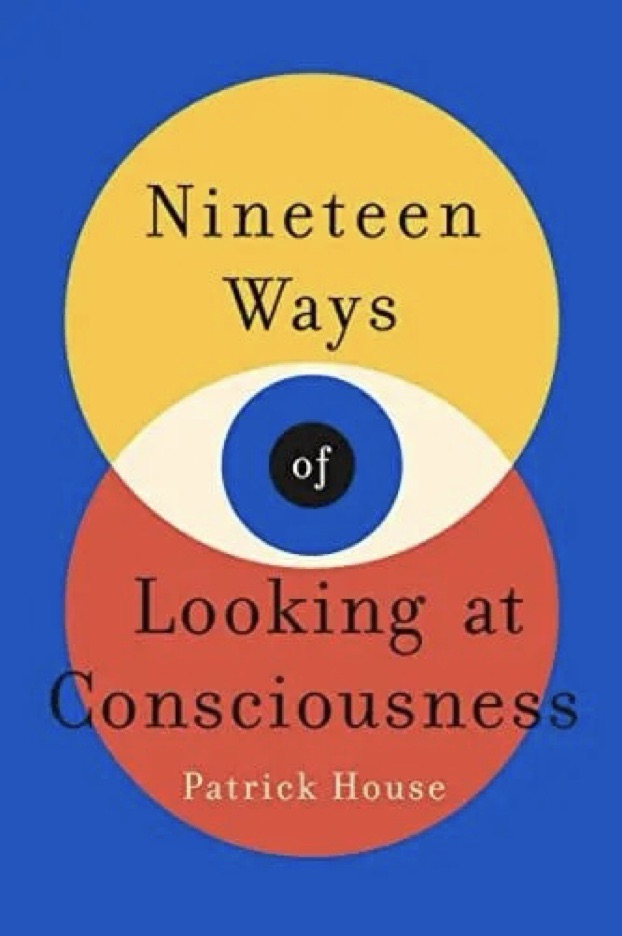
Always interested in neuroscience, I had high hopes for this book by a Stanford neuroscientist, but they were dashed as soon as I got started into it. I wish I could honestly say that I understood at least one of the chapters, but I would be lying.
Several chapters deal with a girl undergoing conscious surgery for epilepsy with stimulation of her brain in various places and her responses, but with no conclusion about her consciousness as far as I can tell. Others deal with dropping a pigeon and a bowling ball from a height and concluding that the pigeon has consciousness based on the response. “The measure of how conscious the pigeon is can be determined by the maximum value of its so-called phi which stands for the intrinsic cause-effect power of the local maximum cause-effect power- in other words the ability of any group of communicating things to act on itself.”
One further confusing quote to give you a sense of this book: “Consciousness is present in all timekeeping brains because it has to be in order to coordinate asynchronous inputs into any kind of meaningful purposeful motion.”
Perhaps someone is able to understand this book full of erudite facts, but I just found it frustratingly confusing. It seems to me that consciousness itself will always be problematic precisely because it is so broadly defined and one needs to have it to study it. The lexicon simply does not accommodate this.
1/5
Thanks,
Kirkus Reviews.
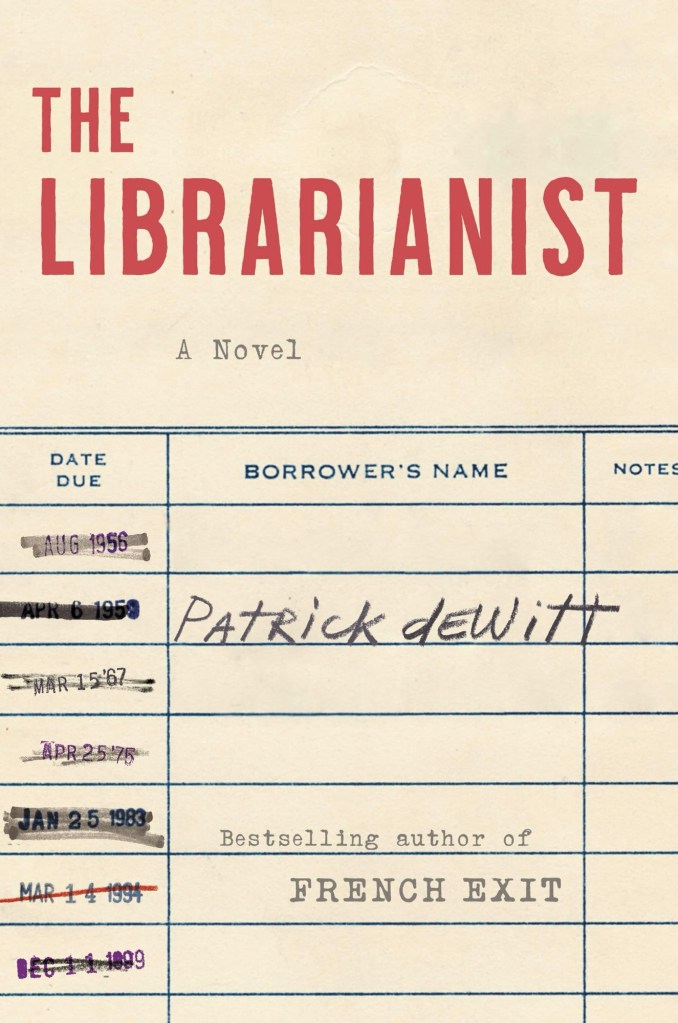
The Librarianist. Patrick Dewitt. 2023. 253 pages. (Ebook.) .
It takes 60 pages of this novel by the Canadian/American before anything makes any sense. Then there is a backwards time shift to the 1940s and 50s and startling revelations suddenly come into life. Playing on the stereotypical librarian, Bob Comet is a bland introvert, with low ambition, few friends, and a very limited emotional range. It seems that he would be content to live his whole life in a routine of near total anonymity with every day like the previous one, and becomes upset when that becomes impossible. This is the exact opposite of what usually makes for an interesting fictional character, and the writing is also anything but fast-paced. But he grows on you. When he gets involved with others who are certainly interesting rogues, chiefly Connie and her family, and Ethan, and is reluctantly pulled into many unpredictable crises and surprises.
I do not understand the ist on the librarian of the title. There are enough surprises to keep the reader engaged although there is nothing very profound about this story. Altogether a pleasant read.
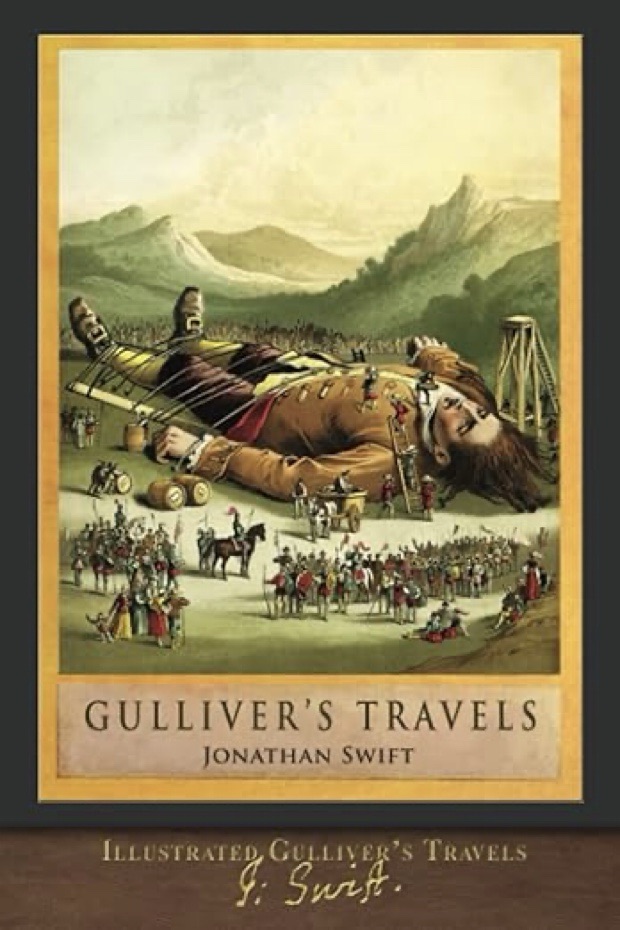
I managed to read this version (there are several) of the old parody and magic realism tale in its entirety today while being driven up to and back from the Escapade Huskimo dog-sledding team outfit- our first experience with this activity. It was far to warm and I felt sorry for the dogs who had to work very hard, although they were obviously happier running than when penned up.
The travels include a visit to Lilliputin, a land of very small people, one to Brobdingnag, a land of giants, a flying island of Laputa, and to the country of the Houyhnhnms. Each of these has humanoids who communicate with the Englishman. Along the way he tries to explain the English customs of warfare, amassing money, and laws, seemingly to gradually realize how irrational all of these were.
This may be one of the earlier classic comedies of the genre of magic realism, which is possibly why such terms as Lilliputian and Yahoo, to describe a silly person, remain part of out standard language.
This may be one of the earlier classic comedies of the genre of magic realism, which is possibly why such terms as Lilliputian and Yahoo, to describe a silly person, remain part of our standard language.
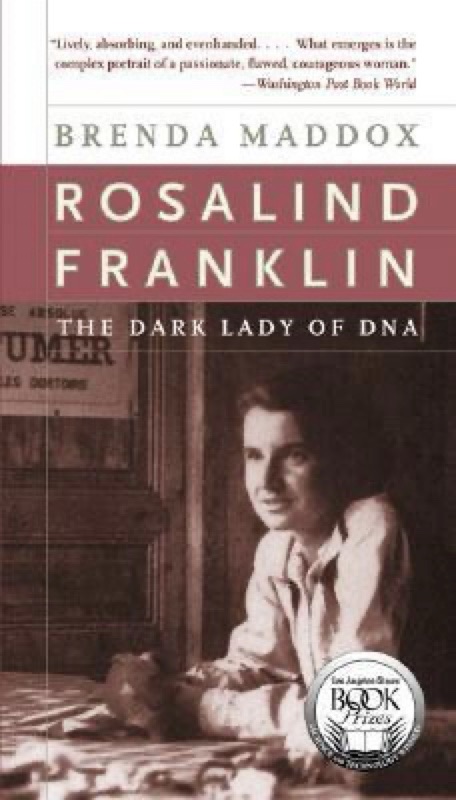
This biography of a Brit by a Brit is on the list for our book club next month; I don’t recall who got it there. I was very familiar with the character, having enjoyed the fictionalized version of her short life in Marie Bennett ‘s Her Hidden Genius, where she is portrayed as having been cheated out of fame and a Nobel Prize by misogynist undeserving James Watson, Francis Crick, and Maurice Wilkins. This very detailed biography certainly confirms that viewpoint. The fierce competition in science is hardly new, and I have experienced this as well, on an obviously much less important scale. (My first major research paper was sent for review to the two people whose earlier report I was directly refuting). Sometimes professional jealousy overpowers or interferes with good science.
There is no doubt that Roselind Franklin was brilliant, but also “very attractive, very bright, very impatient, and very opinionated.” Prickly and difficult would also seem to apply.There is also little doubt that had Watson and Crick not basically used her data without acknowledgment that she or someone else would have solved the mystery of the structure of DNA within a few months in 1953, although that structure was not accepted by all in the field as correct for years because of other possibilities. It is a tribute to her integrity that she never expressed any complaints about being excluded; her focus was always on science, not personal glory. She remained on friendly terms with Watson and Crick right up th her death at age 37 in 1958. That was almost certainly related to her careless disregard for radiation exposure. In keeping with the usual practice at that time, she was never informed about the hopeless prognosis and it was never discussed, at least in any detail.
The book adequately documents that breakthroughs in science are almost always collaborative or competitive, not due to the brilliance of any one individual. (The theory of relativity may be a rare exception.)
The praise for this book is ambiguous at best. On the back cover, it is variously described as “a meticulous biography”, a “balanced biography”, and “coolly trenchant” which could well be interpreted as damming it with faint praise. I do not claim to understand (nor feel a need to understand) more than a small portion of the science presented in great detail, to appreciate the very human story of a wrong that should be corrected. I doubt that I am alone in this. The reviews seem to confirm that others feel the same way as I do about this book- it is needlessly detailed and erudite, insuring a very limited audience of basic scientists.
Of the three people who won the Nobel prize in 1962, the young James Watson (still alive at 95) seems to be the leader in snubbing Franklin’s contribution, never even mentioning her in his Nobel address, and minimizing her vital role in his best-selling book The Double Helix.
In contrast, the fictionalized story Her Hidden Genius, delivers much the same message in a very readable and even entertaining way. There is little to be gained in reading this book that cannot be more easily and enjoyably obtained from the fictional version.
On the first page of this imaginative novel, Ana, the narrator and rebellious daughter of a head scribe for the Roman emperor of Nazareth reveals that she is the wife of Jesus ben Joseph. But 140 pages later it is still about to happen as in the interval all sorts of intrigue and imaginative harrowing events interfere. The life of Jews, and Romans, the role of women and the doubts of even the most devout are carefully explored. The thought of Jesus as a married man is not as radical as it would at first seem as we are never told anything about his life between the ages of 12 and 30 in the Bible, or anywhere else, for that matter and it was expected that Jewish men would marry by their early 20s.
When he finally does get married, his family proves to be very dysfunctional, and he is not shown as divine, but very human. He works as a labourer, fisherman, and stonemason, while Ana tries to find meaning in life by writing poetry and warning letters on shards of broken pottery and papyrus if/when she can find the material and ink, a lifelong obsession that he supports. The intrigue of jockeying for position in the ruling Roman Empire becomes vicious. The Jewish rituals of cleansing and purification are pervasive.
After another 100 pages, Jesus has been dunked in the Jordan River by John the Immerser, the latter has been imprisoned, and then beheaded by the Romans, and Jesus feels called to lead the devout Jewish resistance to Roman rule with the reluctant approval of his wife. But she is banished to Alexandria, where a melodramatic reunion of Yaltha, her aunt and Diodora, Yaltha’s daughter eventually takes place after along estrangement. Ana’s involuntary estrangement from Jesus continues for 18 months with no word about what he is doing. Her eventual escape from Alexandrea to return to her husband comes too late as she arrives only in time to witness his crucifixion.
I have barely scratched the surface of the extremely complex plot, all of it quite plausible, but at times very melodramatic. The life and character of Jesus, as related by his wife is fully compatible with that related in the Bible, down to the smallest detail, omitting only the thieves allegedly crucified with him, but including his betrayal by Judas. There is nothing heretical about this Jesus, although some no doubt claim that his lack of divinity makes it so. But the divine nature of Jesus was in reality confirmed only at the Council of Nicaea in the fourth century, and only by men who had a clear interest in making that proclamation. (See How Jesus Became God, 2015.)
A map of the area was very helpful, but a list of the characters could have also been usefully included.
I quite enjoyed The Secret Life of Bees and The Mermaid Chair both by this North Carolina author but this with a very unique thesis, an exceedingly complex plot, and a deep insight into the lives of the times is even better. Highly recommended.
The acclaimed American journalist makes a clear distinction between racism and a system of castes, pointing out that there is no biological basis for the existence of race. There are no blacks in Africa as almost everyone is black, so the skin colour is irrelevant. But there is a strict caste system designed to keep people in their place, determined by birth, particularly in India. Eugenics, U.S. miscegenation laws, mixed mythology of the origins of Hindu castes, and impregnating slaves for profit with the black womb becoming a profit centre, are all discussed. Eight identified pillars of caste and the consequences of them take up 64 pages as the author discusses examples of each. What surprised me most was how recently these pillars have endured, extending well into the modern era. All of these topics may seem unrelated until suddenly they are pulled together and united.
It seems somewhat ironic that after convincingly showing that there is no biologic basis for the existence of race, the rest of the book deals with it as a fact. But it is not binary with many variations although usually only two are reported in the surveys cited in the book.
The author shows that the loyalty to Donald Trump is in large part an attempt to maintain the domination of the white caste and that it is particularly strong in white men and evangelicals. In a litany of eleven ways in which the U.S. compares unfavourably with other countries, she concludes that the legacy of slavery and maintenance of caste dominance is largely responsible. However, while in 2020, when the book was written, it was possibly true that the highest mortality from covid was in the U.S. the same cannot be said for later in the pandemic, when secretive China probably won that dubious distinction.
The chapter on the health effects of stress resulting from the caste system is less than convincing, with surrogate markers such as telomere shortening used as a substitute for lifespan.
In a late chapter, Wilkerson contrasts the contrite actions of post-Nazi Germans who erect memorials to victims and compensate survivors with those of Americans who erected memorials to the Confederate soldiers, and often still practically worship them.
There came a point in reading this book at which I realized that I could never say a word in the company of diverse individuals without risking offending someone. At the very least, any value-judgment comment about the action of others could be considered as a form of caste narcissism. Although the dozens of examples of grossly inappropriate comments and actions cited are shocking, a few are less obvious. Perhaps that is the point. If a traditionally lower caste subject, say a black female, can intimidate a traditionally higher caste individual by taking offence at whatever is said by, say, a white male, into silence, the caste system comes under threat, and reacts to maintain the status quo. Any criticism of this book whatsoever in my review will likely be seen as racist and an attempt to restore the hierarchy, but that will not stop me.
We would like to think that this is all irrelevant to us as Canadians, and bits of of it are, but not as much as we would like to think. And living beside the behemoth, we can’t afford to ignore it. There is now a movie loosely based on this book, but I suspect that Hollywood will have made it very violent; I don’t want to watch it.
I was at a loss to give this book a score, at some points willing to consider 4/10, but I became so impressed with her insight, intelligence, and sincerity that I ended up giving it
I am always leery about the focus of think tanks, but the American Enterprise Institute, to which this author belongs, is described as centrist but leaning right, although the source of its funding is not entirely clear (Some comes from Qatar.) Loaded with data about the many ways in which women have come to surpass men in the last twenty years, and with an international focus, he is willing to disagree with Left and Right equally.
Early on he rightly points out the major biological differences between girls and boys that impact their responses to decision-making, careful to exclude those which may be driven by expectations and culture. One can then begin to see where his argument is going. He makes a compelling argument for delaying entrance into formal school for boys to fit with their biological development and answers several objections to this. Second, he argues for a greater role for male and black teachers, specifically in early education. He advocates for greater funding for, and encouragement of, career and technical schools.
In the penultimate chapter, a compelling plea is made for encouraging men into Healing, Education, Administration, and Literacy (HEAL) jobs, modelled after the remarkably successful programs that have greatly increased the proportion of women in STEM (science, technology, engineering and mathematics) jobs. This however is narrowly focused on the job market in the U.S., but easily expandable, at least in theory. The final chapter discusses the need to
reform paternity leave, child support and father-friendly jobs.
A well-documented balanced treatise on an important subject with well-thought-out suggestions, I enjoyed this book, but feel powerless to do anything about the problems identified. Let’s hope that some lawmakers are listening and are willing to act.
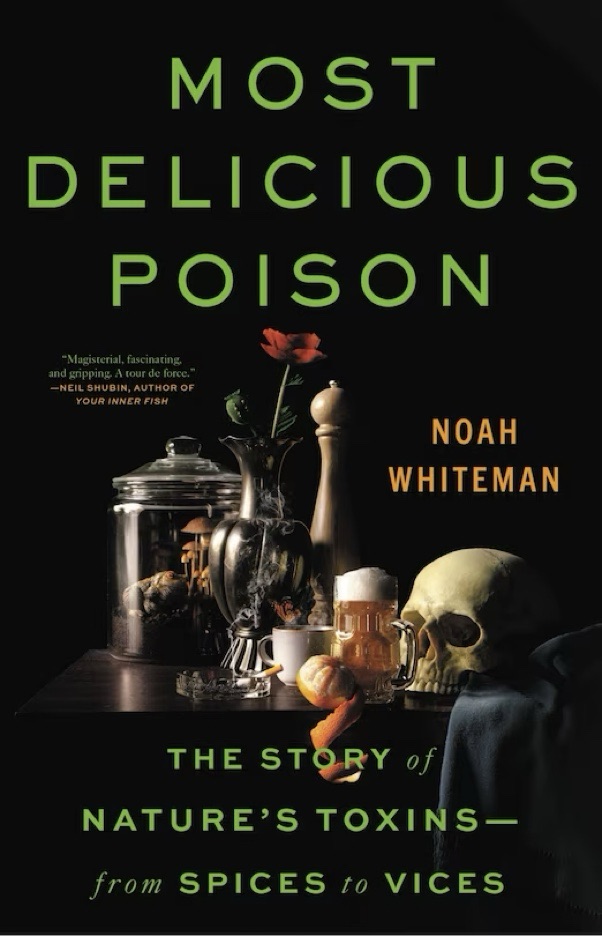
In this scholarly work by the Berkley professor, the definition of a poison is somewhat loose, as he notes early on – it all depends on the dose. One needs to keep the relationships clear as they can be very complex as some plants use a huge variety of compounds in defence while animals and microorganisms sometimes succeed in adapting them fortheir own purposes. Such is the case with aspirin- like compounds and the phenolics and flavonoids that have produced some useful medicines.
In describing the monarch butterfly defence using toxic cardiac glycosides, the long history of this tactic is emphasized as is the complex relationship between our endogenous production of similar products. It seems a stretch to link the author’s father’s fatal alcohol abuse to any specific product in nature and I could not follow the logic. Similarly, to state that “A line can be drawn from the single most influential drug ever, the Pill, to the herbivore-repelling diogenin-laden of wild yams in Mexico, the red trillium birthroot of the Native Americans, and the oubain in the poison-tipped arrows that the Girama people used to defend against the Portuguese invaders in 1505” seems an extreme stretch, but this book is full of speculation.
The long chapter on the death odour is so unfocused as to weave its way into many other areas such as psychedelics and the narcotic epidemic. There is no mention of the revolting odour called fetor heptaticus on the breath of some patients with chronic, but not always severe liver disease. I briefly studied it and showed that it often did not indicate severe disease. It is believed to be mainly caused by a mercaptan, and is so potent that one drop will clear a sizeable building, and is used by gas companies to alert them to leaks.
The history of coffee is interesting but I am concerned that no distinction is made between causation and correlation and the bit about pregnancy made no sense- there is no such thing as first trimester premature birth! The protective effect of smoking on development of Parkinson’s Disease is mentioned, but not the effect on ulcerative colitis. One snippet of interest is Sigmund Freud’s addiction to cocaine. The author totally lost me in his wandering logic under the title. The Herbivore’s Dilemma.
The author seems to regard chapter titles and subtitles as mere suggestions or launching points to then discuss myriad unrelated topics as they occur to him. He never addresses the issue of free will and may not have ever pondered it, but acts as though it doesn’t exist. It is hardly news that there are thousands of poisons, that they serve an evolutionary purpose, or that we vary in our responses to them. Beyond that few will want or need to know more details. There is a huge amount of information conveyed in this book, but it is so poorly organized as to be very difficult to remember. I cannot recommend it.
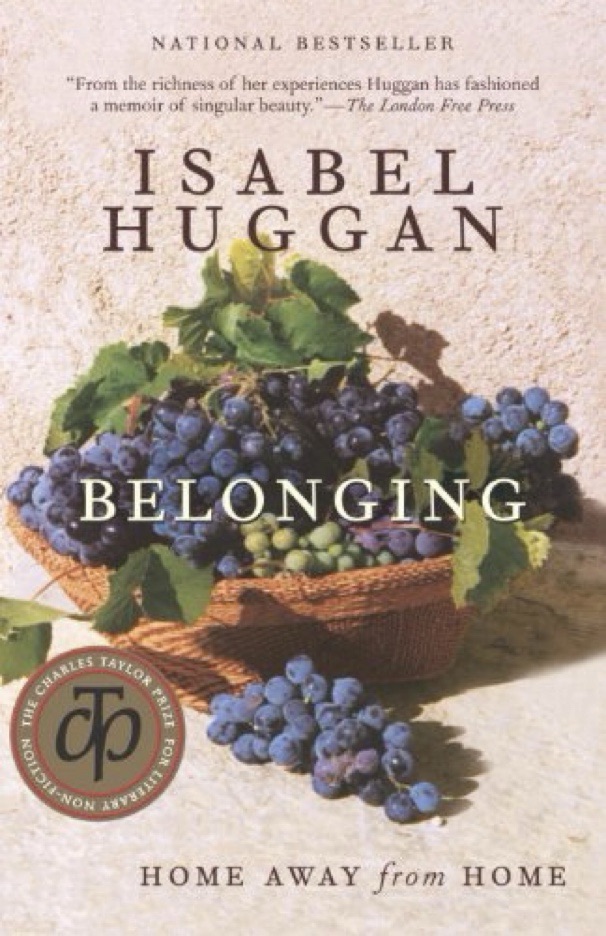
This is the book that my sisters recommended-one of several with the same title. Born in Elmira, Ontario, in 1944, the author has since lived in London, Ottawa, Belleville, Kenya, the Philippines, and two places in southern France as she followed her husband around the world. In addition, she has had several visits to Tasmania.
The writing is lyrical as she muses about the meaning of the endless useless objects that she collects. More nostalgic, sentimental and introspective than almost anyone I ever met, there are keen insights and musings about relationships. There may be a remote connection to my mother. She mentions that her mother was Catherine Innis McLennen; my mother’s maiden name was also McLennen and there are some other hints as the geography and time period fits. Her extensive travels around southwestern Ontario brought back fond memories of my similar travels.
The description of her travails in the never-ending fixing up her ancient home in southern France adds humour with their inept contractors. There will be no difficulty keeping the characters straight but in the latter sections of the book it becomes less autobiographical and less related to her own experiences.
There is nothing very profound in this story and she never discusses her own beliefs and philosophy, but seems to consider the whole world her home. Although I could not relate to many of the places she dwells on, there is little doubt that she would be a most entertaining dinner guest.
From the author of The Gift of Rain, another interesting historical novel. The prologue is set in South Africa in 1947 but the action is in Panang, Malaysia in 1921 in Part I. There Somerset Maugham with his same -sex companion travels the globe collecting stories about Sat yen-Sen and surreptitiously collecting information for MI -6, the British foreign intelligence agency. It was hardly a secret even at the time to those in the know by the time of his death. The stories are told in part by the married hostess of the group who gather in Panang, Malaysia.
Part Two is set in Panang in 1910, narrated by the same wife/teacher of a local lawyer who provides an interesting perspective on Dr. Sat yen Sen and the China of the era. But there is a lot of time shifting and a lot of discussion and speculation about marital infidelity that made it even more difficult than in The Gift Of Rain to keep the characters straight. The murder of a supposed rapist becomes even more complex when new revelations are found in the epilogue after the narrator has moved to South Africa. The symbolism of the House of Doors seems a bit weak to me. The two constants in the book are the life of the rebel Sat yen Sen who after many failures finally overthrew the Chinese empire of the day, and the life of Somerset Maugham with his homosexual partner as they wander the globe.
Not as good as The Gift of Rain, in my opinion, but still an interesting read. If I had to choose one or the other, I would choose The Gift of Rain.
Bizarre is the only word to describe this book. I thought it had been recommended by my sisters but now doubt that. I guess you could call it an autobiography, but there are few details except for the etherial overpowering and all pervasive sense of not belonging of the author. I became more and more concerned about the mental state of the author, a Montreal Sufi and Jungian as I read on. The overwhelming self analysis and vagueness made this not only useless advice for this concrete thinker, but I wondered if anyone could make sense of it. There are not just a few but hundreds of meaningless sentences such as “When we go inwards at night, we are restoring ourselves to the multiplicity of our coherence.” At one point, she describes herself as a “unique weirdo” and that seems to fit. I gather that she works as a psychotherapist and dream interpreter on a small island off the coast of British Columbia, but I have no idea what her qualifications are. Dreams and short nonsense poems are liberally interspersed within.
I/10
I foolishly persisted to the end, hoping it would improve. It did add some interesting history of relatives who survived the Holocaust and hints of a Jewish background, but there is also a distinctly non-rational flavour, a hint of anti-science and more admonitions to do this or that nebulous something. And in the final few chapters, there is a bit more autobiography that goes a little way in explaining her emphasis on community, but it remains very vague with impractical suggestions. While I do not doubt the author’s intelligence and good motives, the cultural chasm between her world and mine is just too great for me to get anything meaningful from this book.
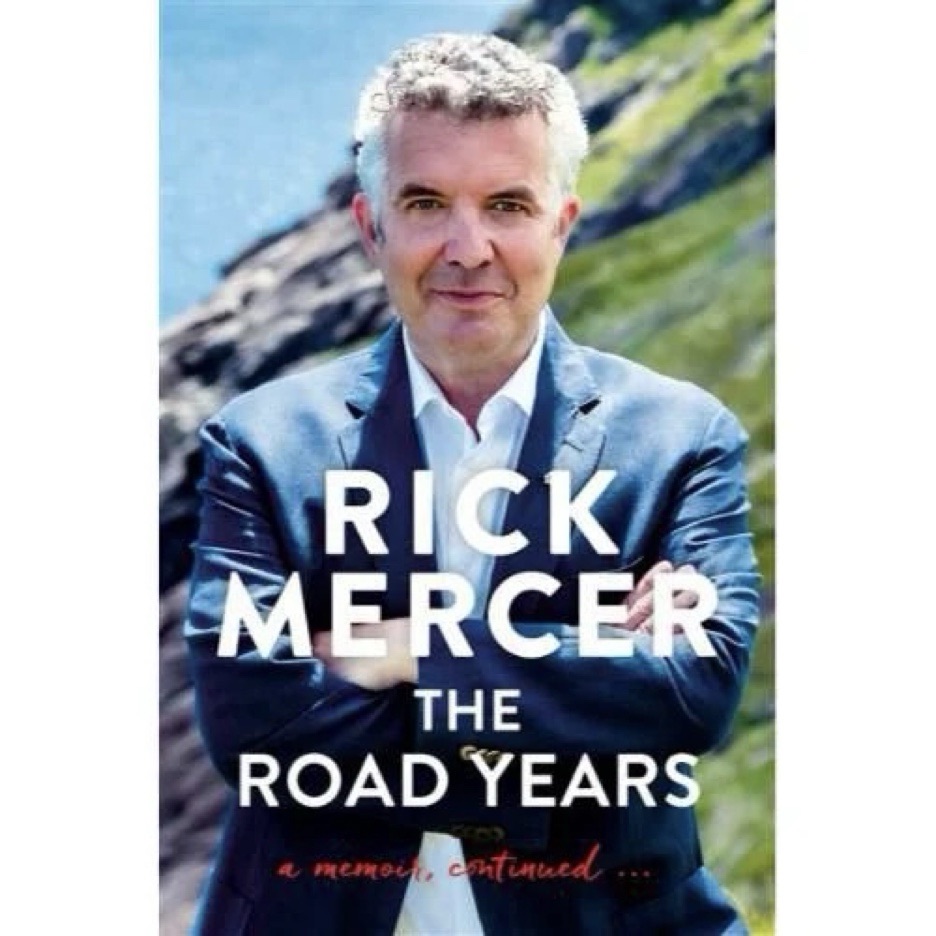
One of several books by the Canadian known mainly as a comedian and daredevil, this is part biography and part history. He goes through a few of his old adventures such as in a Varney, Ontario road race with old cars with no brakes. In another he is tasered in Ottawa, unfortunately on the same day as a misidentified man died by being tasered. That episode was wisely never aired. The most daring would appear to be tagging black bears in Algonquin Park.
But as the book progresses it also becomes more serious and more political. He clearly was not fond of either Stephen Harper as a person nor of his politics. He interviews Belinda Stronach, one of the few who openly disagreed with the all-controlling Stephen Harper, and then deserted him to become a liberal cabinet minister and advocate for the international centennial goals. His visit with her to Africa as part of those international goals with Jeffrey Sacks is touching and mind changing. The resulting decision to sponsor the Spread the Net was a huge success among school children as it saved many lives.The background of the famously recalled nude diving into the lake with Bob Rae is shown to have been a diversion from the fact that they had caught no fish that day.
There are good insights into what is involved into the weekly planning of a television show and he has nothing but praise for those who did it for years.
There are are far too many superlatives, too many famous names dropped and too few jokes in this disappointing book for those who are expecting more of the mostly entertainment genre of previous books. But for those who want a serious discourse on Canadian history, this is a great book.
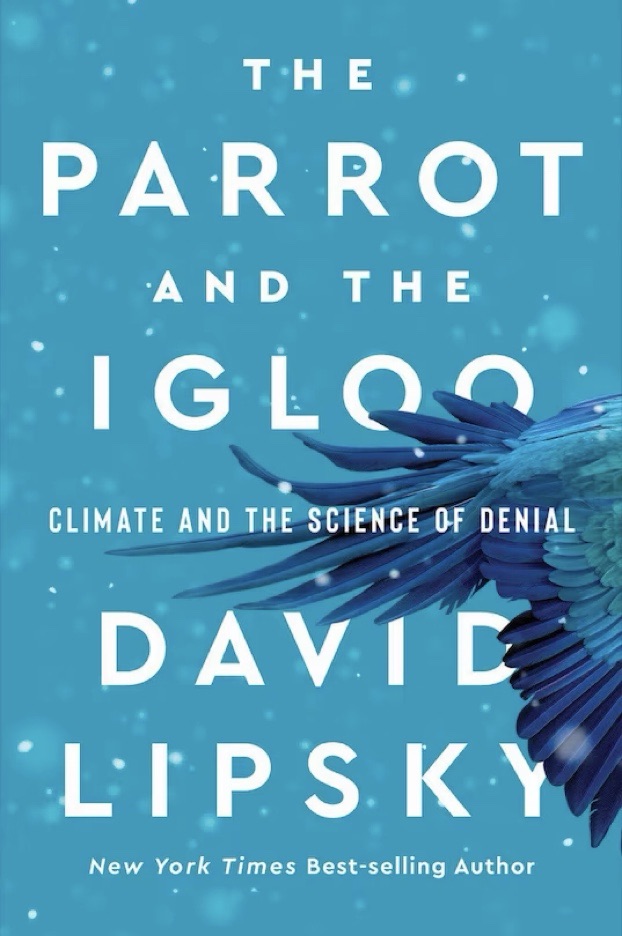
The Parrot and the Igloo. David Lipsky. 2023. 18 hours, 46 minutes. (Audiobook.)
In the two hour Part I, this American environmentalist details the discoveries of such luminaries and forerunners of our technologies as Faraday, Volta, Turing, Westinghouse and Franklin leading to the ultimate discovery of carbon as the main cause of global warming.#
In Part II, the early warning of climate warming is featured, including Arrhenius who falsely believed that oceans would compensate, much earlier than usually appreciated and identified carbon dioxide as the major cause. The effect of methane is never mentioned. And the albedo effect is discussed in detail, providing a positive feedback loop. Jimmy Carter’s policy of boosting reliance on coal in response to the Arab oil embargo is only briefly mentioned. The surprising fact is that others, both Republican and Democrats were at least equally guilty. The myth of the frog in boiling water is shown to be just that-a myth. Long divergences about the relationship between lung cancer and smoking including eminent scientists, illustrate the ease with which people can be deceived by government propaganda, but that is hardly news. However, the broader efforts to discredit all science had its origin in this and can be linked the actions of the cigarette industry. We are now living with the consequences of this. The introduction of the late billionaire Reverend Moon, is confusing and it is a real stretch to relate it to climate change. It is not the only tenuous connection in this book. But there is no doubt about the link between aspirin use and Reye’s syndrome although some still deny it. That is one of several instances where the author repeats himself, sometimes several times.
Short terse sentences are everywhere and it seems to be the point that government agencies are ill equipped to deal with well paid lobbyists. The long conflict over the freedom of information act also seems unrelated. The author seems pleased to show off his minutiae of innumerable facts of no major significance. There are numerous incidents which are said to have been crucial to the survival of the species, as authors exaggerate their importance. Apart from numerous outright lies, many points of data are used selectively, to fit with the bias of the author. The hour-long final chapter criticizes the administration of Obama for its low priority of the climate crisis. The epilogue and the postscript are both more than one hour long.
This book is needlessly long, disjointed, and pessimistic; lots of problems are identified but no solutions are even suggested. I cannot recommend it but did finish it. I am sure better ones await.
This book is the choice for this month’s Western University Alumni Book Club, with its peculiar format of online discussion in sections.
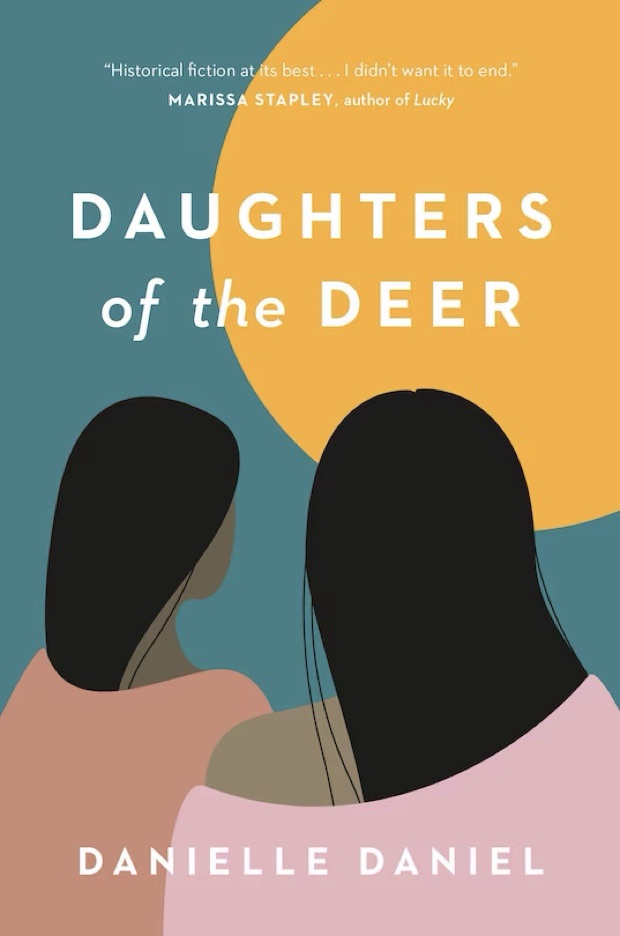
Maria, a widow of the small Weakanari tribe, a part of the larger Algonkin nation, near Trois Rivière in the late 1600s is the narrator of most of this interesting native tale although some is third person singular prose and some is mixed. At one point, she appears to be the narrator, but then refers to Maria in the third person singular. It is described as historical fiction, but could possibly also be considered as embellished memoir, as the family tree which is included at the end shows that the author is the granddaughter of Maria. Maria is reluctantly remarried to a French soldier for their protection from the raiding Iroquois. The all-encompassing dictates of the Catholic Church and Jesuit priests ensures that the native spiritual practices are eliminated and their babies are baptized. She reflects my thoughts exactly when she states “ I cannot imagine how a god who is all-knowing would allow babies to burn in hell for eternity because they are not baptized.” The white French also brought what I gather was measles, which proved deadly to the natives. After a winter of near-starvation, further encounters with French culture and religion and the death of her beloved Chief, Maria and her family feel isolated, friendless and lonely and reluctantly decide to leave the tribe and resettle on a 12 acre seigneurie farm in southwestern Quebec, near the junction of the Richelieu and the St. Lawrence rivers near Ville Marie. A gay couple and a lesbian couple are readily befriended and welcomed by the natives but shunned and condemned by the French Catholics.
Robin Wall Kimmerer’s advice in Braiding Sweetgrass to take from nature only what you need, to give back what you can to ensure sustainability, and to express gratitude, distinctly native creeds, is repeated here.
Bizarre dreams of talking animals and magical travels mixed with pantheism, belief in an afterlife, and purported cures for various ailments from natural products are the features of this book that I have the most trouble appreciating and understanding. At times, Maria’s daughter appears to be hallucinating, seeing her dead lover who has suicided. There was no recourse for the women if their husband dies or leaves them, as they had no property rights and are deemed to be property of their white husbands. The introduction of alcohol and its effects on the native culture is shown to be devastating.
A politically correct interesting well written tale that I quite enjoyed with some reservations. I await discussion from others of the online book club.
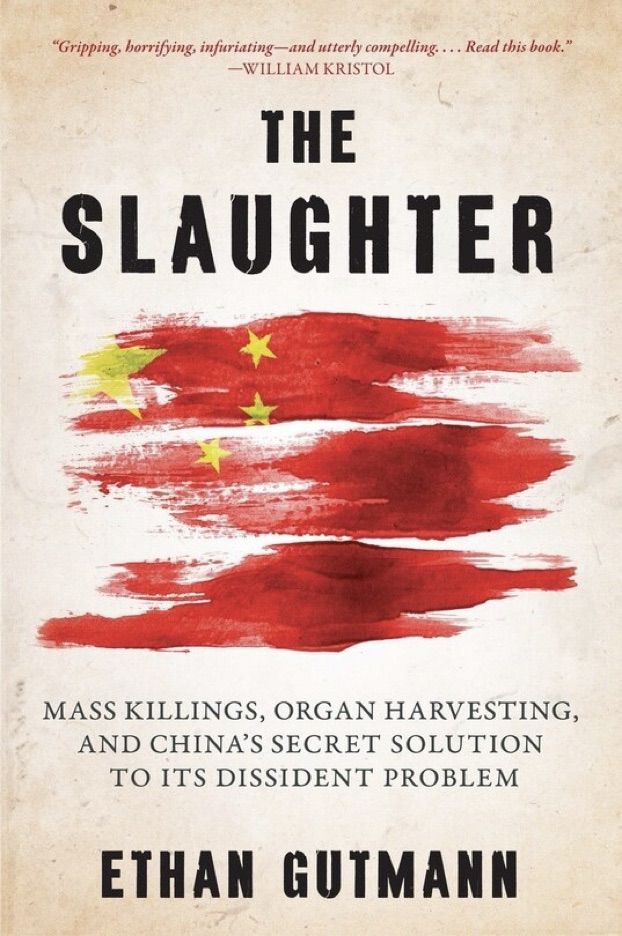
I found this book by a British China watcher abandoned in the mailroom of our apartment complex. With ‘Organ Harvesting’ in the subtitle I thought it might interest me. The first chapter describes gruesome executions of the ethnic Uyghur Muslims of Xinjiang province to retrieve organs for transplantation. The next chapters detail the history of Falon gong, a quasi-religious practice of exercise and meditation derived from Buddhism with bits of traditional Chinese medicine, Confucianism, and Taoism thrown in. They are proponents of nonviolent pacifism with an emphasis on truthfulness, compassion, and forbearance, hardly threatening tenets to any authorities. It was founded in 1992 by Li Hongzhi who became the hero of the ‘cult’, and it was banned by the Chinese Communist Party in 1999 when it’s domestic practitioners reached an estimated 70 million. The following chapters are devoted to documenting the brutal attempts to eliminate the practice by the Chinese government. It is now practiced around the world, including in Canada, but only secretly in China. Dedicated to it to the point of risking torture and death, thousands of Chinese practitioners openly practiced it and were incarcerated, subjected to very inventive means of torture, and killed by the state apparatchik. One survivor recalled that she was spared because she was blood group AB negative, making her a suitable organ donor for less than 3 % of the population. (Recipients with that blood type can receive organs from any donor.)
By 2002, the battle was in the airwaves with cyber-attacks from both the Communist government and Falon gong leaders. At one time, the latter highjacked state TV stations to announce that the ban was lifted. Foreign communists espionage agents and Falon gong leaders were also hacking, but few western governments got involved.
David Kilgor and David Matis, two Canadian investigators concluded that 41,500 Falon gong practitioners in China were executed for their organs between 2000 and 2005. By the time of the 2008 Beijing Olympics, they and the author put that number at 64,000 Falon gong ‘prisoners of conscious’ murdered for their organs.
In the late 1990s, during a short locum in a small Middle East emirate, I was presented with a healthy Arab youth who had just returned from having a liver transplant somewhere in China a few weeks earlier. Although we trained several Arab transplant hepatologists, none were from that country and his compatriot physicians had no idea how to treat him. I was able to give them some guidance in their care of such patients. As per ethical standards, we never inquired about the donor, although I was vaguely aware of controversies concerning Chinese organ donors, and use of executed criminals as donors for a very profitable international market. How much did that patient or his government pay for that transplant? The legitimate ethical controversy surrounding payment for voluntary donation of a kidney or a liver segment by some poor resident anywhere is never addressed.
In 2012, my wife and I did a three week tour around China. I was naively unaware of even the existence of Falon gong, Uyghur dissidents, and banned House Christians or the controversy about their persecution and frequent use as retail donors of organs in a thriving international marketplace. We were taken to places and events that the government wanted to showcase to the world. But the ‘harvesting’ of organs from executions of innocent people persists and deserves condemnation of the Communist government and the participating doctors by the international community.
Included in this book are several not very helpful photographs and too many foreign names of people and places that no western reader would be able to keep straight.
This is an exhaustively researched, very enlightening documentation of an important aspect of international relations and organ transplantation. Not for everyone, but as a former transplant physician, I appreciated the discussion.
4/5
I found this book by a British China watcher abandoned in the mailroom of our apartment complex. With ‘Organ Harvesting’ in the subtitle I thought it might interest me. The first chapter describes gruesome executions of the ethnic Uyghur Muslims of Xinjiang province to retrieve organs for transplantation. The next chapters detail the history of Falon gong, a quasi-religious practice of exercise and meditation derived from Buddhism with bits of traditional Chinese medicine, Confucianism, and Taoism thrown in. They are proponents of nonviolent pacifism with an emphasis on truthfulness, compassion, and forbearance, hardly threatening tenets to any authorities. It was founded in 1992 by Li Hongzhi who became the hero of the ‘cult’, and it was banned by the Chinese Communist Party in 1999 when it’s domestic practitioners reached an estimated 70 million. The following chapters are devoted to documenting the brutal attempts to eliminate the practice by the Chinese government. It is now practiced around the world, including in Canada, but only secretly in China. Dedicated to it to the point of risking torture and death, thousands of Chinese practitioners openly practiced it and were incarcerated, subjected to very inventive means of torture, and killed by the state apparatchik. One survivor recalled that she was spared because she was blood group AB negative, making her a suitable organ donor for less than 3 % of the population. (Recipients with that blood type can receive organs from any donor.)
By 2002, the battle was in the airwaves with cyber-attacks from both the Communist government and Falon gong leaders. At one time, the latter highjacked state TV stations to announce that the ban was lifted. Foreign communists espionage agents and Falon gong leaders were also hacking, but few western governments got involved.
David Kilgor and David Matis, two Canadian investigators concluded that 41,500 Falon gong practitioners in China were executed for their organs between 2000 and 2005. By the time of the 2008 Beijing Olympics, they and the author put that number at 64,000 Falon gong ‘prisoners of conscious’ murdered for their organs.
In the late 1990s, during a short locum in a small Middle East emirate, I was presented with a healthy Arab youth who had just returned from having a liver transplant somewhere in China a few weeks earlier. Although we trained several Arab transplant hepatologists, none were from that country and his compatriot physicians had no idea how to treat him. I was able to give them some guidance in their care of such patients. As per ethical standards, we never inquired about the donor, although I was vaguely aware of controversies concerning Chinese organ donors, and use of executed criminals as donors for a very profitable international market. How much did that patient or his government pay for that transplant? The legitimate ethical controversy surrounding payment for voluntary donation of a kidney or a liver segment by some poor resident anywhere is never addressed.
In 2012, my wife and I did a three week tour around China. I was naively unaware of even the existence of Falon gong, Uyghur dissidents, and banned House Christians or the controversy about their persecution and frequent use as retail donors of organs in a thriving international marketplace. We were taken to places and events that the government wanted to showcase to the world. But the ‘harvesting’ of organs from executions of innocent people persists and deserves condemnation of the Communist government and the participating doctors by the international community.
Included in this book are several not very helpful photographs and too many foreign names of people and places that no western reader would be able to keep straight.
This is an exhaustively researched, very enlightening documentation of an important aspect of international relations and organ transplantation. Not for everyone, but as a former transplant physician, I appreciated the discussion.
Goodreads suggests that one should analyze what they have read periodically. This is relatively easy for me as all the books I have read and reviewed are on my ThePassionateReader blog, but slotting some into a specific genre proved difficult. Here is how it seems to break down.
I had difficulty classifying several of the novels without going to the library and checking painstakingly what category they were shelved under. For next year, I plan to slot them into categories as I go.
Nonfiction Genres: Sciences- 29 Medical- 10. Biography/Memorir- 12 History/Current Events-12 Philosophy- 2 There is obviously some overlap and arbitrariness to these categories.
Authors: Canadian-15. (Aboriginal- 3) American- 28 British- 6 Icelandic-1 South African-1 Malaysian- 1 There are many who have lived in many countries or whose nationality I have forgotten.
Oldest: David Copperfield. 1850 Newest: Of Time and Turtles. September 19, 2023.
Longest: David Copperfield. 2104 pages Shortest: The Ant Who Needed A Transplant. 23 pages (children’s book)
Format (for those where I recorded it). Hardcover: 29 Paperback: 12 Ebook: 13 Audiobook: 5
The family tree, map, and point-form chronological history at the front of this dramatic family memoir of a large extended East German family makes it easy to follow the events and characters in the book. The author is the U.S.-born daughter of an early escapee from the repressive East German communist state. She married a U.S. army intelligence officer and Holocaust survivor, has lived in numerous countries and at one time in the 80s headed dangerous U.S. army espionage trips into East Germany from West Berlin.
The family members in East Germany and the West were separated with minimal or no communication for 40 years, hence the title. The larger contingent in the east were indoctrinated into Communist doctrine, restricted in everything they did or said, watched constantly, and faced hardships and shortages which were worsened if any of the family tried to escape to the west. Some became teachers of the state dogma and at least one became a guard at the Berlin Wall, with orders to shoot anyone trying to escape. The author does not condemn those who, in a previous lives worked for the Nazis or the East German STASI, nor does she reveal anything about her personal political views except to praise Ronald Regan and George W. Bush. There is nary a word about Trump or Obama. The extent of how well the propaganda of the repressive state was accepted by good ordinary citizens is a stark reminder that we are all susceptible, and we should not condemn ordinary Russians for believing Putin’s lies, nor at least some Americans (and a few Canadians) for believing Trump’s. Most of us probably believe some lies, whether promulgated by politicians, religious leaders, or others.
One cannot read this book without learning what amounts to a brief history of the whole Cold War. When the Soviet Union eventually collapsed along with the Berlin Wall, the late Mikhaïl Gorbachev was hailed as a hero, and the members of the author’s family who were still alive of are able to get together in numerous emotional reunions.
Despite the author’s extensive research and numerous diaries and conversations, some descriptions of the emotions, thoughts, and gestures of the family members must be surmised or inferred and some conversations are probably embellished or paraphrased at least a bit.
This book can alternatively be read as a truly heart-wrenching tragic story of loss and separation or a testament to human determination to endure, survive, and make a difference against incredible odds. For me it is the best history lesson I have read in years.




 The Passionate Reader