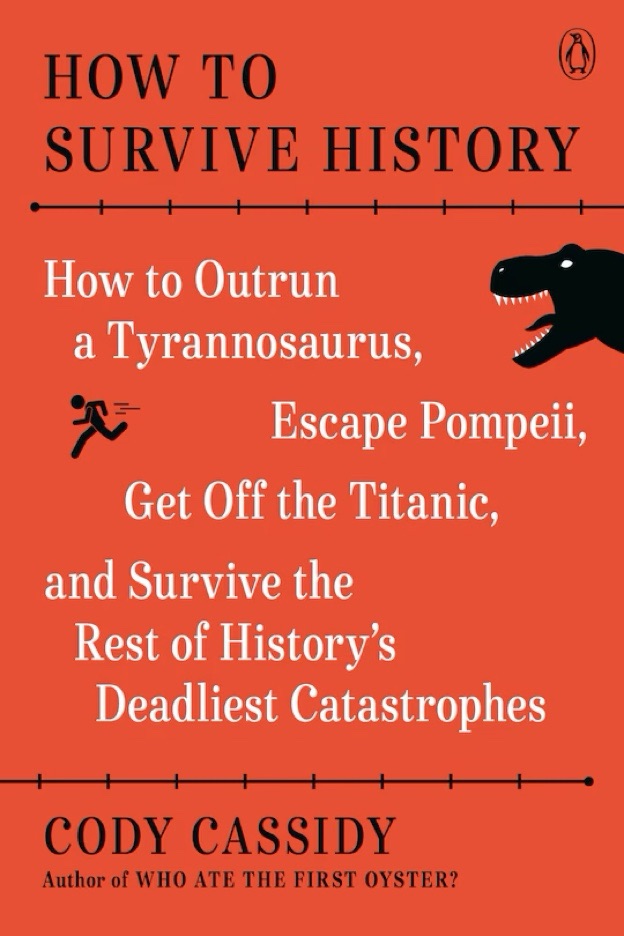
The San Francisco author uses a very unique literary device to provide entertaining and scientifically solid advice on 15 different topics- he pretends that you are actually in, or time travel to, the dangerous places he outlines. The advice often seems counterintuitive, but is made to make sense as he describes the details.
The science can become quite complicated. He describes the square-cube law of our relationship to gravity that may make it possible to outrun Tyrannosaurs Rex. I had to read the climate science of tornadoes twice to grasp at least some of it.
“…the Midwest hosts more than 75 percent of the world’s tornadoes because its long flatlands provide a unique unobstructed pathway from Mexico to Canada. As a result, collisions play out on a continental scale. Every spring, when the winter jet stream still blows with enough force to create a strong low-pressure vacuum, and the skies over Mexico warm, but it remains cold over Canada, the Midwest hosts the atmosphere’s greatest demolition derby.”
Even without the fanciful personalized touch of pretending to be there, the science of some stories is interesting, such as the geography of the sacking of Constantinople and the many mistakes leading to the worsening of the devastation of the 1906 San Fransisco earthquake and fire. The then current myths about the cause of the Black Plague are detailed, and the refusal of many sailors to believe the solid evidence of the cause and easy cure of scurvy lead to thousands of miserable slow deaths.
By far the most difficult and complex book that I have read in years, and perhaps ever, I persisted only because after about 200 pages, the Oxford professor of history was finally up to the years designated as A.D. and I thought it would get better. It did in some respects, but not in many. After another 90 pages we were only up to 1250 A.D and after yet another 100 pages up to 1800, and at least some names of places and people became familiar to me but many still did not.
The atrocities of the slave trade, and its lasting effect on global economics is described in detail, albeit scattered over about 50 pages in three chapters, along with data about diseases, climate change, volcanoes, trade, and migration. In fact, one of the problems I experienced with this wordy dry book is that the time frame and all of the topics keep shifting, seemingly randomly. The Great Wall of China is mentioned only in passing in one sentence and the Terra Cotta soldiers which I have marvelled at, not at all, nor is Machu Picchu. The Crusades merit a one sentence mention. The invocation of many religions to justify horrendous acts of cruelty is a recurring theme.
There are thousands of unfamiliar names of places and people as borders and names continually change. Twelve pages of maps of the world as it changed over many millennia are never referenced in the text. There are several confusing charts in the text that sometimes seem to be unrelated to the topic being addressed. The author sees irony frequently using the word Ironically every few pages, sometimes where I can see no irony.
On the positive side, quoting Amatra Sen, the author notes that famines are not the result of lack of availability but of pricing problems, in particular affecting those who cannot afford food at times of sharply rising prices and hoarding by the rich. And as a part time regenerative farm volunteer, I was intrigued by the discussion of potatoes as as a highly nutritious high-yield crop, but the horror of the1845-52 Irish potato famine from blight (imported from South America) showed the folly of monoculture.
The last three chapters mostly covering the time I have lived is definitely more familiar to me but I was previously unaware of many of the events discussed, such as the covert cloud seeding that took place in Vietnam and the U.S.S.R, and is still being used covertly in several places. I lived in the U.S. for three years under three different presidents (you figure what years that had to be) but was largely dependent on mainstream news outlets and if it didn’t involve U.S. politics, troops, or money, it just was not reported.
The last chapter is particularly bleak in its projection of the many challenges and the refusal of most politicians to address them in in a meaningful way. To read this is to conclude that we are doomed. I like books that present challenging problems and then offer solutions, such as Sir David Attenborough’s A Life on our Planet. This one only presents the challenges, except for a weak attempt to show an optimistic side to things in the conclusion.
A quote from part of a single paragraph illustrates the density and opaqueness of the entire book: “Splenothem data from Balum Cave in Belize, along with lake sediment cores in northern Yucatan and titanium content from the Cariaco Basin in the southern Caribbean all point to to a protracted period of drought in the mid-ninth century that lasted for several decades. Average rainfall levels dropped by around 50 percent and occasionally by as much as 70 percent with these shifts likely the result of changes in solar activity, volcanic eruptions, or both. This exacerbated problems cased by rapid deforestation that has been linked to the dual need to expand agricultural land and to obtain wood for fires required in order to bake calcium carbonate from shell or stone into quicklime.”
In a much more readable and enjoyable form, much of the history of humankind, politics, culture and religion can be obtained in either Jared Diamond’s 1997 Guns, Germs and Steel or Francis Fukuyama’s 2011 The Origins of Political Order, both of which I enjoyed, although they lack the emphasis on conservation.
There is a bleak fatalistic tone to the whole book, but I am in awe of the incredible amount of global information the author delivers. I suppose it might make an interesting and appropriate text for a class to study in an advanced university history or ecology course.
As a work of reference, this may appeal to a select few historians, epidemiologists, archaeologists, and ecologists, with its 26 page index, but I can’t recommend it for the general public.
It strikes me that including the number of pages in the heading for an ebook is sometimes not very useful as it depends on the format, the font and the size of the type you choose. Better is to disclose how long you take to read it available on some platforms. In this case, they said I only spent 5 hours and 46 minutes to read it. But that also depends on whether you are a fast or slow reader; I have been told that I am a fast reader, but have nothing to compare it to.
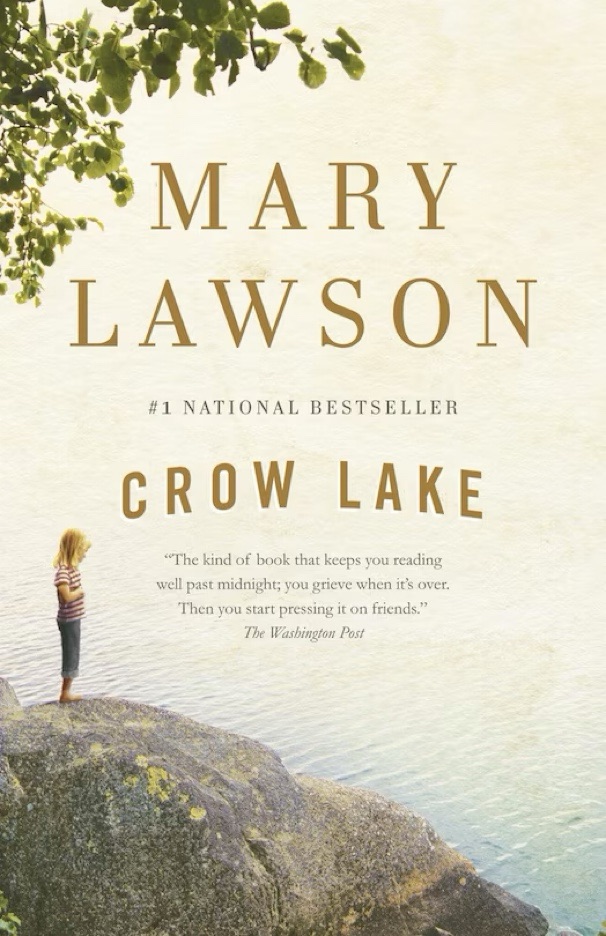
This novelist calls herself Canadian, but has lived in Britain since I 969. She seems to have started her writing career late with this novel at age 56, with five since then. This is set in the fictitious small community of Crow Lake, hours north of New Liskeard Ontario, and spans many years sometime in the mid 20th century. A family of four children is orphaned when the parents die in a car accident. They stay together in spite of poverty, and the oldest boy sacrifices his chances for an education so the second son can get one.
The farm life and culture is described in vivid detail with events and values that I can readily relate to. The characters are colourful, and although there is considerable conflict, the good Presbyterians refrain from showing any emotion, keeping everything inside. There is a constant struggle to balance the value of higher education with the joys of being rooted in a community, valuing nature and hard work. For them the eleventh commandment was “Thou shalt not emote.” This describes my childhood accurately.
Among many colourful quotes: “…she hauled me up to her bosom, just as she used to do, just as she always will. It shows the state I was in that for the first time in my life, I almost wanted to accept that bosom for what it really is- a pillow to cry into. A great giant soft warm pillow into which to unload all your sorrow and regret, safe in the sure knowledge that Mrs. Stanovich will pass it directly on to Jesus.”
It is a bit peculiar that after 440 pages in 24 chapters, entirely narrated by the young Katie, the story comes to an abrupt end followed by the “Author’s Note” which is then followed by a 60 page prologue of the author’s next novel seemingly set in a town near Crow Lake and narrated in the third person. So this novel really is only is about 440 pages long.
I look forward to discussing this story in our book club, but I don’t think I want to read any more stories of deep hidden emotions. Perhaps that is a reflection of my “Thou shalt not emote” background.
This short old classic allegory is coming up for discussion in our book club. I have included the insightful 10 page Introduction by the late Christopher Hitchens in the pagination. This is a reread for me having first read it many years ago. I had forgotten how imaginative and brilliant it is. It is even more so since the collapse of the Soviet Union and its partial replacement by the lying Putin regime.
Set in Orwell’s Britain at an unspecified time, the animals rebel and establish an «Animal farm » where everyone is supposedly equal. Pigs are supposedly smarter than other animals and gradually take over complete control over all the others, who are worked to death and starved while being deceived by the pigs and dogs into believing patently false lies about farms run by humans. The increasingly ruthless pig named Napoleon, clearly modelled after Stalin, comes to live a life of luxury, while the hard-working, loyal, but not very bright horse, Boxer, works ever longer hours to make the farm a success only to be rewarded by being shipped off to the glue factory, when he could no longer work. The pigs and dogs claim that it was an animal hospital.
An enduring caution about being deceived by dictators, this book is perhaps more relevant now than when it was first published.
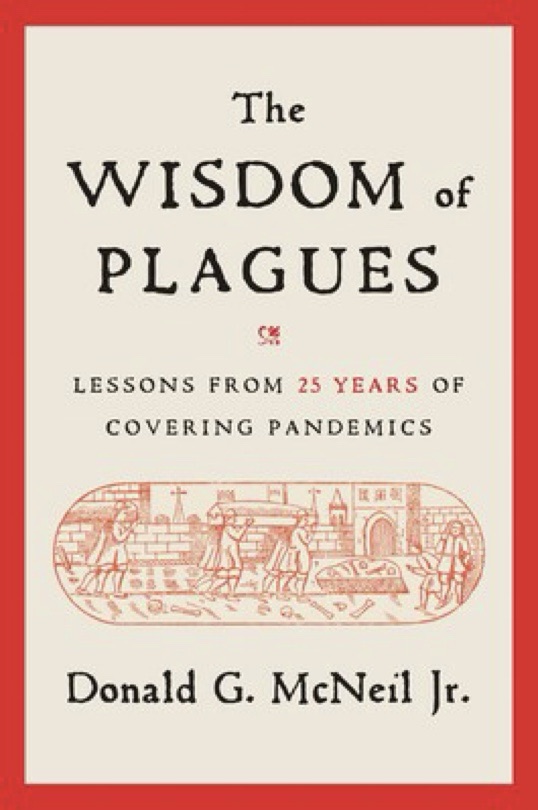
A former New York Times reporter specializing in global pandemic threats ranging from COVID -19 to Zika virus presents his take on a wide variety of issues. He is critical of the various early warning systems in place around the world, and points out huge discrepancies in the resulting death toll, when various agencies or political operatives fail to act in a timely manner.
The wide-ranging topics covered include the Zika virus outbreak, Ebola, influenza, syphilis, HIV, and extensive coverage of COVID-19, including continuing speculation about its origin. McNeil never reveals why he left the New York Times in March 2021, so one can speculate. In spite of broad-ranging experience and knowledge there is just a whiff of “I told you so” superiority about the book. His complaints that others deceived him when he published some information that proved wrong, may be true, but do not flatter him.
The natural tendency of pathogens to mutate to become more infectious but less lethal is dismissed with one paragraph, pointing out only one apparent exception, the mutation to the Delta variant of the Corona virus that dominated briefly and was replaced quickly by the Omicron variant that clearly followed the rule. And the rule seems to have applied to other situations, including syphilis, and most flu outbreaks. When a high percentage of hosts are killed as in Ebola, and SARS, the virus basically becomes self-limiting, too lethal for its own good. But this rule perhaps only apples if Homo sapiens is the primary host and not some other species where it can be milder, as in rabies.
Part Four, on what we need, comprising the last 77 pages is wide-ranging including foreign aid, a history of some great successes and some failures, politics, and a lot of common sense, which seems to be in short supply particularly in current U.S. politics. The recommendation to rate outbreaks on a double 5 point scale for infectivity and lethality rather than using emotionally burdened words like emergency, lethal, and even pandemic makes a lot of sense. So does elimination of the religious exemption for vaccinations. We have an obligation, as citizens of the world to protect our neighbours as well as ourselves.
Never mentioned is the possibility that a warming planet could release a viable sporulating pathogen from Arctic permafrost that has been dormant for millennia. This has already happened with an outbreak of Siberian anthrax that killed a 12 year old and thousands of reindeer in 2016. We may not even know that they exist until they strike.
I got this book when I noticed it in the library to pick up another one, because I really liked Great Small Things a previous novel by Picoult. It is written entirely in the fist person singular. But after 46 pages of utterly incomprehensible confusing discussion about the archeology of ancient Egyptian tombs containing the said named book along with numerous Egyptian myths, I was almost ready to give up. The next chapter is back in Boston where she is married with a daughter and working as a death doula, a kind of councillor to the dying in a hospice. Then it is back to Egypt in 2017, after 15 years to search in the the tomb of Djehutynakht with her Yale professor. It appears that they are intermittent lovers and at other times enemies and that everything comes as pairs- two tombs, two lives, at least two Books of Two Ways, and two aspirations for herself. It becomes like the electron in the quantum physics course that her husband teaches at Harvard. It is simultaneously in two places with two different spins. Or it may be like Schrodinger’s cat that is simultaneously alive and dead. To me this just emphasizes our profound ignorance about how the universe works, in spite of the advances of modern physicists. She muses about the multiverse or many parallel universes of quantum theory as she listens in on one of his lectures. Free will is reduced to the direction of spin of an electron. The row of Egyptian tombs becomes a parallel universe to her life in Boston, each with an unfaithful partner. Dark matter becomes the fill-in explanation for what would otherwise be a mystery.
The plot becomes significantly more complex in the last part of the book, with a surprising paternity revelation, a plane crash, and an undelivered letter to an illegitimate son as his mother is dying.
I could never develop a clear mental picture of the layout of the Dig the site where archeology students primarily from Yale dig out the tombs and read the accompanying hieratic and hieroglyphic texts. And although the writing is superb, all of the characters are too introspective, forever undergoing self analysis, sensitive to perceived insult, and emotional for my taste. The endless myths of dozens of Egyptian gods that change from one form of life to another do not endear me to them at all. The obsession with sex and death are at times overpowering.
I was a bit disappointed in this book.
6/10.
I am not fond of tattoos but if I had to have one I would put one saying « Do Not Resuscitate, or just DNR » directly on my sternum.
For me, this is a quick reread as I read it years ago, but didn’t recall the details. That was on the recommendation of a nurse in the transplant unit who praised it, while we watched helplessly as a patient was dying.
A computer science professor at Carnegie Mellon, Randy Pausch was at the height of his career at 47 in 1987, when he was diagnosed with terminal metastatic pancreatic cancer. He had a loving wife and three children under seven. He decided to give a last lecture to a crowded audience about what he had learned about living. It is available on line and is very touching and surprisingly upbeat. I listened to it after rereading the book which is not the lecture per se but all about living life to the fullest, fulfilling your childhood dreams, and helping others to do the same, with absolutely no self-pity.
The lecture itself is also very upbeat and filled with some quite extraordinary humour. There is little religiosity to it and no mention or hope for any afterlife except this wonderful line about his roommate: “If I am going to hell, I will request 6 years off for time served.”
Unlike me, he was grateful that he knew that he was dying as it gave him time to prepare his family, offer sage advice and make sure everything was in order for a life without him. I would much prefer to have no warning and die suddenly and painlessly, but I am not 47.
A couple great quotes:
“He was proof that, sometimes, the most impenetrable brick walls are made of flesh.” (Of a certain dean.)
“Experience is what you get when you didn’t get what you wanted.”
This is a great book, but my retrospective advice is to view the YouTube video of the actual lecture before reading it for the best experience of this remarkable man.
I don’t know who recommended this book and didn’t even have it on my list of books I want to read, but it suddenly showed up on my ‘ready to be picked up’ list at the OPL. I’m glad it did.
The author is almost as dispersed as many of the plants she discusses. Born in Canada of Taiwanese and Welsh parents, she has lived in Vancouver, London, Ontario, Nova Scotia, Taipei, London, England, Cambridge, and Berlin, the latter twice and currently. She has a Ph.D from Cambridge. The personal stories of her adventures are interwoven with the documentation of the many plants and few animals that she discusses. Her wanderlust probably contributes to her sense of belonging in no fixed place. The conversations with her newborn daughter as she is forced to move back to Berlin because she can’t afford to live in Cambridge are touching and philosophical.
In 14 chapters, she discusses the deliberate or unintended introduction of many different species such as soy, citrus trees, pine, heath, tea, and mosses, often with major economic impacts such as the introduction of citrus trees to Florida. Some achieved nationalistic symbolism and have had a major impact in the literature and culture of countries, e.g. introduction of tea to Britain. The genetics of constantly evolving plants responding to climate change is mentioned but not a major feature in this work.
There are now 1,700 seed banks around the world that serve as a repository of genetic material that can be studied by scientists.
While recognizing the harm done by many species as they migrate to new territories, she takes issue with the whole concept of invasive species and points out that plants have always been and always will be on the move in the battle for survival. The U.S. Department of Agriculture has been responsible for introducing 80,000 species to that country, and even cherry trees were not part of the American ecosystem until the Japanese gifted them to the president.
This is a beautiful book. I read it in one day, stopping only to eat dinner and go for a short walk, in the forest as I contemplated the varied species I encountered there.
Bob Dylan was born as Robert Zimmerman in Duluth, Minnesota in 1941. There is scant mention of his childhood, before he took up the bohemian lifestyle of a 60s folk singer in Greenwich Village, among other places. He only briefly attended the University of Minnesota.
The 82 page analysis of the song Blowin’ in the Wind, published in 1963, and its lasting impact, becomes a bit tiresome with the many versions and many singers who sang the protest song over many years in many countries.
The second chapter supposedly on The Lonesome Death of Hattie Carol (32 pages) has almost nothing to do with that song and a lot about a host of other singers and songwriters many of whom I was unfamiliar with. That includes the nonsensical Dan Tucker who “died with a toothache in his heel.” Thankfully the following chapter, Ain’t Talkin’ is shorter. But the Jim Jones (not the cult leader nor the rapper/songwriter) chapter, at 47 pages, mentions Bob Dylan only in the last 11 pages when he discovers old poem about a perhaps mythical murderer exiled to Australia, which he then plays and discusses. This chapter is contains run on sentences going for half a page and hundreds of names, most of whom I had never heard of.
To call this book by the American music critic, a biography at all is a stretch. There is no discussion of Dylan’s lovers and wives, his drug use, his family, either parents, siblings or children or his critics, of whom there are many. I have rarely been as disappointed in a book.
The Many Daughters of Afong Moy. Jamie Ford. 2022. 36 Pages. (Hardcover.)
I have included the author’s note and the unusually long acknowledgments at the end in the pagination of this work as they go some way to explaining the meaning of this unusual book. I thought that it was Linda who recommended it but now seriously doubt that.
This Montana novelist’s stories range from 1836 to a futuristic 2086, exploring the similarities of an extended family beginning with Afong Moy, the first Chinese woman who escaped from an arranged marriage to New York. She worked as a singer in night clubs and subsisted in boarding houses arranged by her managers. Others include Greta, who joined a feminist dating app in 2014 that went viral, then imploded when it was revealed that their major funder was an abusive billionaire playboy. Her daughter, troubled Dorothy in a dysfunctional marriage in 2045 undergoes epigenetic therapy to restore memories that she has never experienced, but that other unknown members of her ancestry have. Thereafter, by the time we get to her daughter in 2086, epigenic therapy companies have proliferated.
There is a lot of speculation about transgenerational epigenetics particularly of PTSD from past trauma, determinism, and free will, all woven into a very puzzling novel. To follow and make sense of the story, one needs to keep the year, the person and the location identified at the start of most of the chapters in mind as one reads it. Otherwise it can become very confusing, and even doing so, I remained confused. Once I was finished I went back and tried to connect the dots, but it did not help much.
This American investigative reporter details the life of Sam Altman-Fried the much maligned proprietor of the now defunct FTC cryptocurrency exchange in this controversial report. His was an awkward nerdy childhood with aspects of autism and ADHD, but seemingly altruistic, with a genius’s talent at all kinds of math quizzes and gambling. He joined Jane Street Capital, in 2014 at the age of 22 as a full time trader in the opaque world of ultrafast market gamblers, after only one year at MIT in physics.
His altruism, along with that of most other traders espoused the utilitarian philosophy of one of my favourite philosophers, retired Princeton philosopher Peter Singer. They claim to want to make untold millions only to give it away to the charities that will save the greatest number of people.
The 26 page chapter outlining the complexity of Alameda Research and FTX trading with venture capitalists investing billions, while Alameda remained in the shadows of Hong Kong and the Bahamas confused me, but I don’t feel so bad as the author admits that no one has been able to define what cryptocurrency really is.There are far too many transactions worth billions and far too many shadowy characters to keep track of.
Spending thirty million on a mini city on five acres in the Bahamas designed by someone with no experience in design and without any guidance was only one of the problems. There was no org chart, with an imported psychiatrist acting in the role of councillor to a third of the staff of 300. Few knew who they were supposed to report to. The psychiatrist developed a makeshift one but didn’t even have a Bahamas medical licence. There was virtually physical security and no working Board of Directors. Sam’s longstanding affair with one of the staff was a well-known secret. Chaos theory seemed to be in play everywhere.
The effective altruism espoused by almost all of the 300+ employees was shifted to trying to prevent a future existential threat to humankind and there is little evidence that much of it was ever spent on any kind of altruism. Even in November 2022, when it was leaked that seven billion dollars went missing in the FTX account, precipitating what was essentially a run on the bank, it remained unclear who was to blame. Sam was extradited to the United States and is now according to Wikipedia, awaiting sentencing, having been convicted on all accounts of fraud.
Even as the crash-landing of FTX has given all cryptocurrencies a bad name with the general public, nerdy venture capitalists are spending billions on it, particularly in the less regulated regions of African countries, with little to show for it to date.
Next week, something lighter, and definitely not economic theory.
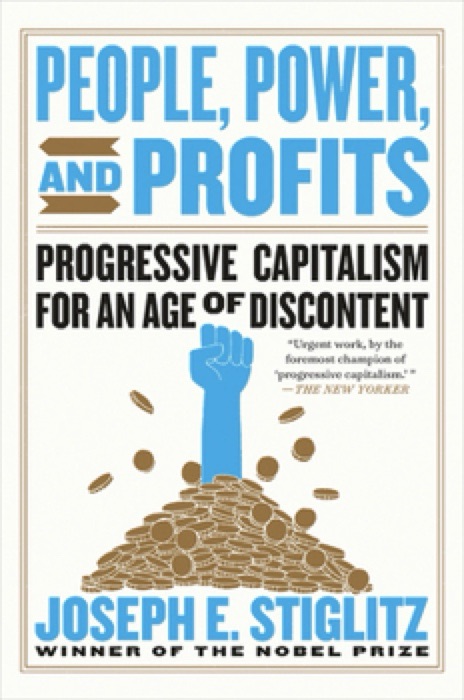
This book written in 2019, was obviously published before the looming 2020 election, and is therefore somewhat dated, but will, or should, have a lasting impact on future U.S. politics. I am nor sure if it had any impact on the looming 2020 election but I doubt that any Trumpist would ever read it. Keynesian vs Friedman’s Chicago school of economics is discussed in detail, and it is clear that the author favours the former.
The author is no slouch: he was the Chief of Bill Clinton’s Council of Economic Advisors, and Chairman of the World Bank, a Nobel laureate, and a professor at Columbia University.
In this tome, he expresses somewhat contrarian views about a wide variety of ills in the modern U.S. economy, from worsening income inequality, exploitation and market monopolies, globalization, new technologies, the financial crisis, and the proper role of government regulation. In spite of his banking background, banks come in for particular scorn. There is a truly international perspective with comparison of the U.S. with many other countries in a variety of measures, debunking the widespread belief that the U.S. is the greatest country in the world.
The best examples of monopoly power that are familiar to me are the drug company Valient increasing the price of Syprine, used to treat Wilson Disease by 3000 % because they were the only manufacturer and had the monopoly on it in the U.S. and academic publishing with a few companies charging authors to publish papers that are the result of research funded by the government.
In Part II, some solutions that would benefit all are offered, chiefly a greater role for government. He discusses government inefficiency and claims that it is generally no less efficient than the private sector. Some of the measures advocated seem unrealistic to me.
In spite of having a Ph.D. economics professor daughter, little knowledge of the intricacies of macroeconomics ever rubbed off on me. I have never claimed to understand much about economic theory, and when I read The Economist, I often skip the more complex discussion of markets. When they start writing about derivatives and credit default swaps my eyelids sometimes interfere with my reading or I move on to the next story.
The bottom line from this convincing treatise is that (at least it seems to me): he envisions a United States that would become more like a socialist state like some Scandinavian countries, and fears that it may be impossible. Another conclusion is that anyone who believes that the United States is a true democracy is deceiving themselves.
The writing is very convincing, but dry and wordy.
This is investigative journalism at its finest. Find a remote corrupt area of the world, larger than Belgium, with an interesting, largely unknown history and an immense impact on the present day world, examine it in great detail, at considerable personal risk, then tell the world about it and you’ve got it made. I asked six well-educated people at our Friday Luncheon Discussion Club what they knew about the Wa nation, and they all confessed that they had never heard of it. If you can expose the CIA complicity in various nefarious deeds and embarrass them, so much the better. This American journalist based in Bangkok does this and a lot more.
In Book One, he manages to get a lengthy interview with Saw Lu, a kingpin of the Wa, an almost totally independent state within Burma, (now called Myanmar), which interview covers most of the history of the feuding highland headhunters and drug lords providing opioids in vast quantities to China, Vietnam, Thailand and beyond up to the early 80s, with the CIA helping out by supplying arms, more concerned with fighting Maoist communism than stemming the tide of narcotics floating around the world. Saw Lu’s efforts to educate the Wa, and to convert them to Christianity (he was a Baptist) were largely unsuccessful, but he was willing to overlook their funding from narcotics and had more success uniting the diverse mountain top tribes against communists. Several maps at the front of the book are very helpful references for those of us unfamiliar with the vast territory.
In Book Two, starting in the early 1980s, a rebellion against the ruling communists in the highlands, led to new loyalties and warlords, aided by radio communication systems supplied by the CIA, that ensured safe passage of the drugs to markets worldwide. Nixon’s War On Drugs is shown to be largely ineffective in part because of feuding between the Drug Enforcement Agency and the CIA. One in six returning Vietnam War veterans was addicted to heroin and new supply routes from largely autonomous Shanland (ever hard of it?) developed to maintain the flow to America. It was eventually almost completely extinguished and dispersed by the powerful UWSA, the United Wa State Army.
By the early 1990s, Saw Lu had become a local legend, the foreign minister of the Wa nation. He tried hard to develop a secret master plan to burn drugs and drug factories with DEAs help and no explicit help from the Burmese ruling military junta. In exchange the U.S. would help ease the extreme poverty and stop villainizing the dictators of Burma. Only one such burning took place before the CIA, traitors within the DEA, and lobbyists for the “War on Drugs” in America sabotaged the plan, and imprisoned and tortured him.
The new drug tzar of South Wa, Wei Xuegang, jettisoned any attempts to christianize the Wa, replaced most of the heroin production with meth-amphetamine, and focused on appeasing China rather than America, smuggling 90 million methamphetamine tablets a year to Thailand a U.S. ally. 90 % of the heroin production shifted to Afghanistan warlords fighting the Taliban and supported by the CI A. In addition, exporting rubber to China became a thriving business.
The Wa remain an independent state with profound poverty but with some aid in the form of roads, schools and hospitals supplied by China. Officially a part of Myanmar, no one is keen to change the status quo, least of all the United States.
Very informative and well researched, my one criticism of this book is that it is often difficult to determine what time period he is discussing. A linear time line chart with major events plotted would have made a useful reference.
In the first chapter of this dense treatise by the Stanford philosopher, he clearly states that he aims to convince the reader the free will does not exist. In this he agree with a few other thinkers like Sam Harris, but not with the majority of philosophers, perhaps most notably Daniel Dennett.
“Saying that a gene determines when to generate its associated protein is like saying that the recipe decides to bake the cake that it codes for. Instead, genes are turned on and off by environment.”
“Nothing just got it into its head to be a causeless cause.”
There are two chapters devoted to chaos theory and the complex mathematics involved with that left me baffled and seemed somehow peripheral to the argument for or against the existence of free will. The chapter on Emergent Complexity and fractals, with its reliance on power law distributions also was beyond me. Ditto, the long discussion of quantum mechanics, entanglement of electrons over vast distances and traveling faster than the speed of light.
The more straightforward chapter comparing the altruism of atheists vs theists is enlightening and well worth reading before delving back into the neuronal circuitry of the sea slug and its relevance to human decision making, a chapter that I only partially understand.
The 44 pages devoted to the evolution of thinking about epilepsy, schizophrenia, PTSD, and autism are exceptionally informative and almost convinced me about the absence of free will.
In the penultimate chapter, Sapolsky makes a strong but hopelessly optimistic case for quarantine rather than punishment for all misdeeds, evoking Scandinavian models that largely avoid any attribution of blame for any criminal behaviour. Just after reading this, I read a long blurb in the New Yorker about a 15 year old mass school shooter who remains in jail 25 years later, deeply regretting that the voices in his head ordered him to do it, now with his schizophrenia under complete control.
In the final chapter Sapolsky acknowledges that he has suffered from depression intermittently for most of his adult life, and that, although he does not believe in free will, we may benefit from believing that it exists in some form. Almost as an addendum he then discusses the complex causes of obesity.
The real life examples of decision-making throughout this book are generally realistic, sometimes heart wrenching, and often humorous.
I was about to write that I admired the author’s vast knowledge about a vast array of subjects, when I realized that if he is right about determinism, it logically follows that admiration, guilt, responsibility and a lot of other engrained words such as good, evil, blame, liberty, ethics, justice, morality and equality, used in everyday language become meaningless. The same conclusion applies to praise for this book.
I have difficulty rating this book as it is thought-provoking and erudite; in some places it is impossible to understand, but in other places it is superb.
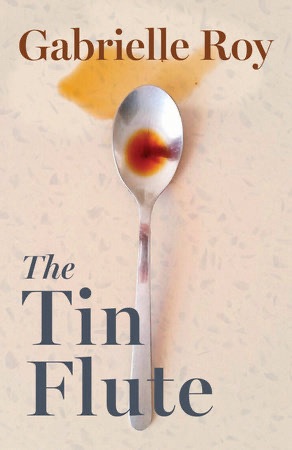
In this classic debut by the French Canadian author, Florentine Lacasse 19, and Jean Levesque, a bit older, are in the slums of St Henri, part of Montreal in 1940. There are endless scenes depicting the awkwardness of young dating. I won’t give away much of the fairly simple plot but the characters never cease to be interesting from the eternally optimistic Azarius to the equally pessimistic Rose-Anna, his wife. They uniformly struggle with poverty moving frequently with their huge family. The pervasive influence of the Catholic Church is well portrayed.
There are lively arguments about the war and conscription, with know-it-all men spouting nonsense to whoever would listen and eternally optimistic men always scheming to make a dollar out of it. The war becomes the default way out of poverty for many young men, not out of any sense of patriotism, but purely to make a living wage.
The writing is graphic, describing scenes clearly. “The hum of the sewing machine nibbled at the silence. It stopped at times and then you could hear the kettle whistling” One old lady “…seemed to have been transmuted into the negation of all hope…she liked to think that she was on her way to her Creator laden with indulgences…she saw herself achieving paradise like a traveler who had taken lifelong precautions to ensure herself a comfortable stay in that last resort. She had put up with her purgatory here on earth.”
The latter part of the book becomes distinctly darker, with a child dying, even worse poverty and malnutrition, and two unwanted pregnancies even though the sex is only alluded to obliquely. The tin flute of the title is barely mentioned but may be somehow a vague symbol of what the child wants but can’t afford. There is no time shift and the entire book covers less than one year.
The plot is not complex and there are no loose ends but the vivid description of the lives of the poverty-stricken people of St. Henri reflect a reality that no longer exists. St Henri has now become largely gentrified.
I suspect that this book appeals more to older readers than the young who may have trouble relating to the era. In the interest of domestic tranquility, I need to give it it a high rating as my wife recommended it, and although we often disagree about books, I agree with her on this one as I thoroughly enjoyed it.
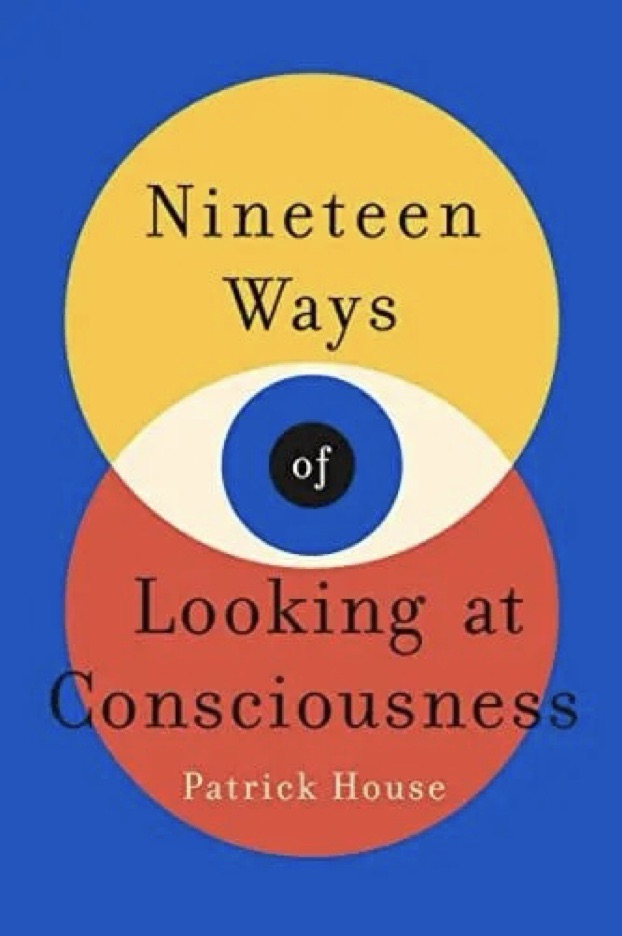
Always interested in neuroscience, I had high hopes for this book by a Stanford neuroscientist, but they were dashed as soon as I got started into it. I wish I could honestly say that I understood at least one of the chapters, but I would be lying.
Several chapters deal with a girl undergoing conscious surgery for epilepsy with stimulation of her brain in various places and her responses, but with no conclusion about her consciousness as far as I can tell. Others deal with dropping a pigeon and a bowling ball from a height and concluding that the pigeon has consciousness based on the response. “The measure of how conscious the pigeon is can be determined by the maximum value of its so-called phi which stands for the intrinsic cause-effect power of the local maximum cause-effect power- in other words the ability of any group of communicating things to act on itself.”
One further confusing quote to give you a sense of this book: “Consciousness is present in all timekeeping brains because it has to be in order to coordinate asynchronous inputs into any kind of meaningful purposeful motion.”
Perhaps someone is able to understand this book full of erudite facts, but I just found it frustratingly confusing. It seems to me that consciousness itself will always be problematic precisely because it is so broadly defined and one needs to have it to study it. The lexicon simply does not accommodate this.
1/5
Thanks,
Kirkus Reviews.
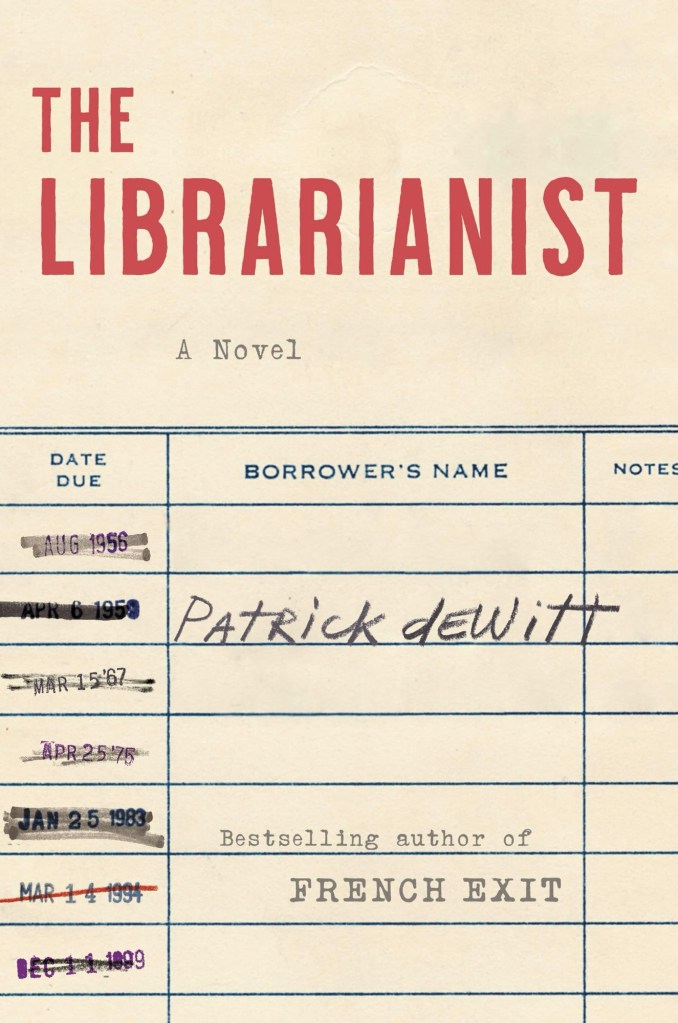
The Librarianist. Patrick Dewitt. 2023. 253 pages. (Ebook.) .
It takes 60 pages of this novel by the Canadian/American before anything makes any sense. Then there is a backwards time shift to the 1940s and 50s and startling revelations suddenly come into life. Playing on the stereotypical librarian, Bob Comet is a bland introvert, with low ambition, few friends, and a very limited emotional range. It seems that he would be content to live his whole life in a routine of near total anonymity with every day like the previous one, and becomes upset when that becomes impossible. This is the exact opposite of what usually makes for an interesting fictional character, and the writing is also anything but fast-paced. But he grows on you. When he gets involved with others who are certainly interesting rogues, chiefly Connie and her family, and Ethan, and is reluctantly pulled into many unpredictable crises and surprises.
I do not understand the ist on the librarian of the title. There are enough surprises to keep the reader engaged although there is nothing very profound about this story. Altogether a pleasant read.
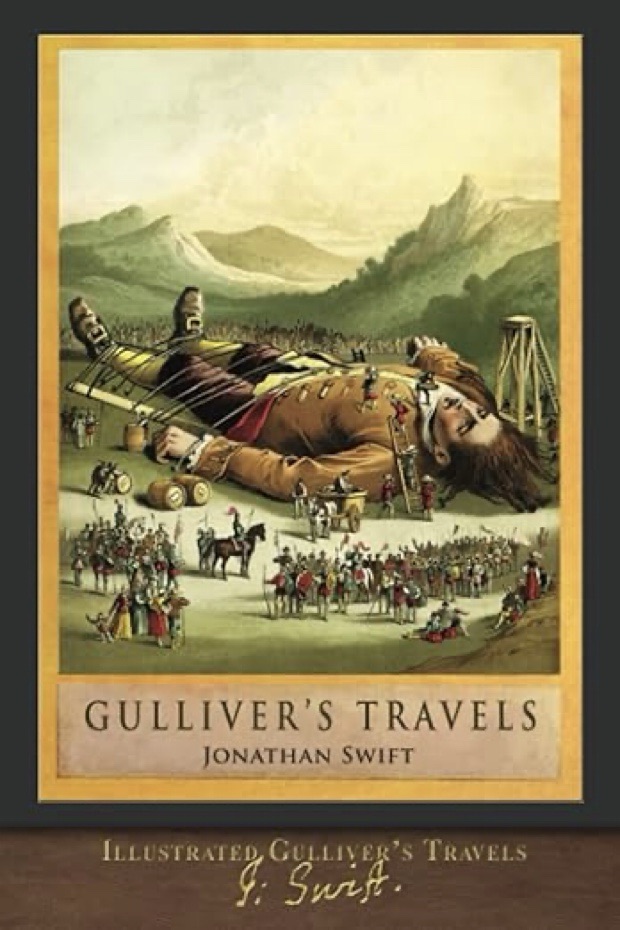
I managed to read this version (there are several) of the old parody and magic realism tale in its entirety today while being driven up to and back from the Escapade Huskimo dog-sledding team outfit- our first experience with this activity. It was far to warm and I felt sorry for the dogs who had to work very hard, although they were obviously happier running than when penned up.
The travels include a visit to Lilliputin, a land of very small people, one to Brobdingnag, a land of giants, a flying island of Laputa, and to the country of the Houyhnhnms. Each of these has humanoids who communicate with the Englishman. Along the way he tries to explain the English customs of warfare, amassing money, and laws, seemingly to gradually realize how irrational all of these were.
This may be one of the earlier classic comedies of the genre of magic realism, which is possibly why such terms as Lilliputian and Yahoo, to describe a silly person, remain part of out standard language.
This may be one of the earlier classic comedies of the genre of magic realism, which is possibly why such terms as Lilliputian and Yahoo, to describe a silly person, remain part of our standard language.
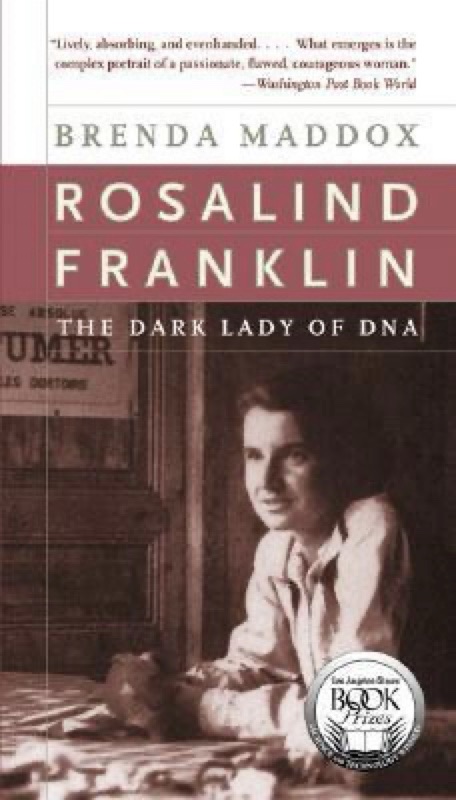
This biography of a Brit by a Brit is on the list for our book club next month; I don’t recall who got it there. I was very familiar with the character, having enjoyed the fictionalized version of her short life in Marie Bennett ‘s Her Hidden Genius, where she is portrayed as having been cheated out of fame and a Nobel Prize by misogynist undeserving James Watson, Francis Crick, and Maurice Wilkins. This very detailed biography certainly confirms that viewpoint. The fierce competition in science is hardly new, and I have experienced this as well, on an obviously much less important scale. (My first major research paper was sent for review to the two people whose earlier report I was directly refuting). Sometimes professional jealousy overpowers or interferes with good science.
There is no doubt that Roselind Franklin was brilliant, but also “very attractive, very bright, very impatient, and very opinionated.” Prickly and difficult would also seem to apply.There is also little doubt that had Watson and Crick not basically used her data without acknowledgment that she or someone else would have solved the mystery of the structure of DNA within a few months in 1953, although that structure was not accepted by all in the field as correct for years because of other possibilities. It is a tribute to her integrity that she never expressed any complaints about being excluded; her focus was always on science, not personal glory. She remained on friendly terms with Watson and Crick right up th her death at age 37 in 1958. That was almost certainly related to her careless disregard for radiation exposure. In keeping with the usual practice at that time, she was never informed about the hopeless prognosis and it was never discussed, at least in any detail.
The book adequately documents that breakthroughs in science are almost always collaborative or competitive, not due to the brilliance of any one individual. (The theory of relativity may be a rare exception.)
The praise for this book is ambiguous at best. On the back cover, it is variously described as “a meticulous biography”, a “balanced biography”, and “coolly trenchant” which could well be interpreted as damming it with faint praise. I do not claim to understand (nor feel a need to understand) more than a small portion of the science presented in great detail, to appreciate the very human story of a wrong that should be corrected. I doubt that I am alone in this. The reviews seem to confirm that others feel the same way as I do about this book- it is needlessly detailed and erudite, insuring a very limited audience of basic scientists.
Of the three people who won the Nobel prize in 1962, the young James Watson (still alive at 95) seems to be the leader in snubbing Franklin’s contribution, never even mentioning her in his Nobel address, and minimizing her vital role in his best-selling book The Double Helix.
In contrast, the fictionalized story Her Hidden Genius, delivers much the same message in a very readable and even entertaining way. There is little to be gained in reading this book that cannot be more easily and enjoyably obtained from the fictional version.