In my preteens and early teens I was a farm hand. Then I was briefly an orderly in a general hospital and later at a psychiatric hospital. I worked à an extern at a city run nursing home and at a psychiatric hospital during medical school training. After graduation with a M.D. I worked as an internist, a gastroenterologist, and a hepatologist until I retired.
Author: thepassionatereader
Retired medical specialist, avid fly fisher, bridge player, curler, bicyclist and reader. Dedicated secular humanist
TRUE confessions from the Ninth Concession. Dan Needles. 2017. 230 pages. (Paperback.)
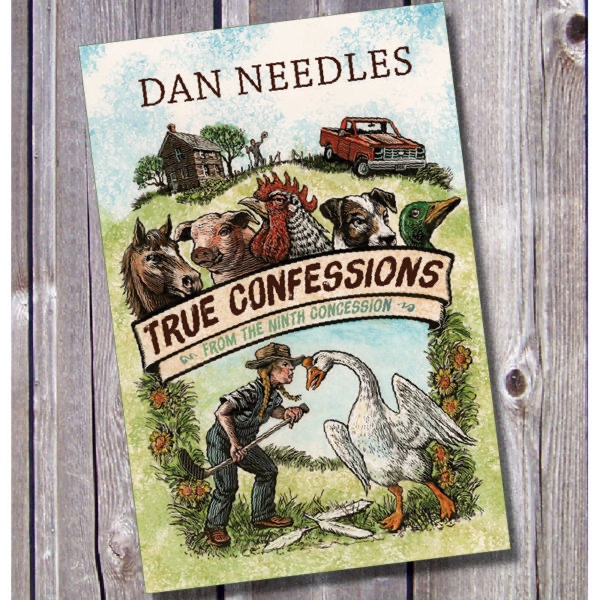
I don’t know how I missed this gem earlier, as Dan Needles is one of my favourite humour authors. I, my wife, and my parents all enjoyed his earlier books and plays featuring the fictional Wingfield Farm, and the town of Larkspur, in the equally fictitious Persephone Township. These were based, he reveals here, on his memories of spending summers on a farm in Nottawasaga Township while schooling in Toronto. I recall asking for one of his books in a London bookstore and being told that it would be in the Agriculture section!
In contrast, these 80 allegedly true short stories relate anecdotes from the author’s observations about rural life after he moved, at age thirty to an old farm house outside of Duntroon, not far from Collingwood, in 1977. This is only a short drive northeast from the farm where I grew up, and many towns, villages and townships he discusses are well known to me. This includes the Mount Forest Fur and Feather Show five miles from the Ghent farm, the Keady Livestock Market auction my father often took us to and Proton township where we visited my maternal relatives.
These musings about rural life were previously published in Harrowsmith or later ones in three other farm magazines. Although arranged in chronological order from June 1997 to March 2016, there is no need to read them in order, as each stands alone as a short fun read. They include discussion of a wide variety of topics, some serious and some hilarious. The menagerie of farm animals are attributed distinct endearing personalities that any farm youth could readily relate to: likewise the neighbours and the often antiquated farm equipment.
A couple of quotes will convey the quirky humour so unique to rural folks everywhere. After admitting that he could not predict weather very accurately: “Because I studied economics, I do have formal training into how to make incorrect predictions.”
“Pigs are a lot like teenagers. If something doesn’t suit them, they fight and kick and yell their heads off.”
The world of rural Ontario as described here now exists only in isolated small pockets, as big factory farms take over most of the arable land. Our loss, but we can and should preserve some of the helping community culture. Unfortunately, as Needles notes, they also tend to leave a hugely disproportionate carbon footprint. They also are almost exclusively white Christians of European descent and wary of other races and cultures. I never met an African American, Asian, Latino, or aboriginal Canadian until I moved to the city. Even Catholics were accepted somewhat reluctantly.
Perhaps in part because this revived so many wonderful nostalgic memories of my rural upbringing, I have to rate this book as
⭐️⭐️⭐️⭐️⭐️⭐️⭐️⭐️⭐️/10
Cam
Bloodbath Nation. Paul Auster. 2023. 147 pages (Hardcover.)

The New York author details the disastrous, unique, and growing consequences of a minority of American’s love of guns in this short pithy essay/book. The pagination cited above includes 10 completely blank pages and 33 pages of grainy black-and-white photographs that contribute no useful information.
After discussing his own relationship to guns in his youth in marksmanship, skeet shooting, and the secret shooting of his grandfather by his grandmother, he launches into the bigger picture. Much of the essential information is contained in the front cover blurb continued on the back cover. He delves into the history of the second amendment and asserts that the original meaning of the “right to bear arms” was clearly meant to apply to a government-controlled militia, contrary to the NRA, firearms industry and modern supreme court’s interpretation. He points out that much could be accomplished by enforcing existing regulations such as those that apply to interstate commerce, rather than trying to introduce new restrictions in a deeply divided Congress.
After comparing gun ownership to driving a car or smoking cigarettes, he notes: “…not every gun owner will use his gun to maim or kill himself or someone else. But people shoot other people because they have guns, and people commit suicide with guns because they have guns, and the more guns there are to be bought and the more people there are to buy them, the more people will kill themselves and others with guns. This is not a moral or political statement- it is a question of pure mathematics.” But that cannot be entirely true as it does not take into account multiple mitigating factors.
As a smug Canadian ex-hunter and marksman, I see no workable solution to our neighbour’s major ongoing folly, and am grateful that it has not spilled over the border.
⭐️⭐️⭐️⭐️⭐️⭐️/10.
Thanks, The New Yorker.
Five Little Indians. Michele Good. 2020. 10 hours, 43 minutes. (Audiobook.)
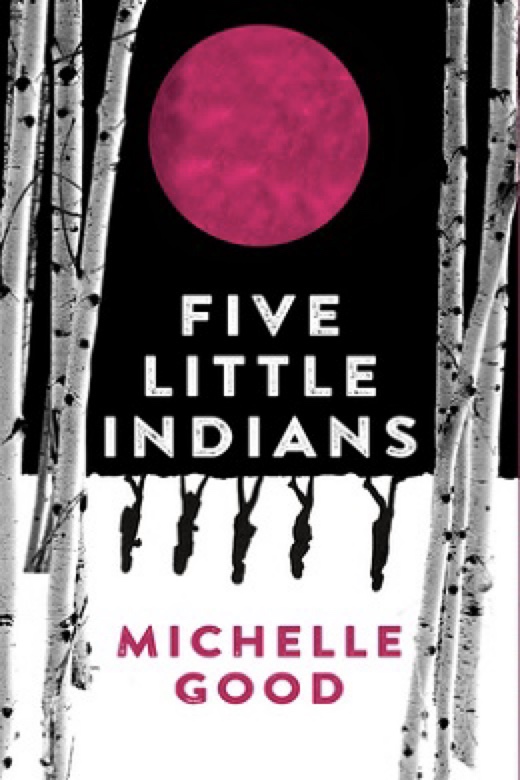
One of several novels about the shameful history of the treatment of aboriginal children in Canada’s residential schools, this one by a Saskatchewan Cree lawyer is easily confused with Sherman Alexie’s Ten Little Indians. But they are very different and this one is the darker one. (I only read reviews of Ten Little Indians.) This concerns the messed up lives of children escaping or released from a northern Vancouver Island residential school for aboriginals run by abusive Catholic staff. This is in what I take to be the 1960s although throughout the story, there is no date mentioned to anchor the tale to any era. One escapee working as a maid in notorious East Hastings Street in Vancouver leads a secret double life as a hooker and drug addict, and eventually commits suicide. Another serves a long sentence for beating up one of the cruel abusive priests.
I found it hard to keep track of the five characters in the title as there are many more little Indians that make an appearance. They all seem to be psychologically crippled by the physical, emotional, and sexual abuse at the hands of the priests and nuns running the school with the white legal authorities and RCMP providing support for the system. Stereotypically, no priests, nuns or teachers in the school are portrayed as showing any compassion or empathy, or any effort to understand the native culture.
The freed children, whether in Vancouver, Seattle, or Bigger, Saskatchewan are uniformly poor, working in menial and temporary jobs, and often breaking the law in order to survive or evade capture. There is little humour and the most admirable character is Clara’s huge adorable rescue cur.
There are allusions to late government efforts to provide compensation and restitution but nothing definitive is discussed.
Kenny, one of the escapees experiences pain in his liver from heavy drinking in spite of the fact that the human liver has no connections to the sensory nervous system. He also reminisces about his life while lying dead in a casket.
The merciful ending to this story is abrupt, without any warning to the reader.
The sad and continuing abusive treatment of our aboriginal kin deserves better characterization than this disjointed story provides.
⭐️⭐️⭐️/10
Things We Do In The Dark. Jennifer Hillier. 2022. 342 pages (Paperback.)
Things We Do In The Dark. Jennifer Hiller. 2022. 342 pages. (Paperback.)
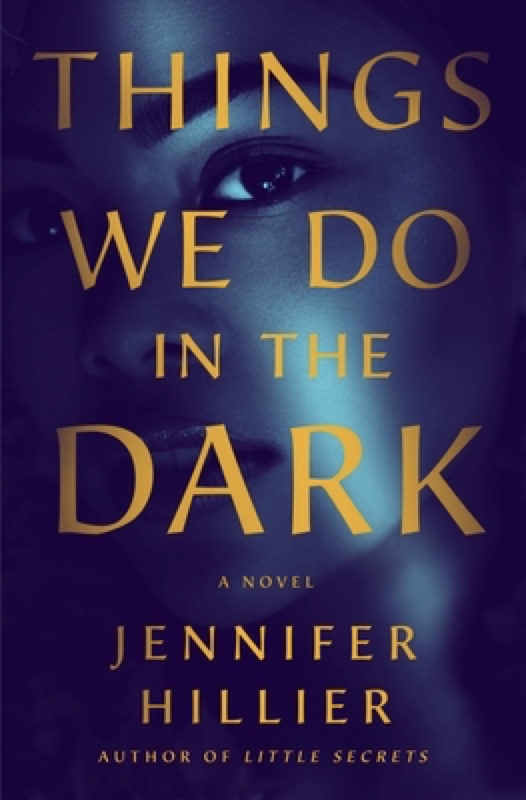
Murder mysteries are not in the top tier of my favourite genres of novels. But when I read the opening line of this one from an Oakville-based Filipino-Canadian, I thought I would enjoy it. “There’s a time and place for erect nipples, but the back of a Seattle police car definitely isn’t it.” The title is from the very popular fictional podcast of a black Toronto investigative journalist.
All the usual standard devices of the genre are here, including many time shifts, false leads, sexual violence, gangs, booze, drugs, nosy self-appointed investigators, multiple murders and deaths that appear to be accidental and unconnected but aren’t, false identities and clueless police. The author makes good use of her Filipino identity and knowledge of that culture to star two down-on-their-luck Filipino teenage girls working in a sleazy strip tease joint/bordello in Toronto, and the Filipino trophy fourth wife of an aging TV star comedian in Seattle, accused of his murder. The eight years the author lived in Seattle helps enlighten that connection. Novelists naturally tend to set their stories in places they are familiar with, though possibly less so since it became so easy to research unfamiliar sites online. It is not hard for readers to deduce the connection between the Toronto and Seattle murders by about page 115, only to be proven wrong 60 pages later.
There are no likeable characters except for a very caring social worker, an efficient crown attorney, and a female detective. The main characters are all violent pedophiles, criminals, psychopaths or serial killers. None are as gruesomely evil as Hannibal Lecter in The Silence of the Lambs but there are more of them than in that Thomas Harris classic.
The plot is exceedingly complex with as many unpredictable sudden twists and turns as the flight path of an outhouse fly.
There is one unexplained occurrence that readers are apparently not supposed to pick up on. How did a Seattle woman on bail for suspected murder, wearing an unremovable GPS-tracking ankle bracelet, even with fake ID, manage to cross the border to Vancouver for a round trip to Ontario to retrieve the ashes of her doppelgänger?
One enigmatic quote: “Polite rudeness is a difficult skill to master.”
The number of highly unlikely coincidences and twists dampened the enjoyment of the story for this realist, although I give the author top marks for her creative imagination that ties all of the loose ends together by the end.
Enough murder mystery for the year for me.
⭐️⭐️⭐️⭐️/10
Thanks, Alana.
Waco Rising. Kevin Cook. 2023. 229 pages. (Hardcover.)

Of several recent books documenting the fiasco at Waco in 1993, I chose this one for no particular reason. The first 56 pages is an education of readers about the history of the Branch Davidians, best known for the lethal confrontations with federal law enforcement agencies at their compound, Mount Carmel, outside of Waco, Texas. A worldwide offshoot of the Seventh Day Adventists, started in 1935, there were 144,000 members twenty years later. Over the ensuing years there were numerous internal conflicts, some of them violent, as various leaders tried to claim authority to set rules and to interpret biblical prophesies, particularly from the Book Of Revelation. The enigmatic Seven Seals in Revelations figures prominently in subsequent story. Constants included leaders who indulged in polygamy and pedophilia, a belief in the imminent second coming of Christ, and licentious indulgent lifestyles for the self-appointed prophetic bosses. David Koresh, the last undisputed prophet/leader married preteens, nullified marriages of Davidian couples, and copulated indiscriminately and openly with the ex-wives, fathering at least a dozen children. He indulged freely in booze and tobacco while prohibiting their use by his followers. During the initial firefight on February 28th, five or six Davidians and four federal agents were killed.
One of the followers explained their actions: “What if you lived two thousand years ago. Your’e a fisherman. Jesus walks up to you and says ‘Follow me’. That’s who we were.” They were also heavily armed with illegal military-grade automatic weapons and had Alaskan malamute dogs guarding the compound.
Australian Peter Gent, one of the group shot by the Alcohol, Tobacco and Firearms agents on the first day, Feb 28, may have been a remote relative of mine, as the h in Ghent was a recent addition, and there are relatives in Australia. After the cease fire and stalemate of that first day when five Davidians and four ATF agents were killed, the FBI took over the government side of the conflict and a wounded David Koresh pleaded and preached on national media outlets from within the compound. A deal to end the standoff by agreeing to let Koresh address the nation on radio, in return for surrender, failed when Koresh, after his message had been aired, reneged, citing a direct command from God to wait. He thereby lost a lot of good PR he had gained with his talk. He did, however, release some children, one or two at a time and in later negotiations some adults also surrendered to authorities. On April 19th, after a fifty one day siege, the final conflagration began with tanks ramming the building and throwing tear gas canisters in and a few Davidians escaping. Seventy six of them died as the tinderbox building went up in flames. The fire was almost certainly set by the Davidians as a suicidal fulfillment of what they believed was prophesies from the Bible. Several Davidians inside committed murder-suicide, including Koresh.
The government agencies were rightly criticized retrospectively for their fatal excessive use of force, finally assaulting the compound with tanks and grenades when they could have arrested Koresh any time he left the compound unarmed to go to Waco’s Walmart or went walking or jogging around it. The several subsequent later investigations were widely criticized as a coverup. In some respects they probably were.
Although most radical cult followers are thought of by educated sceptics like me as gullible, poorly educated people looking for some meaning in their lives, education was seemingly no protection from the allure of this radical group. Davidians included at least two Harvard law school graduates, a university professor, a man with a Ph.D. in comparative religion from the University of Hawaii, a physicist from Australia and other university graduates from around the world. The man with the Ph.D. in religion later became Koresh’s negotiator with FBI agents.
The author concentrates on the ineptitude of the FBI handling of the crisis and the consequences leading directly to Tim McVeigh’s bombing in Oklahoma City, and the modern rise of radical right wing conspiracy theorists such as Alex Jones of now defunct Info Wars infamy, and the prophet Q of QAnon. And he points out the danger of increasingly militarized law enforcement and of the also heavily armed conspiracy theorists. The connections of the Branch Davidian cult mentality to the Proud Boys, The Three Percenters, survivalists, and the January 6th 2021 Capital rioters are hard to ignore and the remaining Branch Davidians remain active in Waco. It would be very risky to smugly think that such groups could not survive in Canada- just consider Jordan Peterson’s admirers.
For me, an equally important lesson in this sad tale is the ease with which even well educated otherwise rational people can be duped into believing really whacky doctrines when they are dressed up as religious dogma. As scientific rationality gradually highjacked my brain in middle life, I began to doubt the Billy Graham-style Christian evangelism I had been taught as a youth. To reduce the resulting cognitive dissonance, out went the myths of creation, the virgin birth, the resurrection, the Second Coming of Christ, and heaven and hell. (I never did believe the cannibalistic Doctrine of Transubstantiation in which fresh bread and red wine become 2000 year old stale flesh and blood.) In came a vague sense of an obligation to enjoy life and to be useful here on earth, freedom to explore any and all new ideas, and the peace of mind of expecting to go nowhere- neither heaven nor hell.
This is not a fun read, but an incredibly important commentary on the scary times we live in and a warning that we all need to heed.
9/10.
Thanks, The New Yorker.
Are you a leader or a follower?
I sometimes lead, such as when I am discussing a book I love at our book club meeting. But my inclination is to hang back and listen to what others have to say before doing anything. I follow m’y own instincts rather than the mainstream, so in that sense I guess I am not a follower. and when I am in mixed company, I deliberately try to hang back and be quiet lest I be seen to dominate the conversation.
Of Mice And Men. John Steinbeck. 1937. 107 pages. (Paperback)
Another old classic that I had not read is coming up for discussion at our book club. This very short novel is set in deep depression era central California. The false promise of good jobs in agriculture there sets the stage for Steinbeck’s later classic The Grapes of Wrath, that I have read. There are no dates but it is obviously in the depths of the Great Depression. George and his mentally challenged constant companion, Lennie, whom he cares for, seek serial menial labor jobs harvesting crops. George, Lennie and a loner named Candy, also an itinerant day labourer meet in the bunkhouse at one of the camps, and dream of buying their own ranch to raise rabbits for Lennie to pet, chickens, and a cow or pig or two. Lennie is mentally probably an imbecile in what we were taught in psychiatry as the spectrum of mental deficiencies from idiot to imbecile to moron, based on measured IQ. (This is now a discredited classification that I still think of as useful shorthand.) He is huge and strong, capable of hard manual labour, but obsessed with petting anything soft, like a mouse. But he does not know his own strength and kills his pets by stroking them and caressing them, including the mice in the title, which obviously derives from Robbie Burns poem “To A Mouse.” I will not divulge his ultimate fate that this obsession leads to.
A graphic depiction of the poverty and chaos of the Great Depression with the colourful illiterate itinerants and their clipped lingo, this is a beautifully written tragedy and a joy to read.
Thanks, Din.
⭐️⭐️⭐️⭐️⭐️⭐️⭐️
How Did I Get Here? Bruce McCall. 2020. 270 pages (Hardcover)
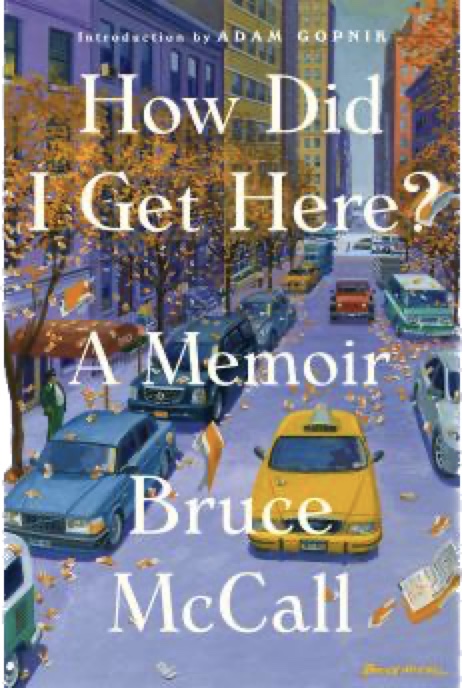
A laudatory tribute in The New Yorker, one of his many employers, to the late artist, humorist and cartoonist who died two weeks ago brought my attention to this autobiography. An eccentric, insecure, misfit in a large dysfunctional family in Simcoe, Ontario, and later in Toronto and Windsor, McCall spent his entire 1940s unhappy childhood doodling satirical and comical drawings as an escape. His mother was an alcoholic and his father an aloof cold absentee most of the time. His childhood, except for the dysfunctional family, reminded me of my 9 year old grandson, who spends hours sketching funny scenes on any available surface. I may be biased, but I think he has great talent and potential.
After unhappy lonely schooling in Toronto and Windsor, and failed attempts to establish a car magazine in Canada, and fanatically enthralled with cars and racing, McCall found menial jobs in advertising for various automotive companies. First this was in 1960’s thriving and then derelict Detroit and later in New York and Frankfurt, Germany, (working for Mercedes-Benz). Never satisfied and never contented anywhere he settled, with the help of friends, he eventually found meaningful work in the 1970’s as an illustrator, cartoonist, satirist, and writer for various publications, first with National Lampoon and most notably, The New Yorker. His stint of writing for SNL in 1976 was very brief. I loved his covers (he produced a total of 77) for The New Yorker and some but not all of the more than 100 satirical “Shouts and Murmurs” pieces he wrote for them. Some of his cartoons are also very entertaining.
I loved the dry humour and satire in the book, and grant that McCall had considerable writing talent with unique humour and satire. One man’s friendship is said to be “as sincere as the mortician’s handshake.” There is good insight into the complex world of ad agencies to complement the information provided by Terry O’Reilly”s Under the Influence” show on CBC radio but some of the distinctions of differing jobs in that field were lost on me.
Some good quotes:
“I quickly realized that I wasn’t cut out to be an adult; anxieties I had been grooming since I first learned to worry rattled me.”
“My airbrush learning curve was a straight horizontal line.”
He described the 78 Ford Fairmont station-wagon’s bench front seat “as ergonomic as an electric chair.”
Now the faults. There is a negativity to much of the description, such as the personalities of many colleagues and the lack of nightlife in his rural Massachusetts’ home. This extends to his false modesty and self-deprecation, attributing all of his accomplishments to others, which does not ring completely true and is annoying. It could be read as the exact opposite- a bloviating “Look what I’ve accomplished in spite of my awful background.”
McCall‘s constant distain for Canadian culture irritated me. He describes us as “breeding what I saw as a wallflower mentality, and a bland tolerance for mediocracy.” He never criticizes America’s polarized politics, gun culture, and war mongering. In fact, he never mentions U.S. politics at all.
I have expanded my star rating of books from a scale of 0-5, to one of 0-10 to allow for more nuance. I give this one ⭐️⭐️⭐️.
The Ant Who Needed A Transplant. Dr. Bill Wall. 2023

Full disclosure. The surgeon and author of this touching, beautifully illustrated children’s story is my medical school classmate, a friend, and a collaborator that I worked closely with for more than 30 years. You would think that in retirement Canada’s pioneer liver transplant surgeon would write the definitive textbook on that very complex procedure, but no- he wrote this imaginative children’s book to increase understanding of the need for organ donors instead. Papa ant finds that he cannot climb to the top of the anthill to toboggan with his family because of a failing heart and is told by the ant surgeon that he needs a transplant. After an anxious wait, the relatives of an ant who was killed by a falling branch donate his heart and the ant surgeon in the ant hospital preforms a successful transplant, restoring him to health. The ant family expresses their deep appreciation in a card to the donor’s wife and family, sent anonymously via the surgeon.
This is a simple, short, ingenious story that children will easily understand and enjoy. Due to the philanthropy of another colleague and friend, it is already in more than 4000 Ontario elementary schools, less than a month after it was published.
⭐️⭐️⭐️⭐️⭐️
Thanks, Bill, Diane, and Cal.
What is your career plan?
My working career is over. My aims now are to stay vertical and ventilating as long as possible and to be of as much use to friends and relatives as possible for as long as possible.
The Apprenticeship of Duddy Kravitz. Mordecai Richler. 1949. 13 hours, 12 minutes. (Ebook)
The fictitious protagonist of this story is a mischievous Jewish boy born in 1932 in downtown Montreal. From the first paragraph it is clear that he is not a conformist ordinary school boy. In Part I, heavy-drinking Mr. MacPherson, a teacher at the downtown Montreal Jewish school, finally becomes so enraged by Duddy’s antics that he breaks his personal principle to avoid corporal punishment of the unruly teens and applies the strap to Duddy. This revelation just sets the scene for what is to come.
An ambitious scheming dreamer, there is no doubt that Duddy, had he been born later when every personality quirk has become medicalized, would have been labelled as having ADHD, and perhaps as being on the autism spectrum. And as the story progresses, with his many enterprises thriving and then failing, one could also see Duddy as bipolar, alternately manically scurrying about chasing women or lying in bed for days with lucid disconnected dark dreams, thinking of suicide. A manipulative liar with laughable schemes to make money, he doesn’t hesitate to deceive friends and business partners alike. He always seems to have enough money for cigarettes and lots of booze to blot out his feelings of despair and dope his friends and relatives into supporting his schemes and lending him money. When all of his businesses fail, at one point, Duddy declares bankruptcy and resorts to driving a taxi for his father, all before he turns twenty. He sets an epileptic friend up as a driver for one of his businesses, with predictable results.
Usually just one step ahead of creditors, he drives taxi, sells illegally imported pinball machines, delves into real estate, dreams of developing a resort, produces and distributes movies made from camera recording of bar mitzvahs and weddings, and buys and sells scrap metal. He gets mixed up with an American heroin dealer and towards the end of the story, forges a cheque to finally purchase his dream resort lake property. To add to the diagnoses in the modern DSM -IV diagnoses that I discussed above, he would certainly qualify for the label of psychopathic personality disorder, but like many psychopaths, he can turn on the charm to get what he wants. As the author portrays him he is made to seem likeable to the readers.
Most of the story is concentrated on Duddy’s late teen exploits as a hustler and con artist
The picture of the striving Jewish families of the 1940s Montreal and of that city’s unique culture is interesting and detailed even though most of the families are depicted as highly dysfunctional. There is more than a hint of stereotyping Jews as money obsessed hard bargainers in all of their enterprises. There may be a grain of truth in this in that era; as a preteen, I recall the Jewish man who visited the farm to bicker over the price of scrap metal he was collecting. For the time when the book was first published the frank discussion of sensitive sexual issues and the loose mores must have been a bit avant garde. The foul language is confined to the conversations of the characters the reader would expect it from. The writing is mostly in short terse sentences and, like most of the conversations, often incorporates quirky humorous turns. It is as though the author is leading readers into the short attention span ways of the protagonist.
I quite enjoyed this old Canadian classic that had somehow previously escaped my attention.
⭐️⭐️⭐️
Thanks, Williams Court Book Club II.
What do you do to be involved in the community?
My community is the whole world, although I no longer travel much. I connect with local people for bridge games and some dining out, keep in touch with a host of friends on four continents on Facebook, and volunteer at a curling club in the winter and at an innovative regenerative farming project in the summer. I belong to a group of old men who meet weekly on Zoom to solve all of the world’s problems in one hour!
I always vote. One shouldn’t complain about what our politicians are up to if you haven’t voted. I research my choices carefully, but I like to throw the pre-election pollsters for a loop by telling them I will vote for the Communist Party candidate or the one from the Marihuana party. In the past I have asked the first candidate to knock on my door to put a sign on my lawn as it acts like pest detergent for the others that come by.
Do you vote in political elections?
G-man. Beverly Gage. 2022. 755 pages.

In this massive tome, a Yale professor of American history outlines the complicated life history of J. Edgar Hoover, the quintessential government man and Director of the FBI from 1924 at age 29 until his death in 1972. Her opus is even longer than the above pagination would suggest as the hardcover edition I read is set in a small font on 6” x 9” pages.
Hoover was the prototype Washington insider. Born there, he was educated at it’s elite, segregated, all white Christian schools, then at George Washington University where he led the Kappa Alpha fraternity which supported segregation and the KKK. He graduated in 1917, then worked for four years cataloging and filing at the Library of Congress. Thereafter that experience was used in the Justice Department where he quickly rose to the deputy and then full director positions at the new FBI. Obsessed with cataloging and files, he kept files on and prosecuted labor leaders and early on organized the secret detention and deportation of Germans. His illegal roundups and deportations included radicals and communists. He joined the Free Masons and admired the right-wing John Birch Society.
The remit of the FBI expanded in 1934 under Roosevelt, and it was involved in the capture of the notorious gangster John Dillinger. Killings and veiled authorization to torture captured suspects and witnesses and deny them legal representation became a secret but common modus operandi. Hoover developed a PR initiative with Hollywood moguls and newspaper editors, offering tours of HQ to offset his investigation of Hollywood stars and media types as communists. By1938 the FBI had secret authorization to collect information on American Nazis, Communists and fascists, with a fuzzy alliance with the ACLU and NAACP that gave it the facade of being apolitical. During WWII, there was a fourfold increase in personnel with extensive wiretapping and spying on innocent citizens that included Eleanor Roosevelt whose hotel room was bugged in an effort to discredit her liberal influence. A file on her alleged dalliances during her husband’s presidency was maintained.
In 1945 Hoovers authority was challenged when president Truman replaced Wild Bill Donovan’s Office Of Strategic Services for foreign intelligence, losing to the new CIA, but he managed to limit the later’s scope to foreign affairs, thus maintaining total control over domestic security services. After WWII, much of the focus of the FBI was on the perceived communist threat with exposure of of senior government men and Hollywood moguls as Soviet agents, trying to outdo the exaggerations of the danger to national security of flamboyant Senator Eugene McCarthy. He saw communists, Nazis, and insurrectionists, real or imagined, everywhere. He claimed to expose many senior government officials as Soviet agents with some success, with outing of Alger Hiss at the State Department, and collected information on Kim Philby, Donald McLean, Guy Burgess, and Julius and Ethel Rosenberg, often using secret and illegal means of obtaining the evidence.
The FBI also provided minimal results in a less-than-enthusiastic attempt to stop southern lynching and enforce voting rights because doing more conflicted with Hoover’s racism. But the failure of these efforts was also abetted by racist southern Democrats, police and judges.
Agents also provided duplicitous cooperation with the NAACP in the late 1950s southern integration dictates following the Brown vs. Board of Education decision, playing both sides, genuinely attempting to enforce federal law while trying to remain on friendly terms with southern segregationists. Hoover’s book, Masters of Deceit, an anticommunist manifesto was touted by William F. Buckley, the John Birch Society, and Barry Goldwater. Wild extremist conspiracy theories are not new, as amply documented by the Birch Society followers that Hoover had to reluctantly distance himself from in the early 60s. His two-faced endorsement of Johnson’s Civil Right’s Bill is typical of the ultimate political survivor and blackmailer. While seemingly enforcing the provisions for Johnson who had waived the mandatory retirement age for him, his racist misogynist conservatism ensured that he did as little as was politically necessary.
Hoover was overly antagonistic to to the Kennedy administration after supporting Nixon in the 1960 presidential campaign but had enough dirt on the Kennedy clan to ensure that they would not fire him. The confusing role of the FBI in 1962 with the CIA and organized crime bosses Robert Maheu, and Sam Giancana to assassinate Fidel Castro, and their support for the Bay of Pigs invasion of Cuba was hidden from Hoover by his own agents at the time.
In 1963 Hoover publicly labelled Dr. Martin Luther King as “ the most dangerous Negro in America”, wiretapped his home, office, and numerous hotel rooms where he had many orgies.
Throughout his career he maintained rigid control over every aspect of the all male agent’s lives including work attire, hair length and much of their social lives. He was constantly at loggerheads with his younger boss, the Attorney General Bobby Kennedy in the Kennedy administration over these dictates. A Nixon pal and Johnson neighbour, he maintained his job by obtaining secret secure information on John Kennedy’s many affairs, some with women associated with gangsters.
In 1965 an aging Hoover could only think of the New Left antiwar students, the mostly white Students For A Democratic Society and Stokely Carmichael’s mostly black Student Nonviolent Coordinating Committee as insurrectionist communists, and investigated them as subversives a la 1950’s McCarthy hearings. Later he targeted the Black Panthers, the only avowed Marxist group, with the same invective and subjected them to surveillance and repression with anonymous letters, press releases, bugging and outright lies to the media.
In later years, rising conflict with his ally Richard Nixon in his presidency centred on when he would retire and who would replace him. But Hoover also had the upper hand here as the master blackmailer, to remain in power and Nixon could not bring himself to fire his pal. He died suddenly while still in office in 1974. A whole chapter is devoted to the accolades of politicians, conservative allies and hypocritical liberal opponents alike after he died. This reminded me of Garrison Keilor’s humorous quip: “They say such kind things about people at their funerals that I am sorry that I will miss mine by a few days.”
During his entire his 44 years as Director the entire FBI maintained a misogynist and racist stance with women and blacks employed only in low ranking menial jobs. He also targeted gays and atheists even though he was himself almost certainly a closet gay, living his whole adult life with his Associate Director and constant companion, Clyde Tolson. It is true that in the past, gays were often at risk for blackmail by foreign agents, a phenomenon that fortunately has largely disappeared. But throughout history to the present day the most vehemently homophobic men, such as Hoover, are often themselves closet gays, and Hoover was one the most outspoken homophobic men of the century.
One remembers history more vividly if one has lived through it. I lived in the U.S. for three years, under three presidents- you can guess the years- and was acutely aware of the turmoil in their politics at that time. The atmosphere in New Haven where I lived and studied, in the aftermath of the murder trial of the Black Panther national chairman Bobby Seales there was tense, with lots of protests and violence and made me pay more attention to politics than I would have otherwise. But the account in this book is very different from what I recall in the news at the time, and undoubtedly more accurate. There is little doubt that if Hoover had been born in 1965 instead of 1895, he would now be an ardent Trump supporter.
This detailed scholarly dry account is very informative and provides important lessons for the current era, even though it is very American-centric. It is also, like this review, a bit chronologically disjointed. But I hope my sketchy review does not deter people who like history from reading it.
⭐️⭐️⭐️⭐️
Thanks, The New Yorker.
Have you ever been camping?
Many times. Mostly in northern Ontario at fishing camps or bicycling.
The Berlin Girl. Mandy Robotham. 2020. 389 pages ((Hardcover)
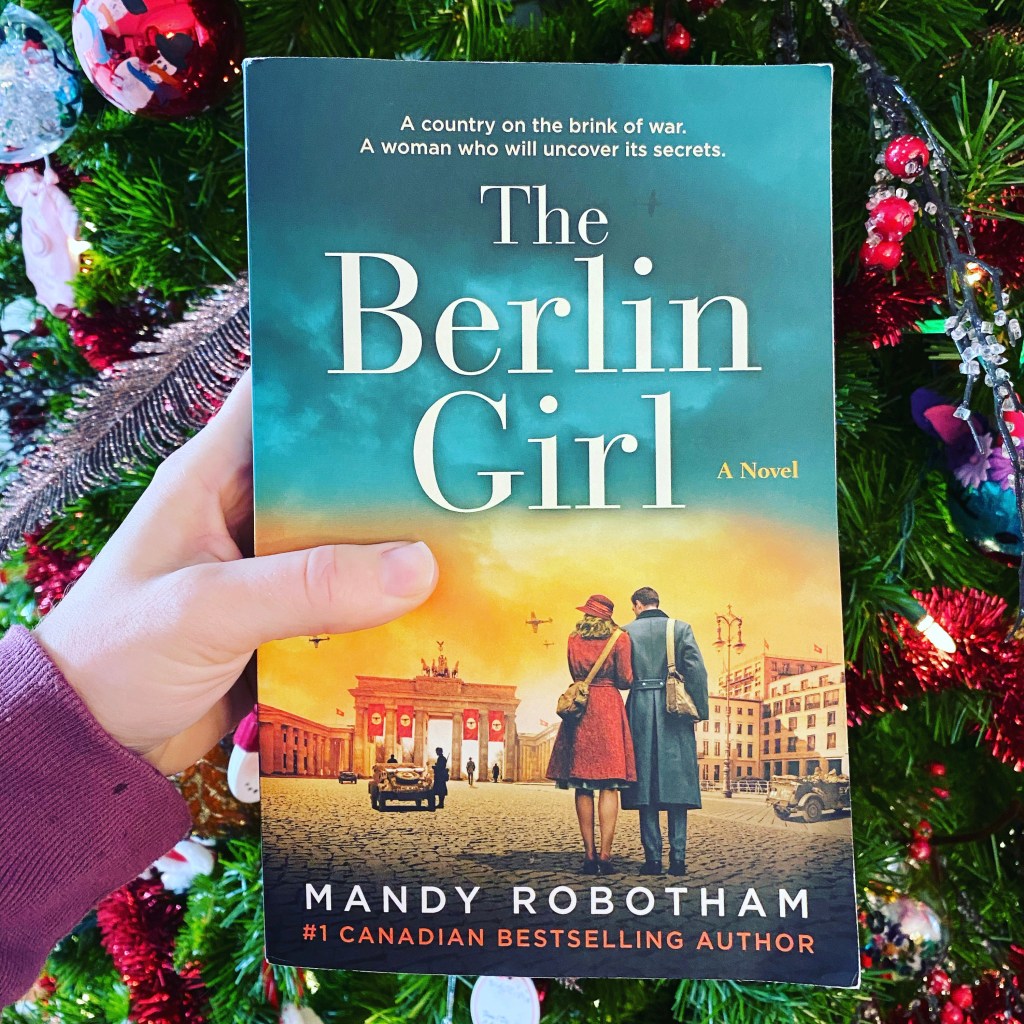
This third novel by the British midwife converted to full time writer begins in July 1938 and 57 chapters later ends a WWII begins. postscripts detail the postwar lives of the main characters.
British foreign correspondent for The Chronicle, who becomes part time detective, Georgie Young in Berlin relates the details of the city and the buildup to the war as the rest of the world ignores her warnings and documentation of Nazi atrocities in fifty seven straightforward, numbered and dated chapters. Among the most graphic details of Nazi horrors, is the description of Kristallnacht, (the night of broken glass, November 10th, 1938) when a coordinated Nazi roundup of Jews, the disabled, homosexuals, and Jehovah Witnesses should have alerted the rest of the world to their depth of their debauchery.
As the story progresses, the adventures become less and less realistic, but still gripping. Many chance encounters and harrowing escapes seem designed to hold the reader’s attention like a cheap spy novel, rather than as anything that could possibly happen. This includes the eventual romance of two of the rival British foreign correspondents posted to Berlin. I
The writing is certainly engaging and the plot is complex but not hard to follow. There are hints of support for early feminism in the misogynist world of journalism and the heavy drinking for which the crowd of journalists is known is not ignored. Sexual innuendo abounds as Nazi officials proudly display their foreign conquests, but there is no graphic pornography.
Among the memorable quotes is this:
“Hence the need for a foreign press, and the hundreds of underground pamphlets and newspapers pushing their heads up like daisies through the manure bed of propaganda.”
In the vast number of historical novels based on WWII, this is one of the better ones I have read, perhaps on a par with Kristen Hannah’s The Nightingale. But my appetite for this specific genre is dwindling.
⭐️⭐️⭐️
I have no one to thank for recommending this book to me, as no one did. When I sent a draft off this review to my wife for comments and corrections, as I usually do before posting, she pointed out that the book she had actually recommended was titled The Girl From Berlin-same genre, different author, different plot, slightly different time frame, similar theme. My mistake.
What topics do you like to discuss?
It largely depends on who I am conversing with but I enjoy discussing current affairs, anything related to science, and history. We are told to avoid discussion of politics, sex, and religion with people we do not know well, but those are never off the table if someone else introduces them.
Risks
Describe a risk you took that you do not regret.
When I left a secure position as an associate professor at Western, after being denied a promotion to full professor, I had concerns about my future as a private practitioner dedicated solely to hepatology. But my research, teaching, and patient care flourished without the restrictions of university and hospital politics, And it proved at least as remunerative as practice within academia without all the stress and boring committee meetings. No regrets.
Long Way Down. Jason Reynolds. 2017. Approx 180 pages (no numbers to the pages)
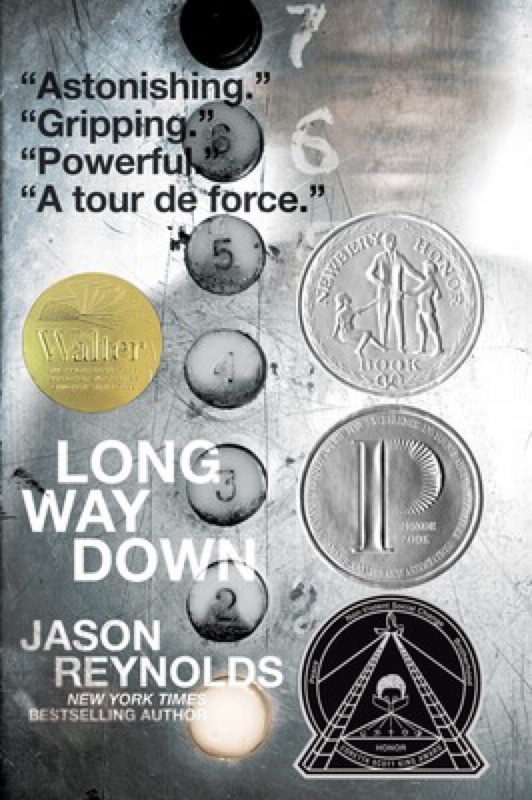
I am thrilled that all four of my grandchildren have become avid readers, so when the 12 year old suggested this book, said to be for “14 and up”, I felt I owed him the courtesy to check it out. I expected something light and fluffy, not a dark graphic novel composed entirely of cartoons set in a black ghetto in an unidentified city.
The loose plot is of one boy in the world of street gangs warring over territory for drug dealing and includes a lot of street gang lingo, shootings, and revenge. It realistically includes the broken families and lawlessness of the setting. But it also includes some magic as the lead character plans to revenge the shooting of his older brother, uncle and father by talking to them for advice.
The artistry is more like graffiti than anything closely attached to the plot, but that is probably intentional. All in all, a dark but interesting and very uniquely American three hour read.
⭐️⭐️⭐️
Thanks, Kiran.
 The Passionate Reader