Which animal would you compare yourself to and why?
An eagle. I will eat almost any food on offer, and I love to wander aimlessly, though on the ground, not in the sky.
Which animal would you compare yourself to and why?
An eagle. I will eat almost any food on offer, and I love to wander aimlessly, though on the ground, not in the sky.

I will not reveal any of the details of the extremely complex plot which is nevertheless easy to follow and beautifully and completely integrated with no loose ends but lots of surprises. There are strong themes of feminism and the deeply embedded cultural gender inequality of the era that the author, with Elizabeth as her mouthpiece, points out in many everyday situations and conversations, and some episodes of overt violence against women. Men appropriate women’s research findings as their discoveries and are anxious to keep women in the home, cooking and producing babies. The hypocrisy of the clergy and society at large is another recurring theme of the declared atheist Elizabeth. One clergyman muses in private that “The problem with being a minister was how many times a day he had to lie.”
I mentioned that this was a quirky story, but that hardly explains it; perhaps bizarre would be a better word for some of the happenings. Many are highly unrealistic bordering on magic but all are made to somehow seem possible, and the connections between some characters are tenuous at best. But what will make you forget the improbabilities is the pauses you will need to laugh at the hilarious descriptions. The unfortunate title may turn some potential readers away but you do not need any but the most basic knowledge of chemistry to love this tale.
There are so many great quotes that is difficult to choose only a few:
“a horrible man broke into the house and said if I didn’t give him all our money, he’d take the baby. I hadn’t slept or showered in four days, hadn’t combed my hair for at least a week, hadn’t sat down in I don’t know how long. So I said, ‘You want the baby? Here.’ ” She shifted Madeline to the other arm. “Never seen a grown man run so fast.”
“She supposed it took a certain type of skill to be able to say exactly the wrong thing at exactly the wrong time. Maybe that was a prerequisite for a position in Personnel.”
“Like most stupid people, Mr. Sloane wasn’t smart enough to know just how stupid he actually was.”
A few nit-picky errors: Sidewalks are made of concrete, not cement. Blood pressure and pulses are reflected in arteries, not veins but here veins pulse and “her blood pressure skipped through her veins like an unsecured fire hose.”
This is a fun read combining a complex imaginative plot, laugh-out-loud hilarity, and many surprisingly serious unusual observations about human interactions, life and death.
–
A close friend suggested that I was reading too much heavy nonfiction lately and recommended this quirky recently published debut novel, as did my wife. Set largely in fictional Common, California in the fifties and sixties, the central character is Elizabeth Zott, a brilliant and beautiful but very eccentric research chemist, trained at elite British and American universities, and for four years, a celebrity TV cooking show host. Her live-in star partner, Calvin Evans who was her research rival before hormonal chemistry bonded them together, their illegitimate precocious misfit daughter Mad, and their unrealistically intelligent mongrel dog named Six-Thirty complete the family.
⭐️⭐️⭐️⭐️
Thanks, Sheila and Floyd.
What is your middle name? Does it carry any special meaning/significance?
Neil. Never found out why my parents chose it, so no special meaning as far as I know.
What is one question you hate to be asked? Explain.
Why did you leave a full-time job with the university and hospital to establish a private practice dedicated to hepatology.? The reason was largely because I was frustrated in not getting promoted beyond Associate Professor, (hospital and university politics, personality conflicts, and my wife’s encouragement all played a part) but it was, in retrospect, the best career decision I ever made.
What experiences in life helped you grow the most?
I can’t identify any one single experience, but if forced to choose, I would say that it was probably my decision to give up on my first marriage.
The Connecticut-based journalist with The New Yorker expands and updates the extensive data from his article in the April, 2017 issue of this weekly. The prevalence of deafness and the resulting social isolation and misunderstandings are increasing, in part because of noise pollution everywhere.
The first part details the epidemiology, comparative anatomy, physiology and even evolution, with discussion of the different frequencies of sound waves audible to different species (about 20-20,000 hertz for humans), echolocation used by bats, owls, and some blind people and the asymmetric anatomy of owls’ ears assisting them to accurately pinpoint where a sound is coming from.
A chapter on tinnitus relates the peculiar remedies that have been advocated throughout history, most of them dubious at best, and none subjected to double-blind controlled trials, the gold standard for proof of efficacy. The very subjective nature of this common symptom was made obvious to me on reading about it. As I read this chapter, the very high-frequency ringing I had experienced years ago, but that my auditory cortex had finally learned to ignore returned to torment me for the last several days.
The hearing aid industry is marked by very effective lobbying by the audiologists to maintain strict licensing requirements, and exclude other entrepreneurial outfits, securing a massive monopoly with unconscionable profit margins.They also seldom do not recommend aids as they self-serve as both tester and treater, like a doctor prescribing drugs from the pharmacy he or she owns, without ever acknowledging any conflict of interest The author predicts that these alternative researchers will be able to mass market their very useful products by 2022. (Peculiarly the book’s Copyright is shown as 2019, but in the text the author relates an episode of his experience in 2020.) The “Beyond Conventional Hearing Aids” chapter showcases several of these devices but in places reads like a infomercial for Bose’s Hearphones.
Denial of the damage done by exposure to loud sounds is not limited to the military and industrialists but includes the whole music industry, and that damage can include such settings as busy city streets, sports venues and motor car racetracks. The Occupational Health and Safety legislation in the U.S. at both national and local levels set the threshold for protection far too high, and those standards are seldom enforced unless there are complaints.
The description of the intricate micro-infrastructure of the human hearing apparatus was impossible for me to visualize in three dimensions, even with my medical background. A page or two of reference sketches would have been helpful. There is no discussion of such phenomena as other sensory modalities compensating for hearing loss, synaesthesia where sensory inputs get crossed and people hear colours and see sounds, or taste sights. Or my granddaughter’s peculiar affliction of misophonia, where certain common sounds, such as hearing others walking on gravel triggers a panic attack or anger and aggression.
There is a lot of irrelevant detail in this rambling U.S.-centric book. E.g: “If you are traveling on the Red Line, get off at the stop closest to the Charles River, which is the stop for both the Mass. Eye and Ear and the Massachusetts General Hospital, and if you are early for an appointment at either place, you can hang out in the lobby of the Liberty Hotel, which is right between them. You can sit on a comfortable couch with a cup of coffee from the big urn over by the stairs and read the newspaper on your phone. Nice washrooms too.”
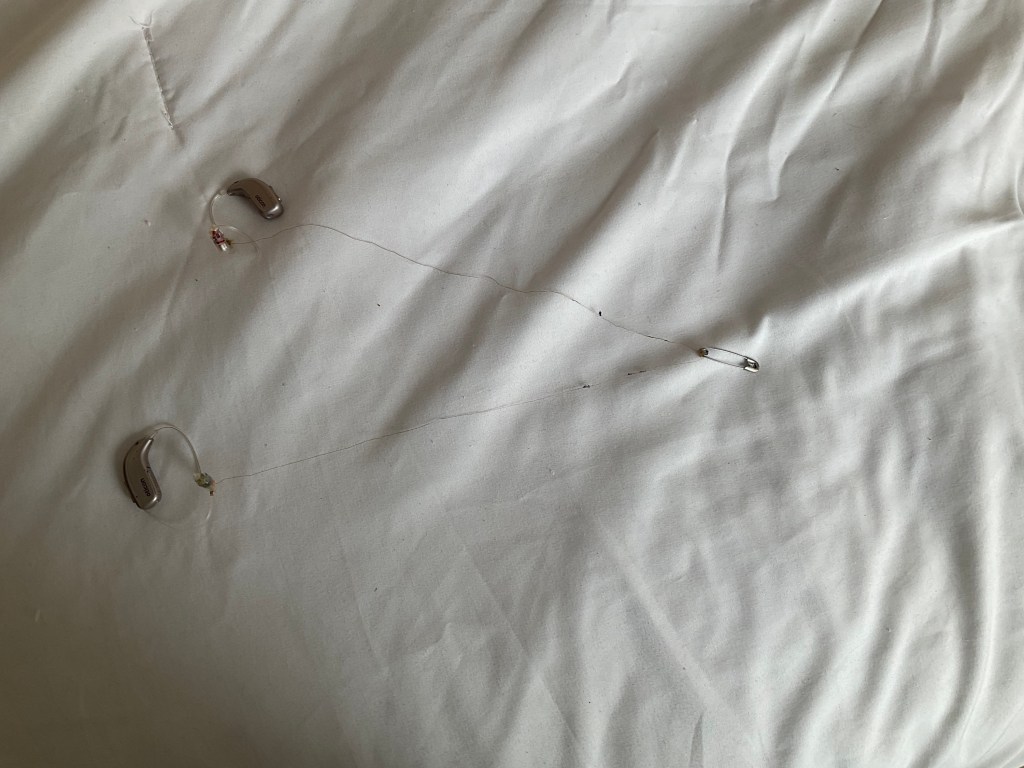
Now a brief note about my experience with hearing specialists and aids. At an unspecified age, 19 months ago, I went to a local audiology outfit, was tested and fitted with a pair of small Oticon rechargeable aids, for almost $6,000. When I asked the audiologist if improving my hearing would slow the progression of my subacute galloping brain rot, she said the evidence was iffy. I then lost one aid three times in six months- they often fall out when removing a mask, hat strap or sunglasses. So for $30, I bought a plastic cord that would attach then to my collar from the audiology shop: that fell apart within two weeks. So I devised my own anchor, a thin thread tied from the arms of the aids to a small safety pin I attach to my collar (photo attached). I have not not lost one since.
I cannot recommend this book. Most readers interested in this important subject would be better off to read the author’s more concise article in The New Yorker. Because it was a gift, I felt obliged to read to the end, but I’m not obliged to enjoy it. It will now be regifted.
⭐️⭐️
Thanks, Andra.
I flew to B.C. To visit dear friends who had moved there. The lady had terminal colon cancer but I was not sure how much she realized about her prognosis. As they said goodbyes at the airport, her husband said he would see me when he came east in the spring. As the lady gave me a big hug, she whispered in my ear “You don’t need to pretend that you will see me again.” I broke down and lied. “Of course I will.”
Based on extensive interviews with two generations of her fore-bearers and their friends, and extensive research, this historical account of an extended Polish Jewish family scattered around WWII Europe spans from early 1939 to 1947. It thus joins hundreds of what are labelled historical novels of WWII. But this one is, by all accounts, more embellished family history than novel-on the spectrum of History-Novel, it is definitely on the History side. As Naziism grips more and more of Europe, the members of the family become scattered even further around the globe from Siberia to Africa, Palestine and South America losing all of their possessions. For years they are unable to contact each other or determine whether any of the others are alive. Describing unconscionable acts of cruelty and killing, the Connecticut author does not spare readers the details of inventive cruelty, but the inspirational stamina and determination of the family members shines through. After the war, thanks in large part to the crucial role of the International Red Cross, the new United Nations Rescue and Rehabilitation Agency, and various Jewish organizations, all the members of the immediate family are able to reunite, first in Rio De Janeiro and later in the United States. But they also learn of many other friends and relatives who did not escape death by starvation, disease, Nazi bullets or gas chambers, including many of the spouse’s families.
The description of the geography, the real battles in Italy and the precarious travel conditions are vivid and realistic. For Gentile readers, the details of the Jewish family rituals surrounding Passover and Hanukkah are enlightening.
It is difficult to exaggerate the inhumane horrors that Jews experienced in the Holocaust, but some of the physiologic responses described here are exaggerated or impossible for humans to experience. Some animals raise the hair on their necks when angry- humans do not; our neck veins do not throb, unless we are recumbent or in heart failure; it is not possible to deliver a fist blow to the esophagus; our corneas do not change colour in response to emotions; the skin manifestations of scurvy are inaccurately described. I encounter such anatomical and physiological impossibilities in novels so often that I would suggest that aspiring novelists should take short courses in human anatomy and physiology, and perhaps psychology. There are imaginative embellishments that seem to this reader to be obvious attempts to amp up the suspense that do perhaps do just that for readers who like suspense novels, but did little to enhance my enjoyment. Unless a reader pays close attention or perhaps takes notes to refer to, it can be difficult to keep track of the many family members and their spouses and children.
This tale compares favourably in my estimation with the limited number of other historical war novels of the era that I have read including Heather Morris’ ‘The Tattooist of Auschwitz’, Anthony Doer’s ‘All the Light We Cannot See’, and Kristen Hannah’s ‘The Nightingale’. Of them all, it seems to tack closest to truth.
⭐️⭐️⭐️⭐️
Thanks,
Goodreads and Williams Court Book Club
This science document is a quick read chock full of interesting biologic data and the role of many small creatures in the struggle for survival on earth. The writing is scholarly but not difficult to follow and the line drawing of lifecycles was very helpful as was the appended guide to those lifecycles. I wish they had been available to me in my boring microbiology classes in 1967.
One good quote among many: “Parasites have a special problem since their survival depends not only on their own adaptations, but also those of its host. Choose a host on its way to extinction and that could be the end of the parasite.”
I never cease to be amazed by the complexity and adaptations of various life forms, and never more so than with the intricate changes they go through in the struggle to survive. I was aware of many of these genera, having seen one or two patients with liver flukes,(trematodes) amoebic liver abscesses, toxoplasmosis, hydatid cysts, and schistosomiasis and other patients with intestinal tapeworms, hookworms, pinworms, ascariasis, and giardiasis. But my favourite true story of parasite adaptation is a flatworm that when cut in two both, survive and remember how to navigate a maze they have been trained on. And as cannibals the memory of the eaten shows up in the consumer! Toxoplasma gondii only reproduce in the intestine of cats but they get there by making rats and mice lose their fear of cats and run up to the felines to befriend them. There is other documentation of parasites altering the the behaviour of their onboard hosts to ensure their survival although neither of these phenomena are mentioned here. The nasty spirochete Borellia burgdorfii makes its way from deer via black-legged ticks to humans, including me. But that is a fatal one way route to extinction for this Lyme disease bug as it must be almost impossible to get back to deer via the ticks. As an aside, it seems to me that Covid19 thrives because, unlike it’s cousin SARS, it kills only a small percentage of its human hosts. SARS was too lethal for its proliferation, at least in humans.
The Nebraskan pocket gopher seems to take the prize for hosting the most parasites, most of them neither harming nor helping the host, but the small South American rodent tuco-tucos may challenge them for that prize. And the northern migration, because of climate warming, of Trypanosoma cruzi, the cause of Chaga’s disease that has killed millions of South Americans is cause for concern. It has now reached the middle of the United States.
Scientists and especially biologists everywhere will enjoy this very informative book but is probably too technical and loaded with unpronounceable Latin species names for many others.
⭐️⭐️⭐️
Thanks, The New Yorker.
Are you patriotic? What does being patriotic mean to you?
Not really. For native-born people patriotism involves a belief that the country you happen to have been born into, something that you had no control over, is the best or at least a good one to live in, whether or not that is true. But if you have moved to a country because of its politics, culture etc, you may have more legitimate reasons to be patriotic. But I am a globalist who believes that people, not borders, are important.
This author’s life began in 1956, the child prodigy of an English aristocrat and a Irish society lady in Cork, Ireland. But she became an orphan at age 12 and thereafter was raised by an absentminded uncle who allegedly, simply failed to provide anything and she became severely malnourished. She was educated in the summers in a ancient traditional Irish Celtic coastal community. The 75 page narrative of her early development, is at first a bit paranoid and self-pitying in tone detailing her insecurity and self-doubt, then reversed to tout her self assurance and intelligence as she is educated with a double major in botany and medical biochemistry at University College Cork, finishing a Masters degree course by age 21.
She developed an early love for all animals, and the outdoors, as well an appreciation of ancient customs and folklore. Sun-exposed potatoes were found to be a good topical cure for her warts. (Solanine, the chemical produced in sun-exposed potatoes is a powerful toxin if ingested, but also makes them extremely bitter.) The ancient Celtic rites of the Lisheen valley folk, such as needing to be introduced to scattered altars and using dew on shamrock leafs as beauty aids have a mystical, almost pagan aspect but blend seamlessly with the all-encompassing Catholic influence. Some practices such as using that dew to improve eyesight seem like pure quackery to this scientist and some plant based chemicals such as St John’s Wort are accepted as valuable medicines without critical supporting evidence. (It has dangerous interactions with many proven pharmaceuticals.)
It is not until page 76 that the plight of trees is even mentioned, and cutting them down is then described as an act of suicide. Thereafter the focus is largely on trees as she escapes from her self-pity and demonstrates her real brilliance as a concerned environmentalist.
She moved to Ottawa in 1982 to study plant hormones and get a Ph.D. at Carleton University then taught at the University of Ottawa for nine years. Then, a trophy husband in tow, she moved to a unique private experimental farm somewhere nearby. The claims she makes for the importance of her work are striking. “Trees have the neural ability to listen and think; they have all the necessary component parts to have a mind or consciousness.”
The sweeping assertion that an unidentified chemical from the hop tree “… revs up your major organs.. “ and “ …allows your body to make efficient use of medicines” would be seen as meaningless nonsense to most medical biochemists. It is true that many plant compounds change the rate of liver metabolism of certain other chemicals and medicines but that is as likely to be harmful as beneficial. She spent four days in a helicopter over a 200 square mile Texas ranch looking for a tree species that was possibly extinct, finally finding one tree, then claims that it was the only living one of that species in the world!
While this woman’s insights, perspective, and research findings are important and interesting, the whole book is infused with arrogance and self importance. I recall only one instance where she acknowledges the results of research of another scientist that she was not involved with. There are far too many instances of “I proved”, I found”, I discovered”, “my research showed”, etc. without acknowledgment of the contributions of others. Neither Susanne Simard’s “Finding the Mother Tree” nor Merlin Sheldrake’s “ Entangled Life” are mentioned although much of her research into forest life and fungi overlap with the content of those books. Who coined the term ‘The mother tree’ first? In her Acknowledgments, there are no other research scientists or environmentalists thanked. Even in the Suggested Reading, she cites six of her own works but no other acknowledged world experts in forest preservation such as Sir David Attenborough, Sheldrake, or Simard.
Part 2, comprising 94 pages delves into the ancient Celtic and Druid history and folklore of the message conveyed by 20 different trees and plants. Although this part is an interesting introduction to ancient Celtic culture, it’s claims are even less scientifically authenticated than those in the rest of the book. The discoveries of aspirin from willow and the chemotherapy drug paclitaxel in hickory trees are well known, Some of the other uses of trees and tree products, uncritically accepted by the author, such as divining for underground water with a hickory stick shaped into a wishbone lack any scientific validation. I recall this ancient practice being used in my uncle’s farm yard to locate where to drill a well, but they then had to drill down more than 350 feet to hit water. It may be pure witchcraft with witch hazel. The medicinal claims for the hawthorn extract that supposedly selectively dilates only the left descending coronary artery of the heart seems to me to be dubious at best. By the account here, elderberry extract is used medicinally to treat night blindness. I have become wary of any claims that some product “boosts” the immune system since it is extremely complex and prone to attack other parts of our bodies in the form of autoimmune diseases.
An interesting combination of autobiography and environmental science treatise, I am ambivalent about recommending this book. There are interesting perspectives and bits of information, but to glean them, you need to have both your lie detector and your bs filter in good working order, and on high alert.
⭐️⭐️
Thanks, Jeannie

In this scholarly work, a University of Warwick professor of History of Science and Technology relocates the origins of modern science from European followers of Ptolemy, Pliny, Galen, and Aristotle to the Aztec and Inca empires and even earlier observers of nature in China and the Islamic world. This is particularly applied to astronomy, mathematics, and timekeeping. There is more detail about who was who in those worlds in the dark ages than most readers will ever need or want to know, but the crux of the message is that the colonial Eurocentric view of major scientific discoveries is just plain wrong. For example, the contributions of Mongrel, Byzantine, Ottoman and Persian astronomers were crucial precursors allowing Nicolaus Copernicus to formulate his radical heliocentric view of the universe. However, the astronomic diagrams accompanying this Part I (96 pages) were very confusing to me. This section also made me acutely aware of how little science outside of the world of biology I really understand.
Islamic cartographers lead the world in mapping making drawing routes to Mecca from anywhere, and North Africans in Timbuktu detailed the Silk Road from the Orient to Europe long before Europeans started to map North America’s coastline. There is no mention of the designers of the even more ancient Stonehenge which must have possessed considerable knowledge of astronomy and mathematics, probably because its designers are still a complete mystery.
In Chapter III, Poskett shows that Isaac Newton relied on observations of France’s Jean Richer’s variations of the pendulum clock’s swing time in different locations and the geographic and mathematical data brought back to England by numerous explorers and slave traders; he was far from the lone genius portrayed in some history accounts. This is a theme that recurs frequently in recent revisionist biographies of many other discoverers and inventors from Copernicus to Tesla to Einstein.
Trade in seeds within the slave economy preceded formal genetic studies and Carl Linnaeus both competed and collaborated with Chinese and Japanese botanical classification systems, aided by international trade. Tea arrived in England in 1658, was considered addictive, and sparked a lively international trade war. Throughout the book, there is emphasis on the interconnectedness of science with politics and international relations.
Etienne Geoffrey in Paris and Cairo postulated a version of the theory of evolution years before Darwin, as did Jean-Baptiste Lamarck, Alfred Russel Wallace and others around the globe, but they get little recognition for it, not unlike many dedicated scientists in other fields who were more interested in furthering a field than in seeking fame. (Rosalind Franklin’s major contribution to the DNA story is almost forgotten today and barely mentioned here, but Watson and Crick who basically claimed her data without attribution are lauded.)
Other major advances in science were dispersed around the world. The germ plasma theory postulating meiosis in sperm and eggs before they unite to produce a new organism was first proposed by Japanese natural scientists, complimenting the later genetics studied by the Czech botanist Mendel. The concept of ‘social Darwinism’ was first developed by Englishman Herbert Spencer, but was widely applied by Chinese biologists during the first Sino-Japanese war, and applied by those of the dominant Han ethnicity to suppress other Chinese ethnic groups. Later it was, of course, a mainstay of Nazi dogma.
By the late nineteenth century Europeans and North Americans did dominate in new scientific discoveries with the likes of James Clerk Maxwell in electricity, Marie Curie in radioactivity, and Heinrich Hertz in radio waves, but it was the Russian, Dimitri Mendeleev who developed the periodic table and the best mixture of elements for smokeless gunpowder. A Russian female scientist helped him fill in some gaps in the periodic table. In the late 1890s the now almost forgotten Indian scientist Jagadish Chandra Bosch (the boson was named after him much later) demonstrated the characteristics of radio waves, transforming the world of long distance communication. Ernest Rutherford is credited with the discovery of the structure of the atom, although Hantaro Nagaoto in Japan published results similar to those of Rutherford several years before the later’s 1911 paper, a prime example of colonial racism. The proof of the existence of the positron led to a Nobel prize for American Carl Anderson although it was in fact ‘discovered’ earlier by a visiting Chinese scientist Zhou Peiyuan, in the era when both China the new Soviet Union vastly increased spending on sciences.
The book thoroughly debunks the myths of the lone genius scientist and the Eurocentric history of the advancement of all sciences right up to the present. Most of the emphasis is on astronomy, physics and mathematics and there is a paucity of information on the long and checkered history of medicine. Semmelweis, Lister, Pasteur, Banting, and Fleming do not even warrant mention. Galileo is not mentioned either. The field of the history of science is so vast that anyone discussing it can be very selective in choosing what to include so as to fit with any particular bias.
This narrative is also plodding, tedious, dry, and detailed. Not many readers are likely to care much about the specific mutations governing taste and smell in fruit flies, discovered by a female Indian researcher in 1978. The author seemed much more articulate and focused when I listened to his interview with Bob McDonald on CBC radio’s Quirks and Quarks. He seems to have a common affliction that I call the academic’s delusion- the belief that a host of others share enthusiasm for the subject of his or her narrow field of study.
⭐️⭐️
Thanks, Bob McDonald, of Quirks and Quarks.
In this book, a New York millennial upstart with a background education in the film industry, on discovering that his mother has developed dementia, becomes an almost instant expert in neuroscience and nutrition, advising the whole world on how to avoid that fate, mostly by careful dining, exercising, and sleeping. He recruits a media-hungry private practice New York internist as coauthor to give his wild claims and generalizations some veneer of legitimacy (and presumably to share the revenue from the book sales). And he dresses it up with passing reference to such true experts as Robert Lustig and Nina Teicholz.
From this introduction, one could reasonably conclude that I did not find much to like here. But I really do enjoy books on controversial science subjects and none more than those related to uncertainties in nutrition science. Contrarian viewpoints that challenge what John Kenneth Galbraith called conventional wisdom always interest me and this book contains an abundance of iconoclastic assertions. The authors dish out distain for the conventional dietary recommendations of the medical establishment and governments which admittedly have an unenviable patchy track record in doling out poor nutritional advice that at times has proven to be completely wrong and harmful.
But once a reader sees through the wildly exaggerated claims asserted with certainty, there is abundant food for thought (pardon the double entendre) and a veneer of truth here. There are some exaggerated claims that will confuse readers, e.g. “Epilepsy, Alzheimer’s, Parkinson’s, MS, autism, and even depression are all conditions in which oxidative stress runs rampant in the brain, propagating the disease process.”
Convincing analogies of biological mechanisms to human decision-making and colloquial comparisons abound although some of them miss the mark. Brain-derived neurotrophic factor is described as “the brain’s natural anti-oxidant Miracle Gro”. Attributions of purpose to blind physical and chemistry processes are often difficult to conceptualize. Many social science studies claiming to improve cognition with this or that intervention are never replicated. There is not a word about the ecological consequence of the processes used in producing our foods, which is and should be a major and growing consideration. The recommended lean beef from grass-fed cattle only comes from ruminants belching and farting methane into the atmosphere.
The discussion of the need for an adequate consistent amount of quality sleep echoes what Matthew Walker has written in Why We Sleep, and that of skin care products and the importance of the skin biome that of James Hamblyn’s Clean. But to even suggest that we should reduce our use of anti-microbial hand cleansers now in the midst of a pandemic seems just plain foolish. And his view of our livers and intestinal tract’s susceptibility to injury seems grossly exaggerated as does the harm attributed to gluten in people without celiac disease. Many of the physiological mechanisms proposed for phenomena will no doubt prove erroneous with further research, and rest on correlations and plausible mechanisms without proven causes. But it is refreshing to see the reputations of dietary cholesterol, red meat, dark chocolate, butter, salt, and limited amount of whole milk at least partially restored.
The detailed regimens recommended to get on to the Genius Plan to fully protect your brain from dementia seems needlessly complex and the recipes at the end are arbitrary ones the authors like. Nevertheless, this book contains an abundance of good advice and information that makes it unwise to dismiss it as just another fad diet endorsement like the Adkin’s, Scarsdale or South Beach diets.
In the ebook edition, it was annoying that throughout, the many internal cross-references were all missing with only: “(see page.)”
Perhaps the worst takeaway message from this book is the suggestion that we are entirely in charge of our cognitive fate and not subject to the quirks of fickle nature- a ‘blame the victim’ attitude which is all too prevalent in many fields. I doubt that my significant cognitive decline over the last 18 months is entirely because I do not follow the detailed dietary, exercise and sleep regimen recommended here but the conclusion from this book is that I have brought it on myself by not doing so. I hope it is related instead to chronic neuroborreliosis which I almost certainly acquired by pure chance18 months ago due to a hostile encounter with Borellia burgdorfi, the agent of Lyme disease. It appears to now have set up shop in my cerebrospinal fluid.
Will my eating habits change after reading this book? There may be some tweaks around the edges, but certainly no major overhaul. Remember the adage about old dogs?
⭐️⭐️
Thanks, Book Bub

This is the autobiography of a still young elite bulimic self-loathing, New York State budding figure skater and Cornell student who descended into the depths of depravity, heroin addiction, prostitution, and poverty. She then served two years in county jail and various state prisons before cleaning up and dedicating much of her life to prison reform throughout the United States as a journalist documenting conditions in prisons and a dysfunctional corrections system.
The title has a double meaning in referring to corrections facilities and her love of writing and solving crosswords in ink. She provides a stark contrast between the local county jail in upstate New York and the more varied and crueller state prison system, although neither are at all focused on rehabilitation and corrections and both are beset with asinine rules, arbitrary cruel practices and sadistic staff.
The women inmates are certainly not portrayed as angelic victims and some of their deceptions to get drugs behind bars are ingenious; the jobs of guards and supervisors must be stressful as well, with the constant threat of violence. It seems that most of the inmates, including the author did not forgo sexual pleasures while incarcerated and became “Gay for the stay; straight for the gate” taking on transient clandestine same-sex liaisons that were never meant to be more than for the moment.
I can easily understand her consternation over the side-effects of her year-long treatment with interferon and ribavirin in 2010 for hepatitis C, having heard about these hundreds of times from patients, although my wife/nurse practitioner bore the brunt of their ire, but Blakinger never tells readers if it rid her of hepatitis C. (It often didn’t work and has since been replaced by safer more effective treatment with fewer side-effects.)
The chronology of her decline can be difficult to follow as chapters skip back and forth over the years between 2000 and 2012. Although foul language and graphic pornographic depictions may be totally appropriate in describing her troubled teen life, she seems to relish use of such language, even in describing inanimate objects and events that have nothing to do with body functions. She only obliquely addresses the controversy of viewing addictions as mental illnesses vs matters to be dealt with by the law.
It this tempting to assume that Canadian jails and Corrections Canada facilitates and staff must be more efficient, humanitarian and rehabilitation-oriented than those in the U.S, but such conclusions are probably smug unwarranted generalizations. I dealt with a lot of convicts and ex-convicts in the past and do not miss them, but they are often victims of fate and deserve respect as full human beings. This book puts a human face on them and gives readers deep insight into their plight. As an educational read, it is useful; fun it is not.
⭐️⭐️⭐️
Thanks, Book Browse.
The autobiography of the 33 year old Marvel actor/comedian with a very troubled past, this book provides interesting insights into the inside working of the film, television and theatre world, particularly in America. A single child, he was born and raised to age five by grandparents in rural northern China, his striving parents having achieved high-paying engineering jobs in Kingston and Toronto Ontario. They are also archetypical tiger parents, to the point of abuse, both psychological and physical, a la Amy Chua’s 2012 “Battle Hymn Of The Tiger Mother”, only more extreme.
“On more than one occasion, I wondered if they were just allergic to joy.”
No amount of hard work on his part ever satisfied their ambition to raise a famous, wealthy and prestigious son.
His discussion of Chinese politics and culture is cautious and uncritical to the point of seeming almost cowardly, afraid of retribution by the powers that be in China.
After obediently attending prestigious schools including Western’s Ivey Business School, he worked at a variety of corporate jobs including accounting at Deloitte, but hated the work, was fired, and alienated his parents as he aspired to become a famous Hollywood actor. Alternately self-assured and cocky or insecure and depressed, his emotional extremes do not paint a picture of mental stability. I, and I suspect most children of a certain age, can relate to his extreme need for parental approval, their lack of any any public displays of affection or even private expressions of praise. I cannot however relate to their dictatorial control of his every childhood decision. There must be some best balance between discipline and control of a child’s development and granting of freedom, although I certainly never found that balance. My parents were certainly strict but allowed all five of us to pursue completely different careers. (While my father made it clear that he would have preferred that I become a chiropractor, he accepted my decision to go to medical school).
The selfish focus on career advancement in acting with little regard for the greater benefit of society or moral consequences becomes a bit concerning as he constantly focuses on receiving praise, fame and fortune, although late in the book, he does promote, in a somewhat paranoid tone, the advancement of Asian individuals in performing arts. I am no fan of Marvel fantasy antics generally which may colour my judgement of this book, but I doubt that the world is better off because of either violent Marvel superheroes or this book. On the other hand, pursuing a career in a field you enjoy and feel passionate about may be preferable to purely capitalistic pursuits. Again, some balance is important.
⭐️⭐️
Thanks, Goodreads.
This is the short first person singular (pseudo?) memoir of a modern Reykjavik midwife in four generations of midwives married to generations of funeral directors. The focus is largely on the author’s Icelandic culture and philosophy as related to her by her eccentric midwife great aunt. She was fond of spewing her thoughts on anything and everything apropos of nothing, in conversation and writing, much of it found in old manuscripts left to the author. There is almost no plot. The strength of the book rests largely on the delightful symbolism of entrances and exits, darkness in the womb and the grave and light in between, even in the northern winter. These convey profound universal truths about the relationships of humans to other form of life (hence the title), and what it means to be alive. She seems to regard humans as just another species cohabitating the earth, in danger of extinction.
In the course of her reading the notes left by her deceased predecessor, she discovers manuscripts on understanding human’s helplessness at both ends of a lifespan with helpfulness in between, and seems accepting of and trying to understand both the beauty and the cruelty and randomness of the nature of life. “I’m trying to understand fleeting and dangerous phenomena such as life itself.” “She considered coincidence to be the most important concept in evolution.” “To her mind, details are just another word for fundamentals.”
“The baby draws a breath. I think, from now on he will draw a breath 23,000 times a day”, (I would add “until he doesn’t however long that takes.”)
“
Although the existential almost nihilistic theme could be considered a downer, somehow the acceptance of life and death as they appear by random chance seem refreshing and uplifting, even in the absence of any invocation of any deeper spiritual meaning to life.
⭐️⭐️⭐️⭐️
Thanks, The Economist.
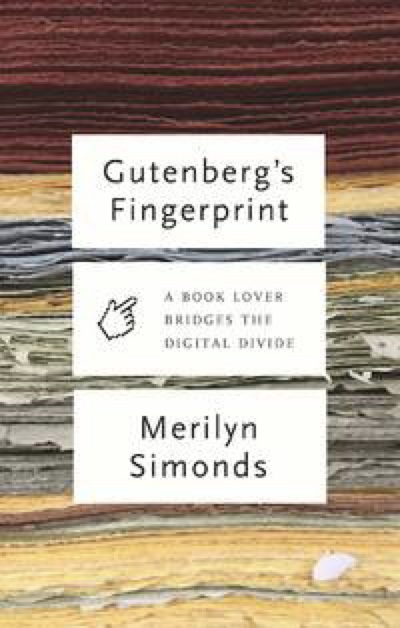
The peripatetic Canadian writer of various genres, now based in Kingston, Ontario addresses the whole history and evolution of paper, ink, printing, press, and reading from papyrus to eBooks and audio books. In chapters including experiments in making paper in her home, trying to mimic ancient methods of typesetting, the history of ink, the press and books, her enthusiasm for the whole process shines through.
I thought the process of attempting to produce paper in her home from various bits of vegetable matter was the most obscure, tedious, confusing and useless information any reader might seek until I read the 57 page second chapter on typesetting and formatting. Although I recognize the importance of choosing an appropriate paper, print size, typeface, spacing and layout of a book, I always left those details to my expert design lady, copy editor and proofreaders. I cannot even remember what fonts were chosen for my books and I doubt that many potential readers choose to buy a book based on the font of the text. I would like to, but can’t blame the layout, margin sizes, or font for my poor record of book sales. But apparently to a subset of professionals immersed in the business, certain fonts are a turnoff and others are magnets. In future blogs I may experiment with different layouts and fonts just for fun- there are hundreds to choose from.
The chapter on inks is a bit more interesting, but still loaded with trivia. I care about the aesthetics of written material whether a book cover, a magazine article or a letter, to the point that I at one point bought a very expensive Montblanc fountain pen which I used almost exclusively for my signature on consultation notes. I don’t know where it is now. It may be important to some fanatics that the ink used in eBook production is organically different than that for paper editions of the same book, but for whom? One bit of interesting trivia- the background in Facebook is blue because Mark Zuckerberg is colourblind and blue is easiest to read for blue-green colourblind men.
The author’s widowed, obviously greatly admired friend and co-worker, Hugh Barclay seems to be the epitome of an eccentric poster child for obsessive compulsive disorder, although she and her son could compete for second prize in that category and she would easily take first prize if there was one for hoarding. Still, most of this chapter and much of the book is taken up by obscure and confusing details as they try to publish a book from scratch using only materials and methods they themselves control, much of it antiquated. Much of the description of this process was like a foreign language to me, e.g “The forms was moved into the chase and furniture and reglets fit all around it to position the text exactly on the page, with proper margins all around. When everything was tight and true, the quoins were tightened with the quoin key, locking up the chase.” (Quion would be a valuable word for Scrabble.)
The chapter titled Books was the most interesting to me as it details the numerous developments from serialization of books in magazines to the ingenious ways of modern promotion and marketing with elaborate gala book launches, to the ways to achieve bestseller status that could be considered almost a scam. I have experience with the vagaries of marketing of books- the sole publicist for the publishing house of my first book went on compassionate leave the day it came out so I got no help promoting it, and the publishing house for my second closed shop after contracting to publish it, leaving me on my own. And I am not a natural self-promoter. Writing a book is the easiest and most fun part of the business.
Although I read a lot of books of various genres in various formats (hardcover, paperback, ebook, or audiobook) the intricate details of the dozens of ways they are produced and the materials used in their production are of little interest to me. Gutenberg’s Fingerprint provides more of those details than I could possibly understand -or care about.
I thought that John C had recommended this poorly organized disjointed book to me, but on checking after struggling through all but 35 pages of it, it seems it was his wife Pat who was as confused as I was by it and hoped I could and would explain it to her. Alas, her faith in me is unfounded and I am sorry to disappoint her.
⭐️
“Anyone who thinks you can have infinite growth in a finite environment is either a madman or an economist.” Ken Boulding.

The past CEO of the consumer goods company Unilever and a business economist, thinker and writer together address the wide-ranging ancient philosophical question of what the purpose of a business is in this tome.
There is a positive optimistic tone about the future in the Blow Up Boundaries chapter. No one should deny that the campaign by Lifeboy, the oldest of Unilever’s 130 personal care products, to teach half a billion people the importance of hand washing has been a net positive for humanity. The Embrace The Elephants chapter provides a lot of counterintuitive advice for business leaders about abandoning short-term goals and Friedman economics in favour of loftier sustainable goals that benefit the company and the broader society rather than just shareholders. The nine point Stockholm Planetary Boundaries model that Sir David Attenborough discussed in A Life on our Planet is again referenced. I must try harder to understand it.
There is also a lot of mushy psychobabble about purpose, taken from the personal to the corporate level. There are hundreds of acronyms that can be confusing to readers who are not fluent in business lingo. There is a slight whiff of hypocrisy in the final chapter’s advice to challenge the supremacy of consumption and growth, from the ardent advocates for consumerism and business growth; that is difficult to work around although they try and partially succeed. It is loaded with all the business jargon that could possibly be dreamt up.
I can imagine this book being used as a primer for any business school M.B.A. course on sustainability, using Unilever as a case study. Although there is no doubt that Unilever is a world leader when discussing ethical business practices, much of this writing reads like a book-length ad for the global behemoth.
Good food for thought, but dry and certainly not for everyone.
⭐️⭐️⭐️
Thanks, The Economist.

The English Civil War and the roundup of the regicides of King Charles I after the Cromwellian “roundhead” parliamentarians are routed and the royalty was reestablished in the person of the nefarious whoring Charles ll forms the backdrop to this historical novel. Much of the action takes place in New England where the Puritan regicides Colonels Ned Whaley and Will Goffe have fled and are sought for return to England to be hanged, drawn and quartered, a process that is described in gruesome detail.
Every development seems to be interpreted as an act of God, with constant reference to biblical verses, often quoted out of context. John Davenport, a strict Puritan preacher and founder of New Haven, Connecticut, where the colonels sought refuge for a time, designed it as the home for Christ’s second coming in 1666, when by his unshakeable conviction, He would establish his Heaven on earth in America, as he interpreted various Old Testament and Book of Revelations texts. What must be Sleeping Giant Mountain, north of New Haven, within a couple of miles of where I lived for three years, is the site of one of the many cat-and-mouse narrow escapes for the regicides as they elude their pursuers, although it seems clear that many of these close encounters are far from factual. But the distances cited from their hideout to downtown New Haven, the harbour, and Long Island Sound are shorter than those lodged in my memory fifty years ago. However, the controversial attempt to establish New Haven as a chartered territory separated from Connecticut was real. If the Puritan founders had prevailed against the Crown, we would now probably have a separate New England state of New Haven, or perhaps a separate country, had the Revolutionary Army not defeated them 110 years later.
But the Dutch control over New Amsterdam (New York) was a distraction that had to be dealt with as did the latter battles with the Dutch in Britain.
The Black Plague and the Great Fire of London, following in quick succession are interpreted by the Bible-quoting Puritans as sings of the last times, as predicted in the Book of Revelations, and every event, for better or for worse, is seen through the cognitive dissonance of a benevolent Good with evil and hardship attributed to His working in mysterious ways, a non-explanation still prevalent in some circles.
An interesting and entertaining novel. Although the chronology of the major political events is doubtlessly accurate and has been carefully researched, this one seems to me to be far more fiction than history, and the author would probably agree. But reading it in 2022, with changes in Buckingham Palace raises new questions about the durability of the British monarchy. Not an historian, I nevertheless quite enjoyed reading it.
⭐️⭐️⭐️⭐️
Thanks, Mike I.
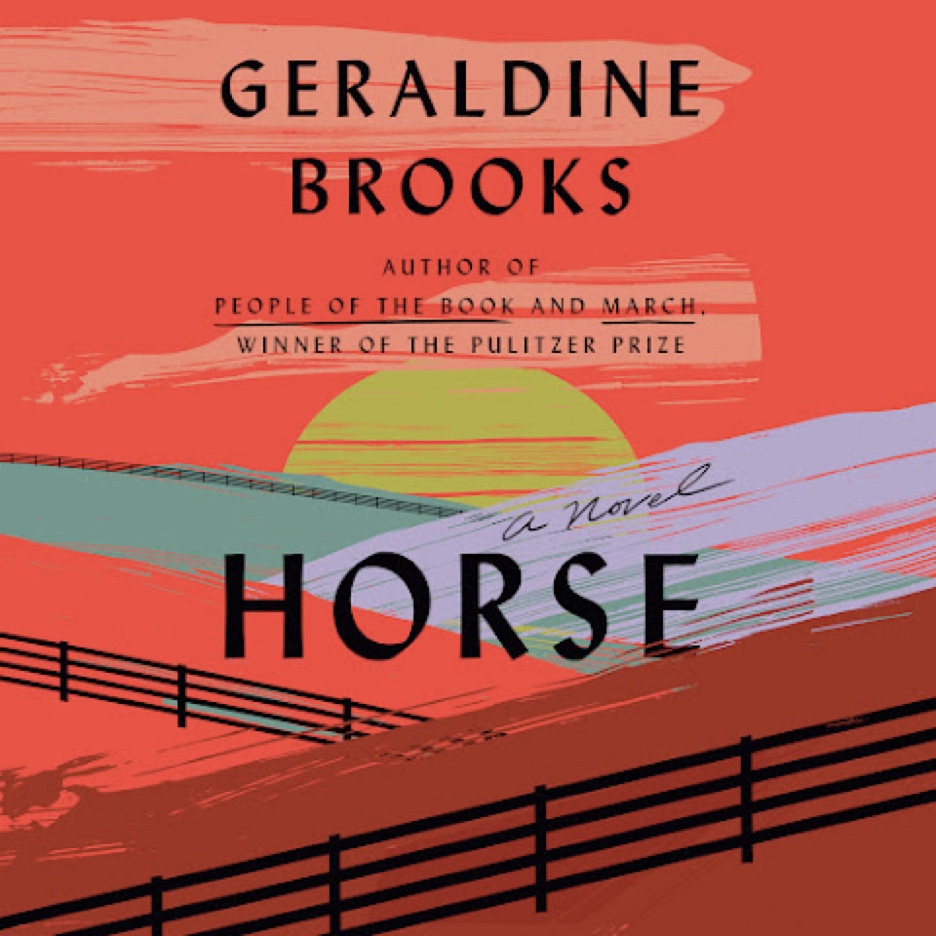
Flipping back and forth from the slavery-powered world of horse racing in Lexington, Kentucky, and cotton picking in Mississippi and Louisiana in the mid1800s and that of art curation and archeology at the Smithsonian Institution in 2019 makes for interesting cultural clashes in this new novel by the acclaimed Australian/American writer. The posh life of New York aristocracy, horsemen, and art connoisseurs and dealers over the ages is presented in detail; there is a Canadian connection as the slave groom of the famous horse eventually finds freedom and family life in rural Ontario.
Most of the story, though described as fiction, is based on facts, with the names of the characters, both human and equine being real heroes or villains of the sometimes corrupt monied horse racing community, and even the mystery of the skeleton that was found abandoned at the Smithsonian and is now at the Lexington International Museum of the Horse is factual.
The provenance and value of old paintings of a racehorse and a colt that had been lost and found several times forms the linking backbone of the plot which is intricately interwoven with tensions within a slave-owner/emancipation-advocating mixed family in Lexington, and of the chase to return a slave groom fleeing to the north on the prized steed he so loved. One painting is eventually found in the hands of a naive New York maid and is evaluated by the billionaire Mellons and Jackson Pollock, which seemed to me to be a somewhat contrived plot twist to include and discuss the lives of the rich and famous, but is apparently factual. The author has researched this story carefully. She also manages to weave the infamous Jesse James into the party of murderous Union horse thieves.
The equine hero of the story after a stellar but short racing career, became the famous ancestor of many real famous race horses, including General Robert E. Lee’s steed and even some recent famous racehorses. The disruption of many relationships and the alienation of friends by the Civil War is dramatically described, and the continuing racism is dramatized by the shooting of an unarmed star black Yale arts student by a cop in 2019.
The butchery of the English language in the lingo of the illiterate southerners is captured colourfully and the writing reflects the complex communication style of the times. The feverish excitement of the crowd of bettors in the grandstands, which I have witnessed at Keeneland in Lexington, but could not get enthused about, is memorably described. All of my early memories of horses were of Monty and Mollie, a team of black utilitarian Percheron farm horses pulling the sleigh with the big tank through the maple sugar bush to which we carried pails of sap, or taking the whole family wrapped in horsehair blankets to town in the cutter when the snow was too deep for cars, or pulling various farm implements not yet adapted to the tractor. But recreational bareback riding was not to their liking and I was thrown off more than once; horse races were only for the town fall fair.
The unwritten bond, communication, and love between horse and groom is heartwarming and well described with the slave groom choosing to remain in that role rather than buy his freedom and be separated from his steed.
An immense improvement over the author’s earlier rather self-contradictory Nine Parts of Desire, this tale is, in my estimation, right up there, in a totally different context, on a par with Jeanine Cummins’ American Dirt and Jodie Picoult’s Small Great Things, when it comes to giving readers an account of the sordid history of slavery and continuing troubled race relations in America with deep insight into the elite snobbish world of thoroughbred horse racing added in. Well deserving of the Fiction of the Year award that Book Browse reviewers awarded it.
⭐️⭐️⭐️⭐️⭐️
Thanks, Book Browse.
 The Passionate Reader