An avid reader reviews a variety of books, writes assays and comments on current affairs once weeklyl
Write about your most epic baking or cooking fail.
My wife does most of the cooking and baking, but once in a while I get the urge to try something from my memories of mother’s great cooking. With my first attempt to make her sour cream raisin pie with meringue topping. I had trouble separating the egg whites and yolks so some yolk get into the whites whipped up to make meringue and I put too much water into the sour cream and raisin mix. The result was a runny mess with a topping that could not be cut without the meringue sticking to the knife and coming right off.
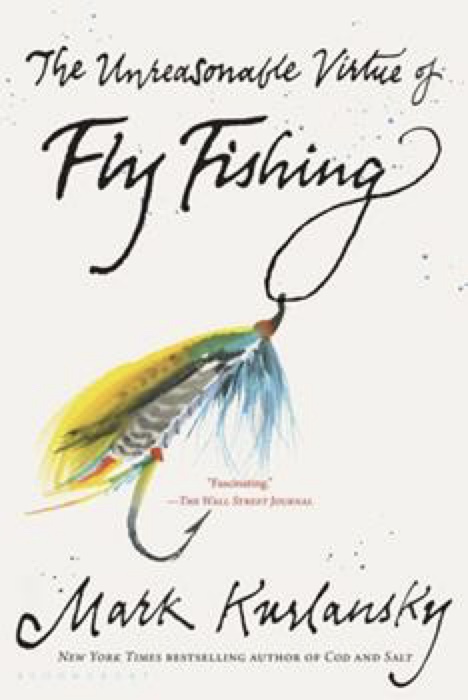
The peripatetic New Yorker provides a surprisingly detailed history of fly tying and fly fishing in this book which will no doubt not appeal to many who have never experienced the joy of this form of fishing. Once used by the ancients and North American indigenous people as a serious means of obtaining food, it has for at least three centuries been used as a leisurely form of recreation, initially by the British aristocracy, now by commoners like me as well. Of the many comparisons of fly fishing to spearing, spin casting, netting or commercial trolling, I like my fly fishing pal’s analogy the best: “Fly fishing is to other methods of fishing what love-making is to copulating.”
The book is divided logically into thirteen chapters wedged between a short prologue and an epilogue covering aspects such as the history, rods, reels, flies, lines and wading, but curiously, nothing about the several different casting techniques for different conditions such as strong winds or overhanging trees, perhaps because the roll cast or double haul cast are best demonstrated rather than described. Many of my flies now decorate riverside trees. Nor is there anything about the dozens of intricate knots used in fly fishing.
“Flies are designed to please humans, not fish” and this is nowhere better illustrated than in the engaging book The Feather Thief, which he cites and I greatly enjoyed reading. It documents the theft of thousands of feathers from the British Museum by a fly fisherman, who sold them for display in the homes of British aristocrats, not for fishing.
The author makes careful distinctions between stream fishing and still water fishing on a lake, dry flies and wet flies, imitator flies and attractor flies, and shore bashing and wading or fishing from some watercraft.
A great quote: “It can be said without irreverence that to celebrate Opening Day on the Beaverskill is like observing Christmas in Bethlehem.”
On the deception of fish: “I am the crooked salesman offering bad merchandise. If they take what I cast, they will be sorry.” The author devotes a short chapter to the moral dilemma of inflicting pain on a fellow creature for our pleasure, but offers no concrete solution. As a humanist, I like to think that any pain or terror I cause to a fish on a hook is balanced by the relief it must experience in being released, as I usually practice catch and release fishing. Is this more cruel than the fate of most creatures, including flies, of being eaten alive?
My introduction to fly fishing could not have been more delightful. The late Dr. H. Miller (Bud) McSween, a colleague in Fredericton, invited me to spend a week with him and his friends fishing for Atlantic Salmon at the Logie pool on the Southwest Main Mirimachi River, owned by the Irving family of Atlantic provinces oil and gas fame. My first grilse was marched into the cabin from the barbecue accompanied by a haunting tune on a bagpipe. I was “hooked” forever.
One quibble. The peculiar word Unreasonable in the title doesn’t quite fit with the content of this book. A better adjective, in my opinion, would be ‘unacknowledged’ or ‘unique.’
⭐️⭐️⭐️⭐️⭐️⭐️⭐️⭐️/10
Thanks, Maria.
Name the professional athletes you respect the most and why.
Satchel Paige of baseball fame for overcoming racial biases and his wonderful sense of humour, and Canadian figure skating champions Tessa Virtue and Scot Moir because they grew up and skated with my children in Ilderton, Ontario
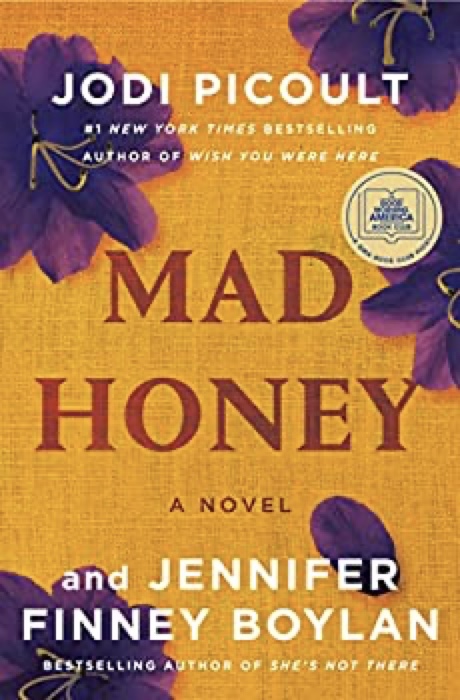
I thought, from the title, that this novel would be all about the biology of bees and the (to me) mysterious rites of beekeepers and harvesting of honey There is lots of that, some of it still mysterious to me, some new and very interesting. The title derives from the honey that bees make from pollinating rhododendron and mountain laurel shrubs- sweet but containing the poisonous grayandrotoxins, which can lay people low for hours or days but is rarely fatal. It was first described as a deceptive chemical weapon by Xenophon in ancient times, and is known to have disabled 1000 of Pompey’s soldiers. I somehow knew about this from previous reading. It is also used in small doses by some as an hallucinogen. But here the term Mad Honey is used as a kind of allegory for toxic human relationships, particularly as they pertain to gender and sexual relationships.
The book was conceived by one of the prolific authors, a transgender woman, in a dream, and came into fruition when the two New Englanders wrote eleven alternating chapters in the first person singular voices of two of the main characters- the beekeeper mother of an artistic sensitive, star hockey player, teen boy accused of murder, and his girlfriend victim, a transgender, cellist, fencer, and school classmate. It is set in the recent past but with frequent flashbacks to the previous lives of women in abusive relationships.
The documentation of the murder trial consumes more space in the book than does any discussion of bees or honey, but is interesting as a revelation of how the modern U.S. justice system works or doesn’t work, and the suspense for the reader is very finely tuned. The unpredictable plot twists as new evidence is presented rival those of any reasonable murder mystery novel. The medical evidence presented by two opposing forensic pathologists was particularly interesting to me.
The interrelated issues of gender identity and biases are profiled with unique insights (as would be expected from a trans author) and sensitivity about the differences between sex and gender. The androgen insensitivity syndrome (or testicular feminization syndrome as we knew it) when a genetic XY male nevertheless is born with female anatomy and physiology is mentioned in passing. It is now known that this is due to failure of methylation of a specific DNA nucleotide at at a precise point in fetal development, to allow production of testosterone. Without that, male Homo sapiens would cease to exist.
The finer points of fencing as a sport were totally lost on me, but it is a finesse kind of activity that one of my medical school classmates and one of my retired best friends loved and I suspect that, if given the opportunity, in another live, I could warm up to it.
There are lots of memorable quotes:
“Here’s what they do not tell you about falling in love: there’s not always a soft landing beneath you. It’s called falling, because it’s bound to break you.”
“Pacing a room doesn’t make it any bigger; watching a clock doesn’t make the time tick by faster.”
One attorney is described as “busier than a mosquito at a nudist beach.”
There are some negatives. The excessive use of very foul language and the unnecessarily vivid pornographic description of many sexual encounters contributes little to the story. There is more than a hint of man bashing throughout- in reality, most men are not abusive to their partners. Some characters seem to be on perpetual emotional roller coaster rides and wallow in self-pity, and insecurity.
This book provided me with enough perspective about sexual and gender roles to last a lifetime, but I didn’t enjoy it as much as I did the only other Jodie Picoult book that I have read i.e Small Great Things.
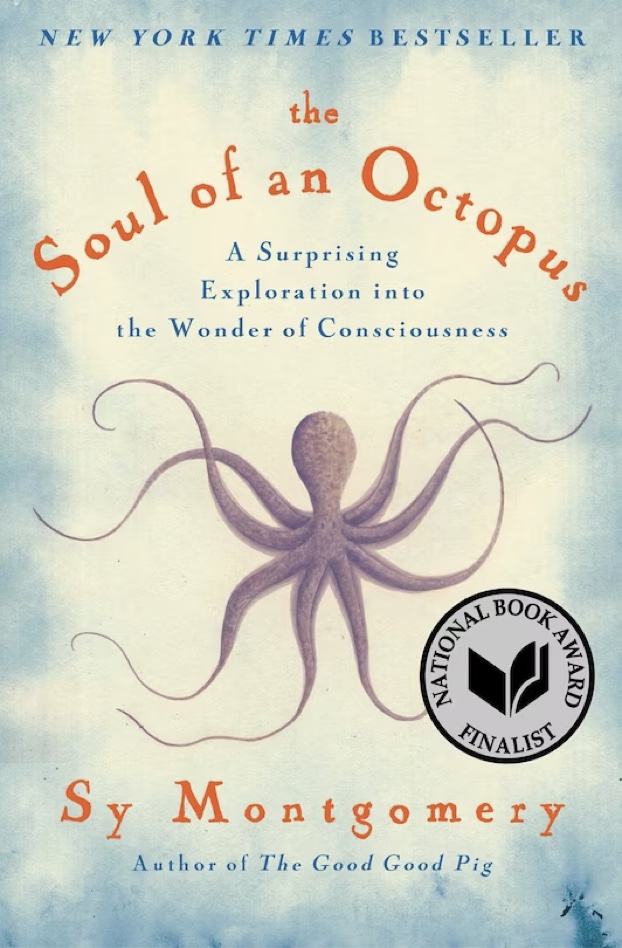
Amazing science findings that challenge our conceptions of intelligence and conscience are always interesting to me. Much of the documentation in this book comes from observations of Giant Pacific octopuses in the New England Aquarium in Boston. They have distributed neurones, independent neuronal control of arms and suckers, fast changing colours and textures of arms, and individual personalities. They learn to navigate mazes and aim water spouts accurately. They can recognize and interact with friendly human visitors, use tools, express emotions, and appear to manage crab ranches. They secrete ink, hormones, and drugs in defence. Their circulatory system involves three hearts. The arms communicate with each other seemingly without any neuronal connections through the central brain, and can regenerate if they are amputated. Does each arm fulfill the human definition of an individual? They possess the ability to, almost without limit, change their size, colour, and shape as shown by one large octopus with an arm span of almost six feet who escaped from her aquarium pool through a two inch hole. They have a form of what psychologists call Theory of Mind, the ability to anticipate and react to the thoughts and actions of others, an ability once thought to be unique to humans. They can design and use tools. They certainly challenge human conceptions of what it means to be a self-conscious individual.
There are some irrelevant diversions in this narrative that have nothing to do with the biology of octopuses, such as the 65 minute chapter discussing the author’s efforts to learn to scuba dive in the Atlantic and Caribbean, her moving of large fish and octopuses to a new aquarium and her philosophical musings about the nature of human consciousness. There are also shorter diversions such as about the trainability of lumpfish, said to be easier to train than any dog breed, and a soppy poetic passage on love of eggs by all mothers in the natural world.
Some of the diversions, such as the observation that male fruit flies when rejected by would-be mates turn preferentially to alcohol- laced water for solace are as interesting as any science of octopuses. And these insect’s seemingly erratic flight paths follow logical algorithms. But after discussing this, Montgomery, in what seems to me be a contradiction, nevertheless concludes that those tiny beings and all living creatures are endowed with free will.
I admire the dedication to science of the author and her colleagues who describe octopuses as beautiful and sexy. But I question their life priories and reasoning abilities when they fly across the continent to attend the mating at the silly annual Octopus Blind Date, a popular annual event at the Seattle Aquarium, even though the reproductive mechanisms of octopuses are complex and unique in nature, as they could observe it in Boston.
There are a lot of superlatives used to describe what the author views as the beauty, talent, and intelligence, of octopuses, as they are described in blatant anthropological terms. There is no doubt that she is sincere and devoted to her eight armed friends but her husband, children, and other adopted pets receive relatively little narrative attention.
⭐️⭐️⭐️⭐️⭐️⭐️/10
Thanks, Book Bub.
What TV shows did you watch as a kid?
Very little. In our house, TV was the invention of the devil, although in 1960, at age, 15 or so, with attitudes changing I was allowed to walk to our aunt’s home and watch the Ed Sullivan show.
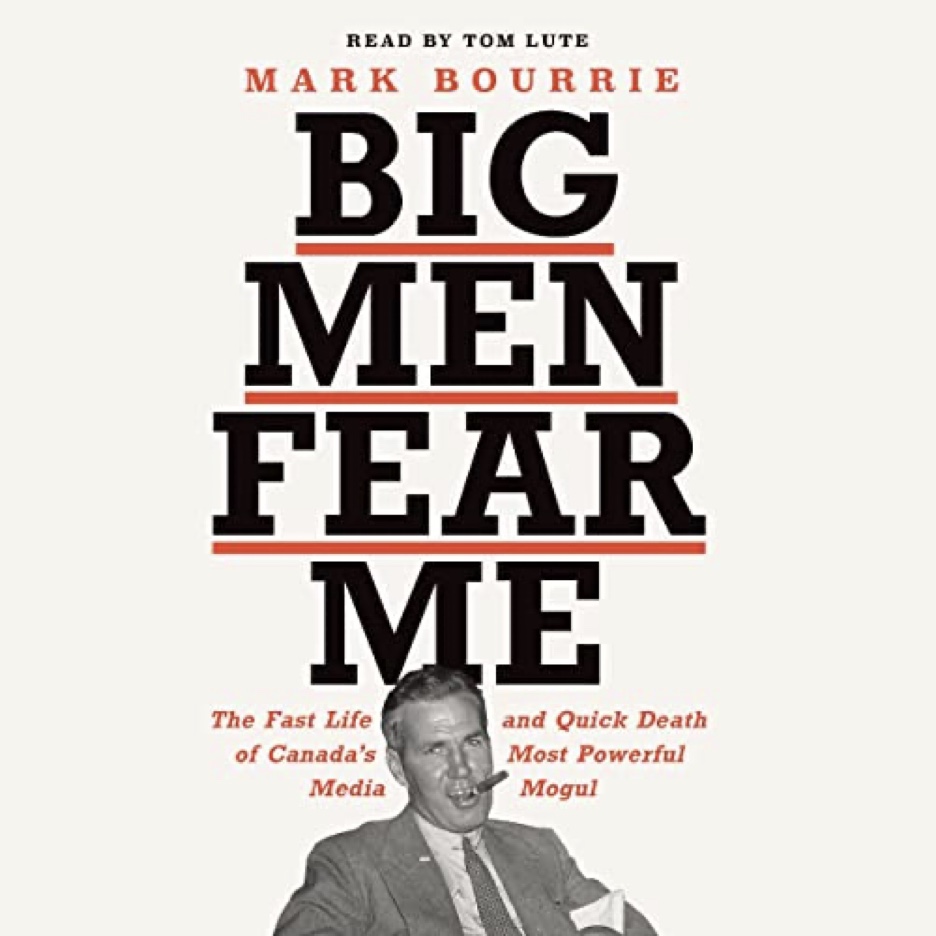
This is the biography of the all-but-forgotten early 20th century Canadian media mogul, George McCullagh. Born in 1905, he went from an impoverished childhood in south central London, Ontario, to hiking the backroads of southwestern Ontario in his early teens, selling subscriptions to the Globe newspaper, to being it’s publisher by the time he was 31, merging it with the moribund Mail and Empire to become the Globe and Mail. Although he dropped out of school before finishing Grade 9, he entered the world of elite well-educated millionaires, advising and befriending politicians, military strategists, royalty, and industry luminaries and labour leaders alike.
McCullagh’s personal wealth came from shrewd speculative investments in various northern Ontario gold and silver mining ventures at the peak of that craze in the early years of the Great Depression. Much of his Bay Street manipulation of mining stock would now likely be considered illegal scams. His friend and financial backer for many of his schemes, William Wright was responsible for most of the mining strikes, and later moved to Barrie and became a horseman, a hobby that McCalllugh also took seriously, winning one King’s Plate race. He was also a part owner of Maple Leaf Gardens and the Maple Leafs hockey team.
There are telling encounters with a rich array of characters, some of whom I have forgotten but they include Mitch Hepburn, the alcoholic Ontario premier, George Drew, conservative power broker, Lord Beaverbrook, Sir Frederick Banting, R.B. Bennett, Arthur Meigan, liberal powerbroker, Maurice Duplessis, dictatorial Quebec premier, McKenzie King, long serving liberal prime minister and spiritualist, Roy Thompson of concert hall fame, Isaac Walton Killam, Halifax paper mill baron, R. Samuel McLaughlin,owner of GM’s Canadian subsidiary, Conn Smyth and Foster Hewitt of sports fame, Sir Winston Churchill, FDR, King George V, Leslie Frost, Progressive Conservative Ontario premier and conservative Prime Minister John Diefenbaker. As I was only seven when McCallagh died, many of these movers and shakers were familiar to me only because I eavesdropped on adult conversations as I grew up, or encountered whitewashed versions of them in school history classes. Others who long outlived McCallagh are well known. We currently live in a Isaac Walton Killam apartment and I received a fellowship from the R. Samuel McLaughlin Foundation in 1976, never enquiring where he earned his millions.
The Globe and Mail was (and it can be argued, still is) the mouthpiece for the right-wing business community advocating for less government interference with free market economics, forever battling its more liberal nemesis, the Toronto Star in vicious editorial swipes. At one point, MCCallagh’s Freedom League championed one party political rule, with elimination of all provincial governments. It was sometimes difficult for me to keep the shifting positions of various players straight on issues like freedom of the press, immigration, taxation, censorship, and conscription. But there is no doubt in retrospect that the Globe and Mail was a key player in exposing Canada’s very inadequate contribution to the Allied war effort. The mainly white misogynistic, Protestant, British world of Ontario power brokers often conflicted with the mainly Catholic French ones of Quebec.
Bourrie’s diagnosis of MCCallagh’s mental health problems breaks the Goldwater Rule to never attach a mental illness label to someone you have not examined, but there is little doubt that McCallagh had a major mood disorder, with severe bouts of depression, treated by electroshock therapy administered by his New York psychiatrist. His intermittent self treatment with alcohol is well documented. Severe depression may have caused his death, which was believed by many to have been a disguised suicide, although I am not entirely convinced by the evidence of that presented herein.
This balanced well-researched examination of MCCallagh’s life by the modern Ottawa lawyer and journalist reveals important lessons for the media and political world of today. Our democracy and freedoms are fragile gifts that are constantly under threat by power-hungry billionaires and media moguls and need to be cherished and protected, as trends in the recent U.S political scene clearly show. It also provided me with a far better and more interesting analysis of the mid twentieth history of Ontario and Canada than anything I was taught in high school.
A Potawatomi aboriginal Distinguished Professor of Environmental Science at the State University Of New York in Syracuse provides a very disturbing native perspective on the dire state of the modern world in this wide-ranging erudite treatise. Much emphasis is placed on the Native legends such as the pregnant Skywoman falling to earth and the evil stalker Windigo representing rapacious consumerism, and allegories that vary tremendously from tribe to tribe, but they bring valuable lessons about sustainability in relation to human interactions with the rest of nature, both living and inanimate. Trees, plants, and all living beings, even lichens, are referred to as sentient articulate people, and our equals, with intentions, struggles, and feelings.
The need to show gratitude for everything that the natural world gives to sustain us Homo sapiens by giving back what those entities need to also survive and thrive is the central theme, and how to go about that giving is illustrated by many examples, such as minimizing the roadkill of slow salamanders crossing a highway to breed. The white man’s harmful endless resource extraction and consumer culture is reviewed with derision as is their shameful past and continuing treatment of the natives and their cultures, traditions, languages and beliefs.
The writing style is catching and unique, with dozens of delightful metaphors and allegories. Perhaps the tone of the whole message is best illustrated by
“We continue to embrace economic systems that prescribe infinite growth on a finite planet, as if somehow the universe had repealed the laws of thermodynamics on our behalf.”
“Our toddlers speak of plants and animals as if they were people, extending to them self, and intention and compassion – until we teach them not to. We quickly retrain them not to and make them forget. When we tell that them a tree is not a who but an it, we make that maple an object; we put a barrier between us, absolving ourselves of moral responsibility and opening the door to exploitation.”
« …there is no substitute for standing in the rain to waken every sense—senses that are muted within four walls, where my attention would be on me instead of all that is more than me.”
I can certainly relate to the fascinating chapter on making maple syrup, having helped with that that for a few years in my teens. I think my father did care for the forest responsibly, culling only old and diseased trees to heat the house, ensuring room for the younger ones and tapping only at most two spots on even big trees. But the biochemistry, tree physiology, and physics is discussed in more detail than anything I learned from doing it, a process passed on from many generations of aboriginal people and elucidated in detail by modern scientists such as the author.
I am also familiar with the Three Sisters farming in which the aboriginals carefully timed planting of corn, beans and squash together may yield more produce than monoculture of any one of them. For the past three years, I have volunteered for a regenerative farming project, which includes the Three Sister technique, run by a retired physician. It is hard work on hands and knees but yields abundant delicious produce without use of fertilizer, herbicides, pesticides or modern equipment. Here Kimmerer suggests that it should be called the Four sisters, as humans are an integral part of the symbiosis in planting them together. And as Mother Earth is a vital component of the process as well, I think it could be called the Five Sisters technique.
In places, the narrative of aboriginal lifestyles seemed too foreign and mysterious to bridge the gap between their experiences and mine. But the message to take from nature only what you need and to give back what you can comes through loud and clear.
⭐️⭐️⭐️⭐️⭐️⭐️⭐️⭐️/10
Thanks, Lois.
What do you enjoy most about writing?
I enjoy sharing differing perspectives with readers of my books or my blogs of book reviews. Whether it is science, medicine, history, philosophy, religion or documentation of interesting people in the form of biographies or autobiographies, the widely divergent viewpoints can only expand one’s own mind. And if readers disagree with me, that too is helpful in making me think harder.
What is a word you feel that too many people use?
I am very tired of hearing people, in interviews on radio or television, whether the interviewer or the person being interviewed, stalling by using the interjection “you know”. Not just one word, I realize, but very annoying, especially if I don’t know.
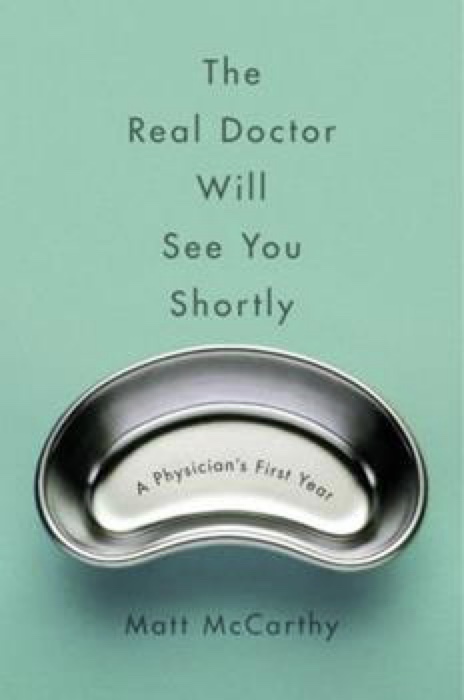
My sister recommended this book which details the author’s experiences as a medical intern, asking if it fit with my experiences as a budding doctor. In certain aspects the answer is ‘yes’; in others ‘no’. I was training in a different institution, (the old Victoria Hospital in London, Ontario), different country, and much earlier era, 1970-71, than in 2008-09 at Columbia University in Manhattan. The military style team hierarchy for bedside rounds -medical student, intern, junior resident, senior resident, chief resident, and consultant has apparently endured, sometimes with a fellow included. The role of the chief resident as the mental health monitor of the less senior staff was not part of my chief resident’s duties and no one monitored my mental state, although I later did so for trainees in an informal mentoring program. The timing and sequence of when we did similar rotations through surgery, internal medicine, paediatrics, surgery, obstetrics, psychiatry and neurology as third or fourth year students or later as interns and residents were different. But after briefly mentioning those rotations, and surgery, McCarthy never mentions paediatrics, obstetrics, psychiatry, or neurology again, limiting the narrative to his experiences in one year year as an intern in internal medicine. My internship was also ‘straight medicine’.
I certainly often experienced the same sense of panic and inadequacy that the author describes and the overpowering fatigue of sleeplessness for more than 30 hour stretches. There are now restrictions or at least guidelines on how many consecutive hours surgeons and trainees can work, but as a resident, I was sometimes on call from a Friday morning until Monday night, catching sleep and eating in any lull between calls. One anecdote: checking on inpatients with the head nurse at 7 a.m., on a Monday, I noted that old Joe, who was clearly dying, was not in his bed. When I asked about him, she laughed and said that the night nurse told her that I had come from the call room three hours earlier and pronounced him dead. I had absolutely no memory of that visit.
There are also remarkable differences in experiences. I never had to deal with HIV infected patients during training, while the author spends over 70 pages in learning about this, and even more after he accidentally jabs himself with a needle undoubtedly infected with it.
His actions and the adjectives he uses to describe his sense of inadequacy and uncertainty, and the resulting emotional rollercoaster ride that he shares with colleagues, patients (and now with readers) are beyond anything I ever experienced-at least the sharing part. Stoicism ruled supreme in the family I grew up in and in the training in medical school-we were expected to not show strong emotions at all, especially not to patients. But on one occasion as a student that advice failed me. A woman in her thirties who had been trying to get pregnant for years came in with a full term haemorrhage. The same night she was informed that her husband had died of a pulmonary embolus in another ward having been admitted with a heart attack a week or so earlier. I helped, or rather just watched the obstetrician deliver her stillborn in the deadly quiet delivery room. This was on my first day of obstetrics rotation. That was a time to share tears with a patient, as I and everyone in the room did freely. I could not visit her in the postpartum ward.
Soured on obstetrics forever by this, bored in surgery, and catching constant infections from sick children in paediatrics, I decided to abandon plans for family medicine training and switched to internal medicine.
There are negatives with this count. I question the cause-and-effect relationship that McCarthy makes between emotional shock and a heart attack in a young woman. In one case the author persuades the daughter of a brain-dead woman to withdrawal of life support, but no one seems to consider asking for organ donation. The emphasis on attending cardiac arrests seems designed to overdramatize medical training which was and I suspect still is often just learning hundreds of facts and dull routines day after day. At one point I recall an intern going through the dull routine of relating the history of a patient which we all knew, at his bedside. He realized that no one was listening so, in a monotone, inserted “and then his left arm fell off.” No one except the patient and the attending caught this as the intern droned on.
Ethics is only briefly addressed and largely discussed only by presenting hypothetical scenarios. The issue of how much to disclose to patients and relatives when an error has been made is avoided entirely. In an earlier era it was common practice to completely avoid discussing your errors or those of other doctors, if at all possible. Gradually legal advice has shifted to encourage disclosure and frank discussion. The wisdom of this is illustrated by an anecdote from my later practice. In a review session with a late patient’s wife and daughter, I confessed that I and several others, including at least two cardiologists, had completely missed the very treatable constrictive pericarditis (found at autopsy) that had caused his death from cirrhosis. That was there at the bottom of my differential diagnosis list of causes of cirrhosis, but I just did not think of it. My secretary heard them as they left, muttering that they could sue me but would not because I had been so honest with them.
This sensationalist account is entertaining but grossly over melodramatic with crisis after crisis presented as the norm. That may increase it’s appeal to a general readership but distorts reality.
⭐️⭐️⭐️⭐️⭐️/10
Thanks, Lois
What change, big or small, would you like your blog to make in the world?
If I can provide some readers suggestions about books that they might enjoy and some that are to be avoided even if very popular, my aim in starting the blog will be accomplished.
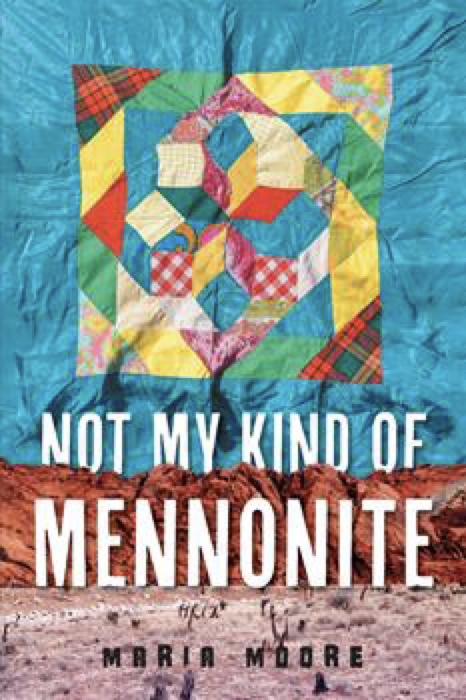
Not My Kind Of Mennonite. Maria Moore. 2023. 203 pages. (Paperback.)
Full disclosure. The author is a quiet, inconspicuous, but very efficient nurse whom I worked with in caring for transplant patients in London Ontario, for 15 years, by her reckoning. She sent me a copy of this, her ‘story’ as she calls it. I never knew anything about her private life when working with her. In the Acknowledgements, she reveals that she is now a happily married mother and grandmother.
Although it is very embellished with some obviously invented conversations, it is a chilling true account of the far-from-holy lives of Manitoba/Mexican Mennonite families ultimately settling in the Tillsonburg, Port Burwell, Vienna, Ontario triangle that I know well. When the author’s parents with a whole colony of Old Order Mennonites from Manitoba moved to campos in southern Mexico, they endured many hardships. Mexican men frequently visited on horseback, getting the men drunk and then raping the women and girls. But sodomy on young boys, extramarital affairs and alcohol abuse by both sexes within the colonies were also common occurrences.i
After trips to Ontario to work as temporary farm labourers, many families moved permanently to this area, hoping to escape the horrors and uncertainty of subsistence farming in Mexico, only to face equally harsh conditions, the author’s family of eight included. Near starvation, sexual and physical abuse, inadequate housing and child labor were rampant. Our Ontario and federal governments failed them in allowing starving children as young as 6 to work for pay in the tobacco and vegetable fields. No heath care was provided and police and Children’s Aid services were sporadic and often ineffective, although many children, including the author, were placed in serial foster homes. Her mother was a schizophrenic alcoholic who traded sexual favours with local men for booze. Her auditory hallucinations and those of one sibling were naturally interpreted by them in that culture as direct messages from God. It is hard to separate the effects of lack of schooling from innate cognitive limitations due to inbreeding but many in the colony seemed to be incapable of learning. There was pervasive fear of being excommunicated if they did not dress properly, used modern farm machinery, installed electricity in their homes, or drove cars. My own experience with Mennonite patients was often in diagnosing and treating inherited diseases in the inbred population of even more progressive sects.
In January, 1972, George Peters, the author’s father, was shot by his brother-in-law, in front of his children, in the latter’s house and tried to escape but died hours later outside the abandoned car of the driver who tried to help him. The dispute was allegedly over the inadequate child care George was providing and his failure to control his promiscuous, alcoholic schizophrenic wife, a stain on the family reputation. The misogyny of the entire community was (and I suspect still is) all encompassing. A woman’s job was to cook, clean, garden, mend clothes, and above all produce lots of babies.The killer walked free after a trial that the author, perhaps rightly, thinks was a miscarriage of justice. She feels that her father, though no saint, was maligned unjustifiably.
Moore never discusses her current religious beliefs, if any, but I suspect that, with her background, she has become a secular humanist like me if not a full-blown agnostic. or atheist.
One minor criticism: the photographed newspaper accounts of the trial are in such fine print that I had to use my fly-tying station magnifying glass to read them.
Although this is a chilling story about closed hypocritical Mennonite communities, there is no doubt that there are similar atrocities committed in other marginal religious sects. The common factors, it seems to me, are the prohibition of contact with the outside world and the related limitation of education of children, particularly girls, whether in Catholic or Hindu monasteries and schools, the Amish, Baptists, Mormons, Seventh Day Adventist’s, ultraorthodox Jews, teaching only from the Torah, Muslims of any flavour teaching only from the Koran or even more radical sects such as the Branch Davidians and Jim Jones’s People’s Temple.
Not a pleasant read, but an important chilling reflection on the dangers of sectarian religion, and a testament to the resilience of one woman who overcame almost insurmountable obstacles to ultimately lead a fulfilling life.
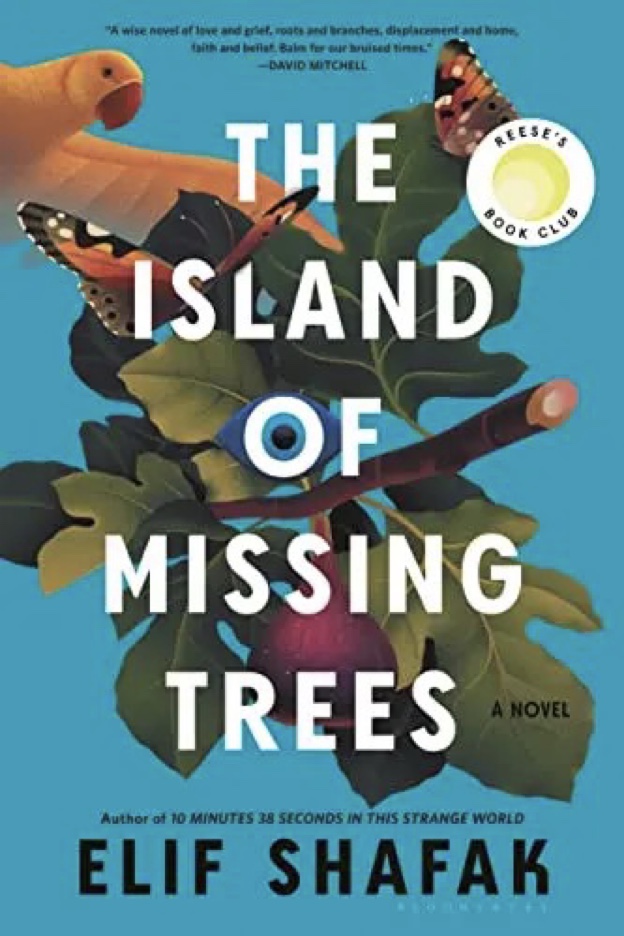
The Island Of Missing Trees. Elif Shafak. 2021. 347 pages. (EBook on CloudLibrary.)
There are two memorable quotes in the first ten pages of this novel alone. Those stuck with me and assured me that I was in for a treat: “ …legends are there to tell us what history has forgotten.” and “Cartography is another name for stories told by winners. For stories told by those who have lost, there isn’t one.”
The Happy Fig Tavern in Nicosia, where an ancient fig tree is centred in the room, growing through a hole in the roof, figures prominently in the story. It hears all the human communications and communicates with them in English that somehow is made to seem realistic. But it also sees its surroundings, and talks to birds, butterflies, mice, and mosquitoes. As the Happy Fig says: “Just as trees perennially communicate, compete and cooperate both above the ground and below, so too do stories germinate, come into being and blossom upon each other’s invisible roots.”
Set in divided Cyprus between 1970 and modern times, the political upheaval is realistically portrayed with Greek, Turkish, and British soldiers everywhere and senseless killing. The characters are not difficult to keep straight, although who is a Greek Christian and who is a Turkish Muslim can be more challenging. A migrating Painted Lady butterfly reads the names of soldiers and children on the headstones in a cemetery.
The lyrical poetic writing style is delightful; the novel is all-encompassing-something for everyone. There is magic with trees, birds, humans, and even mosquitoes all talking to each other, politics with wars and mysterious deaths, ecological science with floods, heat waves, mass extinctions, and loss of biodiversity, and religion with different intolerant gods urging humans to commit senseless killings. There are myths and folklore, tender unlikely forbidden romances, mysteries that are hard to solve, and history uncovered by archeology. There is even some medical science in dealing with malaria, addictions, and mental illnesses. Much of the plant and tree science mirrors that in Suzanne Simard’s intriguing “Finding the Mother Tree”. All of the characters and plot mysteries come together by the book’s end.
A couple other great quotes among many: “… then again, anyone who expects love to be sensible has perhaps never loved.”
“Knowledge is nobody’s property.”
There is one apparent minor error. Nicosia, at an undefined time is described as the only divided city in the world. What about Berlin?
This novel should have universal appeal in any language. I was previously unaware of this Turkish Cypriot novelist who is self-exiled in Britain, but Vera is now engrossed in her “The Three Daughters of Eve.” after hearing about her from a bridge friend.
Over many years of my professional life, I studied the interminable whole body itchiness that many patients with certain kinds of liver disease suffer from. Although I made progress in understanding this common and debilitating symptom, and found a partially effective new treatment, the ultimate cause is still a mystery that I am still curious about. As far as I know no one has come up with what evolutionary benefit could be concurred on someone forced to scratch themselves raw, but I suspect it is somehow linked to the disturbed Vitamin D metabolism in liver diseases, allowing more production of it from sunlight in deeper skin layers
If you could bring back one dinosaur, which one would it be?
An avian of some sort, perhaps a passenger pigeon, which is ra dinosaur descendent that relatively recently we made extinct.
This novel, set largely in Minnesota, New York City, Washington D.C. and West Virginia in the 1980s to 2008 is populated by insecure, amoral, largely young characters with shifting loyalties and mental illnesses. They are from very dysfunctional families; no one could be considered normal. The dialogue of the characters is filled with extreme, constantly shifting expressions of love and hate.
Divided into eight unnumbered chapters, the narrative is broken up by time shifts. One hundred and sixty pages of what is said to be an autobiography, but is not written in the first person singular tense, reads more like a multi-character novel within the novel, covering several years of Patti Berglund’s life from college to married motherhood.
Walter Berglund’s long sermons about loss of biodiversity, climate warming, deforestation, population growth, food security, toxic wastes, feral outdoor bird-killing cats, etc, are all loosely tied to what was in 2010 politically fashionable even as he works as a government lobbyist after moving from Minnesota to D.C. There are many pages devoted to his efforts to preserve the endangered cerulean warbler and similar endangered species, but he also lobbies to obtain permits for coal companies to make fourteen thousand acres of Appalachian mountaintops in West Virginia into barren moonscape, destroying an entire thriving ecosystem. He justifies these contradictory actions with rants about the dangers of relying on nuclear power and wind farms. Some of his arguments are counterintuitive but quite compelling; others are quite specious. I suspect that they reflect the known somewhat radical views of the environmentalist author. Later efforts with Walter’s new lover to be address overpopulation (after his wife’s longstanding affair with his best friend, a young member of her son’s rock band, is discovered) run afoul of American right wing concepts of personal freedoms and rights.
Franzen is a master at mocking the absurd contradictions of American cultural and societal trends, driven by political correctness. The plot is quite intricate, but it is not very difficult to keep the characters straight, even with all of their contradictions. The emotional ups and downs ascribed to some characters do seem a bit excessive. The late reunion of Walter and Patti Berglund after a long separation is a bit of a surprise, but the fate of some other characters is left to the reader’s imagination.
The author seems obsessed with casual sex with seemingly no regard for any longterm consequences, and uses the most disgusting, vivid, foulest, scatological language in describing such trysts that I have ever read. None of the characters are faithful to their spouses. The gutter language is not confined to the conversations of the characters a reader could expect it from, but is an integral component of the author’s narrative. This unnecessary pervasive feature of the whole book compelled me to downgrade my assessment of it by three stars out of ten.
⭐️⭐️⭐️⭐️⭐️/10.
Thanks, Andra.
Cam
If you won two free plane tickets, where would you go?
Somewhere in Australia, the only continent that I haven’t visited
Some masochistic member of our book club has listed this for our upcoming meeting. Formatted as the fictitious autobiography of a coming-of-age British boy, this humongous classic by England’s most famous novelist of the 19th century has been reissued in a variety of updates. I read the 1869 edition as an ebook, wasting a good chunk of my limited reading time. In the early pages, it loosely reflects the experiences of the author as an orphaned child raised by an ever-changing variety of relatives in several southern England sites.
Filled with more truly evil characters than any reader could possibly keep track of, his early childhood is saturated with uncertainty and pathos. The extreme emotions describing his teen and early 20s all-consuming infatuations with girls are described in flowery language that goes on for many pages with too many exclamation marks. His abusive experiences in boy’s schools introduces him to a variety of those evil boys, most notably Uriah Heep, whose name has endured as the embodiment of unscrupulous cunning, greed and deceit. He would certainly fulfill the modern DSM-5 criteria for a diagnosis of psychopathic personality disorder. One of his school chums turns out to be an equally unscrupulous opportunist who secretly elopes to continental Europe with the betrothed bride-to-be of another youth.
His adult life is characterized by many ups and downs with numerous unexplained deaths and betrayals, but ultimately a happy family life as he becomes a famous and well off novelist like the author.
Obtuse language in very long winded conversations with many emotion-laden superlatives and exclamation marks are used to describe all of the characters. The narrative/conversation balance is severely tilted toward conversation. Run on sentences filling half a page abound and no characters say what they mean in straight forward language. The multitude of characters are as hard to keep straight as those in War and Peace.
The best quote that also expresses what I most dislike about the whole book is the author’s own observation that: “We like to talk about the tyranny of words, but we also like to tyrannize over them too; we are fond of having a large superfluous establishment of words to wait upon us on great occasions; we like to think it sounds important and sounds well. As we are not particular about the meaning of our liveries on state occasions, if they be but fine and numerous enough, so, the meaning or necessity of our words is of secondary consideration, if there be but a great parade of them.” This is just a small portion of a much longer dissertation about communication.
Lots of Dickens’ misogyny shows through, but little of his well-known racism is expressed here, although there are a few negative comments about East Indians.
There is no mention of sexual intercourse whatsoever, as befits the prudish Victorian era, let alone any sexual improprieties, but just a faint hint that two female characters may have had a brief secret lesbian relationship. (I may have read too much into their love for one another, as there is a lot of kissing and hugging, seemingly as expressions of fondness irrespective of the gender of the pairs and a lot males also express their love for one another in superlative language.)
I quite enjoyed reading A Tale of Two Cities, and Oliver Twist years ago although they too are overly wordy, but I cannot recommend this one for anyone.
⭐️/10
What foods would you like to make?
I struggle with any cooking, but I have made a good imitation of mother’s delicious sour cream raisin pie with meringue topping, and the Mississippi mud pie that she loved when I took her for lunch from the nursing home to the Crossroads restaurant in Elmira.

 The Passionate Reader