An avid reader reviews a variety of books, writes assays and comments on current affairs once weeklyl
What is your favorite restaurant?
Close to home there is a great Italian restaurant called Viamarzo, that has a good selection of unusual combinations including lot of choices for vegans, and great wines at reasonable prices. We take guests there quite often and have never been disappointed.
Where do you see yourself in 10 years?
Probably as organic compost nourishing a growing sapling somewhere of my survivor’s choosing.
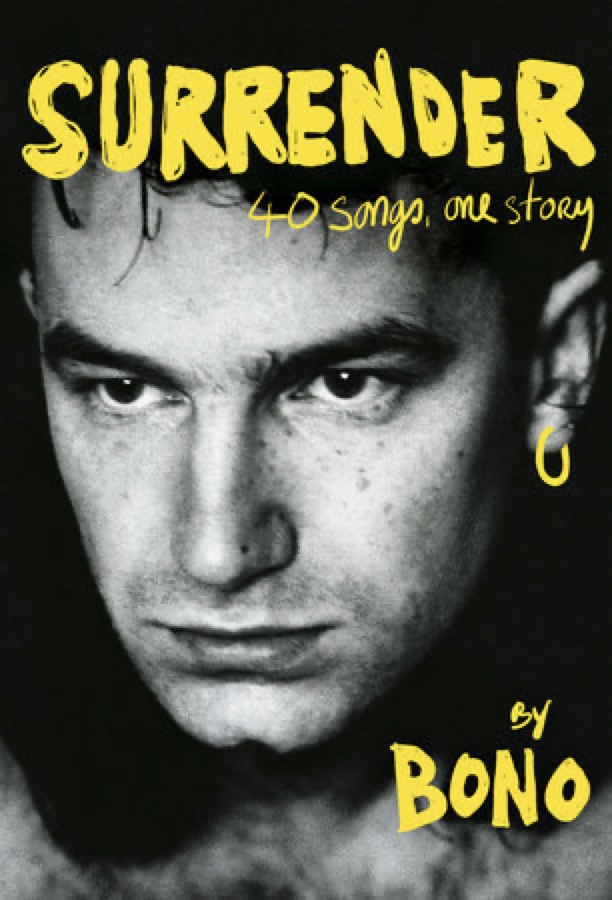
Born in sectarian northern Dublin in 1960 to a Protestant mother and a Catholic father, Paul David Huston, nicknamed Bono by a childhood playmate, early on espoused a generic Christianity. But that Christianity rejects most of the St. Paul add-on doctrines dividing modern denominations, and is more like a moral code to live by as taught by Jesus than any specific religion. The god he prays to before every performance of his famous U2 band is seemingly capable of intervening in human affairs but is a bit ethereal and distant.
His mother died suddenly when he was 14 and much of his early life dwells on his mourning and insecurity as his distant father was unable to provide much guidance and/or praise. But he produced his first album of rock music at age 18, and soon thereafter established the famous quartet named U2 that stuck with him for the rest of his career to date, touring the world, playing to huge crowds and producing many albums. In later years, his music career was intimately interconnected with social and political activism, often incorporated into the lyrics. The impressive list of world leaders that he was and is on a first name basis includes Bill Clinton, Mikhail Gorbachov, Tony Blair, Angela Merkel, Pope John Paul II , Nelson Mandela, Lady Diana, Condoleezza Rice, George W. Bush, Volodymyr Zelenskyy, Bill Gates, Steve Jobs, Warren Buffet, and Oprah. Too many famous modern musicians to list were or are his pals. Perhaps most notably they include Frank Sinatra and Luciano Pavarotti. I may have forgotten others but notably absent from this list are Donald Trump and Vladimir Putin. His lobbying of movers and shakers contributed in a major way to such developments as the Good Friday Accord, the cancellation of billions of dollars of debts of poor countries to rich ones, making anti-retroviral drugs available and affordable to Africans, the end of the siege of Sarajevo, and action on climate change.
Bono’s Christianity apparently does not preclude overindulgence in alcohol and drugs, nor the liberal use of foul language, but he seemingly remained faithful to his childhood sweetheart wife Ali (or conveniently omitted mention of any affairs.) He admits to having an bad case of imposter syndrome with a strong belief that he does not deserve his fame and fortune, even though at times he comes across as having a Messiah Complex, solely responsible for saving the world. But for someone without a university degree, he demonstrates an immersive knowledge of literature and history. There is lot of navel gazing self examination about who U2 were and what they wanted in life with fuzzy distinctions between different messages they wanted to convey that were lost on me. But there is no doubt that Bono has been a positive force for good in the world over the last 45 years.
A few memorable quotes: “It takes great faith to have no faith.”
“If you don’t have a seat at the table, you’re probably on the menu.”
“Living well, as someone put it, is the best revenge. Come to think of it, just living will do.”
There are a few interesting insights into the increasingly complex world of music production and distribution in the age of digital remakes, and live streaming.
Later chapters detail a mystical searching for the Other, the meaning of existence, with no clear answers and a continuation of doubt that I found to be ethereal. The whole book is chronologically and geographically disjointed jumping all over in space and time like an agitated drunk rock star, for no obvious reason.
As someone born before the Baby Boomers, my music tastes tend toward the 19 and early to mid 20th century: I have never been a U2 fan and have trouble even understanding the sometimes subtle differences in genres labelled as rock, punk, punk rock, grunge, pop, soul, hip hop beat, but I do admire the socially-directed lyrics of many of the band’s songs such as Bloody Sunday. That one was attacked by both sides of the Irish conflict, and is, if I am honest, the only one I knew about before reading this autobiography.
⭐️⭐️⭐️
Thanks Ian G.
What’s the most fun way to exercise?
Horizontally in the nude with a nude partner.
If you could be a character from a book or film, who would you be? Why?
Tom Sawyer. Personable, persuasive, fun-loving, honest.
What Olympic sports do you enjoy watching the most?
Curling
What are your morning rituals? What does the first hour of your day look like?
I rise between 5 a.m. and 5:30, without an alarm clock, open curtains to assess the weather, get dressed, have a sip of lukewarm coffee made the evening before, go out for a 20 minute walk, regardless of the weather, to think up a starting word for Wordle, come back and try it out out on my iPad, and play the Wordle, then respond to emails and scrabble games with friends, while finishing the coffee. Then try Worldle, the Guess The Country online game. Not very good at the latter. By 7, it is time to check the local obits online to be sure my name is not there.
The Tucson, Az. prolific novelist chooses Gil, a middle-aged bachelor from the east coast as the main character in this brief tale. In 2016, he sells his home in NYC and relocates to Phoenix. In very small morsels, his unusual personal history is revealed to the reader, and is tied to his very eccentric behaviour and his difficulties with relationships. He is orphaned, insecure, altruistic, wealthy from an inheritance, philanthropic, averse to conflict and confrontation, and frugal in his personal life, but why he has developed these traits is a mystery only slowly revealed.
The title refers to a growing interest shared with a friend in various bird species, the modern descendants of ancient extinct dinosaurs, and different bird species head each of the unnumbered chapters. In a tenuous sense their characteristics are related to his.
There are lots of poorly concealed marital infidelities, but no explicit pornography. Weak attempts to impart universal profound truths about the human condition generally fall flat, and Gil seems almost too altruistic and kind to be real.
One quote worth considering, although a bit enigmatic: “Freedom can only be found in the mind, my dear” she said. “Not in the world.”
An interesting, well-written short but not very memorable read.
⭐️⭐️⭐️
Thanks, The New Yorker, Goodreads.
What’s something most people don’t understand?
There are lots of possible answers to this, but the one that impacted me the most in my former life was the widespread belief that most liver disease is due to alcohol abuse. In my practice, alcoholic liver disease was # 4 in frequency, after nonalcoholic fatty liver disease, autoimmune diseases, congenital diseases in children. And one does not need to consume socially unacceptable amounts of alcohol to develop liver disease if you are susceptible, especially if female.
How has technology changed your job?
I don’t have a regular job, so, in a way, this does not apply to me. But I do a lot of reading and reviewing of books, and now much of my reading is of library books that I borrow on line as either ebooks or audio books.
For those who prefer to read about the looming crisis from global warming in fictional form rather than as speculation by the likes of Sir David Attenborough, this is the book for you. Beginning 2025, as a subsidiary body under the U.N and based in Zurich is led by former Irish foreign affairs minister who is a composite character of diplomats Mary Robinson, Christina Figueres, and Lawrence Tubiana.
Beginning in the 2030s (The only mentioned dates are 2032 when all of the Arctic ice melted and 2034 when a drought caused all the wells in an Indian town to go dry.) and extending for at least the next 30 years, the devastating effects are encountered mainly in poorer countries the least responsible for causing the crisis, with whole cities wiped out in a boiling heat and they are also least able to afford mitigating measures like powerful air conditioners or building dams to hold back rising sea levels. An unprecedented heat wave in India, killing 20,000,000 in one week is the spark that ignites massive unrest and controversy around the world.The United Nations forms a Zurich-based Ministry For The Future to give legal standing for people who don’t yet exist following a 2024 Paris Agreement, with the young widow, Irish diplomat Mary Murphy, the main protagonist, as it’s president. A sole aide worker survivor from that Indian disaster, Frank May, suffering from PTSD becomes a terrorist kidnapper and saboteur of leaders of capitalist companies most responsible for emitting greenhouse gases, is eventually jailed, and becomes a victim of one of the worst diseases I can think of. He also kidnaps Mary temporarily to indoctrinate her because he thinks she is not doing enough; she later befriends him in prison in an awkward example of the Stockholm Syndrome.
Later, the dark offshoot of the Ministry, the Children of Kali, holds Davos attendees hostage to highlight the need to change, downs corporate jets with drones, assassinates fossil fuel company executives, infects beef herds with mad cow disease, and sabotages fossil fuel plants and cargo ships, all with ‘plausible deniability’ on her part.
Remediation efforts include pumping vast quantities of lubricating sub-glacier Antarctic water to the top of the glaciers to slow their slide into the Antarctic Ocean by increasing friction on their under surfaces, a carbon-sequestration currency offered by central banks and backed by longterm bonds offered at attractive rates (“go long on civilization”), using idled fossil fuel company kit in reverse to bury captured carbon dioxide in emptied oil and gas wells, and covering open Arctic water with yellow dye to reflect sunlight back into space. India engages in
geo-engineering, spraying particulate sulphur dioxide at 60,000 feet to act as a shield from the sun. Electric-powered airships (dirigibles) and sailing schooners with solar panels and kites largely replace jet planes and cargo ships.
The 106 chapters are generally short, but one pithy one discussing the concept of discount rates in the fields of markets, economics, and insurance as applied to the lives of future generations was particularly poignant to me. Why should my great great granddaughter’s life be of lower value than mine?
In one of the longer chapters, Mary Murphy, that President of The Ministry of the Future, a then low budget almost powerless institution, fails in attempts to engage the world financial system and very powerful central bankers, in the decarbonization efforts, but later they see the need and establish a world carbon cryptocurrency using block-chain and distributed ledger technology to reward people and companies for reducing their carbon footprint. The House of Saudi is dethroned and it’s replacement is rewarded for oil not burned and for switching to solar energy with trillions of dollar-equivalents in the new carbon coins. The world eventually sees a steady decrease in atmospheric carbon dioxide levels. Remaining global problems are not glossed over, including income inequality, gender discrimination, mass migration, and ozone layer and biodiversity depletion. In spite of development of a vast network of wildlife corridors around the world, creation of huge wildlife reserves, and promotion of regenerative farming, protecting biodiversity remains a global problem.
The American author’s impressively broad knowledge of atmospheric science, human psychology, (Jevon’s Paradox and Lima Syndrome are discussed) philosophy, and literature, languages, geography, macro economics, international law, inequality, biodiversity, mass migration of many species including Homo sapiens, regenerative farming, is all integrated in a complex and imaginative plot.
.
Some great quotes:
“Of course there is always resistance, always a drag on movement toward better things.The dead hand of the past clutches us by way of living people who are too frightened to accept change.”
“Maybe that was what PTSD was- the inability to do the work of forgetting or of not recalling.”
“Easier to imagine the end of the world than the end of capitalism.”
The Tipping Point, a phrase made famous by Malcolm Gladwell, is a valid concept that could be applied to the climate crisis. In Europe, it appears that that point with respect to converting to electric vehicles is when 10% of vehicles seen on roadways are electrically powered. Will it be the same in N.A.?
I see one theoretical contradiction in this great science fiction story. The new Carbon Coalition of Central Banks for Carbon Currency the agency urged on to the central banks by the Ministry For The Future uses block-chain and distributed ledgers in administering the carbon cryptocurrency. Most computer geeks I know allege that these are tech solutions looking for a problem to solve and need huge amounts of energy to operate, most of it currently coming from the burning of fossil fuels; they are helpful only to criminals trying to hide money, as the recent FTX fiasco has demonstrated long after this book was published.
⭐️⭐️⭐️⭐️
Thanks, Mike I.
Who was your most influential teacher? Why?
Dr. GERALD Klatskin of the Yale Liver Study Unit. He only took on two fellows each year, and his door was always open. I could go in at any time of the day, ask a question and he would launch into a long detailed long answer.
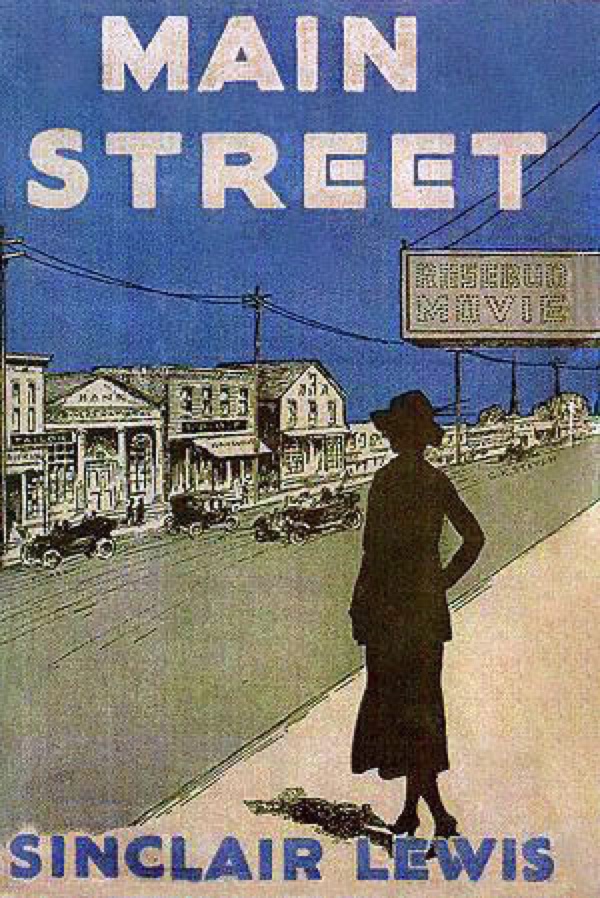
Main Street. Sinclair Lewis. 1920. 924 pages (Libby Ebook)
Our Williams Court Book Club 2, has scheduled a series old classic novels, most of them quite lengthy, for the next few months. Some must feel that their education in literature has been deficient, as mine certainly has. We start with this vivid but dismal picture of the boredom, hardship, uncertainty, and loneliness of life in the early twentieth century small towns and rural expanses of middle America, specifically in northern Minnesota, in the decade of 1910s. It is made to seem doubly problematic for Carol Milford, the new bride of one of the town’s three doctors; she was formerly a sophisticated educated librarian in St. Paul. As she adapts to her new role and environment in the fictitious Gopher Prairie, modelled after the author’s home town, she runs into a brick wall in her multiple attempts to institute the minutest liberal changes in the very conservative mindsets of the denizens, let alone any of her grand schemes to convert the town into a socialist artsy utopia with equal rights, women’s voting rights and free speech. The contrasting ambitions of Carol and her husband are dramatically played out in a spiteful escalating quarrel that threatens their marriage, and then on observing his advanced surgical skills, primitive by modern standards, her admiration and devotion is rekindled for a while. But later she departs with their toddler son for cosmopolitan Washington D.C. for almost two years before returning to grudgingly accept the staid conservatism of Main Street, Gopher Prairie, almost equally disillusioned with Washington society and politics.
The political atmosphere of the time is alluded to repeatedly with suspicion and hostility to all Germans and anything Germanic and bitter societal divisions over socialism and the new-fangled Russian Revolution. There is an abundance of circuitous dialogue, as everyone seems to be belligerently opinionated on the outside and hesitant, self-doubting, and insecure on the inside -except for the dogmatic bombastic, nosy and self-righteous Baptist preacher and his wife. Almost everyone seems to want to conform but refuses to compromise.
There is no very vulgar language and no explicit description of sex, although one character is ascribed characteristics that would make any modern readers think that he is gay and he is described as ‘queer’ a word that did not have the same connotation 100 years ago. And he assiduously tries to seduce some married women including Carol; there are many hints of extramarital affairs. The age-old practice of blaming the victim in a sexual scandal, particularly if a woman, is graphically illustrated by the case of the school teacher who is driven out of town, accused of immoral behaviour by her political and religious opponents. Paranoid intrigue, indignant self-righteousness and vicious gossip prevail in many of the characters.
The writing is dominated by dialogue rather than narrative and even unspoken thoughts are mostly enclosed in quotation marks, which can be confusing. I found a lot of the writing unnecessarily wordy and the ideas expressed were often vague and vague social constructs.
There are a few memorable quotes and descriptions. “Carol was discovering that the one thing more disconcerting than intelligent hatred is demanding love.” Rabbit and chipmunk tracks in snow are called hieroglyphics.
There are a few errors and puzzling obsolete words like ‘Jocosity’. One would think that after more than 100 years, errors such as repeatedly referring to Baptist clergymen as priests could have been corrected in newer editions. (I have never heard of a Baptist priest.) And spellcheckers could correct the references to the famous 1880s atheist as Robert. J. Ingersoll. (He is universally referred to as Robert Green Ingersoll.)
I am ambivalent about recommending this lengthy tome, but will be interested in the other book club member’s assessment of it.
⭐️⭐️⭐️
You’re going on a cross-country trip. Airplane, train, bus, car, or bike?
I would go by bike. I once did a 15 day 1500 km bike trip with my son across much of Ontario, and have fond memories of it. We saw all kinds of things you would miss in a car, bus, or train. I also crossed by train from Ontario to Alberta as a teen army cadet (no great memories) and have flown from Ontario to Canada’s east and west coasts many times but never enjoyed flying.
Which animal would you compare yourself to and why?
An eagle. I will eat almost any food on offer, and I love to wander aimlessly, though on the ground, not in the sky.
I will not reveal any of the details of the extremely complex plot which is nevertheless easy to follow and beautifully and completely integrated with no loose ends but lots of surprises. There are strong themes of feminism and the deeply embedded cultural gender inequality of the era that the author, with Elizabeth as her mouthpiece, points out in many everyday situations and conversations, and some episodes of overt violence against women. Men appropriate women’s research findings as their discoveries and are anxious to keep women in the home, cooking and producing babies. The hypocrisy of the clergy and society at large is another recurring theme of the declared atheist Elizabeth. One clergyman muses in private that “The problem with being a minister was how many times a day he had to lie.”
I mentioned that this was a quirky story, but that hardly explains it; perhaps bizarre would be a better word for some of the happenings. Many are highly unrealistic bordering on magic but all are made to somehow seem possible, and the connections between some characters are tenuous at best. But what will make you forget the improbabilities is the pauses you will need to laugh at the hilarious descriptions. The unfortunate title may turn some potential readers away but you do not need any but the most basic knowledge of chemistry to love this tale.
There are so many great quotes that is difficult to choose only a few:
“a horrible man broke into the house and said if I didn’t give him all our money, he’d take the baby. I hadn’t slept or showered in four days, hadn’t combed my hair for at least a week, hadn’t sat down in I don’t know how long. So I said, ‘You want the baby? Here.’ ” She shifted Madeline to the other arm. “Never seen a grown man run so fast.”
“She supposed it took a certain type of skill to be able to say exactly the wrong thing at exactly the wrong time. Maybe that was a prerequisite for a position in Personnel.”
“Like most stupid people, Mr. Sloane wasn’t smart enough to know just how stupid he actually was.”
A few nit-picky errors: Sidewalks are made of concrete, not cement. Blood pressure and pulses are reflected in arteries, not veins but here veins pulse and “her blood pressure skipped through her veins like an unsecured fire hose.”
This is a fun read combining a complex imaginative plot, laugh-out-loud hilarity, and many surprisingly serious unusual observations about human interactions, life and death.
–
A close friend suggested that I was reading too much heavy nonfiction lately and recommended this quirky recently published debut novel, as did my wife. Set largely in fictional Common, California in the fifties and sixties, the central character is Elizabeth Zott, a brilliant and beautiful but very eccentric research chemist, trained at elite British and American universities, and for four years, a celebrity TV cooking show host. Her live-in star partner, Calvin Evans who was her research rival before hormonal chemistry bonded them together, their illegitimate precocious misfit daughter Mad, and their unrealistically intelligent mongrel dog named Six-Thirty complete the family.
⭐️⭐️⭐️⭐️
Thanks, Sheila and Floyd.
What is your middle name? Does it carry any special meaning/significance?
Neil. Never found out why my parents chose it, so no special meaning as far as I know.
What is one question you hate to be asked? Explain.
Why did you leave a full-time job with the university and hospital to establish a private practice dedicated to hepatology.? The reason was largely because I was frustrated in not getting promoted beyond Associate Professor, (hospital and university politics, personality conflicts, and my wife’s encouragement all played a part) but it was, in retrospect, the best career decision I ever made.
What experiences in life helped you grow the most?
I can’t identify any one single experience, but if forced to choose, I would say that it was probably my decision to give up on my first marriage.



 The Passionate Reader