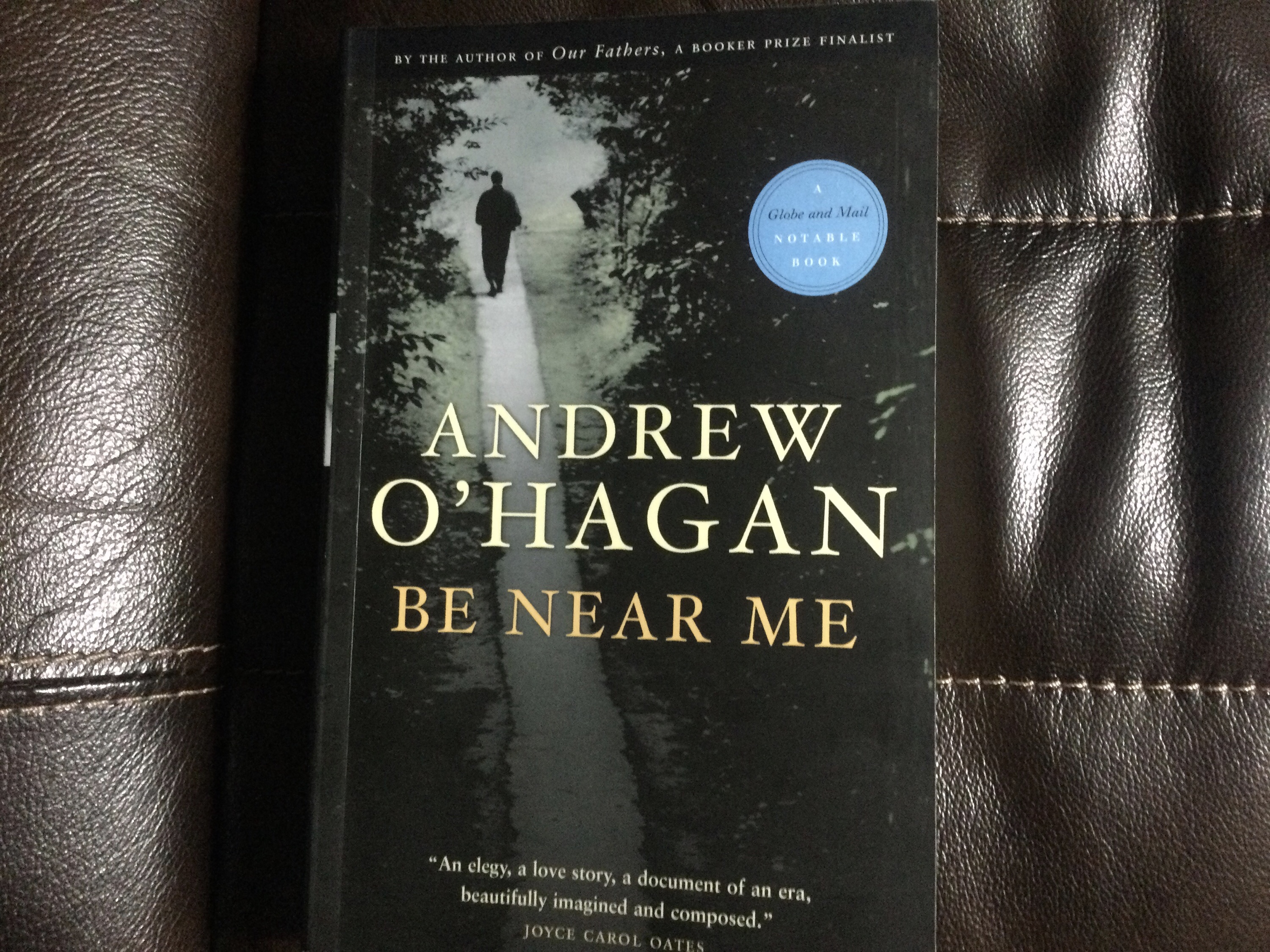
This novel by a Scottish writer who now lives in London blurs the artificial distinctions of genres of fiction. Presented in the first person singular voice of a Scottish Catholic priest assigned to the small town of Dalgarnoch, after spending most of his life in England, at an unspecified time around 2000, it is chock full of disconnected ethereal musings about his faith, the purpose of his life, and the trials he endures as he seeks to be accepted by his parochial parishioners.
None of the characters are innocent except for the dying housekeeper, and the priest’s engagement with two teenagers into thievery, illicit drugs, drunkenness and heavy smoking is a bit of a stretch. Romance and sexuality is presented mainly by oblique inferences, not explicit description, but foul language is pervasive. The priest says Mass and hears confessions without any deep sense that any of the rituals matter.
The plot is quite simple and the characters are few in number but some seem like caricatures.The writing style is expressive, with many allusions to British history and classical literature that I found to be confusing, as the author seems to take for granted that all readers know the details of Oxford history and the writings of Marcel Proust. That doesn’t describe me.
Two quotes will suffice to give a taste of the style. Bishop Gerard “…sat at the table, using his hand, as usual, to weigh the words he spoke, fondling the air in front of him, shaping their rhyme and reason.”
“Mr. and Mrs. Poole appeared to live together in a state of settled resentment.”
I kinda, sorta, enjoyed this story, but it is not very memorable.
No fan of country music or Dolly Parton, I read this biography by an admiring Kansas contemporary from a similar background, hoping to enlarge my horizons and maybe revise my low opinion of Dolly. It had a great review in the New Yorker. My objectives were not fulfilled. The author liberally intersperses distracting autobiography, and references to hundreds of music pieces that I never encountered or enjoyed.
Unabashedly laudatory of Dolly, the disjointed account of her career is loaded with attempts to justify her many contradictions and inconsistencies. They do not quite work.
One needs to admire anyone who rises from abject rural poverty to become a very wealthy cultural icon and a generous philanthropist dedicated to helping those who are trapped in the circumstances of her youth, and there is no doubt that Dolly Parton is kind, altruistic and sincere. But there is little depth to her intellectual rationalization and an overriding need for public adulation and monetary gain let her simultaneously flaunt herself as a sex object and a promoter of women’s causes. And her abundant use of plastic surgery speaks of a vanity and refusal to accept the natural effects of aging, not justified by her assertion that she needs it for her work. Her superficial understanding of her Christian faith apparently does not include any need for modesty.
I did gain more respect for some of the positives of Parton’s efforts on behalf of others, but I am a bit concerned that philanthropy and advocacy at the hands of poorly educated cultural icons and pop stars has more potential for abuse and negative consequences than that provided by the likes of Bill and Melinda Gates.
The writing is rambling and inconsistent in both chronology and topics covered. The author is adept at man-bashing and seems keen to take offence at any criticism of herself, Parton, or country music, implying that criticism or expressing dislike of country music is unacceptable discrimination, and rude. I would prefer to be thought of as discriminating in my music tastes.
This is a most peculiar book by the well-known now retired CBC journalist and newscaster. Written in the first person singular, in the form of seventeen brief autobiographical snippets, the monotonously uniform writing style indicates that the words were actually written by the author. He must have used a lot of liberties to then create extensive questionable dialogue and present the perspectives of the subjects as accurate self-revelations.
The “extraordinary Canadians” featured are certainly an accomplished lot, whose contributions to our culture should not to be overlooked, ranging through the modern day politically correct fields of advocacy for Aboriginals, minorities, and mental health services to animal rights, social services, and unusual political leaders. But how they were chosen from among the thousands of “extraordinary Canadians” who could have been featured is never discussed. In many of Mansbridge’s later interviews as a journalist, I noted a tendency for him to preface his questions with long expressions of his own opinions on the subject, leaving the interviewee with only one acceptable answer. The same process may have entered his choice of subjects to interview for this book.
Some of the self-revelations are cloaked in false modesty and assertions of altruistic motives that are easily seen through as really just reputation polishing. The only bio that I really enjoyed was that of the remarkable selfless Rabbi Rueven Bullard who at one point granted me an hour-long interview on his radio talk show. The Saskatchewan politician Pat Atkinson’s assertions of enjoying political life hide an overgrown ego and need for public praise; the vegan fashion designer Manny Kohli assertions of no monetary motives disguise boosterism for his multimillion dollar company and the animal rehabilitation worker Hope Swinimer overemphasizes the ultimate importance of her work simply because she enjoys it. The featured Nadine Caron, the first Canadian Aboriginal general surgeon, for all her wonderful accomplishments, seems to think, like many surgeons, that only surgeons are worthy of accolades among medical professionals. “I didn’t just want to be a doctor; I wanted to be a surgeon.” Or was it Peter Mansbridge that has the subconscious bias to worship surgeons? As a retired sub-specialist in Internal Medicine, I could take that choice as the kind of insult she decries in others, if I chose to, but I do not. Most of us lesser minions in the medical hierarchy are used to the haughty attitudes of many surgeons who disparage their colleagues in other specialties. But why not feature the equally accomplished Dr. Marilyn Cook, who earlier was the first Aboriginal family physician in Canada?
In many ways, this book is a deceptive way for Mansbridge to present his own slant on the discussions of our social, cultural and political life. Don’t waste your time on it.
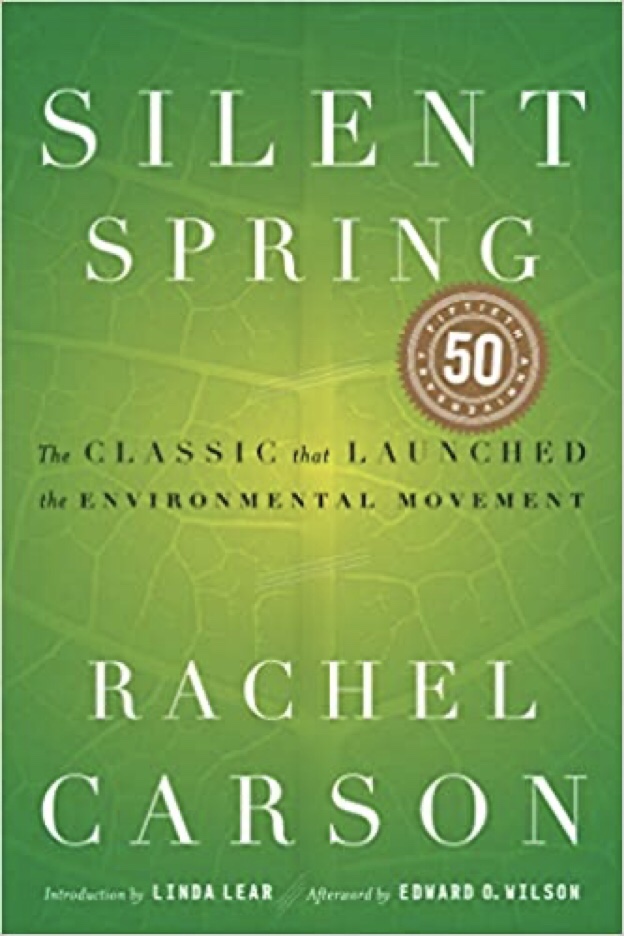
This richly documented influential environmental science screed has never been out of print since its publication 59 years ago. I recently read the 1992 edition, with a long introduction by Linda Lear, in my attempt to make up for my neglect of classics in my previous life.
Rachael Carson was an American-trained marine biologist who never had a long-lasting institutional affiliation; her earlier writing earned her enough to allow her to pursue her broad interests in sciences independently. Her knowledge of entomology, chemistry, physiology, radiation science, and ecology was astounding and is presented in well-organized, logical segments, (but sometimes with biting sarcasm when discussing the then-burgeoning powerful chemical industry producing tons of toxic insecticides and herbicides). She had contact with leading environmental scientists, biologists, and entomologists from around the world and quotes them liberally.
The cozy relationship described between lobbyists for the chemical companies and the U.S. Department of Agriculture seems analogous to that described between Big Pharma lobbyists and the FDA in Gerald Pozen’s Pharma in more recent times.
Emphasizing the delicate balances in nature, the case for using natural products for control of both vegetable and animal pests seems compelling. The examples of the law of unintended consequences are numerous. The cited examples of toxic and at times fatal effects of synthetic pesticides, in many species, including Homo sapiens, are shocking. Carson’s documentation of these ultimately kickstarted the environmental movement that lead to actions such as the banning of DDT and the delayed establishment of the Environmental Protection Agency in the U.S. Yet almost 60 years later, the defoliant in Agent Orange is still readily available to spray, wherever you please, as Killex. It seems we are all slow learners when it comes to sharing nature with other species.
The introduction of foreign species to control native pests, which Carson advocates with some caveats, has a long history of problematic unintended results, witness the devastation wrought by rabbits and cane toads deliberately introduced into Australia. The whole concept of foreign invasive species is a bit problematic- in many places Homo americanus is the main foreign invasive species and from a broad Gaia perspective, Homo sapiens is the most destructive invasive foreign species on earth.
The discussion of cellular respiration and the effect of toxins on cellular respiration took me back more than 50 years to the painful introduction to the Krebs cycle in biochemistry class.
It seems that no one ever refuted any of the hundreds of science claims presented here, although the book was scorned by those in the powerful chemical industry.
Two quotes will suffice to demonstrate Carson’s wisdom as well as her vast knowledge. “By their very nature, chemical controls are self-defeating, for they have been devised and applied without taking into account the complex biological systems against which they have been blindly hurled.”
“The ‘control of nature’ is a phrase conceived in arrogance, born of the Neanderthal age of biology and philosophy when it was supposed that nature exists for the convenience of man.”
This is a great educational read, as relevant today as it was 60 years ago. Unfortunately, Carson died shortly after this book was published, denying her the accolades she deserved and us of more of her brilliant insights.
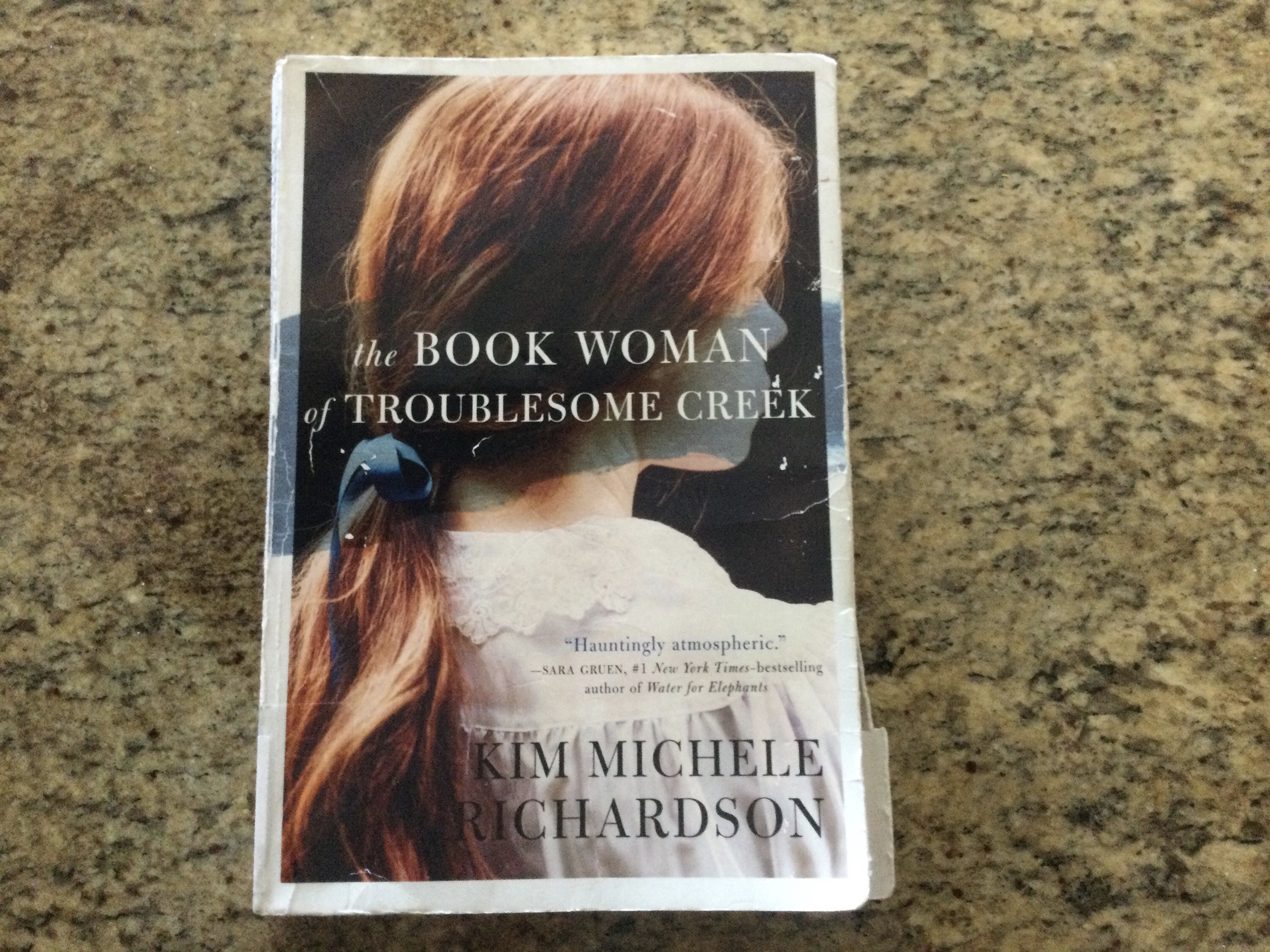
The sparsely populated eastern Kentucky Appalachian mountains and valleys in 1936 is the setting for this engaging novel by a native Appalachian Kentuckian.
The single dirt-poor daughter of an ailing coal miner suffers from the prevalent discrimination and misogyny of white folk because her rare inherited methemoeglobunemia makes her skin blue. Eking out a living by joining the Pack Horse library program of the Works Progress administration to deliver library services to the colourful backward independent hill people, she meets and befriends a diverse mixture of misfits, delivering library books, magazines and newspapers on her ornery mule Junia.
Encountering lawlessness, corruption, illiteracy, inbreeding, misogyny racism, and starvation was part of the everyday life for the very real Kentucky Pack Horse librarians. But there are also acts of generosity and heroism. The poignant symbolism of the semiliterate starving school boy, Henry, who nevertheless gives Cussy Mary his single Lifesaver candy in gratitude for her delivery of children’s books is very touching. The decision of Cussy Mary to discontinue the new treatment that makes her a beautiful white woman speaks to the importance of acceptance of who one really is, and not yielding to conformity. The abusive lawlessness of the anti union coal company is startling but realistic. The backward starving hill folk who refuse to accept any aid simply because it came from the government via Roosevelt’s WPA program reminded me of modern day Republican states’ refusal of federal aid because it was part of Obama’s Affordable Care Act.
The complex plot unfolds slowly but, for the most part, unpredictably and the first person singular narrative is loaded with southern idioms and figures of speech. There are no loose ends and the reader is left to guess the fate of ‘Cussy Mary’, the narrator, until close to the end.
A couple quibbles. The need for a wedding and a traumatic death to round out the story becomes predicable well before they happen in the last few of the 47 short chapters. And one incongruity: it is said to be pouring rain on a “cloudless day”, probably a computer spellchecker typo not corrected by a human one.
Having visited my daughter who lives and works in eastern Kentucky (at one time in Hazard), I can just begin to understand the uniqueness of the regional culture although it is no longer as backward as it once was.
This is a beautiful well written story. Highly recommended.
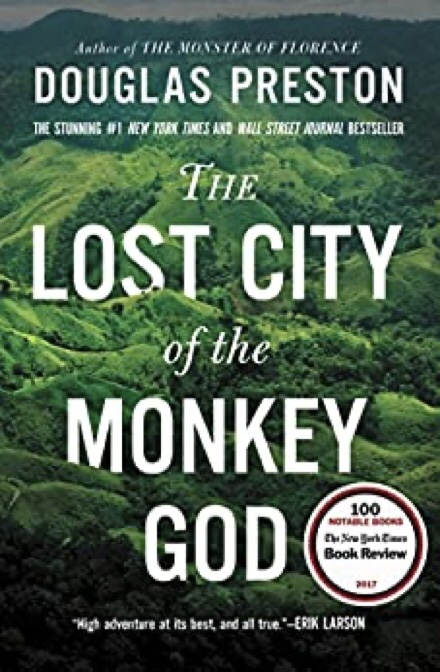
Because of a chance 1996 meeting of the prolific novelist with a scientist exploring ancient ruins, he joined a 2015 motley crew of archaeologists , anthropologists, photographers, film artists, and adventurers to explore the ancient buried city rumoured to be the home of an extinct Honduran people deep in the jungle of the Mosquito region. His previous writings include articles for The Atlantic, The New Yorker, and Harper’s, as well as dozens of novels, most featuring the FBI agent Sargent Prendergas.
The harrowing adventure, working with the changing unstable Honduran political regime eventually lead to what they claim to be the long-lost City of The Monkey God in the world of narcotic traffickers, infested with killer snakes, poisonous vegetation and deadly insects. Their discovery, the exact location of which they try to keep secret to prevent looting of priceless ancient artifacts lead to controversy and scorn from parts of the academic archaeology word, some of it no doubt driven by professional jealousies and shifting political allegiances in the unstable corrupt world of Honduran politics.
The science of mapping the vast area aided by helicopter-mounted Lidar (Light Detection and Ranging) technology is interesting. The explorers almost all got infected with some form of the potentially lethal protozoan, Leishmania, from sand-flea bites, requiring treatment with the toxic drug Amphotericin B. But this did not stop some of them from returning for more artifact recovery.
Although the civilization uncovered may have rivalled that of the Mayan prior to 1500 A.D., it quite suddenly disappeared shortly thereafter, likely largely because of smallpox introduced by Spanish explorers.
The speculations about the meaning of the suddenly destroyed ornate artifacts, and the religious rites of the people, including human sacrifices, are confusing even to expert archaeologists, and will be of little interest to most English bibliophiles. And there is far too much hype in the description of the findings as the author gets caught up in his own enthusiasm. Incredible, outstanding, of supreme importance, astoundingly, staggering, breathtaking, and spectacular, are just a few of the overworked descriptors. The maps and photos at the back are far to small to be of much use. The description of the vastly overgrown city reminded me of what Alan Weinstein described in The World Without Us, and in many ways vindicates his predictions in that book.
By far the most interesting and immediately relevant part of this account is Preston’s thoughtful prescient analysis of the eternal risks to humankind from pandemics, written before the outbreak of COVID-19. He is particularly concerned that the combination of increasing population density, travel, and global warming has lead to deadly variants of leishmania spreading around the world in both humans and animals. And there is no prospect for a vaccine for this deadly infection.
This is an interesting travelogue by a dedicated adventurer that is also a good history lesson and a stark prediction about the future of our battles with dangerous infections.
This very modern treatise on dying was reviewed in the March 20th issue of The Economist. As a physician who has seen too many people die, I was anxious to read what modern experts had to say about the process. The young British/American journalist travelled the globe over several years to interview dying adults of all ages, their caregivers, and both proponents and opponents of laws governing medical assistance in dying. Divided into chapters titled Modern Medicine, Age, Body, Mind, Freedom, and The End, she provides multiple interesting philosophical, ethical and societal perspectives on the ultimate fate of all human beings.
The mishmash of laws concerning medical aid in dying around the world are all far too liberal for many religiously-oriented people, but far to restrictive for many frontline healthcare workers and many of the enlightened public, some philosophers and even a few liberal religious leaders. The most liberal laws are in Holland, Belgium and Switzerland and those few enacted in some of the states are vague and very restrictive. In the U.S., the decisions of the terminally ill are very frequently determined by financial considerations because of their ridiculously dysfunctional restrictive health care system. The limitations in the treatment of the mentally ill are discussed with great sensitivity.
The concept of a completed life, originating in Holland, can lead to the belief that it is perfectly reasonable for an elderly but not terminally ill individual to request medical assistance to die. But widespread acceptance of suicide as a rational end to a completed life is also problematic as most suicides are impulsive acts that should be discouraged in the interests of individuals and society at large. The concept of rational suicide is rejected by most self-serving psychiatrists who insist that anyone committing suicide must be mentally ill. But psychiatrists in the Covid era are now hardly underemployed.
Medical assistance in dying has been practiced for centuries, although usually covertly. In the 1980s, Dutch prosecutors quietly stopped pursuing charges against doctors who openly obeyed terminally ill patient’s requests for assistance in shortening their miserable lives. Such practices were always widespread, with the charade of treating pain with prescriptions of enough narcotics to be fatal if taken as one dose. But there was always lingering concern about possible prosecution for murder. In my Exits chapter in Medicine Outside The Box, (2011), I acknowledged having hastened patient’s demise in the process of relieving their pain, as have many other honest physicians treating the terminally ill. But the charade did feel dishonest and at times was shattered as both I and the patient knew what was really happening.
“If I give you enough pain-killers to relieve your pain, you will die.”
“I know that.That is what I want.”
This was always in hospitalized patients with at most few days to live, unlike those poor souls who potentially face months or years of torture if not provided with help to exit. Nevertheless I was chastised in print by a freelance journalist who questioned my motives. Can anyone fully determine their own motives for such actions, let alone those of others?
In Being Mortal, Atul Gawande expresses concerns about relying on laws as an alternative to improving palliative and hospice care and this seems quite a legitimate concern to me. “Death with dignity laws codify the ‘better dead than disabled’ mindset and may make the disabled feel guilty about hanging around.”
In discussion of dementia, Englehart writes – “ …why should we privilege the critical judgements of a being who effectively no longer exists over the expressed desires of a person who is with us here, now? Why not instead think of the person with dementia as a new person, unconstrained by the choices of a past self?” At first glance this seems like a profound insight but it is problematic. With the insidious, unpredictable progression of dementia, when does the old me cease to exist and the new befuddled me become the one to express valid wishes? And who should determine the time of the switch? Certainly not politicians, lawyers, philosophers, ethicists or doctors. And family members may well have a financial conflict of interest. I personally think that dying with a loved one holding one’s hand is overrated. Given a choice, I would prefer to take my last breath all alone or in the care of a dispassionate capable caregiver.
Organ donation is barely mentioned and the accepted practice of organ donation after cardiac death, in which a patient who does not fulfill criteria for brain death becomes a donor immediately after the heart stops beating when life-support is withdrawn, is not mentioned at all.
This is a well-written (with a few grammatical errors) balanced discussion of profound enigmas. But be forewarned, the personal stories related are generally tragic, and there are no easy answers.
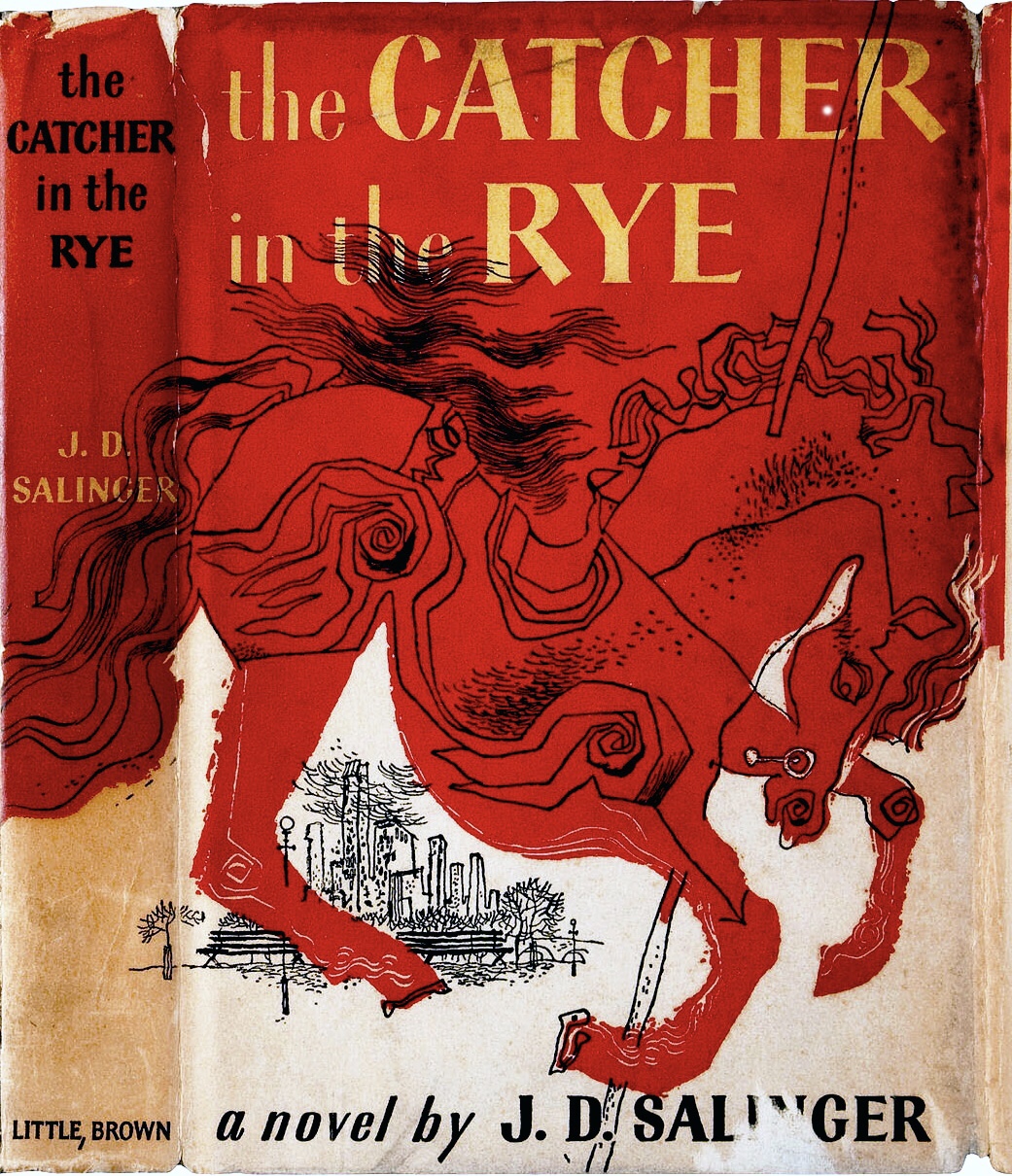
Probably too late to benefit, but trying to at least partially compensate for my deficient knowledge of classic English literature in my circumscribed youth, I recently read the e-edition of this old standard novel. I suspect that the abundant foul language, irreligious and sacrilegious focus and and references to ‘deviant’ sexual practices kept it on the censored list of books we could study in my high school days, in the WASPy puritanical rural Ontario of the 50s and 60s.
Narrated in the first person singular voice of the immature, impulsive New York City teen, Holden Caufield, it’s staccato declarative musings and observations are related in the crisp short vernacular slang and profane sentences of the 1940s. There is no flowery poetry here, and the writing is reminiscent of the sparse language favoured by Ernest Hemingway.
Ageless issues of teenage insecurity, angst and rebellion, exaggerated cynicism about everything adult, and prevalent self-doubt and self-loathing, are fully explored. The narrator has an extremely flighty short attention span, remarkable emotional lability and cannot seemingly form durable emotional bonds with anyone. It is as if this was an early description of what later became medicalized as ADHD, with a pinch of Asperger syndrome thrown in for flavouring. And there are some hints of what later became known as post-traumatic stress disorder for which Salinger had been hospitalized not long before writing this story, after fighting on Utah Beach on D-Day and helping to liberate German concentration camp victims. This seems to complete the recipe of psychosocial ingredients for this novel- combine ADHD with Asperger syndrome and PTSD.
This is the most famous of J.D. Salinger’s works and he admitted late in his life that it was semi-autobiographical. Growing up in the 1920s and 30s New York city culture, he failed to fit in, left several schools without completing required coursework, and was always somewhat of a misfit, becoming a reclusive Vermont backwoods hermit for the last thirty years of his life. Although he married three times, his relationship with women was always strained, and his search for meaning in his life lead to obsessive Zen Buddhist practices and endorsement of Scientology at different times. One gets a picture of an author as troubled and mentally unstable as his fictitious subject, Holden Caufield.
As a throughly urbanized teen’s account of coming of age a decade or two before my coming of age in an totally rural environment, there is little in this story that I can relate to on a personal level. But at least I can now discuss Holden Caufield with my urban neighbours without displaying complete ignorance.
I was intrigued by this title mentioned en passant in an Atlantic article, so I downloaded it from the library. Written by a female American white workplace diversity trainer who gives talks to institutions, company employees, and academics, this screed is a distressingly detailed damnation of the history of race relations, and the pervasive if mainly inadvertent ways that we white people maintain our place in the pecking order of societies around the world, but mainly focused on relations between whites to people of colour in the United States. No white person can escape from the collective responsibility for the continuing deeply-rooted racism. Race based on skin colour is a non-biologic construct that is nevertheless widely accepted.
The author distinguishes between the prejudices everyone has in their heads and discrimination based on actions. “People who claim not to be prejudiced are demonstrating a profound lack of self-awareness.”
Any white person will be uncomfortable with some of the assertions here but there is no escape. No excuses based on individual experiences are deemed legitimate, and even silence on the part of white folk when it comes to discussing racial issues is roundly condemned. The strident black advocate for reparations, Ta-Nehisi-Coates, is extensively quoted and accusations of using ‘the race card’ in debates are condemned. “… unequal power relations cannot be challenged if they are not acknowledged.”
Reading this very perceptive condemnation of white supremacy and privilege made this privileged white male uncomfortable, but perhaps that is the author’s intent. Every argument to justify my world outlook is answered convincingly. I never became acquainted with anyone of non-European, non-white origins until after high school, and was aware of their existence only in such settings as those portrayed by Mark Twain and Harriet Beecher Stowe or by missionaries returning from attempts to ‘civilize’ and convert black Africans. I have probably inadvertently insulted many nonwhites over my lifetime and plead guilty to disparaging the current political correctness movement. I have probably been far too willing to believe that some members of minority groups are looking for excuses to be aggrieved, although that characteristic is widespread irrespective of skin colour.
Humbling but thought-provoking, this book is an important addition to the voluminous literature about how we all relate to one another.
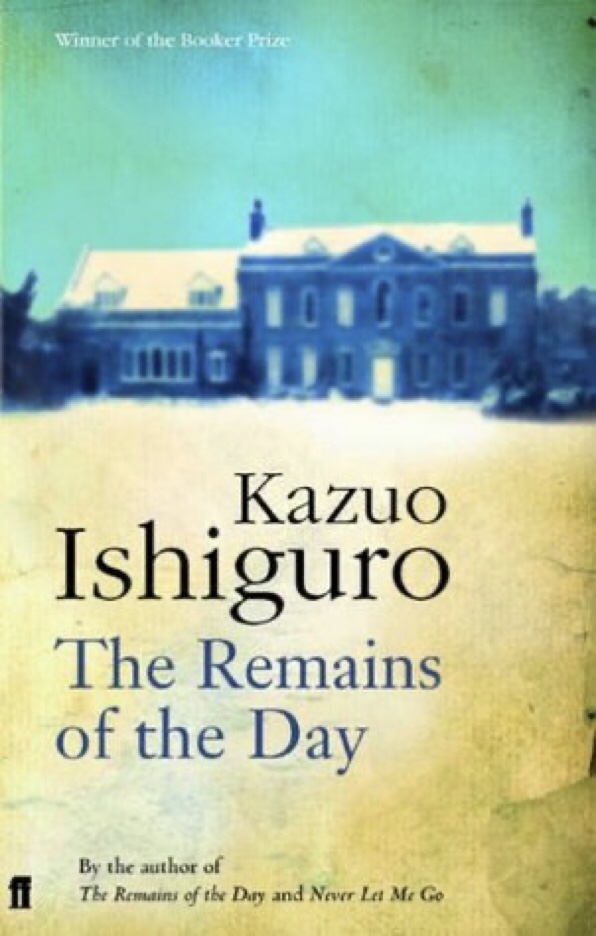
This old British classic novel, set largely between WWI and WWII, is narrated entirely in the first person singular voice of the butler of the English country estate, Darlington Hall, owned and run by the controversial real Lord Darlington. Typical British restraint, propriety, dignity, equanimity, class-consciousness, and understatement in a rigidly stratified, very patriarchal, hierarchy, are displayed almost but not quite to the point of stereotyping, and caricature.
Mr. Stevens, the narrator and head butler, and Miss Kenton, the head maid, maintain a stiff and at times contentious relationship, never even addressing the other by first names, while remaining absolutely loyal to Lord Darlington as he entertains senior aristocrats and politicians, including anti-semitic Brits and senior Nazis in ill-conceived, naive, and wrong-headed, but sincere efforts to avert WWII.
This is novel whose appeal is largely based on character development and eloquent prose rather than a complicated and twisted plot. The musings of Mr. Stevens repeatedly revolve around what it takes to be dignified and a great butler.
The 1993 Hollywood adaptation starring Anthony Hopkins and Emma Thompson turned it into a story of unrequited love, which is certainly there in the background in the book, but is not a prominent feature. I have not seen the movie and am not sure I want to, but critics have raved about it.
One great quote among many: “….when with the benefit of hindsight one begins to search one’s past for ‘turning points’, one is apt to start seeing them everywhere.” The musings about the remains of the day as an analogy for the remains of ones life after retirement are quite profound.
The latest novel from Ishiguro, who has a habit of switching genres regularly, features a human-like robot and does not seem as interesting to me. But this one is an enjoyable period piece refreshingly devoid of any graphic sex or obscene language. I quite enjoyed it.
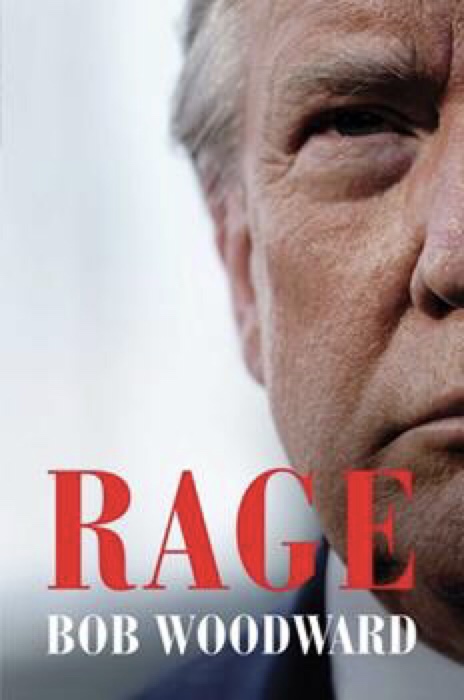
The longterm Washington Post investigative reporter who has uncovered or covered the shenanigans of seven presidents tackles the reign of Donald Trump for the second time in this exhaustive documentary based on seventeen interviews with the president and a lot of inside-the belt information gleaned from his many other sources. If there are any rational human beings who still believe almost anything that Donald Trump ever said, reading this work should set them straight. The fact that Trump agreed to the interviews at all, in spite of Woodward’s negative portrayal of him in his earlier book Fear, is a testament to his delusional egotistic hubris.
The extensively verbatim transcriptions of the conversations reveal fragmented, diversionary, self-congratulatory paranoid non-answers to questions, laced with lies and superlatives applied to himself and invective applied to almost everyone else. Non-sequiturs abound and at times the answers reminded me of the neologistic jargon of a stroke patient with damage to speech areas of the brain.
The inner workings and chaos of the Trump White House are described in far more detail than anyone other than a dedicated political junkee would ever enjoy or need to get the central message. The labyrinth of acronyms especially in the senior cabinet level personnel and the military is confusing. The quoted exchanges of insincere, mutually flattering love letters between Trump and Kim Yong Un of North Korea would be laughable if the world’s peace did not depend on their interaction. As it is, they are just nauseating.
It is striking that only three of the twenty eight people whose photos appear in the book are women, all in rather minor roles in the background.
Woodward, perhaps because of his longstanding Washington insider status with almost unlimited contacts to the rich and powerful (the president always returned his phone calls) seems a bit restrained in his criticism, but comes across as also arrogant and self-important, deeming it appropriate for an unelected reporter to advise the president on both domestic and foreign affairs.
This is far more documentation than any reader should need to conclude that Donald Trump was and still is a dangerous force in the world. Unfortunately, the people who should read this book are the least likely to do so.
This is a peculiar amalgam of the biography of an Auschwitz surviver as told to the younger Australian author, and fiction. The historical authenticity has been challenged by such organizations as the Auschwitz Memorial Society, but memories are never entirely accurate, and the author never claims that every detail happened exactly as related. The title alone may be a turn-off for those looking for an upbeat tale to survive Covid with an intact psyche, but it could also be viewed as confirmation that the problems we face are, in comparison, miniscule. Originally planned as a screen script, the book is based on first-hand accounts of the horrific true experiences the Slovenian Lala Sokolov’s for three years in the Auschwitz-Birkenau concentration camp.
The reader is spared no details of the graphic horrors of the camps and the agonizing moral choices the prisoners were forced to make to survive, knowing that with one wrong choice they would join the ranks of the randomly shot. The love story of Lala and Gita whom he first met when forced to tattoo her to identify her as a Jew is touching if a little overdone as a not-entirely convincing tearjerker.
The physical layout of the massive camps is poorly described and confusing and a plot diagram and a sketch map of wartime Europe would have been helpful for geographically challenged readers like me.
On the one hand, this is a real downer as a reminder of the unspeakable horrors that human beings are capable of inflicting on each other. On the other hand, it is a testament to the resilience and power of the human spirit in the face such cruelty. Not very enjoyable but inspiring and educational.
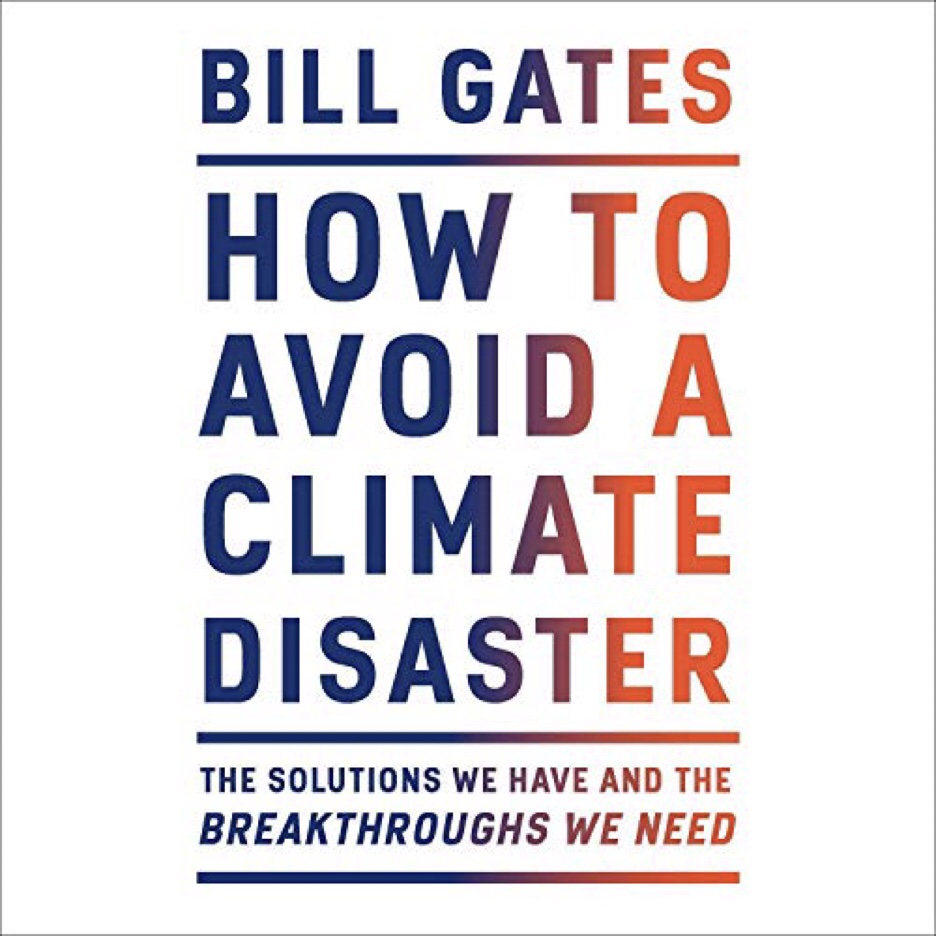
There is probably no one reading this who does not recognize the author’s name and image. But the software engineer philanthropist continues to amaze me with his common touch, brilliance, and generosity as adequately demonstrated in this very readable, and optimistic book of advice. Global in scope and conveying tons of data, his clear thinking about global issues including climate change, public health, poverty remediation and politics is conveyed in clear prose accompanied by charts and graphs, with conviction, a profound humanism and humility. Skeptics may dismiss his arguments as hopelessly optimistic, but there can be no doubt about his logical clear thinking and sincerity. And the alternatives to acting on at least some or most of his recommendations are likely to be disastrous.
The extensive use of the concept of the Green Premium to clarify the costs of different actions to mitigate global warming makes comparisons easier and the alternatives easier to understand. There are revelations here that run counter to conventional wisdom including the fact that planting trees is snowy climates may actually worsen global warming, somewhat neutralizing the message in Michael Powers’ novel, The Overstory. And the concern that setting goals for climate change mitigation for 2030 may be harmful in the longer term is similarly counterintuitive. This is a more scholarly, more universal compliment to the message delivered from a strictly Canadian perspective in Seth Klein’s A Good War. And I trend to trust anyone who quotes the late great Hans Rosling’s Factfulness.
Unlike most of his fellow billionaires who contribute nothing meaningful to the betterment of others, the Bill and Melinda Gates Foundation is dedicated to improving the lot of everyone on earth, regardless of race, nationality, creed or background. While Jeff Bezos strives to ruthlessly acquire more wealth, while ignoring the consequences of global warming, Peter Theil deals with it by planning to move to a huge temperate New Zealand estate, and Elon Musk hopes to escape it to Mars, Bill Gates visits subsistence African farmers to figure out how to improve their lot in life. The contrasts could not be starker. Mark Zuckerberg at least is committed to giving, even the charity of he and his wife is not as well known as that of the Gates’.
After reading this documentary, I wanted to nominate Gates as Secretary of Energy. But his talents and perspectives are too extensive and valuable to be confined to any one nation. He should be in the United Nations with real powers to deal with both global warming and poverty.
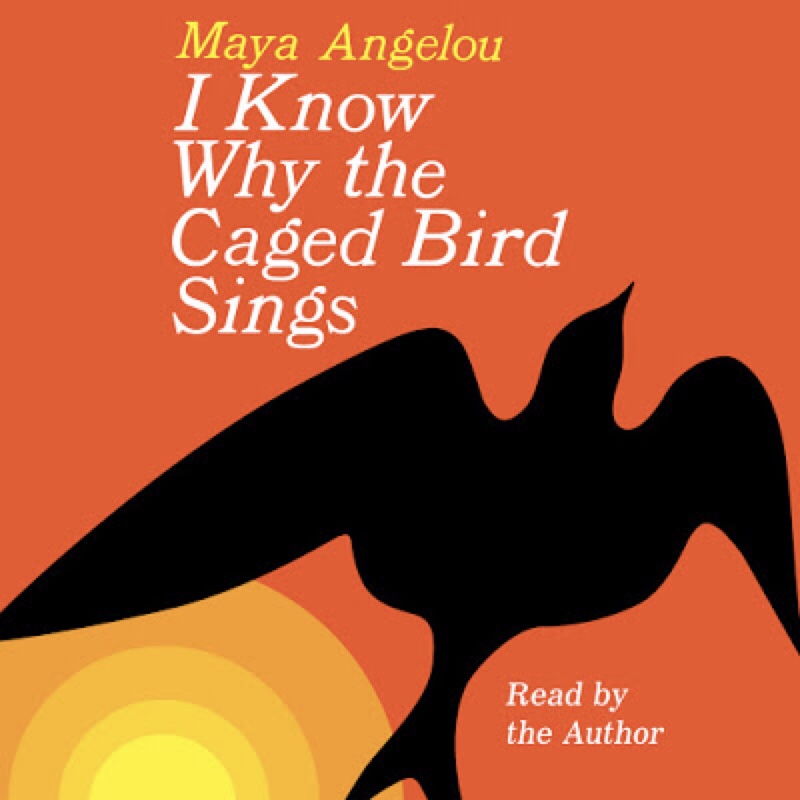
I am humbled by the realization that I knew nothing of the work of this late poet, memorialist, novelist, and Black activist’s until recently. A few weeks ago I watched a taped interview with her and immediately knew I had to read this, her most famous work which is variously described as an autobiography or as autobiographical fiction. From the interview where she discussed her rape at age nine, and her experiences in segregated 1930s and 40s small town Arkansas, it is clear that this is mostly autobiography, though perhaps a bit embellished.
Her divorced California parents sent her at age three and her brother aged four to be raised by their grandmother in Jim Crow Arkansas in the depression. Later she visited with her mother in St. Lois and even later with both parents in California. Her writing is fittingly poetic and her intelligence shows through in spite of her underprivileged life, her lack of formal education and her many hardships. The lives of blacks in the 1930s and 40s Deep South is vividly described. The entrenched racism is realistically described but she refuses to succumb to bitterness and hate. There is abundant humour, particularly as she describes the hilarious antics and hypocrisy of the black charismatic “holy roller” churchgoers. It is not clear how much of her religious education she abandoned in later life, but one great quote gives a hint. “I find it interesting that the meanest life, the poorest existence, is attributed to God’s will, but as human beings become more affluent, as their living standard and style becomes to ascend the material scale, God descends the scale of responsibility at a commensurate speed.”
Her lack of even rudimentary sex education led to great confusion and consternation and an unwanted pregnancy in her late teens. But she learns to love and treasure her newborn son as the book ends.
This is a wonderful biography of a fascinating, beautiful perceptive woman. Highly recommended.
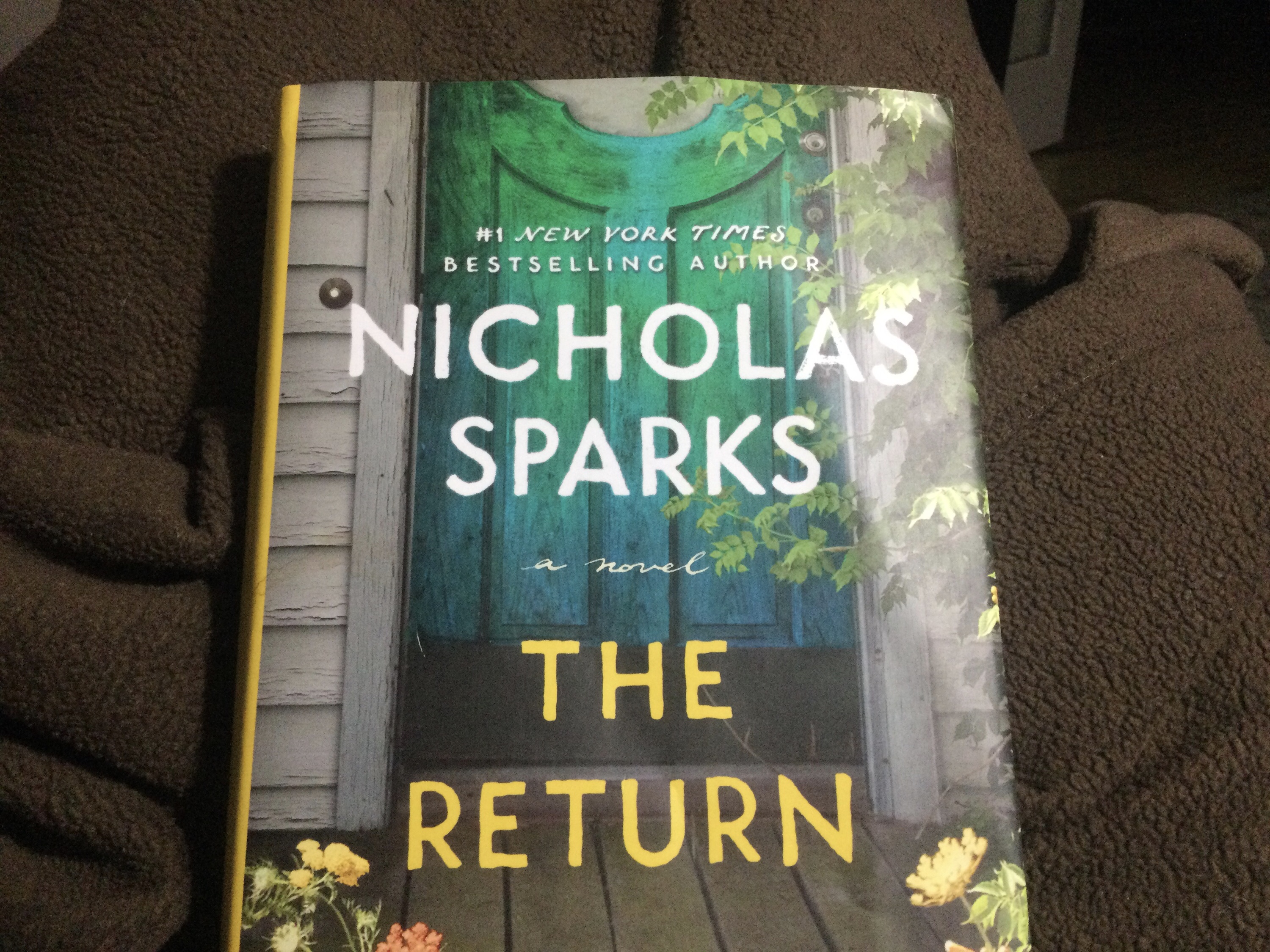
As soon as I arrived home with this novel from my granddaughter’s front yard lending library, my wife predicted that I would not like it, but I was not familiar with the author’s style and took a chance on it.
Boy meets girl or man meets woman, both seeking nirvana. Various obstacles prevent that happening until they are all resolved and then they live happily ever after. Such stories fill the shelves of the romance sections in bookstores. What makes this tale work, by the prolific modern author is not the trite formula, but the obstacles to that happy ending.
Set in small town North Carolina, the two would-be lovers are a wealthy war-damaged orthopaedic surgeon with PTSD and a deputy town sheriff with secrets of her own. The impediments include the man’s quest to take up a new career as a psychiatrist and a need to solve the mystery of his ninety year old reclusive grandfather’s strange out-of-state trip and his death there, as well as his former relationship to the surly mysterious teenage girl who has shown up in town.
The medical mystery of what ails the secretive lone teenager is well described apart from the assertion that her pupils dilate in response to light. The details of the lives of bees and beekeeping are very vividly described and reminded me of my childhood experiences living next door to my beekeeper uncle.
The pathos of the deeply emotional, tentative, timid interactions of the would-be lovers is unrealistic and overdone, reminiscent of old Victorian romances, but there are no graphic descriptions of intimacies.
The happy-ever after ending, although predicable, is arrived at late, only after complex unpredictable plot twists.
This is best read as a mystery rather than a romance, and taken as such is a quite enjoyable read. I suspect it will be enjoyed more by women readers than by men. Small doses of this genre are quite enough for me.
The U.S. Attorney General for the southern district of New York from 2009 until he was fired by Donald Trump in 2017 discusses the workings of the U.S. criminal Justice system from a uniquely insider’s perspective. He details many cases of wrongdoing from insider trading and political corruption to gangland murders and child kidnapping. The writing is easy to understand even if the issues and processes are not at times.
The author is an unusually reflective and principled man who agonizes over the decisions that confront prosecutors on a daily basis; he questions his own decisions frequently and capably conveys the vagaries of a flawed system. He discusses the ethics of plea bargaining with co-conspirators and the futility and dangers of torture as a technique to extract information, the lottery of jury and judge assignments, and the wide discretion allowed for both prosecutors and judges. The egotistical antics of the would-be famous judges who seek fame rather than the truth, a la Judge Judy, is illustrated in the description of the trial of Paul Manafort. Prosecutors are commonly caricatured as ruthless law-and-order advocates, not the very human conflicted moral philosophers wresting with the gut-wrenching decisions about what to recommend as a sentence for a child kidnapper when there are no right answers and all involved will be permanently impacted in some way. But, as depicted here, that is an unfair characterization and a Hollywood generalization. Before reading this I would never have used the words prosecuting attorney and moral philosophy in the same sentence except to disparage the former for the lack of the latter.
Of the limitations of the criminal Justice system, he notes: “The law is merely an instrument, and without the involvement of human hands, it is as lifeless and uninspiring as a violin kept in its case.”
A deep abiding faith in the Justice system is probably necessary to function as a prosecuting attorney and he certainly displays that; whether or not it is realistic is a different matter. By the author’s account the prosecuting attorneys are a uniformly selfless, altruistic lot, dedicated to the public good, which hardly seems likely. His claim that none of them can ever be intimidated even when their families receive death threats, is an unlikely assertion as they are flawed human beings like the rest of us.
I admire anyone in a complex professional field who can explain those complexities in language the general public can easily understand, and this book is a great example of that talent. A good read.
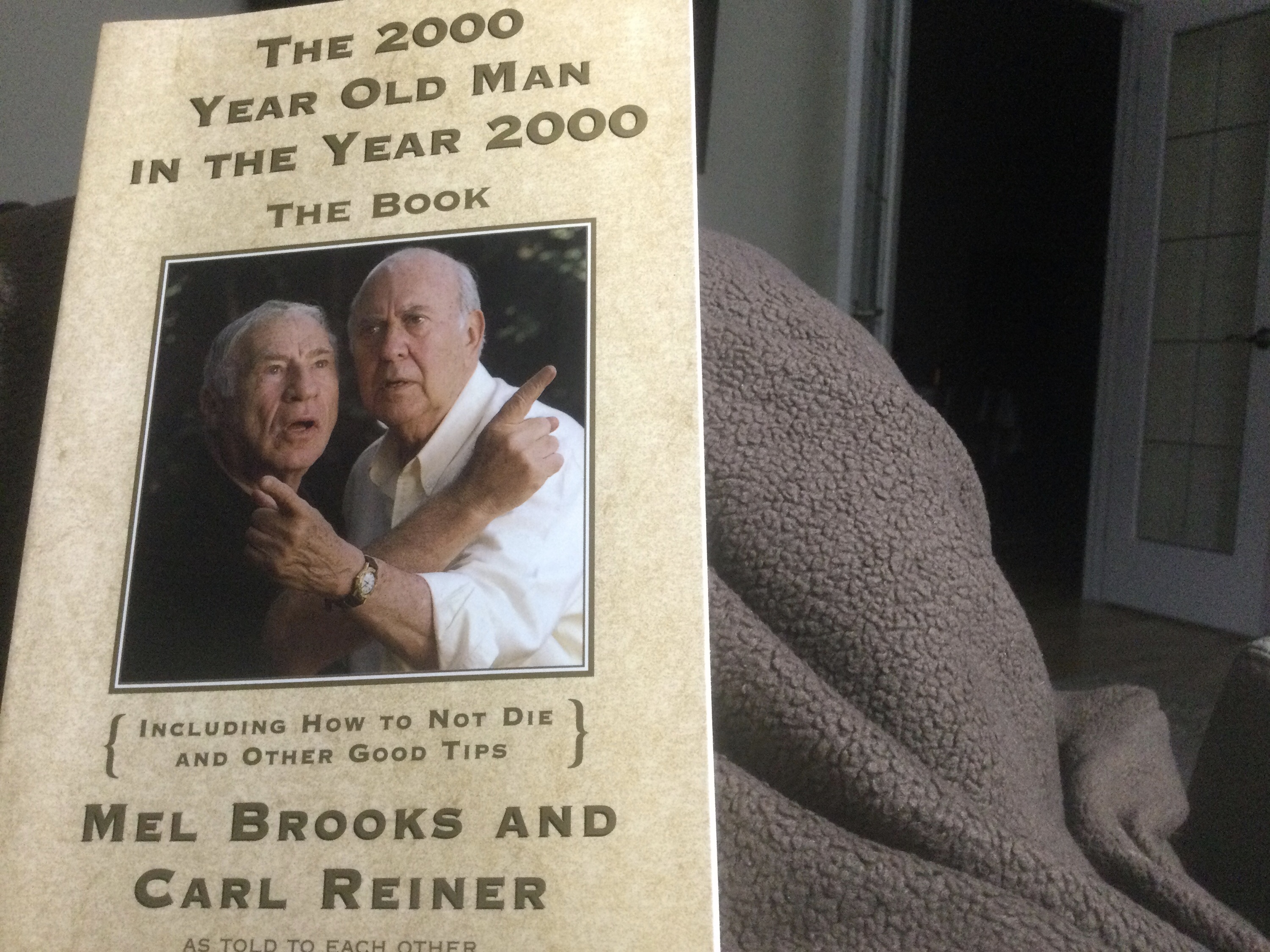
I found this thin reproduction of their original recordings on my bookshelf and have no idea how it got there. It is a light three or four hour read with loads of their rather silly slapstick comedy quips, much of it mocking their stereotypical Jewishness. Nothing profound, and not as entertaining as the original recordings, with their distinctive voices.
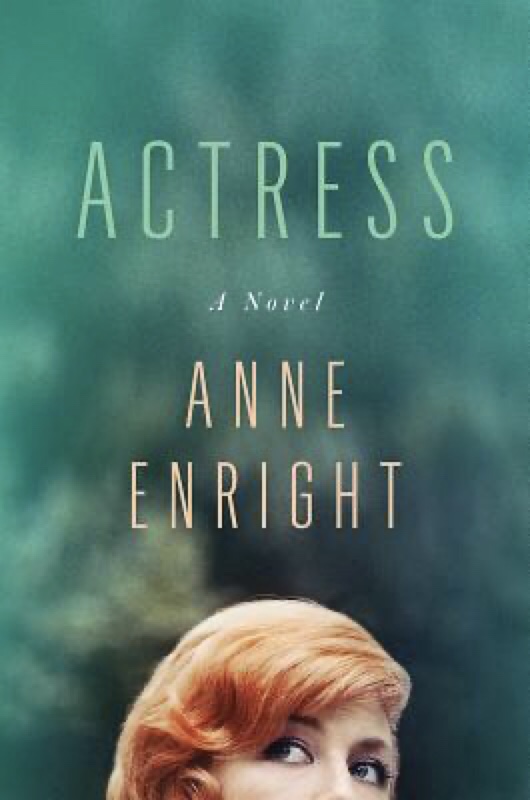
This modern novel by an Irish writer and actress about three generations of English and Irish stars and would-be stars of the stage and screen includes a few real stars and productions. But it’s main strength is the very lyrical description of the lives of people in the peripatetic insecure world of theatre artists all over the world. Set between the 1930s and the1980s, with some reminiscing on the part of the narrator/author from very recently, the yearning for fame, the flexible sexual mores, the superficial nurturing of public images and endorsements, the prevalent, rampant addictions, the recurring episodes of poverty, and the disruption of family and any sense of permanence in the world are described in realistic melodious sentences. The extreme emotional lability, self-doubts, and professional jealousies typical of performing artists are reflected in the flowing prose. The narrator herself illustrates the need for a vivid imagination to work in this field. She imagines long scripts for plays and creates many different images of her unknown father described in magnificent detail.
The life of the Dublin Irish in this era with most conversations conducted in pubs and a population of mostly eccentrics may be stereotyping but makes what little plot there is interesting for the non-Irish reader. The decline of the very eccentric fictional central character who is a vain star of the stage into madness creates a love-hate relationship with the narrator, her bastard daughter. The accommodating local priest, Father Des Folan is colourful. ”He was of course, also a priest, so he was the only shrink in town with absolution on the menu and the clients were queuing out the door.”.
Opposing perspectives of the Bloody Sunday and The Troubles divide the few characters, but are not central to the plot. This is another novel where the plot is overshadowed by the detailed character development. The author addresses a lot of questions directly to the reader or to her fictitious husband as she describes those tumultuous times in Irish history and the ambiguity of many in Dublin as they do or do not take sides.
A good read that will be greatly appreciated by anyone who has ever worked in the field of performing arts. I look forward to the discussion of it in our book club.
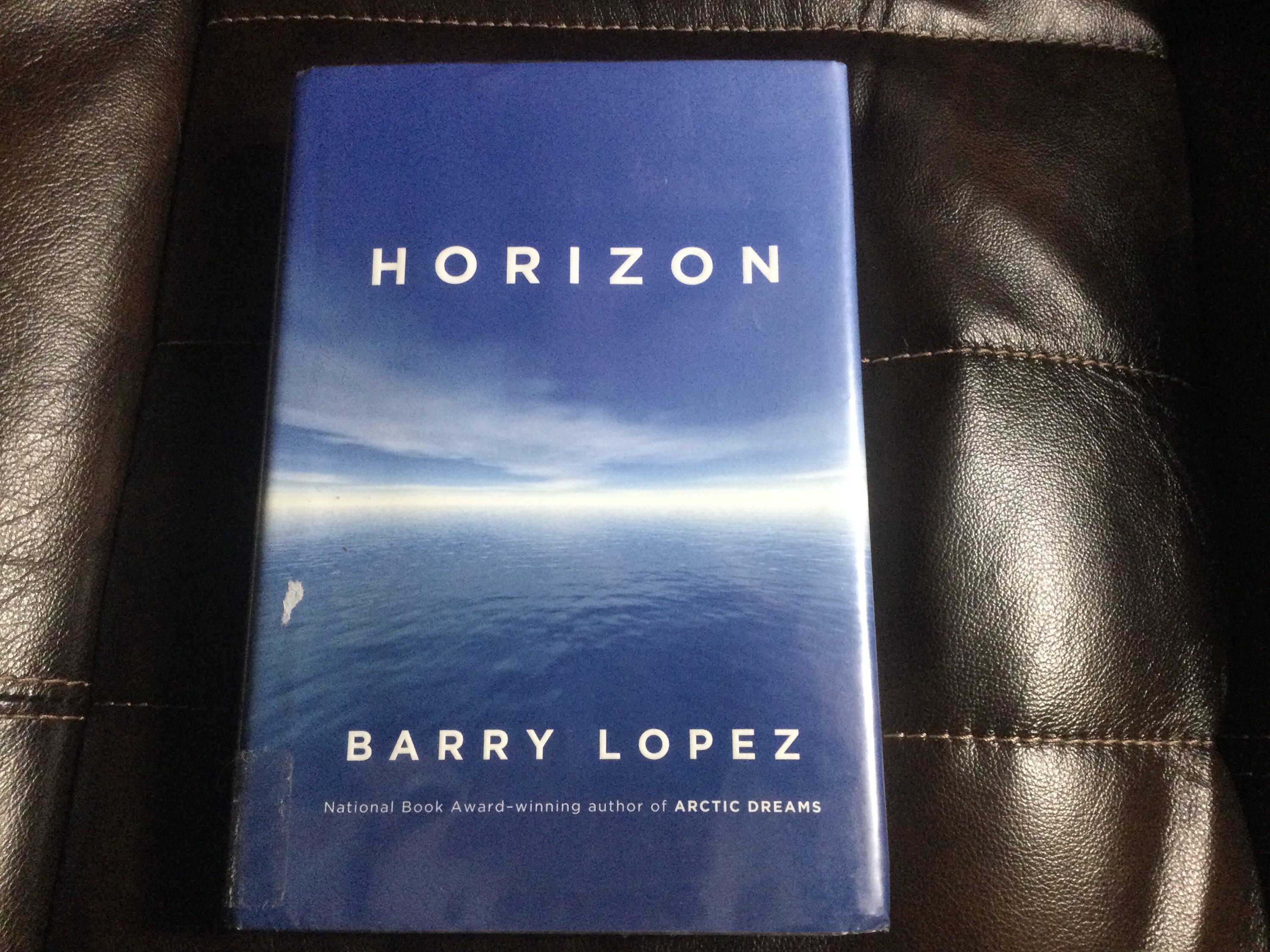
A peripatetic, global explorer’s autobiographical musings, this gem is filled with his rambling thoughts about the meaning of the life he has lived and the sometimes imagined history of the remote outposts he visits and studies. I am in awe of his encyclopedic knowledge ranging from anthropology, history, archaeology, geology, folklore, classical literature, philosophy, botany and even ornithology. He combines this with rare wisdom seldom found in the erudite world of such highly educated prolific writers. His long digressions are delivered from remote locations in poetic flowing prose loaded with metaphors and allegories.
In a long chapter describing his stay In the high Arctic at Skeaeling Island with archaeologists, he muses about the dreaming and the lives of the nomadic Thule and Dorset peoples who subsisted in that harsh environment many centuries earlier. His introspection and respect for those people lead to what seem like almost schizophrenic connections between listening to classical music and making connections with a long-lost culture.
Perhaps the best chapter relates his embedded experiences in Australia where he joins aboriginals in the northwest whose way of life is totally disrupted by extractive industries and the prevalent search for a positive bottom line. But it is also hard to skip over his description of trips as a National Science Foundation researcher to Antarctica, with his awesome descriptions of its unique beauty.
With sensitivity to and reverent admiration for all of nature, his philosophical disquisitions about the history and possible future of Homo sapiens as he searches with a Richard Leakey party for fossil remnants in the Kenyan Rift Valley are also inspiring.
The character of the author deserves some comment. Although never mentioned, he must have some unique ability to connect with virtually anyone else on the planet, to get invited to present at academic conferences and to join researchers in their quest for early fossil hominids in Kenya and meteorites in the ice of Antarctica. Based in Oregon, it is hard to believe, with his description of multiple extended trips to remote areas around the globe, that he actually spends much time with his family there. But whether flying a kite at the South Pole or risking malaria in Kenya, he seems to relish risky undertakings in a admirable quest to understand the role of Homo sapiens in the universe.
A couple of many memorable quotes. “The world outside the self is indifferent to the fate of the self.” “Reactionary resentment around issues of race and culture has no future but warfare.”
This is a remarkable literary masterpiece with great observations, keen insights, profound wisdom – a pleasure to read.







 The Passionate Reader