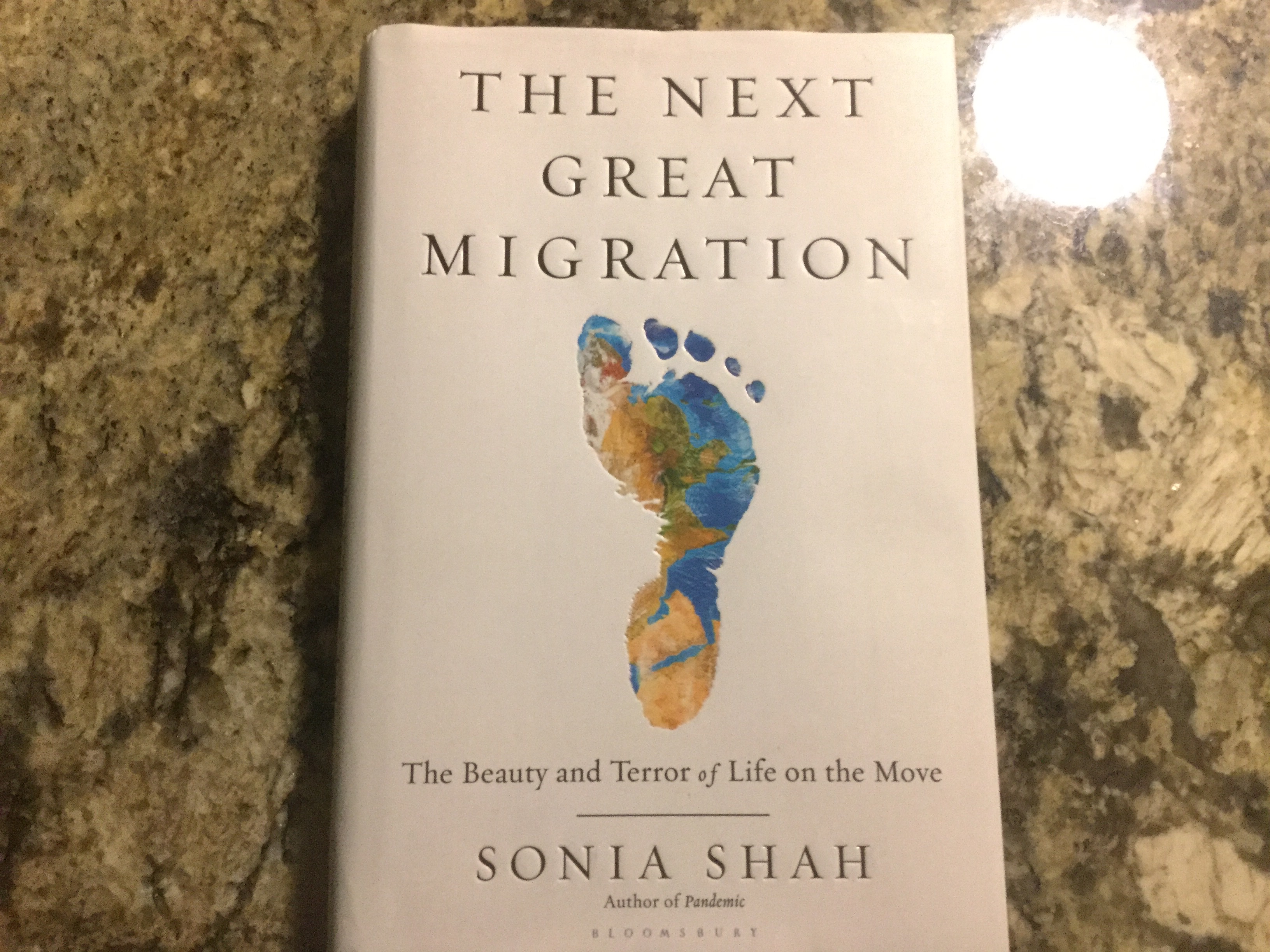
There is, within this passionate plea for better understanding of all manner of living creatures constantly on the move, a plethora of keen insights and sobering thoughts. Shah points out and documents that mass migrations are not a recent phenomenon, but have always been an integral part of the adaptation of all living things to a constantly changing environment. The extent to which humans have moved about in the past was not well known until recently. The personal stories of people risking their lives to cross the Mediterranean Sea or the Mexico-Texas border are heart wrenching. We easily forget that national borders with rigid restrictions on crossing them are a relatively recent feature of human history and have never existed for other forms of life, whether flora or fauna. The message that integration of migrants into western cultures generally benefits everyone including the longtime residents of the host nations, needs to be emphasized, especially in this time of xenophobic nationalism.
A chapter on the baseless, overtly racist politics, with scientists being complicit in the eugenics policies then applied, of the early 20th century is timely given the current U.S. and European treatment of migrants. A superb discussion of the artificial distinctions between native and (exotic) invasive species shows the futility of turning back the clock to allow for only the growth of so-called native species. The estimates are that 99 % of ‘invasive species’ actually increase the biodiversity in their new environments. It could be argued that we are one of the few truly dangerous invaders and perhaps the worst of all invasive species, destroying vast swaths of biodiversity to grow monoculture crops, driving many other species to extinction, and doing irreparable damage to the climate.
Along the way, Shah heaps scorn on Linnaeus, Malthus and a host of other revered scientists for their artificial distinctions and wild predictions based on armchair science with no field experience. The story of lemmings undergoing mass suicide, now a stand-in for blindly following the leader, was created by such scientists and popularized by the special effects team of Disney Films. It is a complete fabrication.
I found the writing to be a jumble of interesting facts thrown together haphazardly, with constant switching back and forth from discussion of the history of migration of plants and animals to that of humans at different times. And like many reports in social sciences, there are dozens of studies where correlation is uncritically equated with causation. That misinterpretation of data led to such atrocities as widespread forced sterilization of the poor as being ‘feeble-minded’ and unfit to reproduce. They were feeble-minded because they were poor and were denied access to good education- a vicious cruel circular argument. There are also a few biologic impossibilities asserted (e.g. living at high altitudes does not make the blood thinner) and some minor spelling and grammar errors. The complex maps meant to clarify points in the text just confused me.
I have mixed feelings about recommending this book, but learned a lot from it.
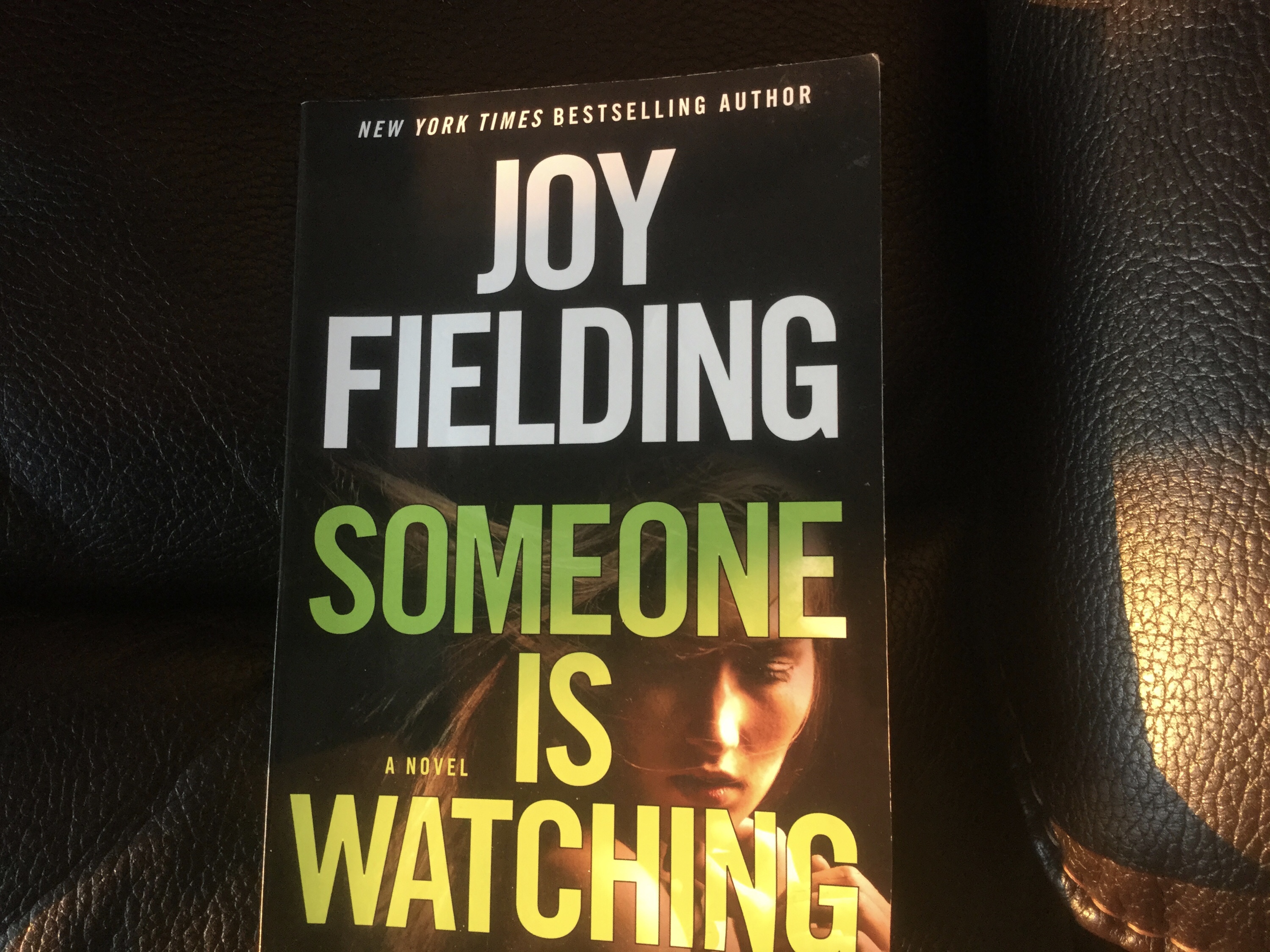
I rescued this psychological thriller from a lonely life on a coffee table in the front lobby of our apartment building after walking past it for several days. The author apparently has written a book a year for more than a decade, but I was not familiar with her work. Set in the recent past in Miami, the story is told in the first person singular present tense and only covers a few months following the brutal assault and rape of the narrator by an unknown assailant.
It cannot be easy to make a story about a rape into an enjoyable read, but Fielding has done just that. The reader follows the victim into a world of increasingly bizarre panic attacks and wallowing in pathetic self-pity, and then a state of paranoid psychosis, unable to distinguish reality from fantasy, nightmare from dreams. She sees characteristics of her assailant in almost every man she encounters, and becomes a recluse. There is the usual clutch of feuding, estranged, and weird family members that seem to make regular appearances in the such novels, and these are indeed colourful and entertaining, even if also scheming, unreliable and unhelpful. The cast of characters is not very extensive and they are easy to distinguish from one another. It seems that the search for the rapist has been fruitless and abandoned until three pages from the end when he is captured wherein all of the false leads and loose ends are wrapped up and suddenly it all makes sense. Readers who keep looking ahead to the last lines will be convinced that the author cannot wrap it up satisfactorily in the space left.
There are some exaggerated and impossible descriptions of actions (the rapist must have four hands to do what’s described at the scene of the attack). The the physiological accompaniments of panic and anxiety attacks as described occur only in novels. Arm veins do not swell and pulsate in response to anxiety, for example. And Fielding perpetuates the popular myth that rape is all about power and has nothing to do with sex. But, as men all know, rape without sexual arousal is impossible, so this is at best only a half truth.
I think that women who have been sexually assaulted will be able to relate to the psychological devastation described here better than any man, but whether or not they could enjoy reading this is a different matter. Perhaps the thrill of the hunt for the criminal and the surprising twists are what makes this whole genre appealing to many readers, with the nature of the offence being largely irrelevant. But I only like thrillers in small doses and will not be hunting for more from this author.
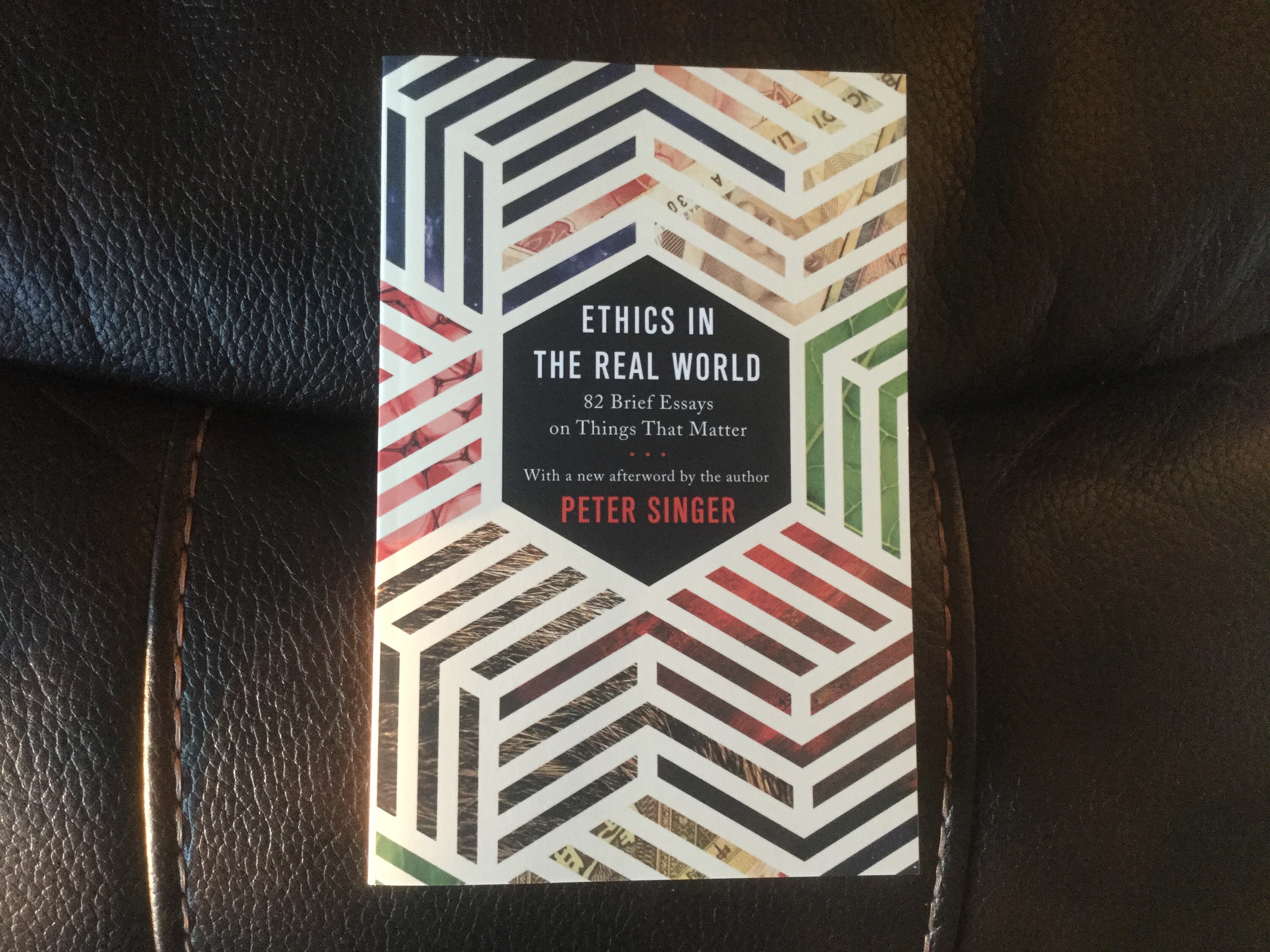
One of the world’s best known modern philosophers, the Australian-born Princeton professor here collects “82 brief essays on things that matter”, mostly written for news outlets and scholarly journals between 2001 and 2015. The selection of topics is very wide-ranging and, and unlike most output from philosophers, is easy to understand for anyone with a grade 10 education and an ability to reason. Singer is that rare philosopher who makes the subject interesting, understandable and relevant to everyday life. Presumably the selection is from those that he could get permission to reprint.
His enlightened views about raising animals for food, charity, and the risk of ignoring science generally and that of climate change in particular, are well known to his followers and clearly reiterated in these essays. Some other brilliant suggestions to improve ones personal ethical behaviour were new to me and very controversial. His stance on abortion and euthanasia are predictable and carefully reasoned out. His arguments on limitations to free speech, and about doping in professional sports are innovative and controversial. Some suggestions seem only marginally connected to ethics (at least to personal ethics), such as recommending that airlines charge travellers based on the combined weight of their bodies and their luggage since that relates best to their actual cost for moving that person.
His passion for ethical treatment of all animals shows up again and again, and is almost enough to make me swear off meat, not only for the sake of the animals, but also as a contribution to the effort to combat climate change. But when he condemns all forms of fishing because of the distress it causes the fish, I become uneasy. I like to think that the enjoyment that I get out of being able to deceive a trout or bass with a fly of my own design counts for more than the minor discomfort of a small puncture in the mouth of a fish. And as I invariably practice catch and release, I am free to imagine the pleasure and relief a fish may experience as it swims back to safety. He fails to address the cruelty of animal deaths in the natural course of events as an alternative to us killingly them quickly and painlessly. And leaving an animal to die after being mauled and maimed by a predator is not being kind; nature can be as cruel as keeping a disabled human being who wants to die alive by artificial means. The difference is that we can’t determine the wishes of an inarticulate animal with no concept of the finality of death (as far as we can tell).
A great collection of essays from my favourite philosopher, this book can be read selectively for topics that interest you. Most essays are only two to three pages in length.
This chronological account of explorers, adventurers, empires, and sciences is a very broad and incredibly detailed history of civilization from our origins in the Rift Valley to the space age. Rader has sensitive antennae for the quirky, little known details that make history seem relevant, not at all like the dry memorization of dates and facts I had to learn in high school. In some ways it is similar to Yuval Noel Harari’s Sapiens and Jacob Bronowskl’s The Ascent Of Man but with more details about daredevil explorers and scientists breakthroughs. The book is packed with colourful characters and details of many cultures.
There are hundreds of minute surprising details about people, places and events that were completely new to me, not the least of which is the obscure derivations of many words and place names in the English language. For example the Lacine Rapids at Montreal were so named because Jacques Cartier thought they were the only obstacle to his reaching China when sailing up the St. Lawrence River.
Only one great quote among many: “ If earth’s history were a day, life appeared at 4:00 a.m,, fish at 10:24 p.m., dinosaurs at 11:45 p.m., and humans at 11:59 p.m. All recorded history took place within the last quarter second, and Columbus sailed at 1/100th of a second to midnight.”
It is not hard to predict the buildup to the last few chapter’s boosterism for space exploration and eventual colonization of other planets as Rader leads the reader to compare today’s space explorers to past adventurers and leaders. After all, he is a manager at SpaceX, Elon Musk’s private enterprise to promote space exploration. But I am amazed that a rocket scientist also knows and relates more interesting historical details than most academic historians. And he seems to uncritically equate continuous technical progress with moral progress, a common but not easy position to defend. His other questionable assumption is that human life on earth is doomed in the near future, rather than millions of years from now when our descendants will be fried by the sun. His infectious enthusiasm for space exploration and colonization with the details of possibilities almost, but not quite, convinced me that my grandchildren or great grandchildren might some day decamp to Mars. But it seems likely that some black swans will arise and dampen the enthusiasm, as they have for almost all explorers.
The writing style is prosaic with mostly short two-line definitive sentences, like the clipped stucco speech of the author on his podcasts. The few attempts at humour generally fall flat. One real criticism is that in a long chapter about the rise and fall of China as a world power, there is no mention of the Great Wall. Perhaps it is just too insignificant in such an epic account of mankind.
This book is not for everyone but there are so many interesting little facts that it kept me engaged.
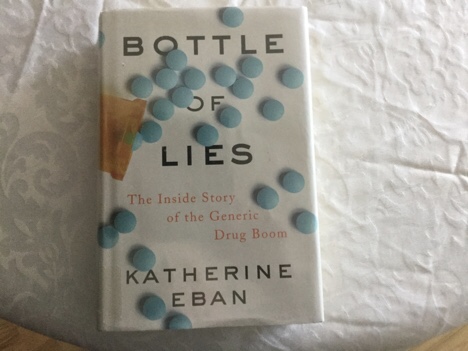
This new and extensively-documented expose of the dangers of generic drugs is alarming enough to make anyone who reads it reluctant to take any medication, not just the generic versions. Almost no one in the industry escapes the analysis with their integrity untarnished, except for a few frustrated obsessive-compulsive FDA inspectors. Their documentation of pervasive fraud, lies, bribery, deceit, and unsafe manufacturing processes are almost routinely ignored or downgraded by higher-up bureaucrats insensitive to their mandated need to protect the public and responsive only to political pressures and the public perception of the need for cheaper drugs.
The first half of the book deals almost exclusively with the criminally flawed manufacture and distribution of hundreds of generic drugs by the now defunct Indian company Ranbaxy, whose bosses reaped huge financial rewards by promoting fraudulent unsafe practices and remain free of criminal charges. But the problems are not limited to foreign companies, given the complex worldwide supply chains that all pharmaceutical companies are obliged to use. The brand name companies that research and develop new drugs are not above using dirty tricks either, often tweaking their formulations to extend patents, using suppliers of dubious integrity, and questionable manufacturing practices in their own laboratories.
One of the most disappointing revelations is the complicity of the FDA bureaucracy. Whistleblowers are silenced or ignored and given no encouragement or legal protection. The practice of giving foreign manufacturers advance notice of inspections ensures that they can clean up the books and the plants, deceive the inspectors, and escape censorship. Eban documents that there were at one point at least 180 manufacturing plants using “dual-tract” production practices, one for first world countries with some degree of oversight, and a second hidden production line for drugs destined for third world counties, mainly in Africa. They knew where no one would detect the defective, inactive or contaminated drugs, not the least of which were AIDS drugs.
I recognized many of the drugs discussed as ones I frequently prescribed. And I can relate to the annoying but essential practice of unannounced public health inspections. We were obliged to buy a second office refrigerator exclusively for the vaccines we used and to keep a detailed log of the temperatures in it 24/7, with regular reporting and a backup battery pack.
For some drugs, the requirement for generic companies to show “bioequivalence” the brand name drug is meaningless. The demonstration of similar blood levels to that of the brand name drug does not take into account the pharmacodynamics of timed release nor the bodily distribution. One of the drugs I prescribed a lot (ursodeoxycholic acid, at one point extracted and supplied from gallbladder bile in Canada Packers slaughterhouses) is absorbed from the gut and acts in the liver and bile ducts but never enters the systemic blood in any significant amounts. Whenever I had suspicions that a generic drug was not as effective as the brand name one, it was my practice to write “no substitution” on the prescription for the brand name version. Does this still work? But sometimes it was impossible to know if either or both versions were defective.
Thanks, Kathy.
This book is a valuable consumer’s guide to the pharmaceutical industry, as valuable for medical practitioners and pharmacists as it is for the public. I anticipate that it will be deemed alarmist by many in the industry, but it is so extensively documented that only willful blindness could lead to denial of its importance. It largely overlooks the ethical lapses of the brand name pharmaceutical companies but these are equally disturbing, as amply documented by Gerald Posner’s Pharma, which is a natural companion work to this one. To be informed in this area is to become a sceptic about any claims on any bottle of any medicine.
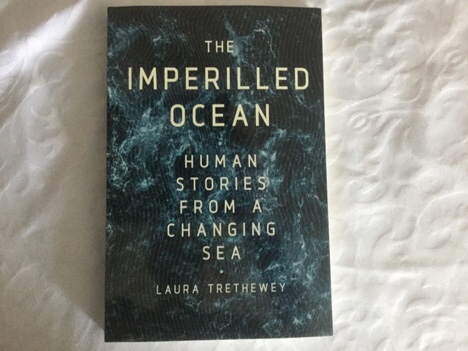
The stories related by the Vancouver author are connected only by her experience, research and insight into how we are all connected in one way or another to salt water. The seven chapters involve, in order: underwater filming for Hollywood films, sailing for fun around the world, refugees crossing of the Mediterranean to Europe, life in a makeshift house boating community threatened by municipal bylaws, cleaning up ocean plastic debris, the cruise ship culture of exploitation of workers, and the efforts to save the Fraser River sturgeon from extinction.
The Epilogue updates the stories in reverse order until about 2018.
Although the date of publication is 2020, no episodes relate events past 2018. The author could not have foreseen the effects of Covid-19 when predicting “As more people in the developing world enter the middle class ……. cruise ship profits will soar.”
This is aa easy, interesting and sobering read that deserves wide acknowledgement as a seminal environmental warning.
The life of the late Montreal-born poet, novelist, and singer/songwriter is detailed in this thoroughly researched biography. The author had extensive access to her subject as well as many of his friends, coworkers, paramours and associates and gives readers a quite fawning laudatory account of his troubled life, excluding his last four years. She was apparently blind to, or willing to overlook, the seamier features of his character, as were most women whom he charmed.
His almost insatiable, indiscriminate sexual appetite lead to relationships with dozens, perhaps hundreds, of women, but few long term relationships, none of which were even remotely monogamous. But he had the unique ability, the envy of all philanderers, to maintain friendships with almost all of his ex-lovers, perhaps because most of them were in the same bohemian counterculture and expected nothing permanent. The exception was the mother of his two children who, years after their relationship ended, sued him for support.
His New York friends in the late 50s and 60s, when he was an aspiring poet and novelist, included a who’s-who list of the famous from the world of the arts, including Janis Joplin, Andy Warhol, Joni Mitchell, Simon and Garfunkel, Bob Dylan, Judy Collins, Allan Ginsberg, Frank Zappa, Tiny Tim, Buffy Sainte-Marie, Joan Baez, and Jimmy Hendrix.
His quest for meaning in his life was never fully satisfied, as he pursued various belief systems, including indulging in Christian Scientism, Hinduism, and Zen Buddhism while always observing Jewish traditions. He spent five years in a spartan Buddhist monastery, becoming an ordained monk and practicing austere meditation, all while continuing his indulgence in heavy drinking, although he apparently eased up on his use of other drugs in his later years. Troubled by intermittent depression, some of his poetry and songs show his gloomy fatalism.
My wife had a similar experience to that related by guests arriving at his shack in Tennessee who were greeted at the door by a stark naked host, having had the same experience when, on a date as a naïve young nurse, (B.C.-Before Cam), she was invited to Gordon Lightfoot’s mansion in Toronto.
The details of the process of making music, well described here, was an eye-opener for me. The number of rewrites of some poems and lyrics run into the hundreds with some never used for anything and others purloined or stolen by other artists without regard for intellectual property rights. The mixing and matching of different lyrics with different musician combinations is a very complicated process that must be confusing, even to those involved. He was so naive that his finances were ruined when his financial manager (and one time lover) scammed him out of an estimated 7-10 million dollars in the 1990s.
Being a concrete thinker, I seldom enjoy reading modern poetry with lines that I find to be generally enigmatic, confusing, or even nonsensical, and have read little of Cohen’s prose or poetry, much of which is apparently graphic pornography-except those that made their way into song- but what gorgeous songs!
There are so many sides to Cohen that a dozen adjectives will not adequately describe the whole of him but here are some: shy, self-effacing, humble, perplexed, sex-obsessed, gentle, naive, troubled, charming, generous, kind, and above all, extremely talented as a singer-songwriter.
Although I enjoyed reading this interesting biography, books can be enjoyed only once or twice but music can be appreciated forever.
As a fun exercise, suggested on the blog site Longreads, I analyzed my book reading choices for the first six months of this year. Here is what I found, in brief.
Number read 49.
Fiction/nonfiction:30/19
Female/ male authors 24/25.
History 2.
Poetry 1.
Short Stories 2.
Social sciences/Philosophy/Medicine/Religion 15.
Longest: War and Peace. Leon Trotsky.
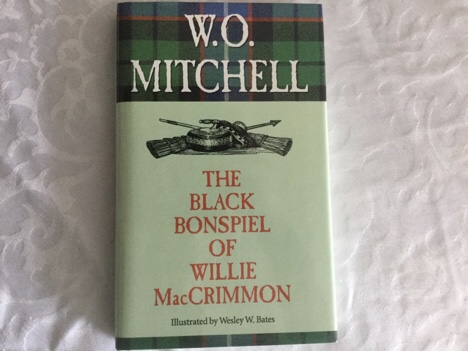
Shortest: The Black Bonspeil of Willy McCribbon. W.O. Mitchell.
Oldest: War and Peace. Leon Tolstoy1861
Newest: Some Assembly Required. Neil Shubin. 2020.
The 77 year old peripatetic former Monty Python star provides readers with a narrative of his experiences and commentary on his 2018 two week tour of North Korea in this engaging illustrated read.
His usual wry humour is well preserved and he dryly notes the many inconsistencies in the propaganda and paranoia of the Kim dictatorship, but he also shatters the common western image of an oppressed populace yearning for freedom. He befriends some of the ‘handlers’ of his film crew, and comes to accept that most of the common people are deceived but sincerely devoted to the Great Leaders, who are worshipped as gods in the officially atheistic country.
Accepting that his itinerary and even his speech is severely restricted, he nevertheless errs on a few occasions going off script inadvertently, such as when snapping a photograph of one of the ubiquitous statues of a Great Leader from behind.
Sir Michael, never one to miss an opportunity to mock politicians of any and all stripes, seems to imply that the commoners of North Korea need our understanding, empathy, and exposure to the outside world, (and freedom), not condemnation, an admonition worth taking seriously-by everyone everywhere
A very good educational light read that can be finished before noon.
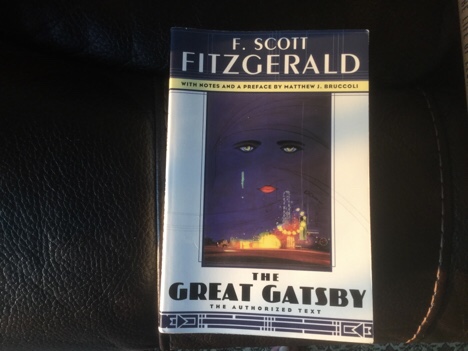
This old classic is on the schedule for our upcoming book club discussion. I could not get it in any form from the library, so spent $2.74 to get the ebook from Amazon to read on my Kindle ap. What showed up was unreadable with fonts constantly changing from microscopic to bold huge, sometimes within a single word. Fortunately, a friend lent me this Scribner/Simon and Schuster edition.
Set on Long Island, and narrated by the chance neighbour of the wealthy title character, the life of NewYork aristocrats in the early 1920s is portrayed with all their pretences, mysteries, lies, bigotry, and overt racism. Nothing is as it seems to be on the surface, with criminal activities and cartels; intrigues, and love triangles keep showing up.
The writing is lyrical, almost poetic, and the intense emotions of the characters are well described. It is generally not difficult to keep the main characters straight, and the few unsolved mysteries at the end are not important. But I did not find any profound insights into life either- this is pure entertainment without a message for the reader. To have sustained its appeal to readers over 95 years, there must be more to it than I detected-either that or a vigorous marketing campaign. Perhaps the book club members will enlighten me further about its lasting appeal. Not the greatest mystery novel, crime story, romance, or adventure, there are nevertheless features of each of these. But there are no admirable characters, nor even lovable rogues, and Gatsby should now be in contention as the fiction world’s best prototype psychopath.
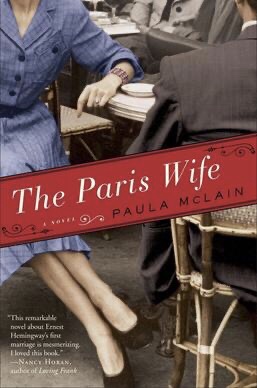
I may have been negatively influenced in my assessment by recently reading The Paris Wife, a fictionalized account of the artistic community of expats in Europe in the 1920s. In this, F. Scot Fitzgerald is portrayed as an amoral, adulterous, alcohol and drug addicted itinerant. But it occurs to me that if we boycotted works by the morally bankrupt, we would miss out on enjoyment of some of the world’s greatest paintings, literature, music, and even sculptures.
In summary, a light and pleasant six hour read, but neither edifying nor educational.
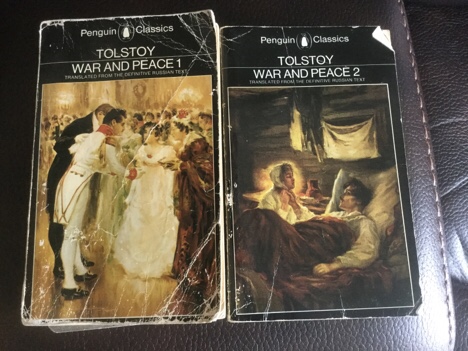
I read this masterpiece many years ago and reread it recently. My copy is the Penguin Classics two volume edition translated by Rosemary Edmonds, published in 1957. But when I grew weary of squinting at the faded size ten font printing I checked out the ebook edition from the library. This was translated by Aylmer Maude and Louise Shanks Maude and is the Duke Classics edition published in 2012, in a clearer larger font. It is quite different, including being organized into 15 Books plus two Epilogues, comprising 384 chronologically arranged chapters. I will stick to the arrangement as in the ebook.
Probably no novel, unless one considers the Christian Bible to be an historical novel, has ever been more throughly dissected and analyzed so I am not sure my review will contribute much, but I carefully avoided reading any reviews or Coles Notes to avoid forming biases or inadvertently plagiarizing ideas.
Starting off in the Petersburg and Moscow high society drawing rooms, the discussion about Napoleon’s 1805 invasion of Eastern Europe gets heated, with divided loyalties; the princes and counts vie for positions in the royal entourage, the cavalry, the diplomatic service and the army. At the end of Book 1, the timeless emotional farewell of soldiers leaving their families for the front is captured beautifully as Prince Andrew (known as Andrei in the earlier edition) bids farewell to his ailing crotchety father, Prince Bolkonsky, his lonely spinster sister and his pregnant wife. And globally, rigid military hierarchies, drills, and disciplines (in peacetime) seem to have changed little between 1805 and my experience as an army cadet in the 1960s.
In Books II and III the disorganized horror of war at the front is graphically detailed when the Russians and Austrians engage with the French concluding at the battle of Austerlitz, and captured Prince Andrew is wounded. This is after his father has unsuccessfully tried to marry off his ugly daughter (Andrew’s sister), on the home estate. It will be impossible for modern readers to keep the characters straight, especially with their numerous patronymics, and diminutives, but it is not really necessary to do so with the pitched battles and the blood of abandoned wounded and dead soldiers and horses mixing everywhere documenting the horror.
Book IV details the high society Moscow life with soldiers on leave, love triangles, gambling, dancing and intrigue, and a duel fuelled by accusations of stained family honour.
In Book V, Pierre compares his life to that of a useless screw with stripped threads, falls into a trance-like state under the influence of charismatic Free Masons as they hustle him through the secret initiation rites. (It is debated whether or not Tolstoy was a Free Mason.) And I, while training in the late 60s in a military hospital, became familiar with the triage by rank rather than by urgency of need or severity of illness as it is described by Count Rostov here.
In Books VI and VII, Prince Andrew experiences a bout of classic depression without naming it thus. The peacetime dinners and balls in the high society circuits of Petersburg are filled with intrigue and the counts, princes and princesses vie for recognition and esteem. As in modern society, elites in boxes at the opera are there more to be seen than to see the performance, but it is once again difficult to keep the characters straight. I had great difficulty relating to the hyped enthusiasm of a horde of hounds chasing down wolves, foxes and hares on the estates of aristocrats.
In Book VIII Tolstoy gives us an accurate and poignant description of Alzheimer’s disease in the aging Prince Bolkonski, fifty years before Dr. Alzheimer described the disease that bears his name. The charming, seductive, completely amoral Anatole may present the best description of psychopathy before the term was invented (in German originally), twenty five years later. Tolstoy, it seems, understood more about mental illness than his German contemporary Freud, even giving us a vivid description of hysteria (or conversion reaction in modern psychobabble), and anorexia in the sexually frustrated distressed Natalia.
Book IX includes eloquent discussions of fatalism, the placebo effect, and the nature of heroism but two quotes about Napoleon as he reinvades Russia in 1812 stand out: “Nothing outside of himself had any significance for him, because everything in the world, it seemed to him, depended entirely on his will.” And a little later: “ …he had long been convinced that it was impossible for him to make a mistake and that… whatever he did was right, not because it harmonized with any sense of right or wrong, but because he did it.” Remind you of any current politician?
In Book X, retrospective analysis of historical events as recorded by the winners is exposed for its flimsiness and biases, fatalism is re-examined, the gory details of the one day battle of Borodin is detailed, and Prince Andrew is mortally wounded. A keen insight as relevant today as in 1812.
In Book XI, the vagaries and errors of historians’ explanations of events is thoroughly ridiculed with careful analysis of the whole Napoleonic campaign in Russia. Tolstoy clearly understood the difference between correlation and causation and the folly of equating them.
Book XII deals with the chaos of the Russian’s abandonment of Moscow to the advancing French army, the destruction of much of Moscow by lawless incendiaries, and the touching scene of Natalia reconciling with her wounded and dying former fiancé Prince Andrew as they flee the conflagration of Moscow. And the show trials of captured Russian soldiers with the predetermined verdicts is as old as war itself. This book ends with the touching scene of Prince Andrew’s slow painful death so remarkably captured on the cover of one of the editions.
In Book XIII, Tolstoy’s cynicism of historians’ retrospective explanations of events is tied into his belief in fatalism, and with biting sarcasm ridicules the usual armchair historical account of Napoleon’s retreat.
In the final book, Tolstoy’s astute analysis of the whole war uncovers his biases in praising the disgraced Russian general Kutusov who tried unsuccessfully to restrain the Russian army’s slaughter of the retreating freezing French in the winter of 1812-13 and ridiculing the bungling Napoleon.
In Epilogue I, Tolstoy casts scorn on the conventional interpretation of historical events musing about the inevitability of subsequent historical developments up to 1850, and manages to pair off the remaining members of the main elite families in an unpredictable but uncontrived way.
Epilogue II consists of a very confusing treatise on what can broadly be defined as political science and the problem of free will that has plagued mankind for millennia, which could only be of interest to someone like Francis Fukuyama or moral philosophers.
Scattered throughout this whole tome are existential discussions about the meaning of life with clarity and insights that at least equal the later musings of Kant, Nietzsche, Sartre, and Camus.
There are more than the usual number of spelling, grammar and punctuation errors in this edition, as though the translators, copy editors and proofreaders relied entirely on an early-version computer spellchecker with no training in grammar or contextual sense. For example, in several places the word bad is substituted for the word had, several sentences have no verb, and the ranks were drown up rather than drawn up. A few maps of the relevant regions would have been a useful reference for this geographically challenged reader.
My wife thinks I reread this just for the bragging rights, but I really enjoyed it. With a few more rereads, I might even be able to keep the main characters straight.
I am not reviewing any specific books this week, being only half way through rereading War and Peace, which I first read at least 30 years ago. That experience led me to read almost any of the older Russian novels I could find. There are unique common threads to most of them, with deep philosophical musings, dark themes of deprivation, separation, death, endurance of extreme hardships, spiritual yearnings without specific dogmas, and the meaning of good and evil. But they all also demonstrate a certain ability to appreciate and find profound joy in small experiences of nature and human connections. Almost none have the fanciful sudden and unpredictable plot twists of popular modern murder mysteries although there are lots of murders. Like the modern novel set in Moscow, A Gentleman In Moscow, the beauty of all of these books is in relating more to the characters than to the plot. One of my all-time favourite movies is Dr Zhivago, based on Boris Pasternak’s novel with the hauntingly beautiful theme song of longing, Somewhere My Love. There must be something in the Russian psyche that uniquely resonates with mine but I am not sure how to describe it.
War and Peace, Fathers and Sons, Anna Karinena, The Brothers Karamazov, A Day in the Life Of Ivan Deisovitch, The Idiot, The Death of Ivan Ilyich, The Gulag Archipelago, Cancer Ward, August 1914- it is difficult for me to pick a favourite, but none have disappointed. I have not read the works of playwrights and poets Checkoff and Pushkin. It probably depends on one’s mood at the time, but if I had to pick one, I would choose either War and Peace (for about 60 hours of reading) , or One Day in the Life of Ivan Denisovitch (for about six hours). So next week I will muse further on the former after I have completed the reread.
This historical fiction is largely narrated in the first person singular voice of Hadley, Ernest Hemingway’s ‘Paris Wife’, (the first of four) with short chapters in italics giving his imagined perspective. It covers the five years of their tumultuous marriage from 1921 to 1926, when they lived a nomadic life in Europe, much of the time in Paris. The details of their lives, travels and friendships are carefully researched for accuracy and although the designation of ‘historical novel’ is applied, only the extensive dialogue and the imagined description of the intense emotions are really fictional. There is an extensive documentary annotation of many points, not included in the pagination noted.
The 1920s Paris artistic community is often portrayed as happy, carefree and vibrant, but as detailed here, it was marked by intense jealousies, shallow unhappy lonely lives, libidinous marital infidelities, consumption of incredible amounts of booze and sometimes cocaine, pretences, and mental illness with wildly fluctuating emotional highs and lows. Not one of the famous authors in the Hemingway’s circle of friends, including Ezra Pound, F. Scot Fitzgerald, James Joyce, and Gertrude Stein could in any way be considered admirable human beings worthy of emulation. In fact, as portrayed, by modern criteria, they would all be considered to be morally bankrupt degenerates with no consciences and defective self control, or mentally ill. Several would be diagnosed as schizophrenic or bipolar.
Sexual excesses and marital infidelities, for which Ezra Pound was famous, were the norm and were generally taken for granted by the tolerant spouses. Friendships were fragile, professional jealousies were rampant and what most people would consider normal human relationships just did not exist. Everyone seemed overly sensitive to perceived insults, moody, needy, and craving praise and fame.
Nothing illustrates the relationship between mental illness and creativity better than the data on suicides, estimated to be twice as likely in artistic types than in the general population.
I do not understand the complex multifaceted relationship between artistic ability, amoral behaviour and mental illness. I have often been disappointed, on reading biographies, to discover the deep moral flaws of many novelists and writers whose work I admire, including Robert Burns, Shakespeare, Leon Tolstoy, Graeme Greene, Salman Rushdie, E.M. Forster and John Mortimer among others. But as I looked at this list, I realized that there are no women authors on it. Are they more likely than the artistic males to be admirable as human beings as well as artists?
As a portrait of the era and the famous characters, this is a very good read. I can now add several more names to the growing list of artists whose work I admire but whose lives I would not want to emulate. But it seems almost hypocritical to admire the work of creative reprobates, whether they be painters, writers or musicians. But then no one has ever accused me of being normal either.
I enjoy seeing and reading about the astonishing complexity, adaptability, beauty (and cruelty) of most life forms, so when I read a rave review of this new science book somewhere, I knew I had to have it, although it was $34 at Indigo. The author is a brilliant knowledgeable Chicago anthropologist with a wide range of experiences.
Starting with the criticisms of the 1869 edition of The Origin of the Species, (addressed in the 1872 edition), this is a combination genetics treatise, introduction to anthropology, embryology, and cell biology and an eclectic discussion of the origins of life.
Much of the material was not new to me as a medical scientist, although I last studied embryology in 1967. I do not dispute the enormous contributions that the humble fruit fly, Drosophila melanogaster, has made to the field of genetics, but reading about it brought back bad memories of cramming for exams. And Haeckel’s faulty assertion that “ontology recapitulates phylogeny”i.e. that we go through the stages of our evolution as we grow from paired gametes to newborns was still hotly debated in 1967.
There is also abundant new information including the role of regulator genes and jumping genes in organ differentiation, the incorporation of repurposed viral genomes into our DNA and the details of how environmental factors influence gene expression. The author assiduously avoids any discussion of the philosophical arguments surrounding free will and whether or not we are more than the predetermined expression of our genes, and the added influences of environments on them.
Shubin convinced me that hubristic computer scientists who think we are in danger of being outdone by their artificial intelligence machines and complex algorithms must be clueless about the infinitely complex functioning of the human brain. The successful mapping the human genome, accompanied by overblown hype, was just a start in understanding the basics of modern genetics.
The writing is straightforward dry narrative with little dialogue and not much humour. I found some parts such as the discussion of jumping genes difficult to understand, while other parts were a rehash of facts that will be common knowledge to most educated readers. But I have to admire the dedication to increasing our knowledge of anyone who can spend years doing nothing but studying the variability in one thousand salamander feet. (I once watched an equally dedicated optometrist carefully dissecting the eyes of every salmon and trout he caught at our fishing camp).
I learned a lot from this book but it is not for everyone; I am not sure who to recommend it to. It seems to me that Shubin neglected to ask himself the critical question every author should ask before writing a word: who is my target readership?
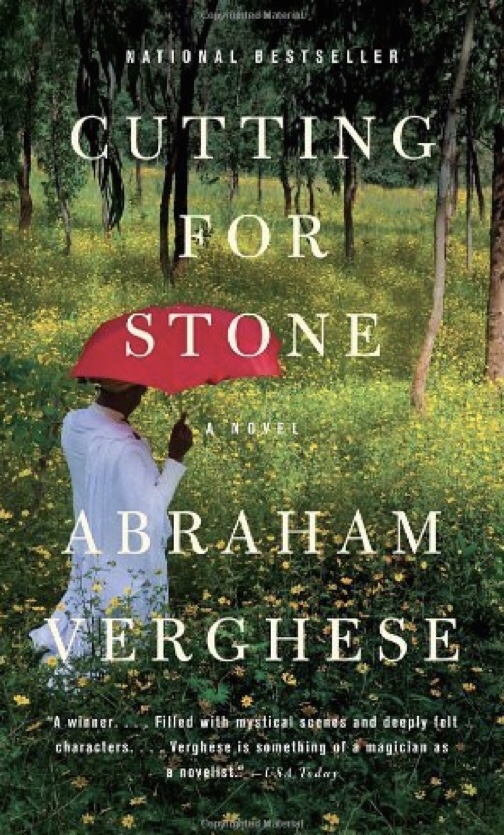
Richly endowed with plot twists and emotional rollercoasters, this grand medical epic has something for everyone, whether from a medical background or not. There are hundreds of medical observations, aphorisms and adages, some original and many from earlier works, including the obscure title (from Hippocrates). But none are difficult for the reader to understand and appreciate.
At an ill-equipped hospital in Addis Ababa in 1954, identical conjoined twin boys are born to a nun who promptly dies and a surgeon who promptly disappears, only to show up many years later, in New York. The characters include guerrilla fighters, surgeons, gynaecologists, and many patients, relatives and servants. There are hundreds of names, procedures, diseases and experiences that reminded me of my years of medical training in the 60s and 70s. Even when relating illnesses such as fulminant hepatitis B, which I dealt with frequently, I did not find any faulty information or impossibilities. I can readily relate to the graphically described utter exhaustion of on-call interns and residents. (One morning after almost no sleep for days, I asked a head nurse where old Joe was, to be told that I had declared him dead at 2 a.m. that very morning, a visit I had no memory of).
The emotional lives of doctors and their sometimes difficult decisions in an emergency are easy to relate to, but there is no adulation for any individual, even including the narrator, the older twin who gradually assumes the first person singular tense as he reaches the age when accurate memories are possible. The inequities of medical care in the U.S. are exposed without comment or judgement, as might be expected since the author was born in India, raised in Ethiopia, and is now a Stanford professor of medicine.
Among dozens of memorable quotes, here are two of my favourites. “A rich man’s faults are covered with money, but a surgeon’s faults are covered with earth.”
“Now that I was a patient, my curse was that I knew too much.” – a curse that every doctor with a serious illness has experienced.
There are no loose ends, but there are some possibly intentional inaccuracies. For example, the development of successful liver transplantation is depicted as occurring several years qearlier than in reality, and at the time that Dr. Thomas Stone was said to be performing many liver transplants in Boston, there were only four centres in the world doing them successfully -Pittsburg, Pennsylvania, Cambridge, England, Hamburg, Germany, and London, Ontario. But Verghese’s unforgivable assertion in the Acknowledgements that “every liver transplant surgeon in the world was trained by Starzl or by someone who was trained by him” ignores the contemporaneous, brilliant, trailblazing work of Sir Roy Calne in Cambridge and my colleague and classmate Bill Wall in London, Ontario. Perhaps he has, in spite of his background, forgotten that there is a world outside the U.S.A.
I have not read the author’s previous two memoir books, nor have I seen the movie adaptation of this one. But they can’t be better than this gem.
The first chapter of this deeply researched, scholarly documentary reads like an advertisement for Johns Hopkins Hospital and University; the second and third provide equal boosterism for William Henry Welsh who is praised as a godlike idol. We do not hear of influenza at all in Part 1(87 pages).
Part II is a very good but basic 25 page primer in general virology for non medical readers. In Part III we finally get a detailed discussion of the factors facilitating the spread and lethality of the 1918 influenza strain, from overcrowding and unhygienic conditions in hastily constructed military bases and munitions factories to a very dysfunctional public heath system in the U.S. (The somewhat parochial focus on the U.S. population, troops, researchers, and politicians gets a bit annoying.)
The liberty-limiting and fact-denying measures of the Wilson administration to whip up belated support for the war effort were as draconian and dangerous as anything Trump has dreamed up and give me some hope that the latter’s damage can also be reversed. Named Spanish flue only because the news of its devastation was not censored in neutral Spain unlike in most of the war-engaged countries, the overwhelming evidence is that the outbreak started in a sparsely populated community in Kansas and spread quickly because of the massive movement of military personnel, overcrowded barracks, and national leaders determination to ignore everything except the preparations for war. The constant mutation of the virus also contributed to its variable virulence in different parts of the world and in different waves.
A digression. In my now-dated book, Medicine Outside The Box, I pointed out that any pathogen that kills a high proportion of its host population is unlikely to itself survive, but neglected to note that there are pathogens which thrive in many host species and could thrive with one fewer host species. This is something worth considering with respect to Covid-19, which along with influenza viruses has other natural host species. To borrow a military euphemism, the future extinction of Homo sapiens might be just nature’s ‘collateral damage’ in a war between two or more other species. But if so neither I nor anyone else would be around to recognize my prediction.
In Parts IV through VII, the full global devastation of the pandemic is described in nauseating detail. There were debates about avoiding crowds, distancing oneself from others on the street, cancelling public functions, closing schools, churches and factories, and the use of face masks. Medical and nursing students and retired doctors were recruited to deal with the sick and dying, and uncontrolled drug treatment trials were carried out, often in overcrowded, unsanitary makeshift hospital wards. Sound familiar? And there circulated serious conspiracy theories that the virus was deliberately released by Germany as a biological weapon. Also sound familiar?
In later chapters Barry describes in minute unnecessary detail the panic and devastation in cities, towns, and rural communities, mostly in the U.S. or the U.S. contingent of soldiers in France. One cannot wonder if his description was not from biased reports and diaries selected for dramatic effect. The strong evidence that lasting brain effects of Woodrow Wilson’s encounter with influenza at Versailles lead to his acceptance of the very faulty treaty makes the virus a key player in 20th century history.
The lengthy digressions into the personalities and personal lives of researchers, public health officials and politicians are clearly separated into praise or vitriolic damnation with little in between. And they contribute little of vital importance to the theme of the book. The author seems very anxious to pass judgement on everyone, whether he has met them or talked to them or not. If you get to page 398, skip to page 447, as there is nothing about influenza in between.
There are at least two obvious errors in this account. By definition, symptoms are subjective experiences of the ill, but here they are twice said to be detected only at autopsy. In a superficial and confusing discussion of pulmonary anatomy, physiology, and pathology, Barry states that “The respiratory tract serves a single purpose: to transfer oxygen from the air into red blood cells.” Really? What about transferring carbon dioxide in the opposite direction? And like many others, he uses the words statistics and data interchangeably although they mean very different things,a pet peeve of mine.
This is a very informative and timely account, but it is also unnecessarily long, dry, and pedantic. It would be much better to have written a short book on influenza and a longer one on the history of early 20th century medicine and biological sciences. It is worth reading selective parts as we struggle to cope with Covid19.
The author of the insightful The Tipping Point, Blink, and What The Dog Saw is back with more of his unique commentaries about modern society, human nature, and contemporary American life. His insights as a keen observer and his wide-ranging analysis are on full display as he explores how individuals and groups interact with complete strangers, ranging from police officers at roadside stops to CIA agents interrogating jihadist terrorists.
We all meet strangers frequently and must assess their character and intentions quickly and accurately. Yet evolution has not equipped us to to do this with any degree of precision. We generally “default to truth “ which could be more accurately described as default to belief as we are inclined to believe what strangers tell us, verbally or by ‘body language’ until proven wrong. But there are those among us who refuse to defer to belief and sometimes become heroes as whistleblowers but more often are paranoid conspiracy theorists. Even more often the nonverbal communications of strangers are misinterpreted sometimes with tragic consequences. Our ability to “read” others must be on a spectrum but even experienced cops and judges often get it all wrong. One counterintuitive thought of my own: perhaps one minor reason that the divorce rate for arranged marriages is one tenth of that for others is because of the deceptive behaviour and communications intrinsic to courtship.
Gladwell shows us that our culturally-rooted interpretations of facial expressions of emotions are prone to systematic errors, which must be exacerbated when we are limited by quarantine, something he could not have foreseen when this book was written. There must be a spectrum of responses to our encounters with strangers from those who too naively expect honesty from everyone to the paranoid or suspicious who see every such encounter as probably loaded with sinister hidden meaning.
Gladwell makes much of the fact that our interpretation of the motivation and messages from strangers is based on stereotypes from such shows as Friends, and favoured expressions in novels (raised eyebrows, dropped jaws), and shows that the interpretation of physical and physiological clues can go dangerously wrong when those clues do no conform to what we expect. Judges do worse than computers in deciding whether or not it is safe to release suspects on bail, in spite of having access to eye to eye contact. When there is a mismatch between facial expressions and behaviours, interpretations can lead to erroneous conclusions with disastrous results. “…with strangers, we’re intolerant of emotional responses that fall outside expectations.”
There are are several criticisms I could level at this book. In spite of Gladwell’s unique insights, I found the book to be disorganized with his really original observations of human nature sprinkled haphazardly throughout it. Sometimes the logic of his reasoning seems a bit convoluted and strained in getting to the counterintuitive conclusions he is so fond of. His discussion of alcohol as the common denominator in campus sexual assaults simplifies the neurological effects of alcohol to the point of a distinction without a difference.
There are many unique and surprising undisputed facts revealed in this smattering of brain droppings. Suicide and crime rates are coupled to specific places and specific methods, not to particular circumstances, contrary to what common folklore would have us believe. For example, we are told and most people believe that someone intending to commit suicide would do so by a different means if their first plan was foiled, but the evidence is that this rarely happens. TSA baggage checkers at airports fail to detect a gun planted in luggage 95% of the time; most could work for 50 years and never find a hidden weapon.
I found this book to be filled with interesting, and original observations, but also not as loaded with insights as his previous revelations. Nevertheless a good read.
Unlike anything else W. O. Mitchel, beloved author of Who Has Seen The Wind? wrote, this fanciful tale should appeal to any lovers of Canada’s most popular winter sport that has become my winter religion, whether as this book or the later stage play.
Willie, or Wullie, a caricature of the stubborn Scottish Presbyterian, widowed and mourning, in the mold of Angus McClintock, in Terry Phallis’s The Best Laid Plans, lives in Shelby Alberta, at the time of Methodist-Presbyterian-Congregationalist church union in 1925. He skips a rink dreaming of winning the Briar national championship, along with his three Charlie Browns, all designated by their occupations.
Satan, as Cloutie, arrives in Willie’s harness and shoe repair shop to get his curling shoes repaired. After some negotiations and banter Willie agrees to Cloutie’s challenge to play against his rink from hell, composed of MacBeth, Judas Iscariot, and Guy Fawkes. The stakes are high, and Willie’s soul will be sold to the devil if his rink loses, but he will win the Briar if his rink wins.
With quotes from Shakespeare and Robbie Burns woven into the story there are fanciful but interesting twists. The four members of the team are from four different religious denominations, all cleverly caricatured and skewered. Not included in this tale, but appropriate to the story, I once heard a clever saying about the difference between dour Presbyterians and the United Church of Canada. “I’d rather be Presbyterian and know that I am going to hell, than United and not know where the hell I’m going.”
A very clever, light, three hour read, or a two hour stage play.
I read every word of this chunky award-winning doorstopper, determined to gain bragging rights over friends who admit to giving up partway through it. A neighbour dropped it off, probably worried about my mental health, or lack thereof during our lockdown. It is perhaps the second longest and wordiest novel I have ever read, after War And Peace, which I am now rereading.
In the southern summer in 1865, in the gold rush town of Hokitika on the northwest coast of the South Island of New Zealand a host of mysteries suddenly develop that entangle a banker, various prospectors, a few prostitutes, native Maoris, a pimp, hoteliers, a shipping magnate, a hermit and his estranged wife, a newspaper publisher, a local politician, a jailor, a realtor, a druggist, a Chinese opium den operator and an itinerant clergyman. Gold dust and nuggets show up in the most unlikely places, old enemies from the Opium Wars meet each other on the frontier, and there are disputed paternities; family ties are abandoned, and unexplained disappearances and mysterious deaths are plentiful.
Starting off with chapters as long as 40 pages, Part One takes up 360 pages; Parts 2-12 become mercifully shorter, but cover a jumble of different and earlier time frames, and different sites. Each Part and each Chapter is introduced with either an astrological circle or sign, the significance of which was totally lost to me.
By about page 500 a few of the dozens of apparently unconnected plot mysteries begin to make some sense, but then new twists also arise to keep my confusion and frustration at their previous high levels.
The writing reflects the flowery, wordy, poetic language of Victorian England with endless character analyses and indirect allusions. But this is no War and Peace; there are few insights into the essentials of human nature -few good quotes or lessons by which to better oneself. One quote to illustrate this: “he possessed a fault common to those of high intelligence, however, which was that he tended to regard the gift of intelligence as a licence of a kind, by whose rarified authority he was protected, in all circumstances from ever behaving ill.”
This book won the Mann-Booker prize and the 2013 Governor-General’s Award for Canadian fiction, (Catton qualified as she was born in London Ontario, though she lives in New Zealand), but reading it did nothing to improve my mental health. It did fortify my skepticism about books chosen by semi-secretive boards of elitist literati for various prizes. But I may someday find someone who understood it and enjoyed it.
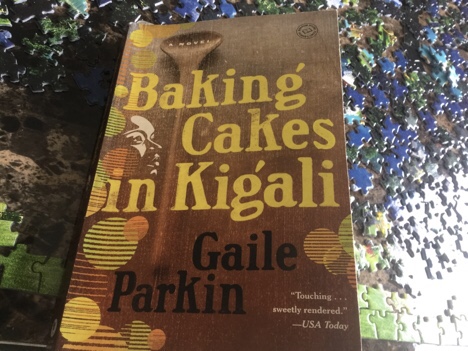
Another novel I recently found on one of our bookshelves, and one that Vera thought I would like, this presents an unfamiliar mixed complex culture that made for a fascinating read. Based in Kigali in 2011, after the Rwandan genocide, the central entrepreneurial character becomes a confidant, counsellor, and inspiration to a diverse group of survivors, ranging from a prostitute supporting her family by selling herself, to international diplomats, a Bible-thumping drunk, and single girls seeking a better life.
The are moral dilemmas in every encounter as the remaining Tutsi and Hutus struggle to find common ground. Muslims and Christians both incorporate elements of animalism and superstition to try to explain their plight. In every family, the devastation of the prevalent AIDS, profound poverty, and misogyny, force adoption of seemingly extremely flexible moral standards. A Christian baker decides to bake a cake to celebrate and then to attend the ‘circumcision’ of a Muslim friend’s daughter.
Parkin manages to give many of the characters a hopeful upbeat attitude in spite of the many hardships they face, and includes leavening humour. When an Egyptian man sends his servant to borrow some cardamon from a female neighbour, the language difficulties lead to her asking for condoms instead, resulting in hilarious misunderstandings.
Baking Cakes In Kigali presents a vivid portrait of a world that is so far removed from anything I have ever experienced that it could almost be from a different planet, (grasshoppers are fried as a delicacy) yet the individuals that occupy it share universal human virtues, vices, anxieties and sorrows with the rest of us. A very enjoyable read.




 The Passionate Reader