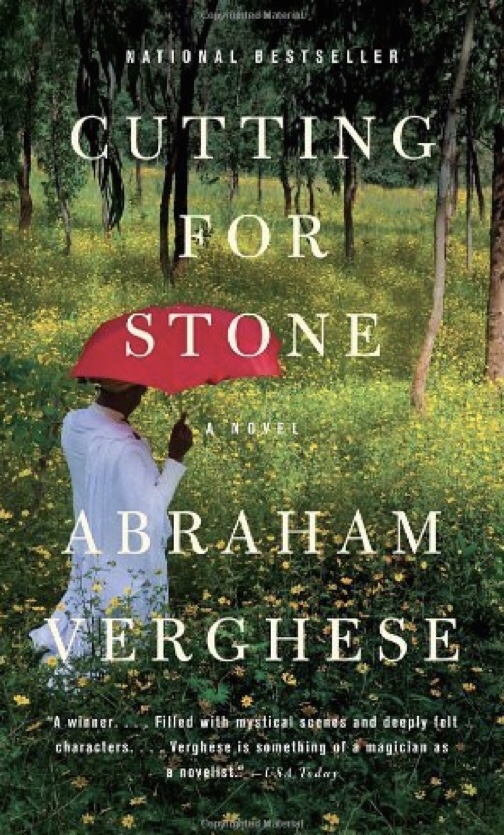
Richly endowed with plot twists and emotional rollercoasters, this grand medical epic has something for everyone, whether from a medical background or not. There are hundreds of medical observations, aphorisms and adages, some original and many from earlier works, including the obscure title (from Hippocrates). But none are difficult for the reader to understand and appreciate.
At an ill-equipped hospital in Addis Ababa in 1954, identical conjoined twin boys are born to a nun who promptly dies and a surgeon who promptly disappears, only to show up many years later, in New York. The characters include guerrilla fighters, surgeons, gynaecologists, and many patients, relatives and servants. There are hundreds of names, procedures, diseases and experiences that reminded me of my years of medical training in the 60s and 70s. Even when relating illnesses such as fulminant hepatitis B, which I dealt with frequently, I did not find any faulty information or impossibilities. I can readily relate to the graphically described utter exhaustion of on-call interns and residents. (One morning after almost no sleep for days, I asked a head nurse where old Joe was, to be told that I had declared him dead at 2 a.m. that very morning, a visit I had no memory of).
The emotional lives of doctors and their sometimes difficult decisions in an emergency are easy to relate to, but there is no adulation for any individual, even including the narrator, the older twin who gradually assumes the first person singular tense as he reaches the age when accurate memories are possible. The inequities of medical care in the U.S. are exposed without comment or judgement, as might be expected since the author was born in India, raised in Ethiopia, and is now a Stanford professor of medicine.
Among dozens of memorable quotes, here are two of my favourites. “A rich man’s faults are covered with money, but a surgeon’s faults are covered with earth.”
“Now that I was a patient, my curse was that I knew too much.” – a curse that every doctor with a serious illness has experienced.
There are no loose ends, but there are some possibly intentional inaccuracies. For example, the development of successful liver transplantation is depicted as occurring several years qearlier than in reality, and at the time that Dr. Thomas Stone was said to be performing many liver transplants in Boston, there were only four centres in the world doing them successfully -Pittsburg, Pennsylvania, Cambridge, England, Hamburg, Germany, and London, Ontario. But Verghese’s unforgivable assertion in the Acknowledgements that “every liver transplant surgeon in the world was trained by Starzl or by someone who was trained by him” ignores the contemporaneous, brilliant, trailblazing work of Sir Roy Calne in Cambridge and my colleague and classmate Bill Wall in London, Ontario. Perhaps he has, in spite of his background, forgotten that there is a world outside the U.S.A.
I have not read the author’s previous two memoir books, nor have I seen the movie adaptation of this one. But they can’t be better than this gem.
The first chapter of this deeply researched, scholarly documentary reads like an advertisement for Johns Hopkins Hospital and University; the second and third provide equal boosterism for William Henry Welsh who is praised as a godlike idol. We do not hear of influenza at all in Part 1(87 pages).
Part II is a very good but basic 25 page primer in general virology for non medical readers. In Part III we finally get a detailed discussion of the factors facilitating the spread and lethality of the 1918 influenza strain, from overcrowding and unhygienic conditions in hastily constructed military bases and munitions factories to a very dysfunctional public heath system in the U.S. (The somewhat parochial focus on the U.S. population, troops, researchers, and politicians gets a bit annoying.)
The liberty-limiting and fact-denying measures of the Wilson administration to whip up belated support for the war effort were as draconian and dangerous as anything Trump has dreamed up and give me some hope that the latter’s damage can also be reversed. Named Spanish flue only because the news of its devastation was not censored in neutral Spain unlike in most of the war-engaged countries, the overwhelming evidence is that the outbreak started in a sparsely populated community in Kansas and spread quickly because of the massive movement of military personnel, overcrowded barracks, and national leaders determination to ignore everything except the preparations for war. The constant mutation of the virus also contributed to its variable virulence in different parts of the world and in different waves.
A digression. In my now-dated book, Medicine Outside The Box, I pointed out that any pathogen that kills a high proportion of its host population is unlikely to itself survive, but neglected to note that there are pathogens which thrive in many host species and could thrive with one fewer host species. This is something worth considering with respect to Covid-19, which along with influenza viruses has other natural host species. To borrow a military euphemism, the future extinction of Homo sapiens might be just nature’s ‘collateral damage’ in a war between two or more other species. But if so neither I nor anyone else would be around to recognize my prediction.
In Parts IV through VII, the full global devastation of the pandemic is described in nauseating detail. There were debates about avoiding crowds, distancing oneself from others on the street, cancelling public functions, closing schools, churches and factories, and the use of face masks. Medical and nursing students and retired doctors were recruited to deal with the sick and dying, and uncontrolled drug treatment trials were carried out, often in overcrowded, unsanitary makeshift hospital wards. Sound familiar? And there circulated serious conspiracy theories that the virus was deliberately released by Germany as a biological weapon. Also sound familiar?
In later chapters Barry describes in minute unnecessary detail the panic and devastation in cities, towns, and rural communities, mostly in the U.S. or the U.S. contingent of soldiers in France. One cannot wonder if his description was not from biased reports and diaries selected for dramatic effect. The strong evidence that lasting brain effects of Woodrow Wilson’s encounter with influenza at Versailles lead to his acceptance of the very faulty treaty makes the virus a key player in 20th century history.
The lengthy digressions into the personalities and personal lives of researchers, public health officials and politicians are clearly separated into praise or vitriolic damnation with little in between. And they contribute little of vital importance to the theme of the book. The author seems very anxious to pass judgement on everyone, whether he has met them or talked to them or not. If you get to page 398, skip to page 447, as there is nothing about influenza in between.
There are at least two obvious errors in this account. By definition, symptoms are subjective experiences of the ill, but here they are twice said to be detected only at autopsy. In a superficial and confusing discussion of pulmonary anatomy, physiology, and pathology, Barry states that “The respiratory tract serves a single purpose: to transfer oxygen from the air into red blood cells.” Really? What about transferring carbon dioxide in the opposite direction? And like many others, he uses the words statistics and data interchangeably although they mean very different things,a pet peeve of mine.
This is a very informative and timely account, but it is also unnecessarily long, dry, and pedantic. It would be much better to have written a short book on influenza and a longer one on the history of early 20th century medicine and biological sciences. It is worth reading selective parts as we struggle to cope with Covid19.
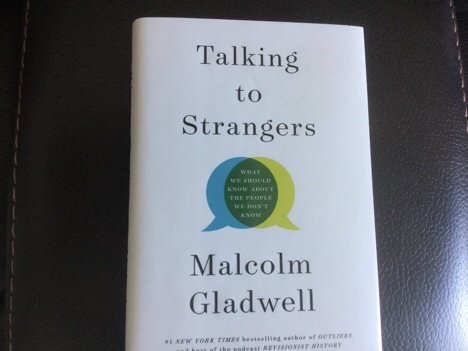
The author of the insightful The Tipping Point, Blink, and What The Dog Saw is back with more of his unique commentaries about modern society, human nature, and contemporary American life. His insights as a keen observer and his wide-ranging analysis are on full display as he explores how individuals and groups interact with complete strangers, ranging from police officers at roadside stops to CIA agents interrogating jihadist terrorists.
We all meet strangers frequently and must assess their character and intentions quickly and accurately. Yet evolution has not equipped us to to do this with any degree of precision. We generally “default to truth “ which could be more accurately described as default to belief as we are inclined to believe what strangers tell us, verbally or by ‘body language’ until proven wrong. But there are those among us who refuse to defer to belief and sometimes become heroes as whistleblowers but more often are paranoid conspiracy theorists. Even more often the nonverbal communications of strangers are misinterpreted sometimes with tragic consequences. Our ability to “read” others must be on a spectrum but even experienced cops and judges often get it all wrong. One counterintuitive thought of my own: perhaps one minor reason that the divorce rate for arranged marriages is one tenth of that for others is because of the deceptive behaviour and communications intrinsic to courtship.
Gladwell shows us that our culturally-rooted interpretations of facial expressions of emotions are prone to systematic errors, which must be exacerbated when we are limited by quarantine, something he could not have foreseen when this book was written. There must be a spectrum of responses to our encounters with strangers from those who too naively expect honesty from everyone to the paranoid or suspicious who see every such encounter as probably loaded with sinister hidden meaning.
Gladwell makes much of the fact that our interpretation of the motivation and messages from strangers is based on stereotypes from such shows as Friends, and favoured expressions in novels (raised eyebrows, dropped jaws), and shows that the interpretation of physical and physiological clues can go dangerously wrong when those clues do no conform to what we expect. Judges do worse than computers in deciding whether or not it is safe to release suspects on bail, in spite of having access to eye to eye contact. When there is a mismatch between facial expressions and behaviours, interpretations can lead to erroneous conclusions with disastrous results. “…with strangers, we’re intolerant of emotional responses that fall outside expectations.”
There are are several criticisms I could level at this book. In spite of Gladwell’s unique insights, I found the book to be disorganized with his really original observations of human nature sprinkled haphazardly throughout it. Sometimes the logic of his reasoning seems a bit convoluted and strained in getting to the counterintuitive conclusions he is so fond of. His discussion of alcohol as the common denominator in campus sexual assaults simplifies the neurological effects of alcohol to the point of a distinction without a difference.
There are many unique and surprising undisputed facts revealed in this smattering of brain droppings. Suicide and crime rates are coupled to specific places and specific methods, not to particular circumstances, contrary to what common folklore would have us believe. For example, we are told and most people believe that someone intending to commit suicide would do so by a different means if their first plan was foiled, but the evidence is that this rarely happens. TSA baggage checkers at airports fail to detect a gun planted in luggage 95% of the time; most could work for 50 years and never find a hidden weapon.
I found this book to be filled with interesting, and original observations, but also not as loaded with insights as his previous revelations. Nevertheless a good read.
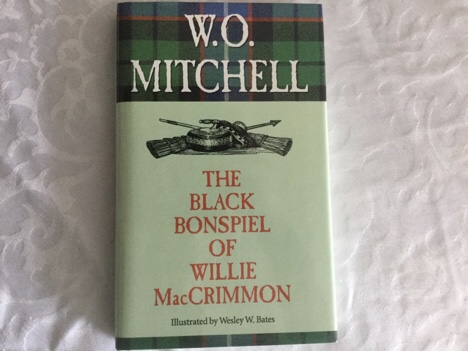
Unlike anything else W. O. Mitchel, beloved author of Who Has Seen The Wind? wrote, this fanciful tale should appeal to any lovers of Canada’s most popular winter sport that has become my winter religion, whether as this book or the later stage play.
Willie, or Wullie, a caricature of the stubborn Scottish Presbyterian, widowed and mourning, in the mold of Angus McClintock, in Terry Phallis’s The Best Laid Plans, lives in Shelby Alberta, at the time of Methodist-Presbyterian-Congregationalist church union in 1925. He skips a rink dreaming of winning the Briar national championship, along with his three Charlie Browns, all designated by their occupations.
Satan, as Cloutie, arrives in Willie’s harness and shoe repair shop to get his curling shoes repaired. After some negotiations and banter Willie agrees to Cloutie’s challenge to play against his rink from hell, composed of MacBeth, Judas Iscariot, and Guy Fawkes. The stakes are high, and Willie’s soul will be sold to the devil if his rink loses, but he will win the Briar if his rink wins.
With quotes from Shakespeare and Robbie Burns woven into the story there are fanciful but interesting twists. The four members of the team are from four different religious denominations, all cleverly caricatured and skewered. Not included in this tale, but appropriate to the story, I once heard a clever saying about the difference between dour Presbyterians and the United Church of Canada. “I’d rather be Presbyterian and know that I am going to hell, than United and not know where the hell I’m going.”
A very clever, light, three hour read, or a two hour stage play.
I read every word of this chunky award-winning doorstopper, determined to gain bragging rights over friends who admit to giving up partway through it. A neighbour dropped it off, probably worried about my mental health, or lack thereof during our lockdown. It is perhaps the second longest and wordiest novel I have ever read, after War And Peace, which I am now rereading.
In the southern summer in 1865, in the gold rush town of Hokitika on the northwest coast of the South Island of New Zealand a host of mysteries suddenly develop that entangle a banker, various prospectors, a few prostitutes, native Maoris, a pimp, hoteliers, a shipping magnate, a hermit and his estranged wife, a newspaper publisher, a local politician, a jailor, a realtor, a druggist, a Chinese opium den operator and an itinerant clergyman. Gold dust and nuggets show up in the most unlikely places, old enemies from the Opium Wars meet each other on the frontier, and there are disputed paternities; family ties are abandoned, and unexplained disappearances and mysterious deaths are plentiful.
Starting off with chapters as long as 40 pages, Part One takes up 360 pages; Parts 2-12 become mercifully shorter, but cover a jumble of different and earlier time frames, and different sites. Each Part and each Chapter is introduced with either an astrological circle or sign, the significance of which was totally lost to me.
By about page 500 a few of the dozens of apparently unconnected plot mysteries begin to make some sense, but then new twists also arise to keep my confusion and frustration at their previous high levels.
The writing reflects the flowery, wordy, poetic language of Victorian England with endless character analyses and indirect allusions. But this is no War and Peace; there are few insights into the essentials of human nature -few good quotes or lessons by which to better oneself. One quote to illustrate this: “he possessed a fault common to those of high intelligence, however, which was that he tended to regard the gift of intelligence as a licence of a kind, by whose rarified authority he was protected, in all circumstances from ever behaving ill.”
This book won the Mann-Booker prize and the 2013 Governor-General’s Award for Canadian fiction, (Catton qualified as she was born in London Ontario, though she lives in New Zealand), but reading it did nothing to improve my mental health. It did fortify my skepticism about books chosen by semi-secretive boards of elitist literati for various prizes. But I may someday find someone who understood it and enjoyed it.
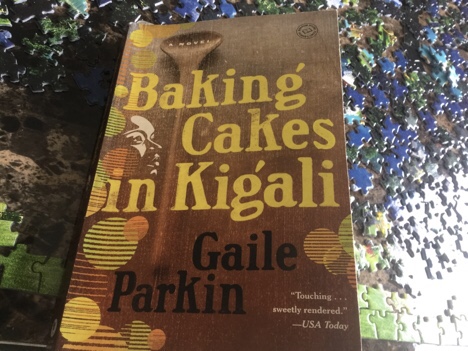
Another novel I recently found on one of our bookshelves, and one that Vera thought I would like, this presents an unfamiliar mixed complex culture that made for a fascinating read. Based in Kigali in 2011, after the Rwandan genocide, the central entrepreneurial character becomes a confidant, counsellor, and inspiration to a diverse group of survivors, ranging from a prostitute supporting her family by selling herself, to international diplomats, a Bible-thumping drunk, and single girls seeking a better life.
The are moral dilemmas in every encounter as the remaining Tutsi and Hutus struggle to find common ground. Muslims and Christians both incorporate elements of animalism and superstition to try to explain their plight. In every family, the devastation of the prevalent AIDS, profound poverty, and misogyny, force adoption of seemingly extremely flexible moral standards. A Christian baker decides to bake a cake to celebrate and then to attend the ‘circumcision’ of a Muslim friend’s daughter.
Parkin manages to give many of the characters a hopeful upbeat attitude in spite of the many hardships they face, and includes leavening humour. When an Egyptian man sends his servant to borrow some cardamon from a female neighbour, the language difficulties lead to her asking for condoms instead, resulting in hilarious misunderstandings.
Baking Cakes In Kigali presents a vivid portrait of a world that is so far removed from anything I have ever experienced that it could almost be from a different planet, (grasshoppers are fried as a delicacy) yet the individuals that occupy it share universal human virtues, vices, anxieties and sorrows with the rest of us. A very enjoyable read.
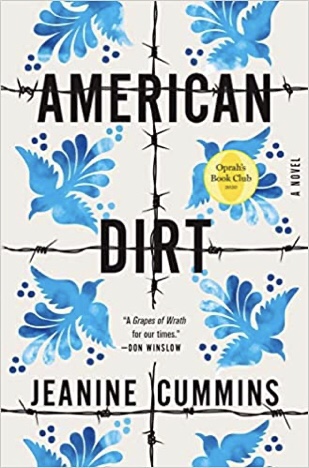
This very modern, much lauded novel details the perilous flight of a mother and her eight year old son from the powerful criminal gang in Acapulco to freedom in Arizona. In the first chapter they just narrowly escape being shot dead at an extended family barbecue, as sixteen members of their family are, all because her journalist husband has dared to expose the gang leader. Griefs, disloyalties, betrayals, cruelties, and untimely deaths abound, but there are also heroic inspired acts of selfless kindness. Profound questions about the ways to follow universal moral imperatives are raised that no armchair philosopher could provide answers to.
The narration is entirely in the third person present tense, rendering a sense of urgency to the main characters’ desperate attempts to survive and reach some kind of security, however precarious. The plot is complex and beautifully integrated yet most readers will have no difficulty keeping the many characters straight. Cummins’ portrayal of the fictional Janeiro, the despicably cruel gang leader and would-be poet reminded me of Hannah Arendt’s depiction of the very real Adolf Eichmann in The Banality of Evil. Frequent Spanish phrases interspersed in the conversations left this linguistically-challenged reader confused at times, but I got accustomed to guessing their meaning from the context.
There are many foreign-born individuals in our midst and until I read this story, I naively seldom thought about how they got here or what hardships they endured along the way. For example, I worked closely with a very talented Mexican liver transplant surgeon in London, Ontario, who now works in Rochester, New York. I never even thought to ask about what challenges he may have faced in getting from Mexico City to Canada and then to the U.S., and can only hope that his journey was nothing like that depicted in this book.
The cruel U.S. treatment of would-be Central American asylum seekers at the southern border, with callous separation of children from their parents, is exposed for what it is- an inhumane violation of basic human rights.
This is not a fun read, but it is an important stark reminder of the plight of those fleeing injustices and cruelty anywhere in the world. The book has been criticized for stereotyping Central American asylum-sealers and the U.S. Border Patrol and Immigration and Customs Enforcement agencies, but, in my opinion, the cruel practices of the latter deserve criticism far more than the book does.
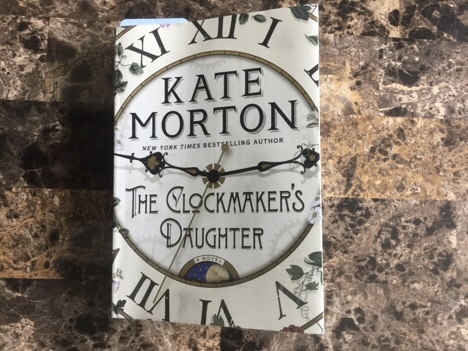
I picked this novel up at the Kanata Grassroots Grannies book sale about a year ago, on the recommendation of a friend, and promptly forgot about it until I spotted it on our bookshelf recently. It presents a sprawling, glorious, vivid, panoramic portrait of the lives of ordinary English folk in the time frame from 1860 to 2017, complete with abundant orphaned or abandoned children, wars, early mysterious deaths and nostalgic searches for the answers and ancestors from an unknown past. Chapters headed only by Roman numerals narrated by the abandoned clockmaker’s daughter, are interspersed with dated chapters relating the lives of a wide variety of characters.
The clockmaker’s daughter, however, is a ghost who occupies the mysterious Birchwood Manor, a big country estate that is the site of lovers betrayals, murders, thefts, and intrigue. She fills in details of the lives of various owners and visitors over the years. Many of the characters are somehow connected to the dark world of late nineteenth century artists, whether real or fictional, and their quest for fame and riches. The plot includes the familiar fiction device of a missing antique gem of inestimable value, but this is not a major part of the story.
The plot is complex and intimately woven, with a long elapsed time frame and a lot of flashbacks and a host of characters. But I never felt either blindsided by sudden unpredictable and unlikely plot twists, or completely lost in keeping the characters straight. And the symbolism of the passage of time and clocks is never far below the surface. “A fool wants to shorten space and time. A wise man wants to lengthen both.” The many loose ends are largely resolved in the last few chapters.
As befits a story mainly set in Victorian-era England, there are several illicit sexual trysts, but they are never described in explicit pornographic detail. The professional thieves and street pickpockets are as interesting as those in Oliver Twist.
As a reflection of the substantial challenges faced by folk living in England during the long time span, this novel is a great reminder of the importance of using time wisely. A more modern Dickens tale that is well worth reading.
This bestseller was on the list for Vera’s book club. Although she said she liked it, a few of the others did not and she was sure I wouldn’t either. But it was one of the few I found that I could borrow as an ebook from the Ottawa Public Library, and getting desperate in physical distancing, I did just that.
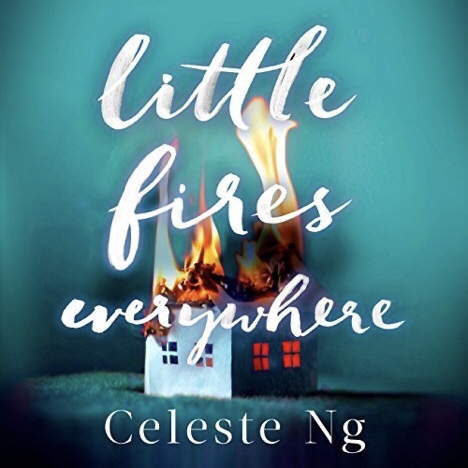
Set in Ng’s childhood home town of Shaker Heights, an affluent carefully planned part of Cleveland, in 1996-97, she obviously draws heavily on her past experiences there.
The plot follows the lives of two families that could hardly be more different although the teens become intimately entangled with each other, resulting in conflicts, secrets, jealousies, and unwanted pregnancies. The question of what characteristics define a good mother is a recurring undercurrent. Other broad moral questions such as how to value the very eccentric artistic types in our midst are addressed indirectly. I will not give away even the broad outline of the plot but it is quite intricate and ingenious. The hypocrisy, duplicity, and meanness of (some) apparently upstanding wealthy citizens is viciously exposed. The writing style breaks several rules taught in creative writing classes, but I hardly noticed.
I quite enjoyed this book, but I can understand why many readers wouldn’t.
A note about add-ones. The ebook edition opens with quotes of praise for the book from no less than 48 sources, and ends with a six page interview with the author, a letter from her to readers, and list of “Questions for discussion.” These add-ons must be meant to convey to the would-be reader that this is a serious literary work to be discussed in school curricula and book clubs, but at least for me they actually detract from the enjoyment of reading. Novels that need these subtle efforts to influence the reader’s interpretation are seldom worth reading. I prefer to form my own opinion about the value of a book without these nudges, just as I am refuse to pick or evaluate books by the ability of authors and publishers to manipulate them on to easily gamed best-seller lists.
With more twists and turns than a world class slalom ski course, this murder mystery is the first of four, all set in Cuba or Ottawa in the late 2000s and all featuring the incorruptible Inspector Ricardo Ramirez of the Major Crimes Unit of the Havana police department. The author is a native of Ottawa; the Ottawa Police Department is involved in the intricate plot. There are few innocents, abundant criminals with hidden past secrets, sycophantic political operatives, corrupt cops, social misfits and impoverished simple families trying to survive in an isolated and poor Communist country. There is lots of tragedy and more than enough sexual titillation to satisfy most readers, even if the perversions are seemingly endless and disgusting. There is the overworked stereotype kind and considerate well-meaning prostitute, social misfits and even a victim of the Stockholm Syndrome in a hostage-taking standoff.
The hallucinatory dead man that haunts Inspector Ramirez in all of his investigations remains a bit of an enigma, even at the end, but is tied into both his fears of a having a fatally progressive neurological disease and the pervasive amalgam of ancient Santeria religious beliefs and Catholicism. The inclusion of both achondroplastic dwarfism and Lewy Body dementia in different characters provides realism.
The depiction of the poverty, limited freedom, and pervasive corruption of many Cubans of that era is vivid and realistic. We visited Havana in 2010 and can attest to the contrast of the decrepit housing and poverty next door to the grandeur and opulence of Revolution Square and the luxury hotels reserved for tourists. The fearful cautious reverence the people held to the 1959 revolutionary leader was palpable as an undercurrent. Most of the natives would never risk being heard to criticize their leader in any way.
There are a few quite improbable details. For example I have attended many autopsies, but I have never ever known a pathologist at one to examine the eardrums of a subject in any detail.
Other than the real origin and identity of the hallucinatory dead man that keeps showing up in Ramirez’s visual field, there are no loose ends and an amazing number of unpredictable revelations of unsuspected uniting features are contained in the last few of the seventy eight short chapters.
As murder mysteries go, not at all my favourite genre, this is as good as it gets.
The Poisoned Pawn Peggy Blair. 2013. 316 pages.
The second of Peggy Blair’s murder mystery series, this one follows up on the complicated plot of The Beggar’s Opera with even more complications and clues that seem to be obvious only to the indomitable Inspector Ramirez of the Havana Major Crimes Unit. But in this volume, he spends much of his time in cold wintry Ottawa, interacting with Ottawa police and the R.C.M.P., investigating the international pedophile ring uncovered in the first novel. In my opinion, the writing here is better and although the subject matter is grim, the graphic description of sexual abuses is absent. The plot gets even murkier before finally getting a bit clearer. There are still loose ends and the dead phantoms continue to haunt Ramirez. I presume these lead into Blair’s third novel in this series.
The description of the intricate religious black magic rituals of the mixed race Cubans in Blind Alley, Havana are detailed and interesting, either the result of careful research or of a vivid imagination. The differences between the political and legal environments of Canada and Cuba are carefully contrasted. The characterization of the Catholic Church as essentially a worldwide pedophile ring masquerading as a religion is perhaps a bit of an exaggeration, but by how much? The aboriginal Canadian detective’s description of life in Canadian residential schools is a sobering reminder of our shameful past but also comes across as a preachy politically correct sermon from the author. Tight time lines and deadlines, supposedly with horrendous international consequences, seem transparently contrived to develop suspense, like the annoying countdown on the television baking show Chopped!. The huge life insurance policy taken out just before someone dies in suspicious circumstances is a stale overworked tool of murder mystery novelists everywhere, but they do need to include some motive.
There are some rather obvious inconsistencies The pathologist who did the autopsy never mentioned missing organs, but later claimed the poisoned woman was an organ donor, even though she died far from the hospital. A 76 year old dies of a heart attack on a plane in international air space, yet became a multi-organ donor. These details reveal a lack of understanding of the criteria for organ donation, but perhaps I am more attuned to this than most readers. A man with a syringe full of air, threatening to murder a young hostage, claims “An air bubble in the main artery will stop your heart in seconds.” Really? Don’t arteries lead away from the heart?
Only one good quote from among many: “People desperate to believe in something will believe anything.”
With nothing better to do during my physical, not social, isolation, I was sufficiently entertained by this yarn to move on to Blair’s remaining novels in this series.
Hungry Ghosts. Peggy Blair 2015, 363 pages.
This is the third novel in the murder mystery series, all featuring Inspector Ramierez. The action in this one alternates between Cuba and Ontario, much of the later being on remote northern native reserves. Once again there are many misleading clues, hosts of suspects for many murders and corrupt cops and power-brokers who are quite keen to not just bend the rules but to shatter them completely. And once again there are the mysterious visions of the dead that plague the inspector and seem to guide his investigations.
I greatly admire anyone who can create vivid pictures of the folklore and mysticism of Russian peasants, the extinct Beothuks of Newfoundland, Ontario aboriginals, and the Cuban Yoruba. Blair’s wide ranging knowledge and research for this book also extends to forensic medicine and the way autopsies are carried out, although some of the claims about clues from the later seem to border on magic, such as the divination from blowfly maturation cycles. The William Maples and Michael Browning book Dead Men DoTell Tales is a more realistic treatise on this grim subject.
The much needed humour is sometimes just recycled witticisms and lame puns, but there are also hilarious metaphors: “ Sometimes I feel like I’m one broken-down truck and a dead dog away from being a country-and-western song.”
In any novel with this range of subjects, there will be some mistakes, some understandable, some not. For example she refers to “acid phosphate that should be acid.phosphatase. But the proof reader should have picked up that a pathologist cannot remove an intact brain using only a scalpel, And there are at least two declarative sentences that end with a question mark.
The dozens of red herrings and the still unanswered clues are sufficient grounds for delving into the fourth book of this series- once my wife has finished with it. I have nothing better to do during my hibernation.
Umbrella Man. Peggy Blair. 2016. 317 pages.
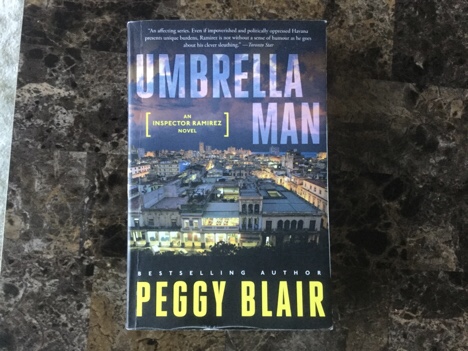
The fourth of the series featuring Ricky Ramirez, the intrepid inspector of the Havana police Major Crimes division was a disappointment for me. I am not sure if this is because Blair’s style has become formulaic or because I rarely like murder mysteries to begin with and also rarely read books that are serialized and must be read in sequence.
In this story Russian and American spies and double agents working in Cuba play prominent roles, but Columbia’s FARC narcos, Chechen mafia and high level corrupt Cuban officials are also featured. There is considerable newsworthy realism such as the poisoning of a Russian defector in Britain using polonium and Russian undercover agents monitoring the dissident Khodorkovsky while he is in prison on orders from Putin. However, there are four interrelated mysterious murders and far too many suspects and subplots for me to keep track of. A constant in all of Blair’s murder mysteries is sexual violence and this one is no exception. It would seem from this account that every single young Cuban woman earns a living as a prostitution and that sex tourism is Cuba’s main industry. Blair seems to never miss a chance to feature the poverty and deprivation of almost all Cubans along with the need for bribery to succeed.
The ghosts of murder victims who plague Ricky in the previous books don’t show up to help him here until……
There are again some inconsistencies. The fingerprints from one of the victims are discussed and analyzed on the day of his murder although they were apparently taken the next day at his autopsy. The findings in another victim’s apartment are discussed after the detectives decide that they did not have authority to search it.
Readers who enjoy murder mysteries will like this series, as did I until the characters and plots got tiresome.
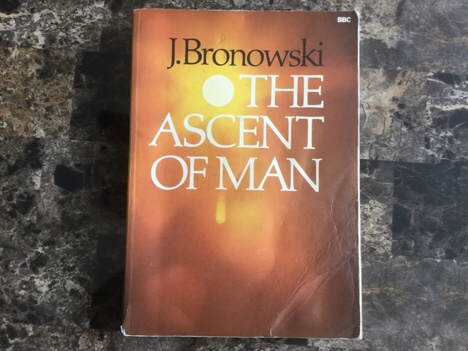
Only one chapter relates details of biological evolution up to the end of the last ice age 12,000 years ago, but a later chapter even introduces the theory of panspermia, meaning that life may have developed, not in an earthbound primordial soup, but in space. Other chapters detail the contribution of mathematics, his specialty, to sciences, arts, astronomy and even politics and law a la Francis Fukuyama in The Origins of Political Order. The series apparently aired just before Richard Dawkins The Selfish Gene was published and the chapter on genetics could have benefitted from inclusion of Dawkins’ insights. Dawkins has written a preface for a later edition.
In any all-encompassing work that includes detailed discussion of a huge range of subjects from the viewpoint of one individual, however brilliant, there will be time-limited biases and even mistakes. Some of the landmarks of pre-human evolution do not quite sync with later evidence. Bronowski avoids the Eurocentric biases common in such works, but still makes claims for our uniqueness that are now dubious if not disproven. We are not the only species to use tools, copulate in the missionary position, or experience female orgasm. The last chapter, largely devoted to human brain development lacks the zing and precision of more recent neurological science findings.
One of many insights. “The most powerful drive in the ascent of man is his pleasure in his own skill.”
In this time of social isolation, I am wasting time by dreaming up daily trivia quizzes to share online. This book provides a treasure trove of facts that I plan to use for weeks to stump friends.
I just found this whole series on YouTube, and I am now wasting a few more hours selectively listening to Bronowski. His voice is as I expected but what makes this thrilling is the beautiful videography that accompanies his strolls across various landscapes. It is far better than the stilted photographs in the book. My advice? Don’t bother with the book, but enjoy the videos.
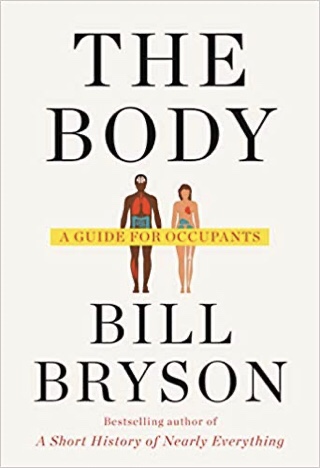
I got this new nonfiction as an e-book from the library, on the recommendation of a friend, fully expecting that with my background, I could find numerous errors and bits of misinformation. Bill Bryson seems to have no specific training in medical sciences and his previous writing has been on diverse non-medical subjects such as travel, linguistics, and general sciences. But he does not rely entirely on his own vast knowledge, but travels the world, hunting down experts on several continents, quoting them and research studies extensively.
I did find a few mistakes, but had to look hard and critically and probably missed some as well. However his own knowledge is wide-ranging, and his awe of the way our bodies are constructed and function is infectious. His generalities, some of which may seem trite to some readers, serve well as a great introduction to human anatomy and physiology, and his documentation of the extent of our ignorance of our own bodies is humbling.
There are more tidbits of information that I never learned in my medical career than I could relate from that long career. He delivers these with wry humour and fabulous analogies and metaphors. Red blood cells are described as shipping containers. “Hormones are the bicycle couriers of the body, delivering chemical messages around the teeming metropolis that is you.”“Antibiotics are about as nuanced as a hand grenade. They wipe out good bacteria as well as the bad.” “Hemoglobin….vastly prefers carbon monoxide to oxygen. If it is present, hemoglobin will pack it in like passengers on a rush hour train, and leave the oxygen on the platform.” Phantom limb pain is compared to a burglar alarm that can’t be turned off.
Written before the Covid-19 pandemic, his insight into the risks of overuse of antibiotics and of a viral pandemic are sobering. He cites results of simulation studies of a drippy nose that will make everyone despair of ever controlling rogue respiratory viruses with physical distancing policies, however strictly enforced.
Bryson also delves into the fascinating but murky world of medical discoveries, replete with wrongly accredited researchers and the serendipitous nature of many breakthroughs. His depiction of the quirky and often prickly personalities of famous biologists is enlightening.
The seemingly pessimistic conclusions about the progress of modern research in the prevention and treatment of many diseases is in accord with the documentation of others including H. Gilbert Welsh in Less Medicine, More Health.There is a huge trove of sobering statistical data that seemingly backs up the pessimistic outlook for our individual and collective future, even if much of it conflates correlation with causation.
Now for some errors or misinterpretations. Your spleen is not on the left side of your chest, nor does food normally enter the stomach through the pylorus. It is not at the moment of birth that “blood from the freshly beating heart is sent on its first circuit around the body.” Is smallpox really “the most devastating disease in the history of humankind?”. Certainly more people over many millennia have died of malaria. The largely uncritical acceptance of the vary biased now discredited views of Ancel Keys in the chapter on nutrition is not in line with the scientific facts documented by Dr. Robert Lustig and Tina Neicholz among others. Not all organ donations except kidneys are from deceased donors.
This is a fascinating, thoroughly enjoyable very educational read. Highly recommended.
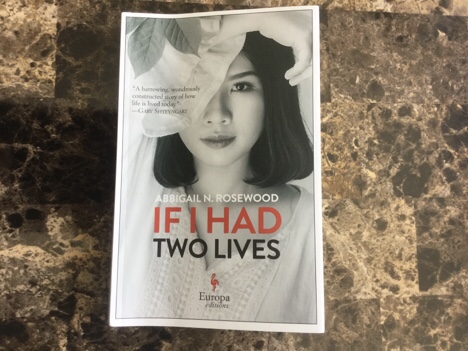
Narrated by the young daughter of a prominent female Vietnamese Communist Party luminary, this debut novel covers her life from her earliest childhood memories in 1993 to her own (surrogate) motherhood in New York City, more than twenty years later. The plot is certainly not difficult to follow although there are hints along the way of dark secrets that are only clarified much later. Tragic deaths, graphic violent sexual encounters, and abandonments are plentiful, leading to constant self-assessments and existential angst with no easy answers to tough questions..
The life of political outcasts confined to an old army base near Ho Che Min City is starkly portrayed and contrasted with the hustle and bustle of New York.
Is this an autobiography in spite of the standard disclaimer that “This book is a work of fiction”? Instead of the usual claim that any resemblance of characters to real people is coincidental, the disclaimer here goes on to say “Any references to historical events, real people or real locals are used fictitiously.” And the author’s life arc is eerily similar to that of the narrator, from Vietnam to New York and back.
Despite her masterful, lyrical, almost poetic first person singular narrative writing, there are several grammatical errors that betray the fact that English is not this author’s first language. “When we walk pass.”, “I regretted my early restrain from touching….”, “Arms of darkness….pushed you down deeper into comatose, into dreams.”, “I lied down.”
Where was the copy editor and grammar checker?
Memorable quotes abound. “The most important question about success-the one you should ask yourself- are you ready, when the day comes, to stand alone?”, “I was afraid of anything I couldn’t just walk away from.”
I quite enjoyed this book. It occurred to me that perhaps, given the constant self-doubt, introspection, and the sensual detail, it may be more appealing to women readers, or am I just gender stereotyping?
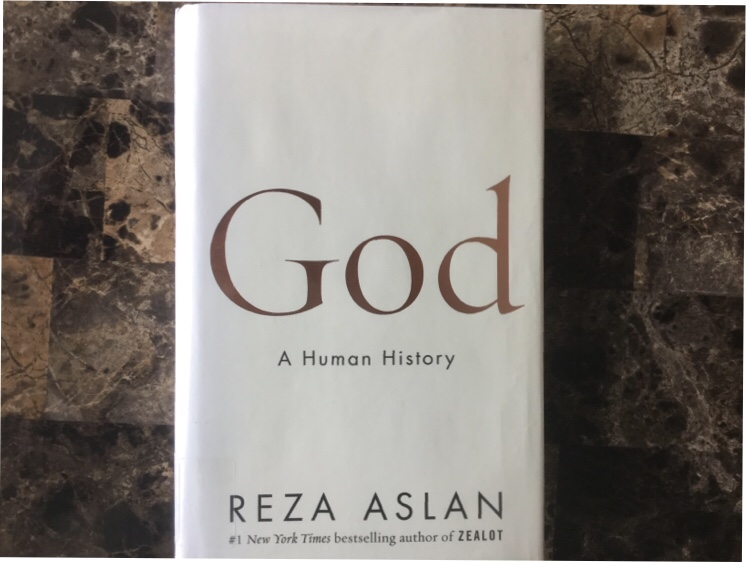
There is something fascinating to me about the wide variety of religious beliefs, often incompatible with each other, held by perfectly rational people around the world. Hence my interest in this scholarly treatise, based solely on the title, as I picked books to fill my time in social isolation. Unlike most people, the author, a professor at the University of California has not stayed with his childhood faith but has migrated from Islamism to Christianity, back to Islamism, then Sufism, and then to a nebulous pantheism.
This is a carefully researched endeavour with a 25 page bibliography, 79 pages of notes and an 18 page index. The author traces the development of various religions from the evolutionary rise of Homo sapiens to the scientific revolution. He emphasizes the universality of the development of religions in history and the almost universal assumption that we possess a soul or spirit that is separate from the body. Ergo, there is little discussion of the neuroscience revelations of what happens in the human brain during religious experiences. The author makes the gradual transition from diverse polytheism to monotheism over centuries seem logical, if not preordained.
Research into the origin of the stories in the Old Testament complement, update and expand Robert Green Ingersoll’s devastating critique of those myths in Some Mistakes Of Moses. In documenting the unlikely survival and growth of early Christianity, Aslan provides interesting background details, but unlike Richard Rubenstein in When Jesus Became God, he largely omits the key influence of Saul of Tarsus in early church history.
This is an interesting short book that can be devoured in one day. My only concern is that the pantheism that the author comes to espouse seems to me to be so ethereal and vague as to be a useless crutch to deny his atheism and to cling to the dubious idea of dualism of body and soul. I still think that Ernest Becker’s The Denial of Death is one very plausible explanation for, or at least a contributor to, the emergence of many religions that promise an afterlife.
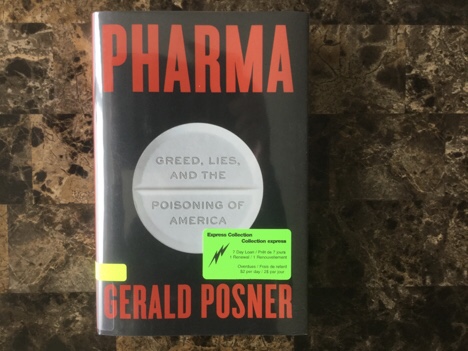
Where to start? Perhaps with a relevant confession. During my professional career, now rapidly receding from memory, I enjoyed and benefitted from the largess of several pharmaceutical companies, including trips to sponsored conferences in sunny climes, free lunches, and honoraria for lectures, work on clinical trials, etc. I naively convinced myself that none of the freebies influenced my prescribing decisions, and viewed, albeit somewhat sceptically, the information provided by reps, as education I would otherwise never get.
This exhaustively researched detailed assessment of America’s pharmaceutical industry by a topnotch freelance investigative reporter is not an easy read. There is a 32 page Selected Bibliography, 89 pages of Notes, and a 37 page Index, as well small-print footnotes on almost half of the pages. It is arranged chronologically from the early days of the nation when coffee was considered more dangerous than freely-available cocaine and opiates, to late 2019 when Perdue Pharma chose bankruptcy rather than further government investigation into their criminal responsibility in the opioid overdose crisis. In between, there are hundreds of revelations about an industry that hoodwinked various underfunded and understaffed federal agencies, broke laws, deceived the public and became the fastest growing industry in the country. There is background information on the development of hundreds of drugs I knew by name and at least a dozen companies I interacted with.
Among the more interesting revelations.
While setting up his President’s Advisory Commission on Narcotic and Drug Abuse, John F. Kennedy was daily downing eight different medications including two different narcotics, a barbiturate, Librium, and an amphetamine.
The Reagan government downsizing led to the FDA accepting pharmaceutical company data without fact-checking or field investigations. Annually, the Sackler family, of later Perdue-OxyContin fame, paid the head of the FDA several times his yearly salary in ‘honoraria’.
Several pharmaceuticals companies knowingly sold contaminated blood products pooled from paid, often criminal donors. The hospitals, clinics and foreign distributors who paid dearly for this contributed enormously to the spread of AIDS and hepatitis, especially in hemophiliacs.
The Orphan Drug Act, designed to encourage companies to develop treatments for rare diseases, was and is being used by Big Pharma companies to maintain and extend patents. They work around the restrictive criteria for orphan drugs by creating new narrow disease categories that they define themselves. Then their old drugs with expired patents can be repurposed as orphans to qualify for subsidies and new patents.
American farmers used 141,000 tons of antibiotics on livestock in 2017, contributing enormously to the development of multi drug resistant organisms. In a prescient prediction, Posner, in late 2019, predicted that this and horticultural and human overuse of antimicrobial agents would lead to a worldwide pandemic that we have no agents to treat. Maybe he got the cause wrong, but not the facts.
The United States is the only western country which allows manufacturers of drugs to set their prices, and to employ very profitable Pharmacy Benefit Manager (PBM) companies to work through the maize of paperwork tying up wholesalers, retailers, insurers and users.
The Sackler family empire, a labyrinth of over 150 companies registered in many different jurisdictions, even as early as 1959 is described as “a completely integrated operation, including creating new drugs in its drug development enterprise, insuring that various hospitals with which they have connections do the testing and produce favourable reports, conceive the advertising approach and prepare the actual advertising copy, make sure the ad campaign is published in their own medical journals, and prepare and plant articles in newspapers and magazines, through their public relations organizations.” They also later set up pain clinics around the country, paid enormous sums to so called pain specialists, donated money to prestigious medical schools to develop courses on pain management and ignored or covered up warnings about pill mills. Many of these did nothing but dispense huge amounts of OxyContin, Purdue’s 10 billion dollar annual cash-cow, to obvious addicts. Detailers were given enormous bonuses for focusing on heavy prescribers and increasing prescriptions from pill mills.
It seems to me that several members of the Sackler family are the archetypical nonviolent psychopaths described by Kevin Dutton in The Wisdom of Psychopaths. And many of their collaborators, such as Rudi Giuliani, at one point their corporate counsel, may also fit into that category. There must be lots of them- only a few whistle-blowers are mentioned in this tome.
Who would benefit from reading this book? It should be compulsory for all pharmacy and pharmacology students. All practicing pharmacists would find it interesting. It is a must for all health care economists. It could be profitably discussed in any course on ethics in any field.
Although the focus is on the American health (or wealth) care system, the scope is global as is the reach of the pharmaceutical giants. I admit that I looked upon a few of the notes and found the text dry and difficult in places, but there are enough educational crumbs to keep me going, and I will never be able to look at the drug industry the same as I did a week ago.
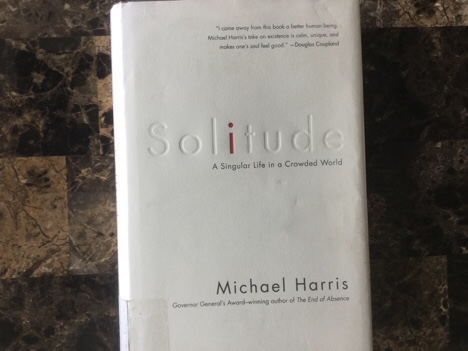
This would seem to be a timely topic for the masses around the world now in voluntary or forced quarantine. The young Vancouver social critic bemoans the constant connectivity of the Internet age, leaving no space in our brains for solitary daydreaming and creativity. Citing a wide range of neuroscience research findings and classic literature, e.g George Bernard Shaw’s In praise of Idleness, he documents the value of disconnecting from the rest of the world to just ponder whatever topic pops up into an undistracted brain. He also frequently deviates into his own solitary and unique musings about the benefits of long walks a la Frederick Gros in A Philosophy of Walking, and other topics that have a tenuous connection to solitude, such as the efforts of some scientists to defeat death entirely.
Harris is no nostalgic Thoreau luddite pining for the impossible return to a past age of innocence. At first glance his advocacy of escape to solitude to treat ‘nature deficit disorder’ would seem to be the antithesis of Robert Park’s recommendations in Bowling Alone, but their arguments actually complement each other in some ways. Park recognized the disintegration of meaningful social support networks long before the constant connectivity that Harris criticizes made those support networks wider but frailer, like a poorly spun wide but torn spider’s web.
The writing style is original and vivid with great descriptions of characters he interviews and the phenomena he documents.
“Oakley is ….possessed of a prickly intellect, a craggy brow, and caterpillar eyebrows that he uses to punctuate his remarks.”
“Emoticons and emojis scratch out individual voices and offer instead a limited shopping list of feelings.”
I enjoyed this book during my ‘social isolation’ almost as much as I enjoy my long solo walks in nature, where I am at no risk of getting or passing along any virus, at least until mosquito and black fly season.
A friend of mine refuses to read any novels by women, claiming they are all pathologically obsessed with sex. He could well use this novel as an example. The tenth of the author’s books, this is set in a coed prep school in the fictional town of Lowlands, Vermont in the fall of 2009. Sexual shenanigans abound not only within the school student body of libidinous teens but within the faculty, and between faculty and students. A group of boys keeps a secret coded computer file rating of the girls facility and skills in providing oral sex, awarding a ‘Dulcinea prize’ to the best girl at fellatio. The new faulty teacher, with a dark background of her own, and a group of disillusioned, sexually frustrated girls eventually break the code of the ‘Darkroom’ boys and sabotage their sick enterprise. The uproar destroys reputations far and wide, and the prep school itself, with dire consequences for some.
In the age of the Me Too movement, there may be an important message about the imbalance between the ability of males and females to find sexual fulfillment, even in modern societies in this tale. If so, that message is obscured by the sheer volume of pornographic description and detail. There are some interesting literary twists and insights. One of many good quotes: “Some people count sheep. What finally sent me to sleep was cycling through possible job alternatives, in alphabetical order. For soporific purposes, you can’t leave anything off the table. I fell asleep sometime after carpet installer.”
I am no prude and do not object to use of ‘course language’ and explicit sexual descriptions in the dialogue of characters in novels, if there is an important underlying message, but I tried and failed to find that message in this novel. And it seems a poor substitute for subtlety and imagination when used by an author in narrating his or her story.
For younger readers who perhaps enjoy reading about the graphic details of the sexual exploits of others, this may be an interesting read, but this old curmudgeon did not enjoy it.
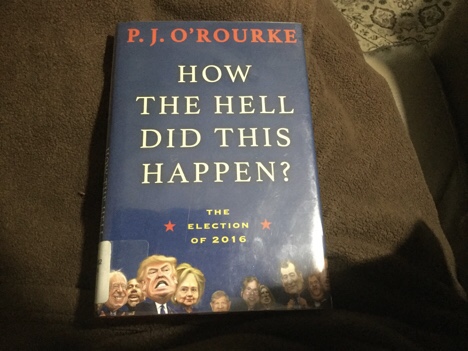
I picked this book up at the Beaverbrook Branch library, along with several others, the day before it closed to promote social distancing, hoping to gain some insight into the fiasco of the 2016 American election. The author, a prolific American political satirist, and former editor of National Lampoon, wrote most of the short essays as that election approached. He employs clever sarcasm, wit, humour, and cynicism to mock all of the candidates for office from both parties. As a self-proclaimed libertarian, his most biting characterizations are reserved for liberal and progressive candidates on the so-called left of the political spectrum. He clearly has a talent for detecting inconsistencies, banality and silliness in the process of political campaigning. His Glossary of Punditese Words and Phrases with Their Meanings Given in English is a witty, but cynical, guide to interpretation of mainstream political writing.
I appreciated the witty turn of phrases and insights for about the first half of the book, but they gradually became stale, and then grating. It is not clear when he is offering serious commentary and when he is just showing off his talent for lampooning everyone and everything about American political life. It is also not clear what makes him an authority on anything, other than his self-assertion of expertise. Much of the commentary degenerates into silly slapstick comedic dismissal of serious issues that deserve to be debated with more gravitas. For example, he denigrates proposed plans for universal health care with supposedly careful economic calculations that fail to take into account off-setting savings and the success in other jurisdictions where it actually works reasonably well.
As I read on, the overriding impression I developed was of an arrogant know-it-all who considers himself to be an expert on everything from politics, economics, and health care to criminal justice. He seems to even think he is an expert haberdasher, critiquing the wardrobes of all the candidates debating serious issues.
The inconsistencies in his own assertions, the increasing pressure of speech, his flight of ideas and the non sequiturs made me wonder, as I tried to put the random rants in chronological order, if when and when he had stopped taking his lithium.
There are a few good quotes. “Consistency is not a hallmark of American politics, but exceptions are made when the constant is stupidity.”
“Elites are self-righteous, self-regarding, self-serving and smug.” An accurate description of the author.
I cannot recommend this book to anyone, unless you are in desperate need of memorable barbed put-downs to use in some debate.
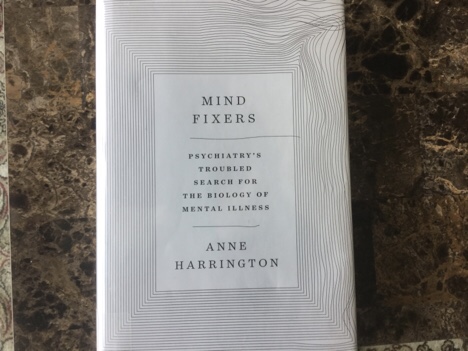
This new history book, the second of my peeks into the murky world of psychiatry in a week, is written by a professor of the history of science at Harvard. With 77 pages of notes and a 22 page index, it is certainly scholarly. As the subtitle suggests, it is also a story of failures, false hopes, and a divided and dysfunctional profession at war with itself, right up to the present.
There is an abundance of historical detail, much of it not at all flattering to the professionals who like to consider themselves as being guided by scientific principles. Charlatans, egotists, and mercenaries seem to find comfortable niches for themselves in the world of mental health care. Egan Moniz’s 1949 Nobel prize for pioneering lobotomy in 1949 is still an embarrassment to the whole profession. Other equally unscientific and ethically dubious treatments such as electroconvulsive therapy, insulin shock therapy, hormone ‘conversion’ therapy for homosexuality, and involuntary sterilization of institutionalized schizophrenics, persisted long past the era when other branches of medicine had embraced at least basic scientific principles in research. In the 1960s an influential dissident psychiatrist, Thomas Szasz, aligned his movement with the distinctly nonscientific dianetics practices of L. Ron Hubbard’s Church Of Scientology.
The conflict between the Freudian psychoanalysts and the biological-oriented researchers who hoped to find an anatomical or biochemically basis for mental illnesses continues, with the repeated failures of the latter, including the glaring inconsistencies of the heavily marketed “chemical imbalance” theories promoted by pharmaceutical companies to promote sales of various antipsychotics and antidepressants that are only marginally more effective than placebos. Blind faith in pet theories led the Canadian psychiatrist Humphrey Osmond at the Weyburn Psychiatric Hospital to the false claim to have found the mediator of psychosis (adrenochrome), and to treatment of ‘cerebral pellagra’ with megadoses of niacin. His experiments with LSD along with Aldous Huxley, Timothy O’Leary and Alan Ginsberg, then led them to deny the existence of psychosis as an illness.
Many of the drugs discussed, from chlorpromazine to all the modern antidepressants and ‘atypical antipsychotics’ were familiar names to me from my days living in the now defunct London Psychiatric Hospital and in a medical practice that included a wide range of mentally ill patients. But their route to discovery as carefully detailed here were not as familiar. Among the most unlikely of those routes is the serendipitous discovery of lithium carbonate, once an ingredient in 7-Up, as an effective treatment for bipolar disorder. With the expansion of the number of mental illnesses in the DSM-5, (what is “Disruptive mood dysregulation Disorder?) it seems anyone can qualify for some psychiatric label, even as big pharmaceutical companies abandon attempts to find new treatments, frustrated by the stringent requirements for demonstrating safety and efficacy imposed by regulators.
The decline in institutional care of the mentally ill in the 1980s left the care of many needy patients to inadequately funded community centres, families, and prison guards.
One minor editorial quibble. “(See Chapter 4)” is in the middle of Chapter 4.
This is a comprehensive and engaging, but somewhat depressing history that should interest anyone dealing with mental health issues themselves or in relatives or working in the field, which probably includes just about everyone. But my take on it may be biased- no one has ever accused me of being sane.
All the usual tropes of modern psychology are here including the Stanford prison experiment, the runaway trolley car thought experiment, and numerous studies dreamed up by psychology professors, often using their students as research subjects. Perhaps I have read about these too many times to be impressed, but there was enough intriguingly different about some of the findings and speculations here to keep me interested, and the title alone is enticing. And I have dealt with enough criminal psychopaths in my professional past to keep me interested in the field.
I have to relate one such encounter. A itinerant, very charming man flagrantly flirted with my secretary at each appointment. He had never kept a job for more than a few months and had a long rap sheet but called to cancel a followup appointment, telling my secretary that he would call back to rebook. The next morning, while listening to the six a.m. news, I recognized his name. There was a Canada-wide warrant out for his arrest!
The whole concept of psychopathy and personality disorders is a twentieth century phenomenon, driven by psychiatry’s need to categorize and fit personality types into arbitrary slots. But many studies have shown that the tools such as the Hare Psychopathy Checklist-Revised, the Psychopathy Personality Inventory and the Levenson Self-report Psychopathy scale do quantify personality traits along a continuum. That continuum can then be arbitrarily chopped into categories to facilitate social science studies, treatment trials, and research.
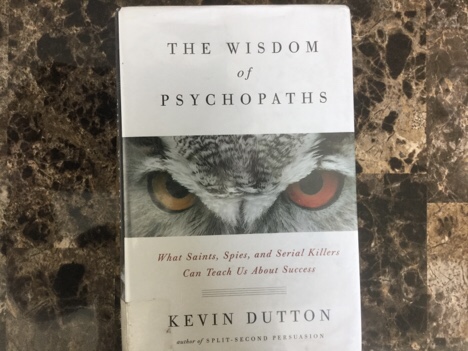
Dutton documents the counterintuitive fact that many, and perhaps most psychopaths, are not ruthless serial killers or rapists but are high functioning societal and business leaders, military heroes, religious leaders, and political operatives. He discusses the probability that Jesus, St. Paul, Steve Jobs, almost all military special unit members and the fictional James Bond would score in the psychopathic range if the modern tests could have been applied to them. Their shared traits of fearlessness, charisma, nonconformity to societal norms, narcissism, short term perspective, assertiveness, and lack of remorse can be useful traits for everyone- in small doses. I would include persuasive salespeople- I once knew a teen who sold a Greenpeace membership to a guy sitting in a Hummer.
The neurological basis for psychopathy is discussed with documented genetic contributions and fixed anatomical brain differences between control and psychopathic subjects. The most interesting revelation is that it is possible, in a laboratory, to temporarily produce the mental and physiologic characteristics of a psychopath in normal individuals using carefully focused transcranial magnetic stimulation, as convincingly documented by applying this technique to the author.
Without exception, all the psychopaths studied or discussed were male, but there is no discussion of any possible reasons for the male predominance. Where are the Karla Homolkas and Terri-Lynn McClintics of the world. Granted, they were accomplices of male psychopaths.
A great quote from an institutionalized criminal psychopath: “But what if you don’t need courage? What then? If you don’t have fear to start with, you don’t need courage to overcome it, do you?”
For fun, I took the online revised Hare Psychopathy Checklist and completed the answers to the Levenson Self-Report Psychopathy scale. I think it would be very easy to game these questionnaires to come up with any conclusion you wanted, but I answered honestly. Seems I failed both if the aim is to self-diagnose psychopathy, but the latter concluded that I was at 60% on the scale for a “general personality disorder.” As they are in the business of selling counselling services, I don’t take their ratings very seriously.
This book was interesting, but not essential reading unless you work in the mental health field, or have developed serial killer instincts during your corona virus quarantine.