Diary of a Deployed Doc. Darrell Ménard. 2024. 298 Pages. (Paperback.).

A now retired Inuit doctor and Air Force Captain from Russell, Ontario, just outside of Ottawa, is recruited to serve as the medical advisor to the Canadian Army medical corps in Bosnia with the NATO peacekeeping mission in 1998. There he documents his daily experiences over 209 days, having previously worked mainly pushing paper at National Defence Headquarters in Ottawa.

As an intoduction to peacekeeping in the aftermath of the genocidal wars in Bosnia and Kosovo, this is a masterpiece of information and a tribute to Canadian soldiers. His personal hardships and his enormous humanitarian contributions to the local residents are exemplary. The daily activities provide ample opportunities for dry humour on almost every page. He does not hesitate to mock the Canadian Armed Forces for their inefficiency, waste, and excessive beaucracy.

He seems be obsessed with running long distances and several sports. He seems a little excessively humble and self-depricating.

One thing that turned me off a bit was his religiosity, frequently ending the account of daily activities with either a short prayer or a thank you to God for what his colleagues and not God had accomplished that day.

There are three pages of acronyms that the armed forces are fond of using. A reference map of this troubled part of the world with the many towns visited would have been helpful.

I quite enjoyed this account and will recommend it to a very senior military officer who also served abroad.

3.6/5

Thanks, Bob.

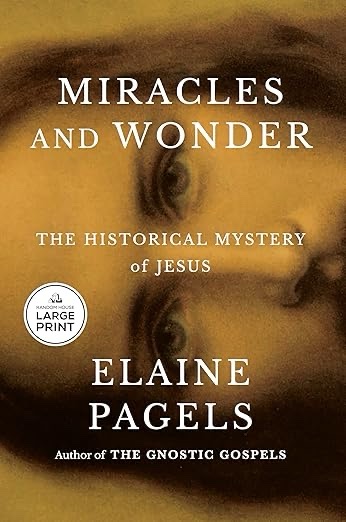
The Denial of Death. Ernest Becker. 1973. 282 Pages. (Paperback.).

Picture 1 of 7

No one recommended this 1973 book to me. I bought it simply because it was referenced in so many books that I have read that I was curious as to its details. It was written by a late American cultural anthropologist. The 2023 edition I bought includes a lengthy preface by Brian Greene, the original Preface, and an Introduction.

A deep dive into classical Freudian psychoanalytic theory is combined with existential philosophy in the first chapters; the book was written when Freudian psychoanalysis was very popular. Then he argues that Kierkegaard’s theology, which I have never been able to fully understand, is psychoanalytic in nature.

The chapter on group psychology and transference is interesting but only peripherally related to the topic of the title. But it helped me to at least partially understand the psychological dynamics within the current Republican Party in the United States.

There is the statement that Freud claimed to have a secret death wish for his younger brother when he himself was only 19 months old. Perhaps not absurd to assert, but certainly absurd to believe.

Quoting a wide variety of supposed experts, the author waxes eloquent on an equally wide variety of subjects from loss of instincts in humans, and all kinds of mental illness including schizophrenia and sexual perversions. If there is a unifying theme, it must be his admiration for Freud. But to claim that this is science is almost laughable.

I hoped that this book would help me understand why many old folk undertake irrational enterprises such as starting a new business or taking up farming as though they believed they personally would never die, in spite of all the evidence around them. And there is a lot of discussion of the fear of dying, but little about the actual denial of the inevitable.

Some quotes may help you understand the opaque vagueness of this book.

“ Schizophrenia is the limiting test case for the theory of character and reality: the failure to build the defendable character defences allows the true nature of reality to appear to man.”

“…what was need was a framework into which to put the corpus of psychoanalytic insight, so that the truth of it could emerge clearly and unambiguously, free of the 19th century reductionism, instinctivism, and biologism that Freud fettered it with.”

This book won the Pulitzer Prize in 1974, so many readers must have appreciated it. But for this reader, it was just wordy, dry, profoundly confusing, and dissapointing. I only persisted because I bought it rather than borrowing it and I hoped to find some gem that I could quote and failed.

1.0/5

The Life Of Herod The Great. Zora Neal Hurston. 2025. 290 Pages. (Ebook.).

This novel by the late well- known Black American writer was not completed when she died in 1960. But someone thought it was worthy and it was then published earlier this year. There is also a long and confusing detailed historical perspective that seems designed to make prove that it is in fact an accurate historical novel.

The plot is complex with young and handsome Herod competing with the cruel Hezekiah to be governer of Galilee for the Romans when we first meet him. He is the son of Antipater, procurator of Palestine, and brother of Phaseus, the governer of Jerusalem. They all appear to be under the control of Sextus Caesar, president of Syria, who in turn reports to Julius Caesar. And all of them become the enemies of the weak but scheming titular King and High Priest. Keeping these relationship straight proved to be a bit of a challenge for me. But then there are dozens more characters, many of them historical and some perhaps mythical.The king forces Herod to stand trial in the Sanhedrin where Herod prevails and a soldier moons the Sanhedrin.

The boundaries of both Israel and what counts as a Jew seem a bit fuzzy. Malicus then plots to kill Antipatrer following the assignation of Julius Caesar by Brutus. The bisexuality of Anthony and many others was widely accepted in the ancient world, to Herod’s disgust.

The plot gets even more complex with multiple heroic battles. Apart from perfidious and greedy Cleopatra, women are mostly servants or slaves, or used as sexual indulgences as concubines, but worth fighting for when threatened with mass rape. When Herod visits Rome, Mark Anthony appoints him as king of Judea, but Cleopatra and his mother-in-law plot to betray him, feeding lies to Mark Anthony.

If one ignores the gleeful parading of the heads of his enemies through the streets, and the execution of his young wife, and then his mother-in-law, Herod seems almost too good to be true.

The book ends with the natural death of Herod the Great, without any mention of any encounter with Jesus. Indeed, the time lines don’t seem to fit and in the epilogue it appears that many other scholars of Ancient Rome besides Hurston also do not believe that their times ever overlapped, and it is difficult to believe that Herod would have condemned a fellow Essene.

A reference map or two with borders and cities mentioned in the text, as they applied at the time would help those of us who are geographically challenged.

This is a dense book with many plots to attain power and prevalent devious backstabbing by all the characters, but dramatically details the pervasive cruelty of the era. It may be of great interest to dedicated scholars of Ancient Rome, but I suspect it will not become a best seller.

2.5/5

Thanks, The New Yorker.
Correction

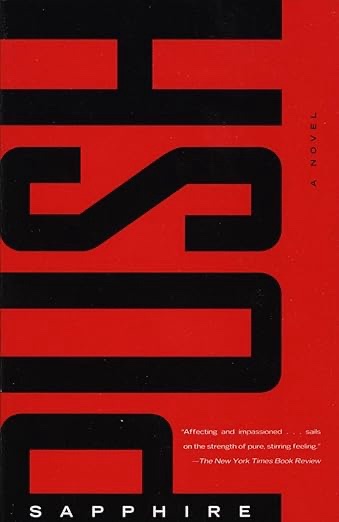
After I wrote the review of The Old Man and the Sea, my wife pointed out that it involved all kinds of symbolism and said she loved it. I missed this completely but I am not convinced that all of it was intended by Hemingway, and readers may read more into it than he ever intended. So much for my literal way of interpreting what I thought of as a simple fishing tale.

The Old Man and the Sea. Ernest Hemingway. 1952. 89 Pages. (Paperback.).

Another short old novel that is on the list for book club discussion; this one by the late famous award-winning Ernest Hemingway.

An old fisherman leaves Havana alone on a skiff, travels further out to sea than ever before, after a prolonged bout of catching nothing and with great effort captures an18- foot marlin. On the return trip, sharks devour it as it is latched on to the skiff. The old man suffers many physical and mental injuries in the process, constantly talks to himself, and survives on raw fish.

Even though I have fished for years, including deep sea fishing for marlin, I found the details of his fishing gear and its deployment to be very confusing, but it introduced me to Hemingway’s style. I won’t be reading more of him.

2.5/5

Thanks, Din.

Pearce Oysters. Joselyn Takacs. 2024. 355 Pages. (Hardcover.).

This Portland, Oregon’s debut novel is set on the Louisiana coastline in the immediate wake of the Deepwater Horizon massive oil spill of April, 2009. The effect on the family Pearce Oyster farm creates many conflicts as it slowly dismantles it entirely.

The Pearce family consists largely of Jordan, his widowed mother, May, and his brother Bennie. There are endless conflicts within and beyond the family as the oil spill, the toxic dispersant, and the new admixture of fresh water with salt water slowly kills off the oyster beds. British Petroleum is depicted as greedy, incompetent and deceptive. The Louisiana government is also portrayed as incompetent and uncaring.

There is a lot of bed-hopping, including gay love, but it is not described in a vulgar way. There is also a lot of foul language, mostly in the dialogue of the people of limited education, that makes it seem somehow more appropriate. There is also a bit more self pity and self doubt in almost all of the characters than seems realistic or necessary.

This book is currently the choice of the Western University Alumni Association Book Club which will no doubt study it in sections over months and dissect it in more detail than would most casual readers including myself.

I enjoyed this very well written book, which is a powerful indictment of the fossil fuel industry specifically, and of unregulated rampant capitalism more generally.

4/5

Thanks, Western University Alumni Book Club.

Brain Worms. Albert Driedger. 2024. 276 Pages. (Paperback.).

Full disclosure. The author is a dear friend, a former colleague, and and a brilliant scientist whom I have long admired. When he recently related that he had published a book, I immediately ordered it. In these 94 short essays on a wide variety of scientific subjects, his vast knowledge shines though in mostly easy-to-understand plain language.

For example, Cleopatra’s goiter contributed to what what was considered to be beautiful about her. Bees keep track of  time and solve  quadratic equations. The Toxoplasma parasite only reproduces in the gut of felines, but when it infects rodent’s brains, they loose their fear of felines and run up to them to present an easy meal. (Hence the title.) Ockham’s razor is  invoked twice and explained as to its name. Waste management, Paul Ehrlich’s contribution, dreams, other hominids, polite discourse, origins of life,  astrobiology, small nuclear reactors, nutrition, and climate change are all discussed in these short essays.

Although Al and I first met in church, and the evolution of his thinking about religion, abortion, homosexuality and so much more, in many ways mimics mine, he is much more scientific, experienced and convincing than I could ever hope to be. We evolved to similar ways of thinking about the world, but never discussed these issues in any detail. 

If one is not interested in the collisions of massive black holes of infinite density and zero volume, or the nature of dark matter and dark energy just skip those essays. There are many others. 

A couple selected quotes.

On the World Wide Web: «  The ability to hurl invective from behind the barrier of autonomy, seems, for most commentators, to be too much to resist »

« It is an advantage of a long life, that one is afforded the opporunity to change of mind… »

I am in awe of the vast knowledge conveyed in this book, and I am sure it is not just because I have been priveledged to know the author. 

4.7/5

A Tale Of Two Cities. Charles Dickens. 1868. 382 Pages. (Ebook on Libby.). (18 hours, 43 minutes.).

For me this was a reread, having read this classic decades ago, (and forgotten most of the details). It is set in Paris and London, before and during the French Revolution of 1789-99, and is to be discussed at an upcoming book club meeting.

The intricate plot with dozens of characters is loaded with tragedy, loss, and violence and the writing is flawless and smooth although wordy.

I had difficulty keeping the characters and the time line straight. The 45 named chapters in three parts are not dated.

It would be very inappropriate and arrogant for me to suggest improvements to Mr. Dickens, but for producers of modern editions, I would suggest two things. Rather than a long introduction and an equally long afterword, a chronology line with major political events on one side and major character events on the other would be helpful. Second, a list of major characters that readers could refer to would also reduce the confusion. I doubt that 18th century readers were less prone to confuse characters than 20th century ones. But I am willing to consider that most readers may be better able to keep characters and time lines straight than I am with my addled aging brain.

3.5/5

Playing Possum. Susana Monso. 2020. 212 Pages. (Hardcover.)

Playing Possum cover art

This Madrid philosopher delves into animal (and plant) behavior to try to understand what they understand about death. Careful to avoid anthropomorhizing, she provides documentation of a vast array of sometimes very bizarre and puzzling behavior in an equally vast variety of species.

The difference between stereotypical and cognitive reactions to death are carefully outlined and she concludes that many species are capable of processing concepts of death to varying degrees even if they do so in a very different way than we do. Cognition, experience and emotion become the mainstays in the erudite study of this phenomenon, known as comparative thanatology, hardly a crowded field.

The possum is not the only species to play dead when threatened and it cools, goes limp and secretes putrescine and cadaverine to detract from its attractiveness to predators.

Much of the documentation involves primates, but insects and even Venus fly traps are included.

The fuzzy black and white photographs accompanying the text are not very helpful. There is just enough morbid humor to keep me interested, although overall the extreme violence of most or nature is what is emphasized.

3.5/5

Thanks, The New Yorker.
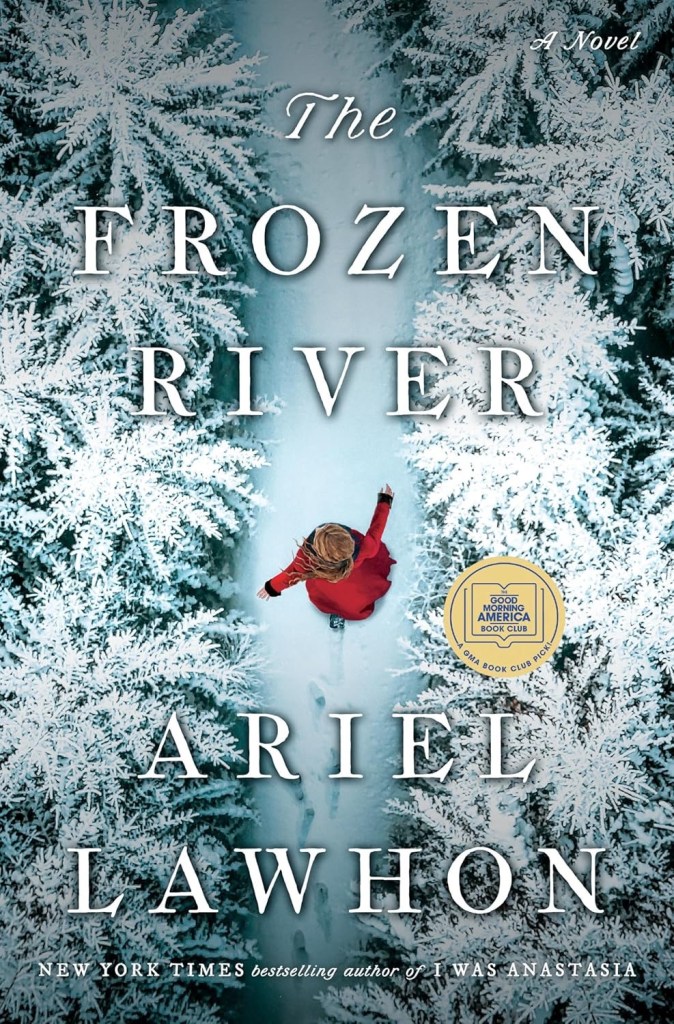
The Portrait Of A Lady. Henry James. 1881. 641 Pages. (Hardcover.).

This American/British novelist’s old lengthy classic is scheduled for discussion at an upcoming William’s Court 2 book club meeting. The above pagination does not include a 15 page introduction by Peter Washington nor a 12 page chronology of the lives of the author and his compatriots, but does include a long preface by the author.

Reflecting the values and lifestyles of the rich in both America and Britain, in the 1860s, not unlike the author, the heroine is Isabel Archer, a young preternaturally beautiful American, transported to Britain where she faces several marriage prospects, with endless scheming and intrigue by relatives and friends.

Wandering around European capitals and North Africa, and site of interest, staying at grand palaces and mansions with many sevants, the protagonists muse endlessly about their own relationships and what they want out of life, without any consideration of the larger issues of the prolétariat. Chance encounters within these wanderings include those with old potential mates, creating endless conflicts, and indecisional self analyses. In the end, Isabel enriched from her uncle’s generosity, opts for a relatively poor Italian widower, much to the consternation of many friends and relatives, and before long, to her own regret.

To be fair, there are no controversial political opinions, no explicit sex (there are references to ‘making love’ but it is not clear that this is as the term is now used), absolutely no science, no violence and no deep philosophy. And no humour. What there is, is the superficial banal life of the leisure class with all their insincere flatteries and multipage ruminations, meaningless trivial self analyses and veiled disagreements, with far too many exclamation marks! No one says what they mean.

A longstanding marital infidelity, and a suprizing case, not of disputed paternity, but in the age of high maternal mortality, an unsuspected maternity, is revealed in the last few chapters.

I will be interested to hear what someone in the book club liked about this book, which to me was was an unadorned wordy piece of nonsensical drivel.

1.0/5

Sleep. Nino Ricci. 2015. 235 Pages. (Hardcover.).

I chose this Toronto man’s novel almost at random from the William’s Court lending library, with nothing else appealing on my list then being available. Not a good choice.

Two seemingly successful historians and university teachers at an unspecified institution in the early 21st century marry and have a young son. But the man tries to deal with a secret sleep disorder with medication, endangering his son’s life and leading to bitter acrimony with his wife, then a bitter divorce and custody battle. His abuses escalate and lead to his failure to advance in his academic career, centred on the history of Ancient Rome.

Chapters are titled after the drugs he uses and abuses to treat his disorder, or the guns he plays with. In places, it becomes impossible to know what is real and what is the effect of the drugs and sleeplessness on his brain. He moves to Montreal, then on sabattical to some unspecified American city, and finally to a very violent Ostia Antica in Italy. His obsession with handguns becomes confusing.

There is abundant foul language and unrealistic sexual encounters with almost any kind of perversion you could think of, explicitly described. At the end, it is not clear what will happen to him, as the novel simply stops on the streets of Ostia Antica, with him captive to kids with guns.

When will novelists learn the difference between arteries and veins? «…blood pumped through his veins. »

I cannot recommend this trashy disjointed book.

1/5

Small Things Like These. Claire Keegan. 2021. 2 Hours. (Audiobook.).

A very short book set in 1985 in the author’s native Ireland, this story features Bill Furlong, whose father was unknown and who was raised by relatives. He becomes a family man with a coal delivery business including to the notorious Madeline Laundries of the Catholic Church. There, his contientious help for the exploited girls he encounters leads to conflict with his own wife and daughters and a loss of his Catholic faith.

The characters are easy to follow and realistic and the writing is in keeping with aspects of historical facts that need to be publicized.

4.5/5

Thanks, The Atlantic.

Seven Deadly Sins. Guy Leschiner. 2024. 316 Pages. (Hardcover.).

In this British neurologist’s book, the first of the seven deadly sins he deals with is Wrath. There are apparently endless causes, some genetic, some environmental, and many unknown. There are also many studies quoted that confuse correlation with cause, including the finger length ratio. But there are few suggestions on how to modify aggression. And we once again meet the old standby Phineas Gage. «In prisoners, the severity of psychopathy correlates most strongly with loss of grey matter in the temporal lobes and limbic systems. » Dare I ask what came first?

The second deadly sin, gluttony, is introduced with examples including Prader-Walli syndrome, grizzly bears, and the increasing use of fecal transplants to modify the gut biome. There is evidence that obesity is a social diseases spread, not solely explained by genetic factors or by viruses and that GLP I and lectin levels are critical in modifying the obesity epidemic, particularly as it relates to prenatal exposure. One begins to see that the author is never going to blame any individual for their problems, a prerequisite for the final chapter.

In the 50 page chapter on Lust, there are many theories about mate selection, the diffences between men and women, the effects of some drugs, and various paraphilias, but few concrete conclusions. By now it seems certain that he will argue in the final chapter that free will does not exist. «The division between the mind and the brain is grey, perhaps even nonexistent. »

In the short chapter on Envy, he notes how the meaning of the word has changed over time to become more benign, and makes the hairsplitting distinction between envy and jealousy.

In Sloth, a detailed anatomical picture of the devastation of Huntington’s chorea is presented as well as the effects of traumatic brain injuries, and sloth is equated with apathy. Building to his conclusion about free will, he states flatly: «Our brains and mind are the same thing. »

In Greed, he acknowledges that there are no known neuropathological correlates but goes on to speculate for 15 pages about both the good and evil aspects of greed.

In the last chapter of sins, Pride is distinguished from hubris and there are endless inevitably undergraduate elaborative psychological studies to draw iffy conclusions.

Not to disappoint, the concluding chapter named Free Will, does indeed conclude that it may not exist. But then in a wordy work around he manages to align himself with the so-called compatiblists like the philosopher Daniel Dennett who through mental gymnastics that I can’t follow, maintains a belief in right and wrong, good and evil, even in the face of a deterministic universe. As a rank amateur, I have no opinion about the existence of free will, but I firmly believe that we should live our day-to-day lives as though it exists.

This is yet another deep dive into the world of neuroanatomy and neurochemistry that will be of interest to a select few readers.

3.5/5

Thanks, Goodreads.

Gray Matters. Theodore H. Schwartz. 2024. 449 Pages. (Hardcover.).

A Cornell Weil professor of Neurosurgery in Manhattan details much of what is known about the working of the human brain and exactly how neurosurgeons try to help when it goes awry, whether from trauma or natural causes.

The neuroanatomy, the surgeon’s instruments and the site of pathology are laid out in helpful diagrahms that are generally readily understandable. The examples of famous people with major problems including JFK, RFK, Eva Peron, Phineas Gage, Rosemary Kennedy, Ted Kennedy, John McCain and a variety of famous neurosurgeons make the stories real. Late in the book, the rapidly developing field of brain computer interfaces is subjected to some rather far-out speculation that may well become a common reality.

Early on the author seems to be quite humble, but by half way through, he cannot resist touting his role in leading innovations and his sacrifices in getting to what he clearly considers to be the pinnacle of the pinnacle of medical professionals. He criticizes some collegues in the luxury world of New York medicine where second a third opinions seems to be the norm. He blatantly interfered with the local hospital routine in dealing with his father’s illness. A humble neurosurgeon may be an oxymoron, but I tire quickly of medical specialists, mostly surgeons, blowing their own horn in books that they write.

He seems to lack some pretty basic knowledge. Sap runs up a tree trunk not down it. The test for shifting dullness is used to to detect free fluid in the abdomen, not for appendicitis.

For the amateur trying to understand something about how the brain works, this is a good read.

3.5/5

Thanks, The Economist.

Don’t Go. Lisa Scottoline. 2013. 11 Hours, 22 Minutes (Audiobook on Libby.).

In this murder mystery thriller, the Pennsylvanian lawyer/author relates the complex story of a U.S. army orthopod, (referred to as a podiatrist) in Afghanistan whose wife dies at home, leaving a infant. That is not the murder, but her friend and confiant is later stabbed to death. As usual in such books, the motive, and the identity of the perpetrator is at first obscure.

A very long emotionally-charged custody court battle, a opiate addicted would-be father, PTSD, alcohol abuse, a disabled veteran, more than one sordid secret affair, and a late-developing romance round out the complexity, with resolution of all the issues only in the last few pages. Nothing is as it seems on first presentation, but to be fair, all the issues are wrapped up in the end.

The female voices seem appallingly foreign and male in the dialogue of the audiobook.

This is not my favorite genre, and this one has even more soppy pathos than most, but for fans of the genre, this may be as good any.

3/5

Thanks, Book Browse

I Heard There’s A Secret Code. Daniel J. Levitin. 2024. 291 Pages as ebook on CloudLibrary.

I am not sure whether this author should be listed as American or Canadian as he has appointments at both McGill and Stanford universities, But he was born in the U.S. and refers to travel from his home in Montreal. He is a polymath/neuroscientist and musician and is known internationally for his studies of the responses to music using the fancy mapping techniques of modern neuroscience.

I am also certain that the lady who suggested this dry erudite book to me has not read all of it; perhaps she hoped I could explain it to her in simple language. If so, she will be disappointed.

In the first few chapters, the author outlines some characteristics of music such as pitch, melody, harmony, note duration, rhythm, meter, tempo, loudness and timbre, and tries to track each to the neurological pathways we use to enjoy music (with variable success.) The scattered sketches of neuroanatomical pathways involved and the later musical notations are labelled with impossibly small print and add nothing to the text.

Complex studies of subjects with William’s Syndrome and even attempts to define musicality left me confused. In successive chapters the author cites the supposed benefits of music therapy on a wide variety of populations such as those with movement disorders, Parkinson’s Disease, multiple sclerosis, trauma victims, mental illnesses, pain, dementia and stroke, again with variable success.

On the same page, the author claims that as a group, musicians are happier than the general population, but then “Yet statistics show that professional musicians experience greater incidence of alcohol and drug addiction, depression, poor health outcomes and higher mortality.”

While the author pays lip service to the gold standard of the controlled trial, and cites a few, he cites many more instances of anecdotal apparent benefits of music therapy and there is no doubt as a musician himself, he has a bias in seeing those benefits. As someone who never had an opportunity to learn to play an instrument or sing, and who listens mainly to classical music while exercising, and various artists when in the car (Paul Robson’s rendition of Old Man River never ceases to give me goosebumps), I can be accused of the opposite bias.

Linguistic pragmatics and situational contextual knowledge discussed ad nauseam in the penultimate chapter just confused me and I think of some future AI program choosing music for me, because it knows so much about me, as dystopian rather than utopian. Apart from repeating the old joke about Grover Cleveland and the rooster, there is no humour anywhere in this book.

The author bemoans the paucity of licensed music therapists in longterm care facilities and advocates for music as an alternative to medicines rather than a supplement to them.

In many places the text breaks what should be one word into two such as Environ mental, teste monial, typic ally, limit less, cere bellum, navi gating, cog nitive, Nat ural, reinvig orate, his torians, ness essary, pharmacol ogical, miti gate, Rehab ilitation, natural istic, Spot ify, oxygen ation, import ant and transport ation. I may be mistaken but this suggests to me that a crude AI assistant actually did much of the writing, or at least transcribed dictation without anyone spell checking.

I am sure that many amateur musicians will enjoy this book and understand it more than I did, but it left me cold.

1.5/5

Thanks, Michelle.

The Day the World Came to Town. Jim Defede. 2002. 6 Hours. 52 minutes as Audiobook.

A Miami journalist, documents this heart-warming book about the exceptionally kind and generous rececption the stranded travelers on 39 international flights received when they were rerouted to Gander, Newfoundland on 9/11. If you need something to convince you about the inherent kindness and generosity of most of mankind, or at least most Neufies, this is the book for you. I won’t reveal all the details but this book is bound to make you feel good and positive about the future even in the face of all the contrary evidence.

Much more detailed than the much later musical Come From Away, based on the same events, it is equally uplifting and a tribute to the people of Newfoundland. A truely enjoyable read.

5/5

Thanks, Janet.

Playground. Richard Powers. 2024. 360 pages as ebook on CloudLibrary.

I don’t recall anyone recommending this novel by the American writer to me, but I really enjoyed his «The Overstory » and «  « Bewilderment » although there is a fair bit of far-out pseudoscience in the latter.

But this book is disjointed in the extreme. Back and forth from the 1950s to the present, from the small island of Makatea in French Polynesia, to Montreal, to Chicago, Urbana, and Evanston, from the magical creation myths, the joys and discoveries of deep sea diving to game theory, chess and Go, to the deep philosophy of Russian thinkers, exploitive capitalism, and the problems of dealing with Lui Body dementia, nothing is connected to anything else.

The title is based on a mythical social network site called Playground. An AI machine does a masterful job of answering every question the 89 islanders put to it about proposed development. The AI system then becomes all powerful and all knowing beating a human genius at Go and threatening to extinguish Homo sapiens. The creator becomes a billionaire only to die of Lui Body Dementia before the development that he has proposed for the island becomes a reality.

To be fair, the description of the astonishing life forms in oceans is detailed and very interesting even if their interactions with humans is embellished. At times it seems the author is simply displaying his admittedly vast knowledge of that life and bemoaning its impending losses.

There is an attempt to tie up loose ends in the last few chapters, but it doesn’t quite work, with the time lines often confusing at least to me.

I have to acknowledge that the writing style is clear and engaging with usually short sentences in third person prose.

«Play was evolution’s way of building brains, and any creature with a brain as developed as a giant oceanic mantra sure used it. »

Of life in seemingly impossible places: «… life was never very good at obeying human logic. »

I was disappointed in this book.

3.5/5

Analysis of my book reading for 2024.

Total:102

Authors: Male/Female 54/48

Canadian:14

American: 61

British:22

French:3. Obviously there is arbitrariness

Vietnamese:1

Dutch:1. And overlap as people move

Russian:1.

Science fiction: 4

Philosophy: 4

Social commentary:20. Again overlap with history and bio

History:18.

Bio/Autobiography:13

Sciences:26

Fiction:

Nonfiction

Historical fiction: 5

Humour: 2.

Longest: The Earth Transformed. 667 pages

Shortest : Held: 118 pages.

0ldest: Sunshine Skerches of a Small Town 1906.

Newest: Heretic 2004.

So I have to update . The newest id probably The wandering Ghosts although many are from 2024.

Analysis of my book reading for 2024.

Total:102

Authors: Male/Female 54/48

Canadian:14

American: 61

British:22

French:2. Obviously there is arbitrariness and overlap as people move

Dutch:1.

Russian:1.

Vietnamese:1

Nonfiction

Sciences:26

Social commentary:20. Again overlap with bio and history.

History:18.

Bio/Autobiography:13

Philosophy: 4

Fiction:

Science fiction: 4

Historical fiction: 5

Humour: 2.

Longest: The Earth Transformed. 667 pages

Shortest : Held: 118 pages.

0ldest: Sunshine Skerches of a Small Town 1906.

Newest: Heretic 2004.