An avid reader reviews a variety of books, writes assays and comments on current affairs once weeklyl
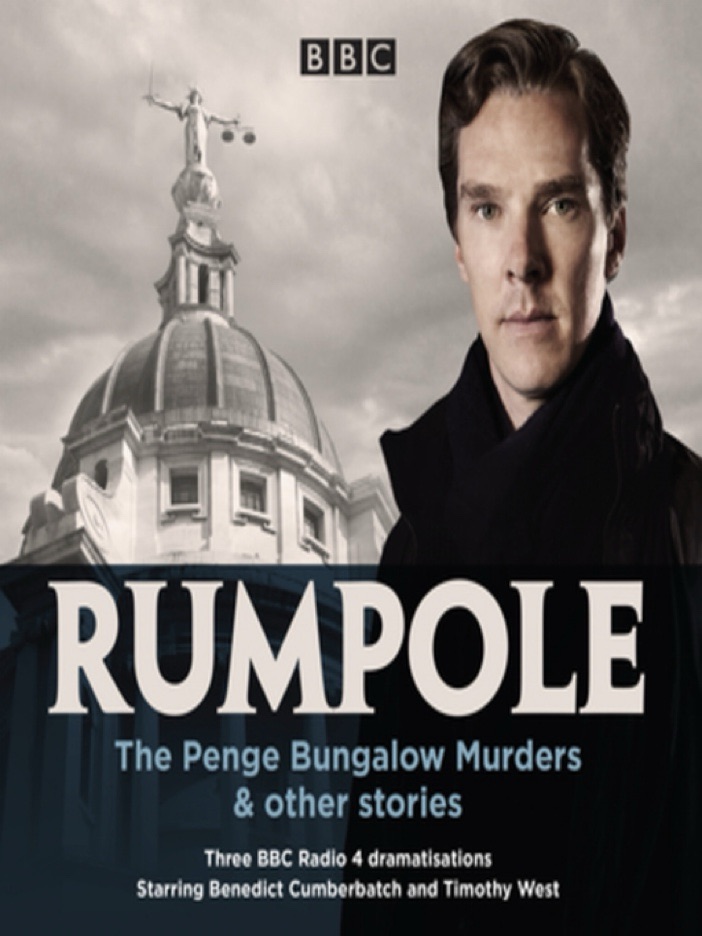
Rumpole and the Penge Bungalow Murders and other Stories. John Mortimer. 2 Hours, 56 Minutes (Audiobook.)
There is no date given for these vintage tales starring the memorable Mortimer Rumpole, and his love/ hate relationship with his wife, Hilda, she who must be obeyed. There are a total of four stories, apparently first read on BBC radio.
Rumpole, in all the stories is at his best curmudgeonly self when faced with seemingly impossible evidence of who the murderer is, only to defend brilliantly and obtain an acquittal.
This is not the best format to feature Rumpole. Either the T.V. series with Leo Kern as Rumpole or the written books are far better in my opinion. Nevertheless the humour shines through and I quite enjoyed it.
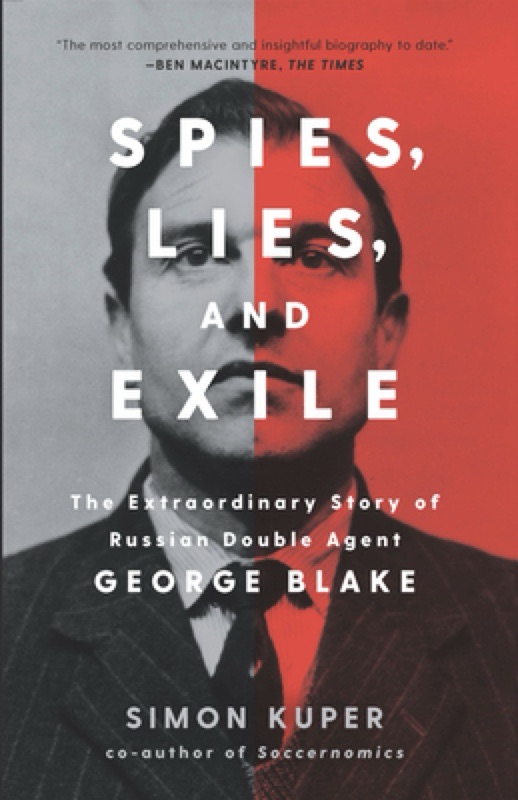
Also known as The Happy Traitor when issued as a paperback, this Dutch journalist’s documentary is one of several books he has written.
George Blake was the lesser-known but probably more influential spy, not part of the triad of Philby, McLean and Blunt. Born in Rotterdam, of Dutch-Jewish parents he travelled the world, became a polyglot and double agent working for the KGB. In spite of harsh treatment in a North Korean prison, he became convinced that international communism was the best way to organize society. At some point, he flirted with Calvinism and considered becoming a clergyman, and denied the existence of free will.
His exposure of the underground Berlin tunnel where westerners eavesdropped on East German conversations (to the Soviets) was puzzlingly largely ignored by them but in part led to his downfall and imprisonment in Britain. His eascape from Wormwood Scrubs prison and flight to Russia was more daring than imaginable in a spy novel. As a foreigner, he had been treated more harshly than Philby, McLean, and Blunt.
A section of the book questions the impact of spying in many situations where the information obtained becomes lost in the bureaucracy or is simply ignored by those in power, most notably by Stalin when informed of Hitler’s imminent invasion of Russia.
To his dying day at age 98, he maintained a faith in communism. The author who interviewed him extensively seems ambivalent about his beliefs, but points out that his actions probably lead to the deaths of at least 40 loyal western spies. His two wives, one British, one Russian, must have been saints to put up with him and his antics and remain friendly to him even after his divorce.
I could never survive as a spy, let alone a double agent, but I found this book quite informative and entertaining.
This very dense and entirey humorless book is the work of the British/French/ German writer, and Professor of American Studies, at the University of Tubingen, whose research is certainly extensive.
The history of conspiracy theories as he defines them goes back to at least Ancient Rome and includes Churchill and Lincoln as believers. He defines them as a belief that nothing happens by accident, nothing is as it seems, everything is connected and the world is
divided into evil and righteous forces. As such, the witchcraft trials qualify.
Some of the conspiracy theories such as those of David Ickes who proposes that extraterrestrial reptiles are controlling the world are so bizarre that it is hard to believe that anyone could take them seriously. But he has a string of popular books, sold-out audiences for his lectures and piles of merchandise. And his followers span the spectrum of the poor and uneducated to the rich and well educated.
Antisemitism figures prominently in many conspiracies, often in deniable disguise.
The author claims that up to fifty percent of Americans believe some conspiracy theory, and perhaps forty percent of Canadians. This led me to question my own beliefs. I may be considered at least a follower of one such conspiracy theory. Jeanne Calment is stated by Wikipedia to have been the oldest person ever to have lived-to age 122. But a conspiracy theory that I kinda-sorta like and seems to make sense is that her daughter assumed her identity when she died at a much younger age.
Donald Trump’s extensive touting of many conspiracy theories is well known and he has used them to great political davantage, whether he believes them or not.
I can only claim to understand part of this book, but it frightens me to think that human beings are so gullible as to believe many of them, evidence to the contrary be damned
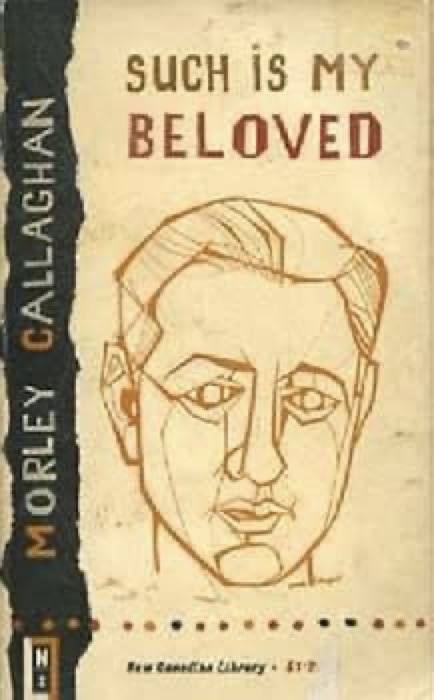
I was vaguely aware of this Canadian novelist’s name but had never read any of his books until recently. His name, via his grandaghter figures prominently in Terry Fallis’s A New Season, so I borrowed this one, said to be his best.
Short on plot and location, the main character is a very devout, idealistic, young Catholic priest, Father Dowling. He has deep philosophical discussions with an agnostic communist adopting some criticism of bourgeois society for his sermons. He tries to help two prostitutes, Ronnie and Midge, to find them other employment while they and their pimp, Lou, mock him behind his back. His visits to them inevitably leads to scandal and after they are arrested and expelled from the unspecified city (?Toronto) he is disciplined by the bishop, becomes even more fanatical, and ends up in a mental institution. The whereabouts of the girls is never revealed.
The stilted conversations, with no one saying what they mean, and Father Dowling’s endless self analysis, make it difficult to fully appreciate this book, even with one interpretation of it offered by Milton Wilson in the Afterword.
3.5/5
Thanks, Terry.
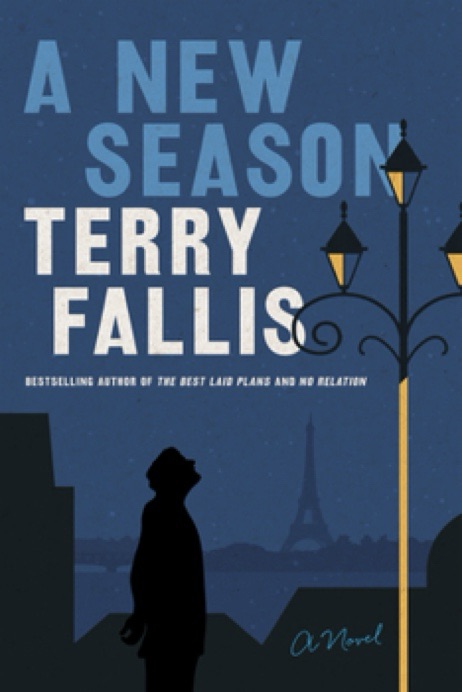
One of my favourite humour writers, this Toronto based gentleman has won many awards. This is a very different novel and his latest. Ball hockey and songwriting play prominent roles in this one, as does the fascination of the narrator with the Paris of the 1920s with the lost generation of Hemingway, Morley Callahan, Firzgerald, Pound, and other notables. One of his love songs becomes a seasonal sentimental hit.
The narrator, named Jack McMaster, is 62, but acts and thinks of himself as 35. Throughout the text he comes to gradually realize that his body is 62 even if he thinks of himself as only 35, providing some of the best humour about aging.
« One is when I wake up in the night, often more than once to pee. Apparently, my prostrate feels not 35, but has fully embraced life at 65. And secondly, the morning after a ball hockey game, when I swear I wake up occupying someone else’s body, maybe someone in their 80s, with enough stiffness in the legs to make rigor mortis a viable diagnosis. »
He insists that these are the only things making him feel his age, until in later chapters, he gradually comes up with more, for a total of 12.
« Now, at 62, my tear ducts operate on a hair trigger, and you never know what might set off the waterworks. »
The details of life in Paris are interesting and detailed, with the rich Thistory, as he explores it and unravels mysteries, with the help of his new, perfect girlfriend decoding a lengthy diary. All the while he is deeply mourning the death of of his beloved wife from Covid more than two years previously.
The sex is implied and not explicit. But for someone raised in a family where public (or even private for that matter) displays of affection were absolutely taboo, there is away too much
hugging, too many tears, too much melodrama, and too much mushy sentimentality. The three women are also too perfect to be real. Others more attuned to their emotions may well disagree, and I suspect, without evidence, that women will enjoy it more than I did.
6.5/10
Overall, while Phallis has certainly not lost his sense of humour, I enjoyed this book less than some of his others
This is the debut novel of a native of the northwestern U.S.
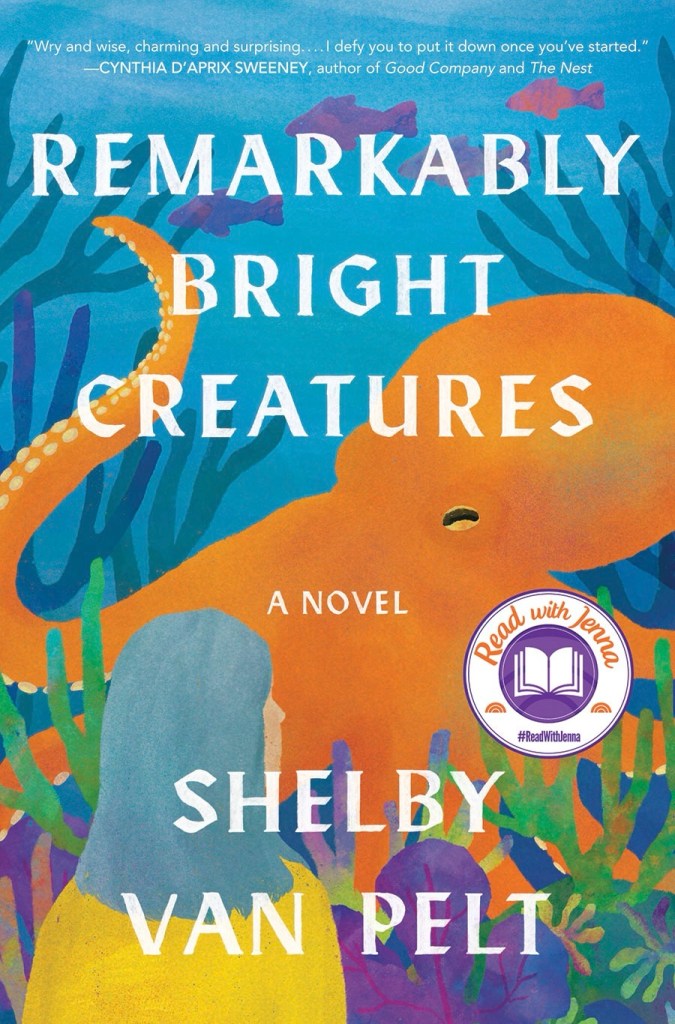
An elderly talking caged giant Pacific octopus named Marcellus becomes philosophical as he muses about the limitations of human intelligence, and is befriended by the elderly cleaner, Tova at the aquarium in Sole, Washington. She becomes complicit in his periodic nocturnal escapes from his tank to devour sea cucumbers. He sees relationships among the humans that they are blind to.
There are many such complex relationships. Perennially unemployed Cameron, raised by his aunt after his mother abandoned him at age nine, is evicted by his wife and takes up residence with Brad, his wife and unborn child. Then he undertakes a futile search for his father, seemingly a wealthy real estate developer named Simon Brinks. Failing at that, he gets part-time employment as a cleaner in the aquarium. Another youth named Eric drowns in mysterious suspicious circumstances.
There are a lot of insinuations about inappropriate relationships, and a fair dose of foul language, but no explicit sex. The plot is ingenious with the anthropomorphized attribution of superb intelligence to an octopus but it is in keeping with their known nature as shown by Sy Montgomery’s The Soul of an Octopus, though obviously exaggerated.
I had considerable difficulty keeping some of the minor characters straight, perhaps in part because while listening to an ebook, I have a tendency to multitask. And it is not easy to go back to pick up the plot thread in an audio book. This is also made worse by time shifts here.
A former New York City science writer for The Atlantic, this author then spent four years studying the life of plants, visiting and interviewing botanists around the world.
Well organized, she shows that plants have personalities with variable kin loyalty, volatile warning chemicals and different degrees of risk aversion. The ways that some plants ward off threats, warn others, and even seem to see their environment, is quite amazing. Although plants do not have brains, she considers the whole plant as akin to a brain and there is no doubt that plants can be anesthetized by ether to stop doing anything implying something equivalent to a mammal’s nervous system.
The biome of plants (and of ourselves) is extensive and leads to the difficulty of defining what a self is. It may be one explanation for plant’s apparent ability to see its envivonment, the other being the primordial ‘eyes’ found on many plants.
The mystery of detecting gravity in spite of calcium channels communications remains largely unexplained.
This is not just botany, but botany with a wide-ranging liberal dose of zoology, physiology, genetics, evolutionary science, native folklore, and philosophy. The debates about plant intelligence, consciousness, and agency get bogged down in linguistic semantics and inadequacy.
Industrial large-scale monoculture farming, using highly toxic pesticides, comes in for scorn, because it weakens some plant’s natural communication and defences, as does air pollution with excess ozone and carbon dioxide. She comes close to promoting the regenerative farming movement but never mentions the name. (Full disclosure; I sometimes volunteer at a regenerative farming project with extensive biodiversity, no use of insecides, pesticides or fertilizer other than composted hay and weeds.The produce is abundant and delicious.)
The book is loaded with data and one needs to pay close attention, but her logic and reasoning should be reasonably easy (and astounding) to follow even to nonscientists if you do so, even though she lost me in a few places.
Probably one of, if not the very best nonfiction books I have ever read.
This imaginative new novel by an Austin Texas author is a light fun read set in modern times and featuring the 12 year old Holly Foster. She spends a summer with her uncle in a small Vermont town where a unique grove of ancient fictional trees is under threat and unhealthy. The meaning of roots takes on a double meaning as she explores her own ancestry and the connectedness of trees via fungal rhizosomes. I won’t reveal more of the plot except to say that it is both complex and quite ingenious but not difficult to follow. In a way, it builds on the science behind Suzanne Simone’s Finding The Mother Tree, Robin Wall Kimmerer’s Braiding Sweetgrass, and Meridith Sheldrake’s Entangled Life.
My only criticism of this book is that the protagonist seems much too emotionally mature to be only twelve and I think it would be more realistic if she were made 14 or 15.
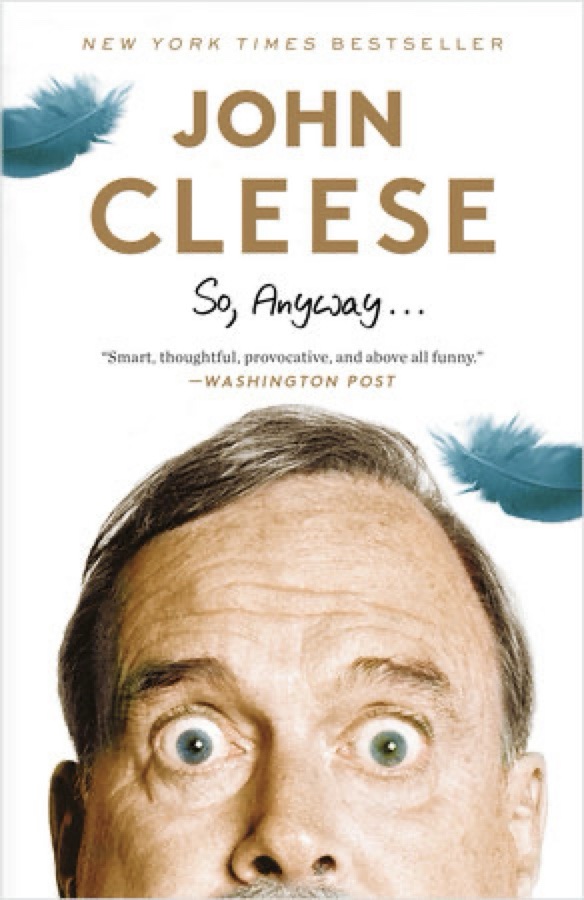
This is a very quirky autobiography of the famous multitalented comedian, born in 1939, best known for his roles in the Monty Python series. But his diverse roles include as a writer, producer, director and journalist for live performances, radio, and TV. Spanning four continents and six decades, he became synonymous with satire, farce, slapstick, parody, the deliberate carefully timed sudden non-sequester, and the loose word association.
His was an only child of rather poor middle-class family in Weston-Super-Mere, England and entered the world of comedy while at Gaston College and while studying law at Cambridge, by joining a comedy troupe there, then playing small roles for the BBC in radio, before breaking into bigger roles with David Frost and Peter Sellers among others.
His insecurity, self-deprecation, and praise of others is noteworthy and admirable. He obviously made friends easily and refused to take the inbred class hierarchy of British society seriously.
There is little about the actual Monty Python series, which he wrote in part, except for their reununion in 2013. There is more about A Fish Called Wanda, which he also wrote in large part. And he only mentions the first of his four wives.
The writing is straightforward with snippets of sketches, and I can appreciate the hard work that writing such sketches entails. But Monty Python is not my favorite type of humour, being largely splapstick, farce, or just plain silliness. I refuse to watch any TV show with a laugh track-no one is going to tell me what is and what is not funny.
There are however, many interesting quotes, among them:
«My legs were so thin I could have played a flamingo. »
Of one of his teacher’s wives: «…anyone harbouring canal thoughts about her would have been taking his life in his hands, because she exuded the air of designer barbed wire. »
«…arguing with him was like trying to pick up mercury with a fork. »
The dust cover of the hard copy portrays Cleese with such striking exophthalmos that any competent doctor would conclude that he has Graves’ disease, (or that the photo has been doctored).
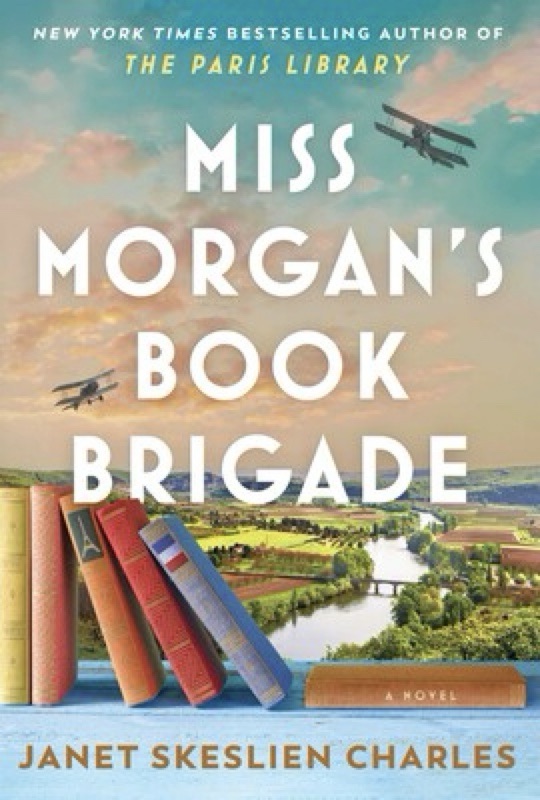
This historical fiction by an American-French author tells the true story of a young librarian from New York City who travels to Blerancourt in France in 1918 to provide books and help to the devastated locals some still fighting the German Army. This is under the sponsorship of the real Anne Morgan, daughter of J.P. Morgan; she established and ran the American Committee for Devastated France. It is told in the first person singular voice, and contains a little less heartbreaking pathos than in Kristin Hannah’s The Women, but still descibes the horrors of war in detail.
Alternative chapters in are set in 1987, where an aspiring writer seeking a Masters degree in creative writing is searching for the record of Jessie “Kit” Carson, one of Morgan’s employees, in the NYPL archives. Naturally, with young men and women working together, intense romances develop at both sites, one ending in death; some were more durable.
The pace of the story picks up a bit as the war nears its end and then the devastation of the worldwide Spanish Flue ensues. The expansion of the library to many other villages becomes a controversial priority for the new French government.
Among many great quotes:
«…too much confidence leads to complacency and to believing that my way is the only way, that my worldview is the way. Everyone should ask ´Why do I think this? What is a strong counterargument? »
«..it’s no surprise that mother isn’t happy in heaven- there’s nothing to complain about. »
This book is a ringing testament to the truly selfless women who never sought any fame or recognition, but worked tirelessly for the betterment of thousands of the women and children devasted by war.
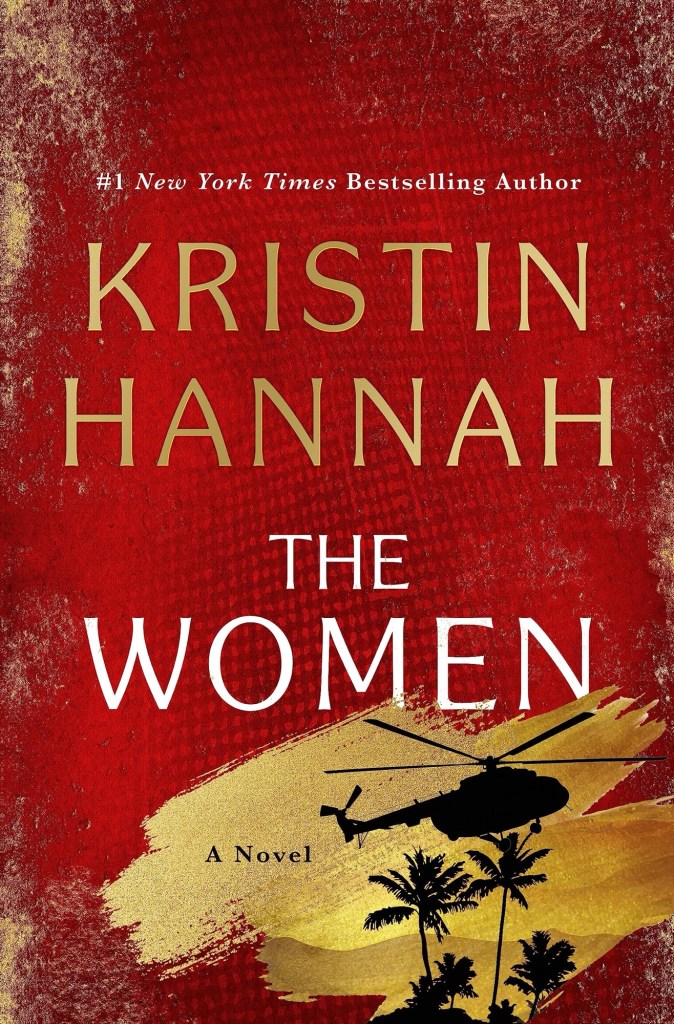
I have only read two of this California author’s 20 novels-the historical fiction The Nightingale, which I quite enjoyed and this latest one. I read this one as an Ebook on CloudLibrary. This is also loosely historical, focused on the almost entirely forgotten lives of the women who served, mostly as nurses, in the Vietnam War.
The life of Frankie McGrath is forever changed by her experiences when she volunteers as a nurse to serve in the army. She is from a staid conservative, Catholic family in the navy town of Coronado Island off the coast of San Diego, and her beloved brother has been killed in Vietnam.
The horrors of war are described in extreme detail, as are the risks and trauma she experiences there, between 1966 and 1969, and there is no doubt it was horrendous. She falls for one of three lovers while there; the sex is described tastefully, but the deceptions she then discovers adds to her later severe PTSD.
She returns to Coronado Island to a hostile antiwar family and country, becomes confused about the morality of the war, lost, and depressed, surviving only with the help of fellow nurses who have also been in Vietnam and her reluctant parents. I will not spoil the plot further, which becomes quite complex with many surprises although it is not difficult to keep the characters straight.
The description of wounds, and their care seem realistic and graphic. There is a definite and justified feminist tone to the book, as the returning women were treated even worse than the returning men.
It would seem unkind to downgrade this book because of the extreme pathos of many episodes, having never experienced anything as dramatic as the horrors of war, but I could not help but think that there might be some exaggeration.
To be extremely picky, she confuses cement with concrete.
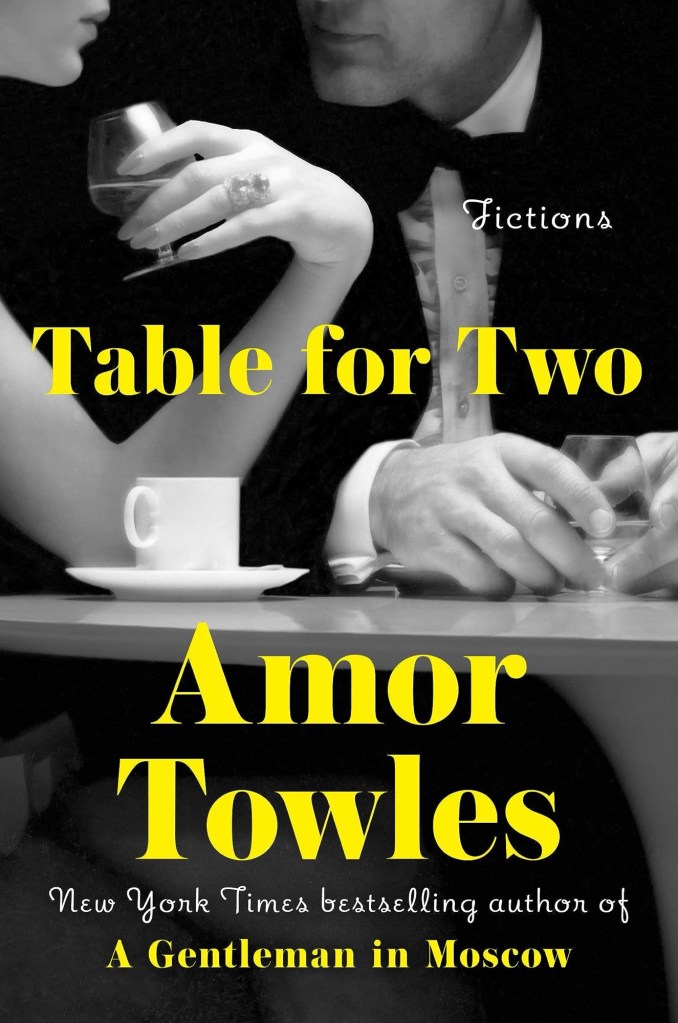
I have read all of this New York author’s previous books. Rules of Civility was so-so, A Gentleman in Moscow was superb, and The Lincoln Higway was a bit disappointing. I have had this one on hold for months.
In this one he tries his hand at six fictional short stories set in York City in the 20th century and one longer two part detective tale set in Los Angeles in the 1930s. It is a though he is testing his own skills in entirely new genres, although how he will judge success is not clear.
I enjoyed all of the New York short stories, some more than others. The Bootlegger in particular is a beautiful tale. All of the short stories are infused with Towles distinctive reflections on human nature with smooth prose and interesting similies and metaphores. But in The Didominico Fragment, Towles seems to be a bit too absorbed in demonstrating his knowledge of the rarified world of antique art collections to the reader.
The detective thriller/murder mystery is in Hollywood with a host of confusing characters. A retired New York homicide detective becomes involved, along with various others in the two-way mirror image of a nude Olivia de Haveland, among others admiring herself in what she thought was a solitay photograph used as blackmail by amateurs.This turns into an extremely complex plot involving a murder mystery within a murder mystery, a feindishly complicated massive blackmailing scam, and numerous famous Hollywood actors and actresses. I almost gave up, as it seemed that it would be impossible to connect all the characters, but I think that Towles ultimately does so with aplomb- but you will know this for sure only if you are better at keeping all the characters straight than I am. I trust that he succeeded, but I am not entirely sure. I am sure that lovers of murder mysteries will love it, but that is not my favorite genre.
How does this book compare with the author’s previous works? In my assessment, it is not as good as A Gentleman in Moscow, but better than the other two.
Stacey Fortune, a.k.a Crow, is the narrator of this debut novel, set almost entirely in the Bras d’Or area of Cape Breton Island, where the author lives, in the late 1980s.
The opening sentence caught my attention: “I come from a long line of lunatics and criminals. Crazies on one side side of the family tree, crooks on the other, although the odd crazy has a touch of crook, and visa versa.”
She returns to her mother’s trailer in Cape Breton from a menial advertising job in Toronto in her late forties, to die, after being diagnosed with three Grade II inoperable brain tumours. She names this trio Parry Homunulus, Ziggy Stardust, and Fuzzy Wuzzy. Together they produce hallucinatory colourful auras over everyone she encounters.
Although there several are very interesting reflections on the process of dying, there are more, almost endless, unpredictable revelations about her extremely dysfunctional family. The language is extremely foul with abundant graphically-described sex but somehow one expects this from the poorly educated, drunken and drug-abusing characters. There are more surprise revelations about paternity than I could easily keep track of.
The writing is quirky with unpredictable twists: “In the corner of the common room, Char is belting out an off-key version of ‘Hotel California to a six-foot tall ficus plant. She thinks it is talking back to her, which is certainly further proof of madness. Any plant in its right rhizome can tell that she is as deaf as a telephone pole.”
«There is only one reason Peggy calls Mamma. Probably only one reason Peggy ever calls anyone. She must have dirt. Peggy isn’t smart enough to be a true criminal and she’s too lazy to be a proper lunatic. To compensate for those failures, she puts all her energy into being a pogey-scammer and a nasty, big-mouth gossip.”
I picked this book up from our lending library, on a whim without a recommendation. It certainly could be criticized as unfairly portraying Cape Bretoners, and there is no doubt a lot of exaggeration, but I quite enjoyed it.
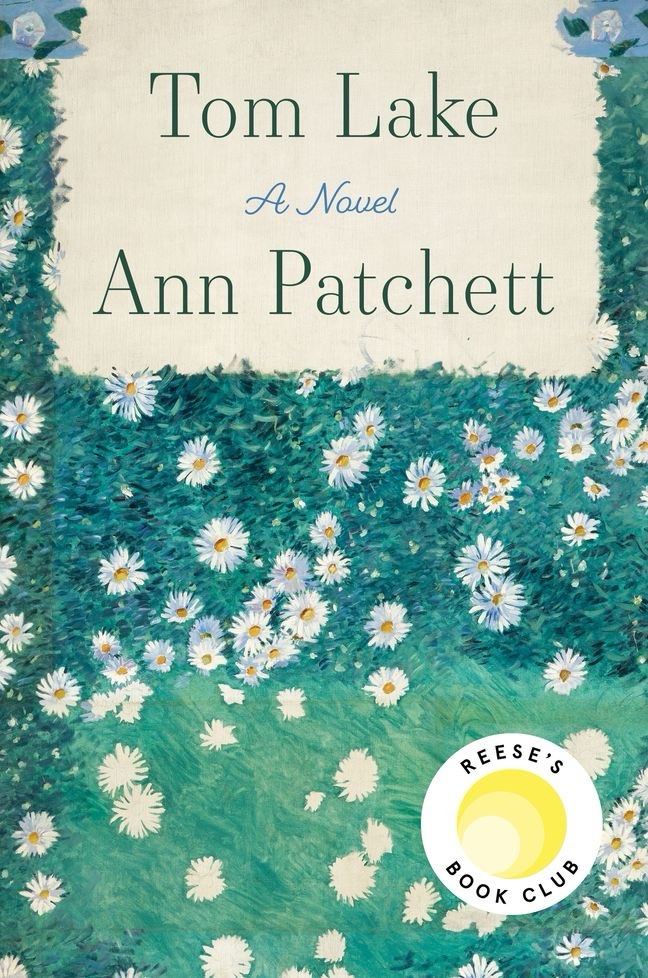
This novel is set largely in the area of Traverse City, Michigan, on a fruit farm near Tom Lake, in the 80s to the present. One of the two narrators is from New Hampshire, and after a brief stint as Emily in a star role in Our Town, in New York , moves to the farm. There are allegorical references to Checkoff’s The Cherry Orchard on the real cherry orchard.
Long on dialogue with many superlative exclamations, and short on plot, the impoverished life of the farmers, mostly would-be actors, is detailed. One true movie star and Hollywood director, becomes a lover of one narrator, but he is far from alone. The numerous infatuations and infidelities with or without the benefit of a marriage certificate make it confusing and there is some uncertain paternity. But all the conflicts of the disappointed characters is resolved without much violence, and absolutely no reference to any religious beliefs on the part of the characters.
The heavy drinking culture of the acting world is described realistically as the disappointed hopeful actors eke out an existence on a fruit farm. One dramatic accurate scene is when a heavy-drinking actor collapses from a variceal bleed just after delivering his lines as George in Our Town. He is taken to the hospital where he is treated with an esophageal Blakemore tube anchored in place by a football helmet. Been there, done that.
Much like Patchett’s earlier novel The Dutch House, this story is loaded with pathos and sentimentality, that does not appeal to me.
Like the reviewers online, you will either love this story or be very disappointed. I am in the latter category as there is nothing whatsoever profound about it, and not even much redeeming humour.
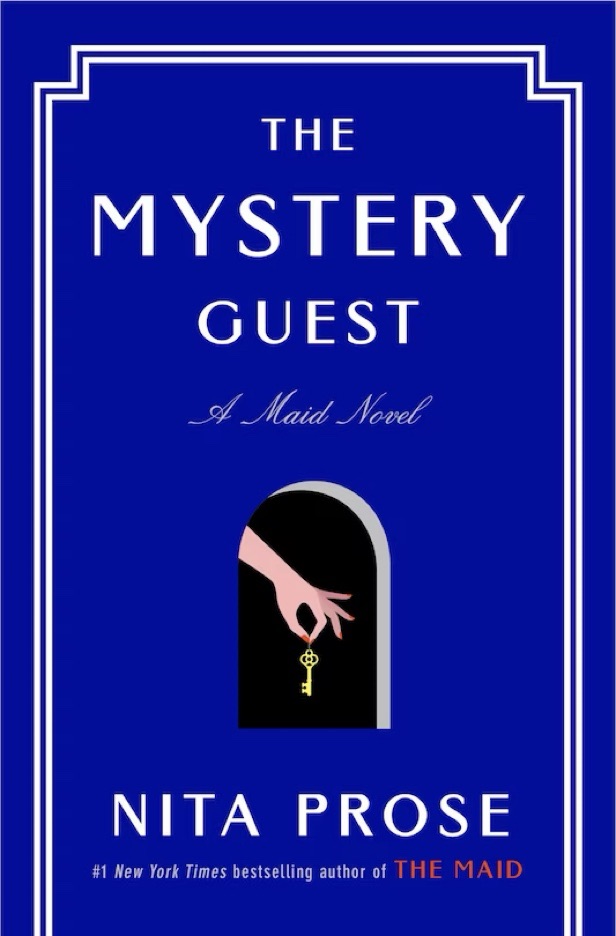
I picked the ebook version of this Toronto writer’s novel almost as a random pick as none of the 25 ‘Books I want to Read’ were currently available at the OPH. Perhaps it was the title that caught my attention. Titles do matter.
This murder mystery centres on the sudden death of a reclusive famous millionaire writer, Mr. J. D. Grimthorpe, just as he is about to make an important announcement to his fans at a gala event at an unspecified luxury hotel, where the narrator is a lowly maid, in an unspecified year.
There are all the usual time shifts, flashbacks, and quirky characters that come with the murder mystery genre. The reader is taken on a series of false leads before the real culprit is revealed near the end. Then there are even more surprises.
I won’t reveal more except that say that the murder weapon could not possibly have been as effective and quick as it is portrayed here, even with the victim’s debilitated state.
While I appreciate the original and detailed imagination of murder mystery writer’s imagination in general, this is not my favourite genre, as they all seem to be a bit formulaic to me. For devotees of the genre, this one may be very enjoyable, and as good as it gets.
How does one write a whole book about these seldom seen but often heard creatures? One way is to delve deep into the history and native folklore surrounding them, and then incorporate the development of pastoralism and domestication of herds of sheep and cattle and take the side of the coyote in the ensuing battle. That is how this New Mexico native goes about it. From poisoning by strychnine to paying a bounty for they’re pelts, (at one point bounties accounted for 75% of the budget of Montana) it should have been a clear victory, but they persist and in many places thrive, and continuously expand their range, even into cities like Chicago and New York.
As an early teen, I never thought of the consequences or rational for paying bounties- to us, it was simply a way of making money by shooting raccoons and submitting the tails to the township office. (The rationale was that raccoons were destructive to corn crops.)
From there, the author scans recent neuroscience which concludes that many animals do have a sense of morality and a theory of mind that puts them morally on a par with humans with an equal right to exist and thrive. The many wrongheaded programs of the numerous branches of the U.S. government in an effort to eradicate them failed because of their extreme adaptability. The many Acts of Congress, some designed to protect them, and others designed to eradicate them, are discussed in detail.
The chapter on genetic studies showing that they have long interbred with some species of wolves and even feral dogs, creating coywolves, left me confused.
My experience with coyotes is limited. Although we often hear their distinctive nocturnal howl, I have only seen them rarely. Once while walking in Kilally Woods in London, Ontario at dusk, I encountered a doe, perhaps 50 meters away, in labour! Thinking I would see a fawn born I the wild, I stood motionless as she grunted and stooped. Then the white tail rose and she was gone in a flash. Three seconds later a coyote ran right past me in pursuit. The doe must have caught his scent as the little devil (as I thought of him then) was just waiting for a delicious fawn.
Just this morning on my 5 a.m. walk I encountered two coyote pups meandering home to the den after a night on the town. Their den is somewhere in the dense brush beside the 417 Highway, where I have seen the adults disappear a number of times.
One glaring omission in this book is the natural lifespan of coyotes. On checking, it seems to be 5-8 years.
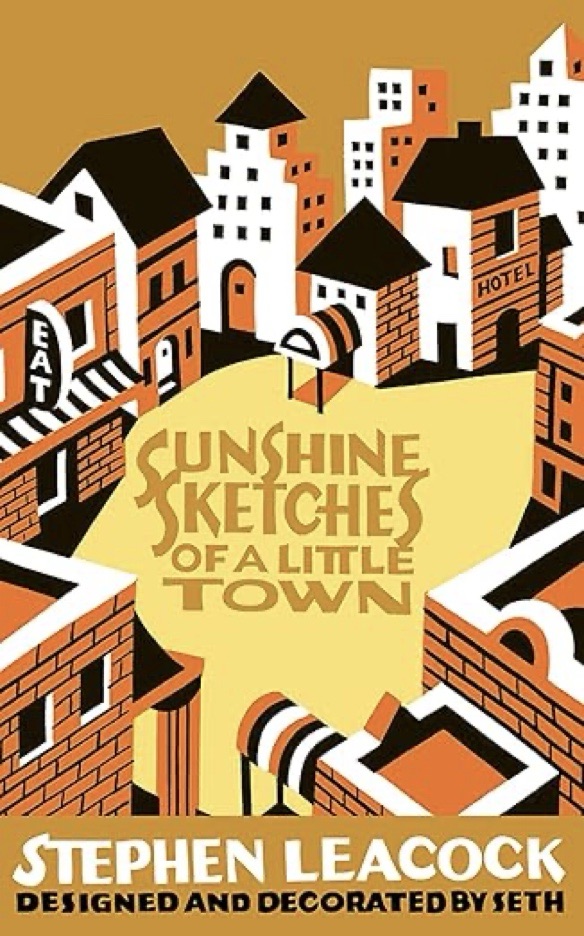
This old classic is coming up for discussion in our Williams Court book club. It is truly classic and I can almost see the McGill professor smiling as he thinks up the next episode in the life of the small town, thought to be modelled after Orillia, Ontario, somewhere around 1900. This is humour so dry that it is sometimes necessary to read several pages to fully comprehend it, not the usual one-liners of modern standup. There are rare oneliners: “First of all, there was a telegram of good wishes from the Anglican Lord bishop of the diocese to Mullen, and calling him Dear Brother in Grace. The Mariposa telegraph office is a bit unreliable and it read ‘Dear Brother in Grease’, but that is close enough.”
“And if you remember, too, that these are cultivated girls who have all been to the Mariposa high school and can do decimal fractions, you will understand that an Algerian corsair would sharpen his scimitar at the very sight of them.”
A very despondent bank clerk planning his suicide because of an unrequited love infatuation, wryly finds four different excuses to remain alive in one chapter, then becomes a local hero by interrupting a bank robbery. The lively local gossip mill declares him dead before he shows up with only a missing ear.
Fit, clean reading for any age, there is nothing very profound here, but it is just what we all need at times- a good laugh.
I recently found this book on our shelf and wondered where it came from. I am now feeling a bit embarrassed as I read one hundred pages before it started to sound familiar. So I looked it up on ThePassionateReader.blog and discovered that it was a Father’s Day gift in 2021 and that I had not only read it but had given it a thorough review. Does nothing to reassure me about my memory.
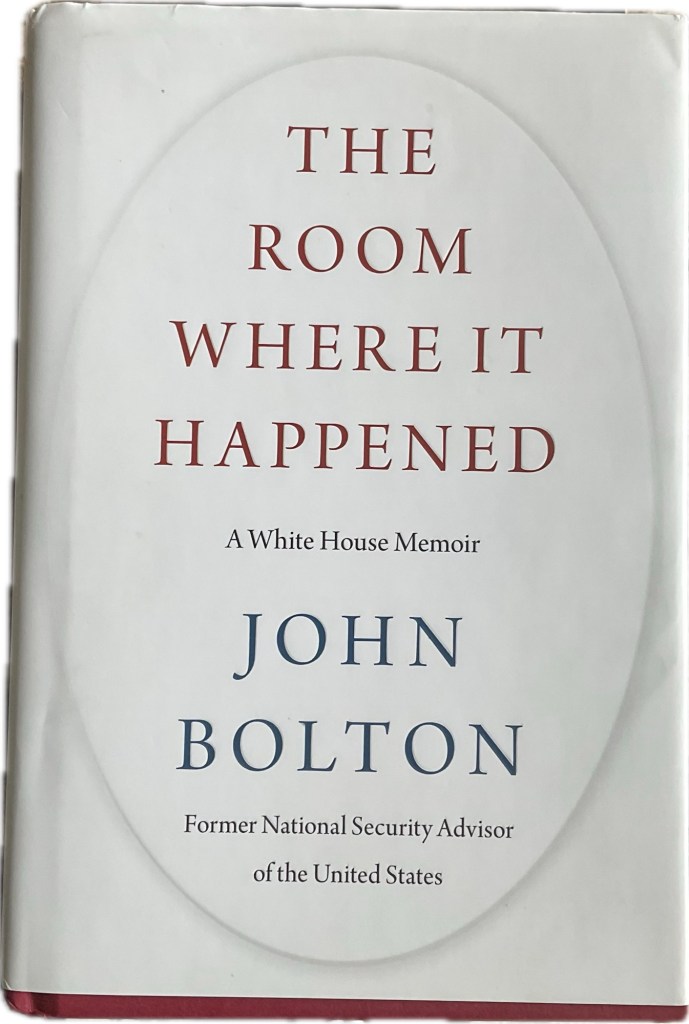
This is a book that Vera found in our Williams Court lending library, where she volunteers. I knew by the fact that John Bolton worked for Donald Trump that I would disagree with many of his assertions, but it is occasionally worthwhile to read such views anyway in an effort to understand them. I am not sure how much she knew about the Yale Law graduate and former National Security Council Advisor from April 2018 to September, 1019.
Never doubting his self-importance, he claims to have frequently “explained” Israel, North Korea, Iran, and Libya, to Donald Trump, and trashed everything Obama had accomplished, all in the first thirty pages or so, while waiting for over a year for any formal appointment to the new administration in 2017, feeling that anything starting with Deputy was beneath him. One really needs to read or at lest scan though this book to appreciate the enormity of his arrogance and pomposity. One example of his importance (in his eyes): “Since my days in George W. Bush’s administration, I had wanted to extricate the United States from the INF (Intermediate Range Nuclear Forces)Treaty. This may seem like a tall order, but I had been there before. I knew what to do.”
When he finally is appointed National Security Advisor, which does not require senate confirmation, much of his work with world leaders, and advice to Trump, seems as though it should have been done by the State Department, lead by Jeff Sessions, which is conspicuously absent, or by the Department of Homeland Security, which is barely mentioned. State does figure prominently once Mike Pompeo took over in late 2018. The author never mentions that he had failed to get senate confirmation as Delegate to the United Nations after prolonged debate in the Senate and has never been elected or confirmed in any position. By about page 150, when Trump has ignored his advice on multiple occasions, it is clear that the relationship is cooling, but lasts much longer.
Neither Trump nor the author address the issue of how the nations of NATO spend their defence budgets, while both insist on spending more as a per cent of the GDP. Perhaps that helps to explain the pervasive waste that is rampant in defence, e.g. leaving billions of dollars of equipment behind for The Taliban.
Critical of Steve Mnunchin, Treasury Secretary, and less so of Mike Pompeo, chair of the CIA, and then Secretary of State, at least initially, he became very critical of both China and Trump in dealing with the early days of the Covid pandemic, while naturally praising the NSC’s response, although it was longer under his direct control. The crisis of a direct attack on Iran which the author backed, missed only by hours, appalled him.
After reading this book, it is tempting to become very cynical about all political treaties, alliances, deals and agreements as fleeting working papers, to be discarded whenever one party no longer finds them useful.
Trump’s erratic behavior, often contradicting himself, his short attention span and his obsession with his media image is increasingly on display as this book progresses. But his alley cat sexual behaviour, which should have disqualified him from any public office is never mentioned.
I have to admit that I learned a lot about the complexity of U.S. foreign relations, and the author makes many compelling arguments for extremely conservative policies. One needs to carefully consider alternative arguments but they are there if you look for them.
Climatic warming is, to my way of thinking, the single most urgent threat to the longterm continuing existence of Homo sapiens on earth, but there is no mention of it at all, except to trash the Paris Climate Agreement as meaningless in a single short paragraph, because Obama approved it.
Trump’s erratic behavior, often contradicting himself, his short attention span and his obsession with his media image is increasingly on display as this book progresses. But his alley cat sexual behaviour, which should have disqualified him from any public office is never mentioned.
Like a novel with too many characters to keep track of, there are hundreds of people discussed in this book, each with their own, often secret agendas, and many with egos the size of Alberta, including he author.
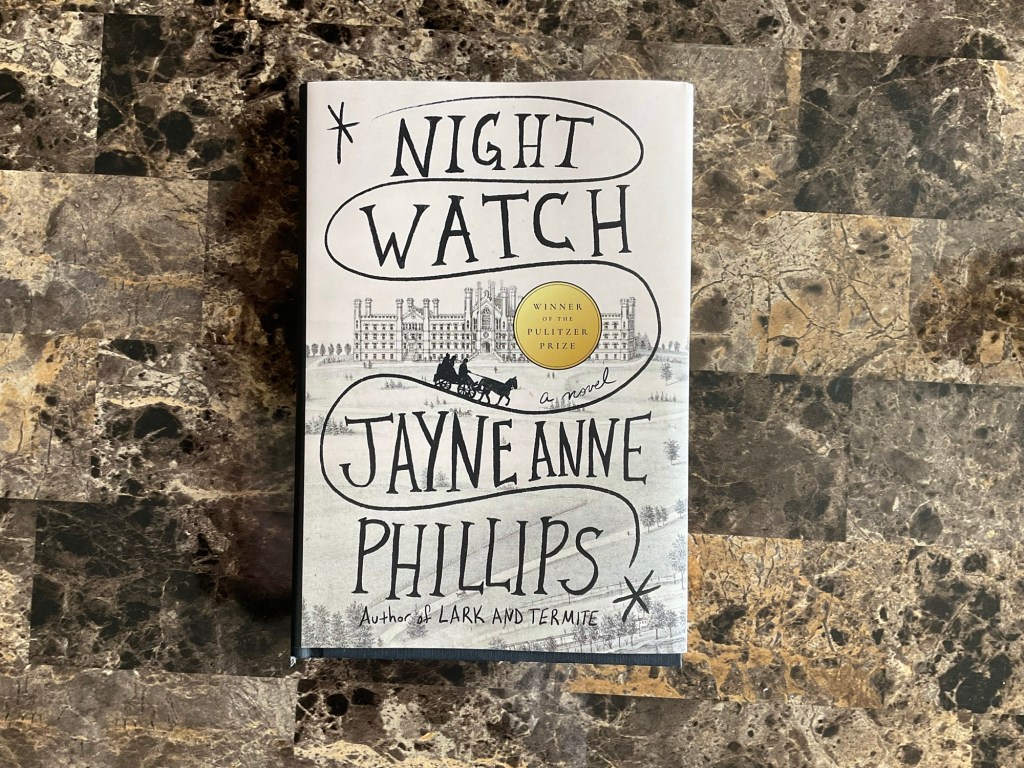
You probably will not enjoy this book, by the New York author unless you are prepared to be throughly confused, at least until more than half way through it. It is unclear who is black, or white, or somewhere in between, who is a Confederate soldier and who is Union, who is severely wounded or dead, who has fathered whom and who is orphaned or adopted. The time shifts between early in 1833 and 1874 after the Civil War had ended do nothing to clarify the confusion and many characters are unnamed while others have several fake names, one wounded soldier cannot even remember his own name, and there are duplicate names for more than one character. The gruesome details of the Civil War and its aftermath on the lives of many are detailed.
With a bit more than 100 pages left, the relationships of a few of the main characters starts to come into focus, and at least some start to make sense. But it takes huge leaps of imagination to figure out what is going on in many places. For example one character is suddenly shoved into a deep, underground root cellar that is then locked, but just a paragraph of unrelated information later is sitting at a feast eating sponge cake.
The author does not use quotation marks, blending direct quotes with narrative that frequently changes tense; at times the speaker is not identified. Dreams mix with reality.
The writing and depiction of the era in American history is interesting, but I remained confused to the end. There are a number of inappropriate verbs out of context (“ConaLee featured she had seen him snatch it up…) that made me wonder if the proofreaders or even the writer was relying on spellcheck or some form of AI. There is resolution of some of the disparate and conflicting information towards the end, particularly in the Epilogue, but I still had unanswered questions about some of the characters and events. Perhaps I simply have lost, or never had the ability to retain so many disparate complex characters clear in my mind. Maybe if I reread it, it would make more sense, but that is not about to happen.
This book reinforces my outlier status as to what kind of books I enjoy. It has received lavish praise from a number of critics, but I have begun to wonder if they are all truly independent or a carefully selected few. It is clear that I often rate books much lower than the critics, but also seldom enjoy a book that critics uniformly pan.




 The Passionate Reader