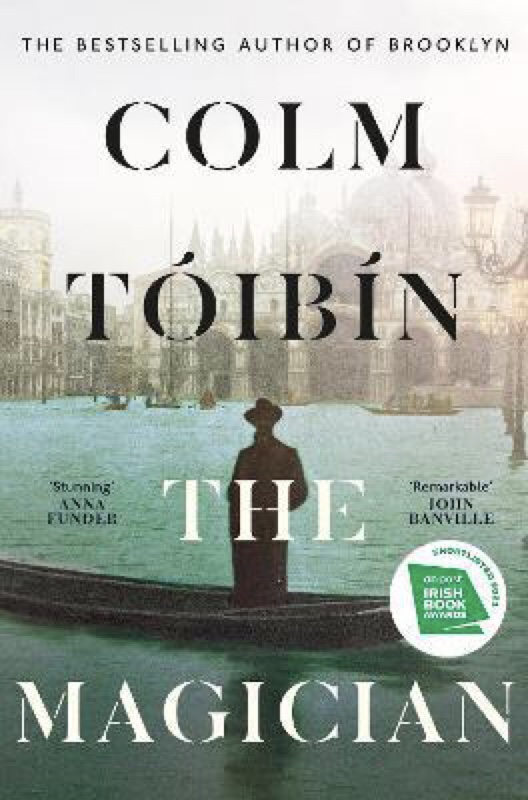
Pick a well-known historical figure, study up on him or her and major events of the era, then embellish and write a greatly expanded account of the life and times he or she lived-and remember to call it a work of fiction and not a biography. That is what the Irish novelist has done in this new rambling account of the globetrotting early twentieth century German writer/activist Thomas Mann, the 1929 literature Nobel prize winner, between 1891 and the early 1950s. It truly is fiction in that it is spiced up with trivial imagined interpersonal conflicts, long detailed conversations, travel plans that go wrong, encounters with other famous figures and endless secret or open sexual liaisons. The latter seem to lack much concern for the gender, age discrepancies, or marital status of the bodies providing the orifices or appendices deployed to satisfy their desires. Many pages are devoted to the imagined effects of what classical music had on Mann’s emotional state and writing.
In the first few chapters, Mann’s tentative and secretive introduction into the world of clandestine gay encounters are featured. In real life, this is also a feature in his novels as well, probably both reflecting the early life experiences of the gay Irish author. It was an era when gay men and lesbians often married for the sake of public appearances and acceptance.
A constant parade of prominent writers, artists, musicians, politicians, and academics including, in no particular order, Christopher Isherwood, W.H. Auden, Bertolt Brecht, Albert Einstein, Richard Wagner, Gustav Mahler, Arnold Schoenberg, and Eleanor and Franklin Roosevelt are included as they interact with Thomas Mann and his dysfunctional family, including his part-Jewish wife, Katia, and their six children scattered around the world.
The diverse characters can be difficult to keep straight as there are three Klaus’s, and several generations of Mann’s relatives on four continents. Mann’s cowardly failure to denounce Hitler early on for purely mercenary reasons (to facilitate sales of his books in Germany) is balanced by his latter leading role as a vocal anti-Nazi activist once he was safely ensconced in the United States. But his late return to Europe in 1950 and a life of luxury in Switzerland hint at the limits of his willingness to sacrifice for moral principles.
I have read enough novels with writers as the main character to be tired of that scene and this one extends that sequence even further as a gay writer writes about a gay writer, who writes about fictional gay writers.
Although the writing is as smooth as silk and the characters are portrayed realistically, I did not enjoy this story nearly as much as the only other Toibin novel I have read, Nora Webster.
⭐️⭐️
Thanks, Din

 The Passionate Reader