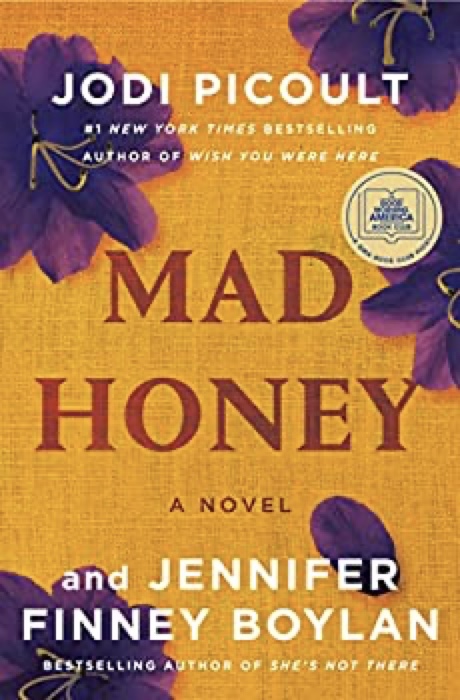
I thought, from the title, that this novel would be all about the biology of bees and the (to me) mysterious rites of beekeepers and harvesting of honey There is lots of that, some of it still mysterious to me, some new and very interesting. The title derives from the honey that bees make from pollinating rhododendron and mountain laurel shrubs- sweet but containing the poisonous grayandrotoxins, which can lay people low for hours or days but is rarely fatal. It was first described as a deceptive chemical weapon by Xenophon in ancient times, and is known to have disabled 1000 of Pompey’s soldiers. I somehow knew about this from previous reading. It is also used in small doses by some as an hallucinogen. But here the term Mad Honey is used as a kind of allegory for toxic human relationships, particularly as they pertain to gender and sexual relationships.
The book was conceived by one of the prolific authors, a transgender woman, in a dream, and came into fruition when the two New Englanders wrote eleven alternating chapters in the first person singular voices of two of the main characters- the beekeeper mother of an artistic sensitive, star hockey player, teen boy accused of murder, and his girlfriend victim, a transgender, cellist, fencer, and school classmate. It is set in the recent past but with frequent flashbacks to the previous lives of women in abusive relationships.
The documentation of the murder trial consumes more space in the book than does any discussion of bees or honey, but is interesting as a revelation of how the modern U.S. justice system works or doesn’t work, and the suspense for the reader is very finely tuned. The unpredictable plot twists as new evidence is presented rival those of any reasonable murder mystery novel. The medical evidence presented by two opposing forensic pathologists was particularly interesting to me.
The interrelated issues of gender identity and biases are profiled with unique insights (as would be expected from a trans author) and sensitivity about the differences between sex and gender. The androgen insensitivity syndrome (or testicular feminization syndrome as we knew it) when a genetic XY male nevertheless is born with female anatomy and physiology is mentioned in passing. It is now known that this is due to failure of methylation of a specific DNA nucleotide at at a precise point in fetal development, to allow production of testosterone. Without that, male Homo sapiens would cease to exist.
The finer points of fencing as a sport were totally lost on me, but it is a finesse kind of activity that one of my medical school classmates and one of my retired best friends loved and I suspect that, if given the opportunity, in another live, I could warm up to it.
There are lots of memorable quotes:
“Here’s what they do not tell you about falling in love: there’s not always a soft landing beneath you. It’s called falling, because it’s bound to break you.”
“Pacing a room doesn’t make it any bigger; watching a clock doesn’t make the time tick by faster.”
One attorney is described as “busier than a mosquito at a nudist beach.”
There are some negatives. The excessive use of very foul language and the unnecessarily vivid pornographic description of many sexual encounters contributes little to the story. There is more than a hint of man bashing throughout- in reality, most men are not abusive to their partners. Some characters seem to be on perpetual emotional roller coaster rides and wallow in self-pity, and insecurity.
This book provided me with enough perspective about sexual and gender roles to last a lifetime, but I didn’t enjoy it as much as I did the only other Jodie Picoult book that I have read i.e Small Great Things.
⭐️⭐️⭐️⭐️⭐️/10
Thanks, Vera.


