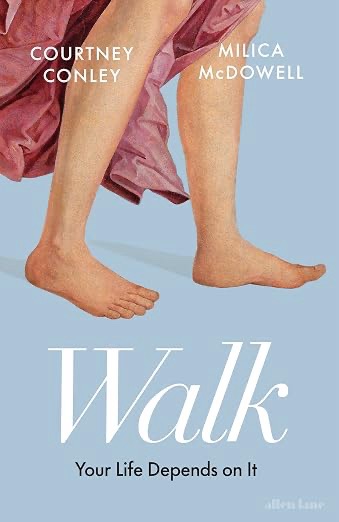
When I realized that the authors of this book were practising chiropractors, my physician bias immediately made me sceptical about its message, expecting snake oil. I soon realized that there was more to it than meets the eye. The first chapter explains the vital signs in language simplistic enough for an average Grade five student to understand and makes endless claims about the health benefits of walking that conflates correlation to causation. Perhaps patients harbouring unrecognized cancers or vascular diseases walk less than their peers because of that rather than the less walking causing the cancer or vascular disease.
The authors never miss a chance to disagree with mainstream medicine advice and argue for the exact opposite approach to many foot, knee, hip and lower back injuries or pains, but are often very convincing in their recommendations. But this oft repeated smug self-congratulatory writing becomes a bit annoying for this retired physician.
The chapter on choosing shoes is loaded wth sage advice like choosing thin soles and low heels to let your foot muscles do the work of walking, and using the foam insert in most store shoes to match your foot size by standing on it.
The many recommended exercises include such details as toe yoga which now makes sense to me and strength exercises and rucking. They have ironically convinced me to vary and reduce my gym routine of one hour every other day flat on the treadmill at four kpm with holding the heart rate bars, to variable speeds and variable inclines with hands free and perhaps even some slow backward walking for less time and less distance. I already do a variety of other strength and balance exercises and over the last year have averaged over 12,000 steps per day but probably not very efficiently.
This book about exercise physiology, much as I hate to admit it, was very useful to me.
3.5/5


