What are your two favorite things to wear?
Summer: Full chest waders and fishing vest.
Winter: Long johns, lined jeans, lined jacket, balaclava and tall hiking boots.
What are your two favorite things to wear?
Summer: Full chest waders and fishing vest.
Winter: Long johns, lined jeans, lined jacket, balaclava and tall hiking boots.
This New York writer suffers from the peculiar terrifying affliction called sleep paralysis in which the brain becomes alert but the body remains in sleep mode, unable to move for a variable length of time, This book may in part be the product of that bizarre experience which lead him into wanting to know more about how the brain works. He starts with how two anatomists proved, with the death of King Henri II of France, in1559 that countercoup blows to the head can be fatal without any skull fracture or direct injury to the brain by an outside force.
The author approaches the subject matter here very logically, with a build up from individual cells, to how they communicate, to clusters, networks, circuits, columns, specialized areas of the brain and the integrated circuitry of the whole brain, spinal column, and peripheral nerves.
The crossed wiring leading to synesthesia, the phenomenon of seeing sounds, smelling sights, etc, is very well explained. The large number of amputees from the American Civil War lead to intense (but not quite ‘duelling’) debates leading to some enlightenment about the basis of phantom limb sensations such as intense pain or itching. And there are the bizarre documented episodes of phantom penises experiencing erections and ejaculations! The suggestion that foot fetishes occur commonly because the main foot and genital areas represented in the sensory and motor cortex of the brain are adjacent and their wiring may get crossed in a mild form of synesthesia seems intriguing. The bizarre sexual urges of some victims of brain injuries is puzzling, as is the criminal sexual predation apparently ‘caused’ in rare patients by use of the drug L-Dopa, widely used in treating Parkinson’s disease.
The 45 page discussion of the adventures of the rogue American Nobel laureate (who was also a pedophile) D. Carlton Gajduesk in the highlands of New Guinea and his discovery of the misfolded protein causing the now-eradicated Kuru in cannibalistic natives, along with other scientists later extending this line of research to explain scrapie in sheep, mad cow disease in bovines and Creutzfeldt-Jacob disease in humans is clear and fascinating.
The emphasis of the legendary volatile Baltimore neurosurgeon, Harvey Cushing, on the brain’s control over many functions via hormones secreted by the brains southern peninsula, the pituitary gland, was controversial in the early twentieth century but opened up the whole new field of neuroendocrinology. Wilder Penfield, founder of the world-famous Montreal Neurological Institute pioneered surgical treatment of increasing precision in the treatment of epilepsy.
A chapter on memory and recall distinguishes several subtypes, and goes some distance to explain the anatomical bases for them and why our memories are sometimes faulty. Some types of memory loss such as in Wernicke-Korsakoff syndrome are accompanied by confabulations to hide the deficit. From personal experience with such individuals, I can attest to the fact that those confabulations can be very elaborate and convincing.
The discussion of the parts of the brain that are mainly responsible for speech was of particular interest to me since one of my early academic publications as a medical student reported the results of a study I did with my neurologist/teacher, Dr. Andrew Kertesz, on localization of lesions producing speech disorders, differentiating expressive and receptive aphasia in stroke patients, in the late 1960s. In emphasizing the diversity of centres used in language skills, Kean writes “ There’s no neurologic ‘pantry’ where we keep our words.”
Myriad victims of brain injuries have inadvertently contributed in many ways to the advancement of neuroscience and the localization of specialized areas of the brain. Some of those injuries result in beliefs and actions of the victims that make any fairy tale seem realistic. For example, people with Capgras syndrome firmly believe that parts of their bodies or people around them have been replaced by doubles, even denying their own identity in a mirror. Victims with the Cotard delusion are sure that they are dead, even as they chat with the living from beyond the grave.
Kean confronts the issue of free will directly by stating categorically that “Free will is a retrospective illusion, however convincing.” but expands on this in a postscript conversation to say that “…no matter what we do, we’ll always feel like we have free will.” With respect to locating the seat of consciousness in the brain, he writes that “Consciousness isn’t a thing in a place; it’s a process in a population.” In other words, “..consciousness isn’t localized; it emerges only when multiple parts of the brain hum in harmony.”
Some of the most intriguing information about neuroanatomy, neurochemistry, and neuropharmacology and the happenstance history of discoveries in those fields is found in the referenced notes at the end of the main text. I have included those in the the number of pages I calculated. And some of the ‘neurosurgeons’ of the title are nineteenth century grave robbers, barbers, zoologists, and philosophers dabbling in studies of the brain.
I do not understand the mathematical diagrams at the start of each of the twelve chapters and found one obvious typo: “Elliot was a good people.” Not bad for a book of this length.
You do not need to be a neuroscientist nor have any medical background to enjoy this clearly- written, well-illustrated, educational, and humorous discussion of some of the most bizarre thoughts, beliefs, and actions that human beings have ever engaged in. Apt metaphors give the brain attributes of a whole being, including being in error as when the brain thinks that the amputated limb is still functioning as part of the body.
You may snicker with a whiff of schadenfreude (the enjoyment of others misery) as you read this book, but no reader knows what brain ailment may await them to make them the subject of some future brain researcher and perhaps have another peculiar syndrome named after them.
3.5/5
Thanks, BookBub.
Cam
What are your family’s top 3 favorite meals?
I do little of the cooking or baking but my wife makes delicious lentil soup with a variety of other vegetables and some small pieces of beef or chicken added, a great vegetable lasagna, and, believe it or not, great beef tongue with bay leaves and onions. We don’t have deserts,on a daily basis, but I do occasionally bake good Mississippi mud pies and/or sour cream and raisin merengue pies.
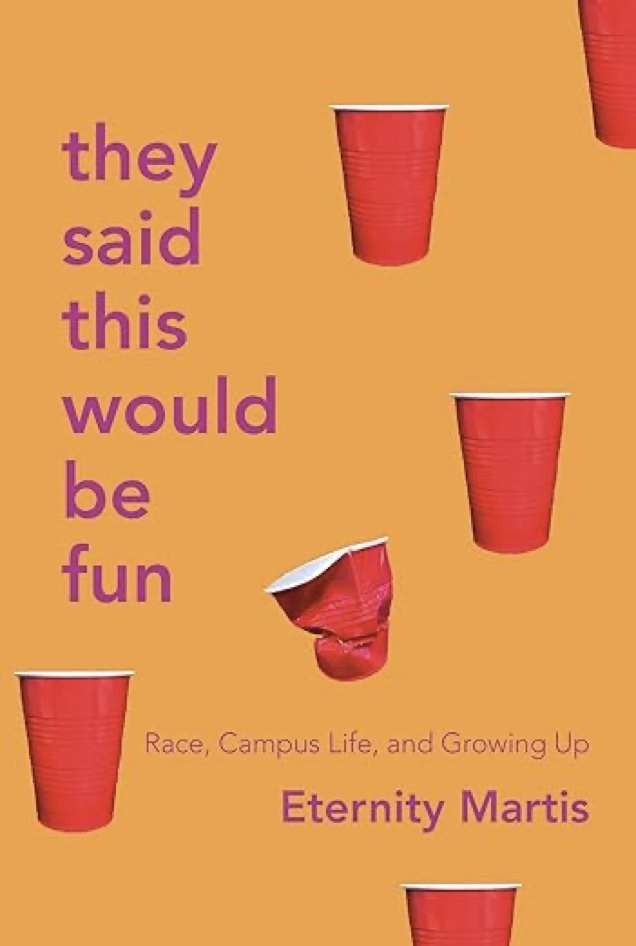
I am not sure where I heard about this memoir by a young black student’s experiences as a student at Western University, from 2010 to 2014. This brought back fond memories of my many years at Western, as a student and later as a faculty member, including the London restaurants, Joe Kools, The Ceeps, Chaucers, and The Barking Frog and the Sydenham-Medway student residences where I lived for one year. She is now a journalist in her home town of Toronto.
Much of the book is devoted to proving that racial discrimination, hatred, and violence is prevalent across Canada, perhaps especially in rich, staid, conservative, WASPy London, and this is certainly adequately documented with examples of individual incidents and data.
The description of the abuse she endured by intimate teenage sexual partners she fell for, demonstrating very poor judgment, is heart-wrenching and goes a way to explain her subsequent dedication to women’s advocacy. Her excessive alcohol consumption at Richmond Row bars to bury her problems in second year, and her subsequent belly pains, is apparently diagnosed by a nurse at Western’s Student Health Services as due to gastritis, seemingly without any laboratory investigation. Why wasn’t the diagnosis of alcoholic pancreatitis considered?
Painting Western as worse and more racist and misogynist than any other Canadian university without citing any experience at any of those other institutions may be true, but is unproven. She apparently does not recognize the irony in Black Londoners organizing ongoing secret Blacks-only segregated meetings at a back room of the Barking Frog bar. How long would such meetings be tolerated if reversed with white folk only meetings in such predominately Black communities as in parts of Detroit or south Chicago?
There is no denying the cruel, unjustified, and pervasive existence of white privilege and racism in Canada and it should be exposed, condemned, and fought vigorously, but this book does not recognize the existence of the majority of white Canadians who do not intentionally discriminate against Blacks. Her complaints about police and security guards profiling Blacks is of a well-known and accepted phenomenon. There is a marked paranoid tone to the writing and rage (which she admits to) and she justifies this rage with questionable racist motivations she attributes to some white peoples’ words and actions. Hanlon’s razor states something to the effect that one should never invoke malice to explain that which can be adequately attributed to stupidity (or incompetence); this author certainly does not follow that advice. It would be neither ‘woke’ nor politically correct for me to suggest that her own insecurity and Toronto childhood experiences with a largely absent, unhelpful father contributed to her interpretation of some personal comments and encounters as racial slurs, when they were not meant as such, but I have never been accused of being ‘woke’ or politically correct, and the thought did occur to me. For example, when she was dining out with her light-skinned Irish-Pakistani mother, she takes offence when the server asks if they want separate bills. She admits to childhood self-hatred because of her colour, being the dark-skinned offspring of a Jamaican father.
As a privileged white male, when I finished reading this rant, I wondered what actions or words I could possibly use to try to befriend a Black person of any gender that could not be twisted into a racial slur by someone determined to do so. But we white folk also need to fully educate ourselves about what others may consider to be racial slurs or actions. Yet I have somehow become good friends with a wide variety of people of various origins and with widely varied amounts of melanin in their shin. Perhaps they are either less attuned to finding racial slurs in the conversations with white folk than this author, or more willing to forgive and forget them. This is a problem that may perpetuate distancing our white selves from people of colour by making us reluctant to try to befriend them or say anything to them lest it be misinterpreted as displaying racism. Na Nehisi Coates, the black activist and writer is perhaps the poster child of those seemingly determined to use the race card to win any debate about any issue. As the saying goes “If all you have is a hammer, everything begins to appear to look like a nail.”
I cannot conscientiously recommend this book, but I am glad I read it, if only to give it a negative review.
1.5/5
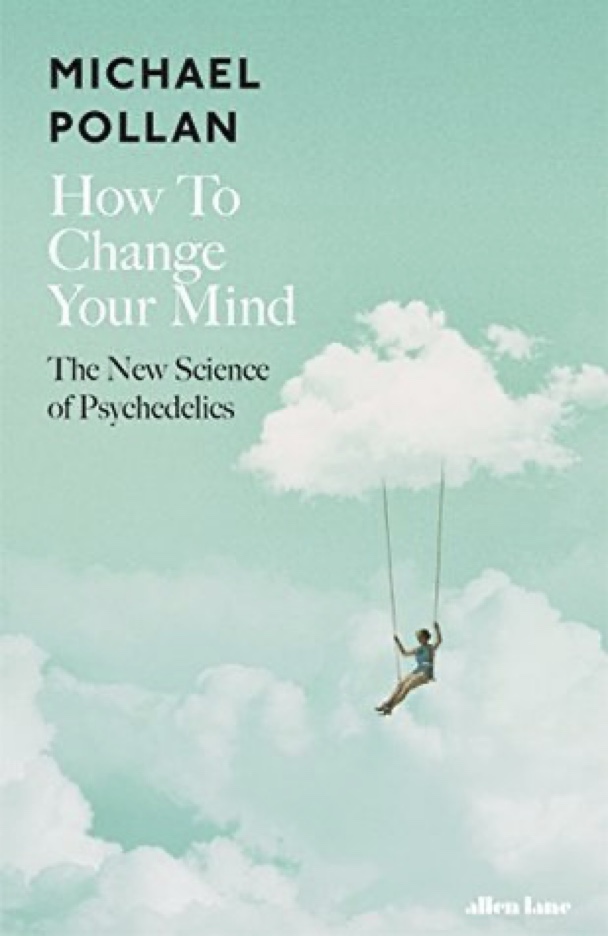
I usually avoid books whose titles feature “How to” as they tend to either promote simplistic generalizations or complicated instructions that I cannot possibly follow. However, an acquaintance recommended this science-based very erudite neurochemistry discussion and I previously somewhat enjoyed Pollan’s This Is Your Mind On Plants, with some reservations. At the heart of this one is detailed discussion of the mysticism and life-changing experiences of people under the influence of psychedelic drugs. But much of this is confined to controlled experiments under medical supervision, unlike the experiences reported in the 1960s before most such drugs were banned (in the U.S. in 1970). It is not confined to experimental treatment for defined illnesses, but also as a life-enhancing additive for normal people, if such creatures exist.
Of the seven chapters, the first three deal with the long and almost universal history of use of ‘trips’ including meditation, shamans, and psychedelics in religious rites and various ceremonies. This included widespread uncontrolled use of magic mushrooms, and various other mind-altering drugs before they proliferated in the counterculture of 1960s America. They were studied by the CIA, as possibly useful for mentally traumatized soldiers and as chemical weapons. This discussion of their effects on many notable people includes Aldous Huxley, Ethyl Kennedy, wife of RFK, Carey Grant, Dylan Thomas, and Alan Ginsberg. The Canadian psychiatrist and mystic, Dr. Richard Maurice Bucke, in London, Ontario in the 1890s with Walt Whitman promoted the zany theory of ‘cosmic consciousness’ as documented in in the biography of Bucke by my late colleague, Dr. Peter Rechnitzer. Later the notorious doctors Humphrey Osmond and Abram Hoffer treated patients with a wide variety of mental illnesses with LSD in the small Saskatchewan town of Weyburn in the 1950s. With the advances in neurochemistry and neuropharmacology, the concept of cosmic consciousness no longer seems so crazy.
“People feel they have been let in on a deep secret of the universe, and they cannot be shaken from that conviction.”
The chapter detailing the author’s personal trips (purely in the interest of science, of course) on LSD, psilocybin derived from mushrooms a bizarre molecule called 5-MeOT-DMT from the poison glands of a rare toad and plant-derived ayahusasca make fascinating reading, as do the following chapters on what is known and not yet known about the neurochemistry and the modern use of such drugs for treatment of addictions, schizophrenia and depression. The default mode network in the brain with its controlling ego or self as the centre of consciousness and its dissolution under the influence of psychedelics resulting in broadening of neuronal connections was an entirely new and intriguing concept to me.
It is not necessary to believe in any religion or an afterlife to benefit from the the ‘spiritual’ experience of a psychedelic trip. The author is a firm agnostic as are many trippers, even as they describe the experience as a spiritual journey to meet with God or become one with the whole universe. But the word spiritual has become so vague as to be almost meaningless.
It seems to me that there are linguistic inadequacies in describing the complex effects of psychedelic drugs just as there are in explaining the complex interconnectedness of everything in nature, but I have never felt the need for a boost from a drug to be totally awed by this “Oneness”. The documentation that plants, animals, and insects possess something akin to our decision-making consciousness leaves me in awe whenever I think of them. Pollan avoids any detailed discussion of whether or not we have minds capable of making decisions separate from our chemically-wired brains, but it seems clear that he does not. And he wisely points out that enthusiasm for any new therapy usually wanes as it is used in broader contexts.
In describing the experience of people getting high on mushrooms: “Even the most secular among them, come away from their journeys convinced there exists something that transcends a material understanding of reality: some sort of ‘Beyond’.
Two other good quotes:
“Our brains are prediction machines optimized by experience…”
“There is an infinite time to be dead.”
This is a carefully researched exposition of the purported modern medicinal benefits of use of a variety of psychedelic compounds. It also details the long history of their use in many cultures before they were hijacked by the 1960s counterculture, then banned and driven underground by an inept FDA in 1970. I am convinced that they have legitimate uses in modern medical practice, but, perhaps because of their condemnation until recently, have never been tempted to take even one dose of any of them. The etherial and spiritual descriptions of their effects is totally foreign to my linear and concrete ways of thinking and the dependence of their effects on the setting and expectations defies explanation other than, at least in part, as placebo effects. But if I am given enough warning about my approaching expiry date, I might be tempted to take a high dose of pure psilocybin as one of its reported effects in 80 percent of dying cancer patients is a complete and lasting loss of the existential distress of knowing you are about to die. However, I would much prefer to be given no such advance notice and be struck by a meteorite or shot in the head by a mistaken jealous husband- when I am over 95.
Longer, but with a much broader international perspective than his earlier book on mind-altering compounds, this is a much better book. I learned a lot.
4.5/5
Thanks, Allan M
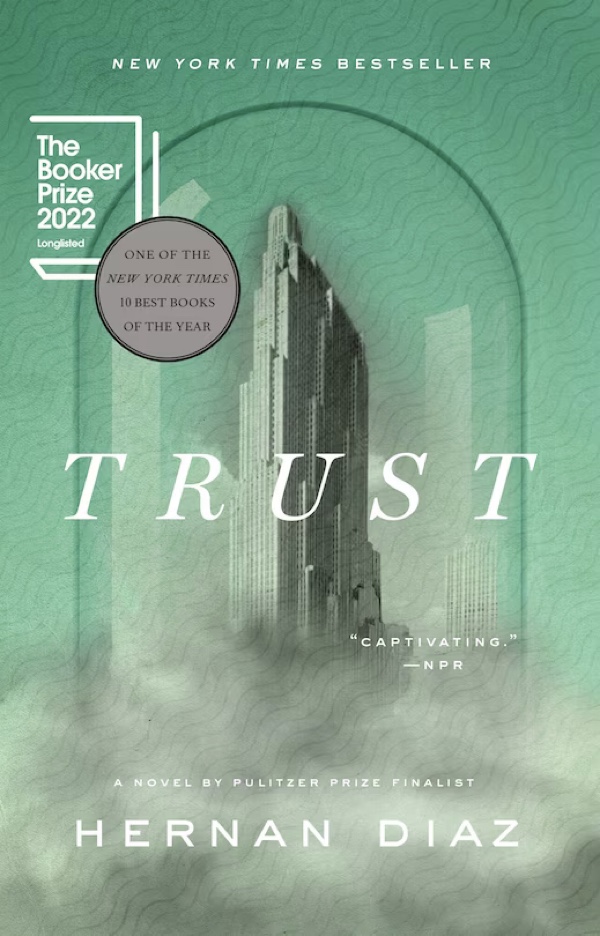
I am unsure what to say about this 2023 Pulitzer Prize winning modern novel by the Swedish-Argentinian writer as it is in a most unusual format with different narrators and very different themes. Most of it is a detailed analysis of the complex workings of the American economy from the 1920s to the 50s as seen through the eyes of various people. An independent novelist, named Harold Vanner, Andrew Bevel, a Wall Street mogul, his ill and very clever but aloof wife, and his secretary all contribute what are really four novellas.
The narrator of the first 78 page novella by Harold Vanner, titled Bonds features Benjamin Rask, an ultra-rich reclusive and introspective New York bachelor tobacco baron who invests in bonds, and is clearly modelled after Andrew Bevel, featured in the next novella. He marries an equally hermitic, very eccentric, brilliant, high-society girl from Syracuse during WWI, giving the title a double meaning as they fail to bond with each other or anyone else. Today, they would both probably be labelled as having moderate autism, although she, like her father, later also suffers from a serious and ultimately fatal mental illness with paranoia and hallucinations. The elusive couple became despised in New York society because of his business dealings in spite of her philanthropy. Myriad financial dealings before the 1929 crash allowed them to avoid any need to interact with others except in business dealings.
The second book-within-a-book is a 54 page early, partly point-form, draft of a fictional autobiography by that same Andrew Bevel, and includes a four-generation family genealogy of Bevels, all financiers. Scattered notes remind the narrator about what to include. He is a reclusive tobacco baron, businessman, and stock market manipulator who claims to have been dedicated to the public good, and firmly believes the old adage that what is good for business is good for America. He claims credit for the widespread prosperity and stability of financial markets of the 1920s with plausible arguments for a Reaganite supply-side free market economy. He calls the Federal Reserve a “blundering machine” that “through artificial, ill-conceived and poorly timed actions that only managed to hurt legitimate investors.”
These very right-wing economic and political beliefs may or may not reflect Diaz’s positions as the third novella presents the very different political beliefs of his secretary, the anarchist daughter of an American communist. She describes money as a fiction but becomes fond of Bevel. She is hired to finish ghost-writing his autobiography based on his previous draft, extensive interviews with him, and tours of his Manhattan mansion, and muses about this experience decades later in the 1980s.
The final story is written, again in draft form, by Bevel’s sickly reclusive wife, who dwells on their strained cold relationship and reveals some of his nefarious methods of cheating other investors and beating the markets to become incredibly wealthy.
Some interesting quotes.
Andrew Bevel: “Intimacy can be an unbearable burden for those who, first experiencing it after a lifetime of proud self-sufficiency, suddenly realize it makes their world complete. Finding bliss becomes one with the fear of losing it.”
and
“Most of us prefer to believe we are the active subjects of our victories but only the passive objects of our defeats. We triumph, but it is not really we who fail—we are ruined by forces beyond our control.”
His wife: “…what is choice but a branch of the future grafting itself onto the stem of the present”
and
“Nothing more private than pain. It can only involve one.”
Only in retrospect could I begin to put these disparate pieces together, but that is probably just a reflection of my limited ability to juggle many different themes at the same time.
⭐️⭐️⭐️⭐️⭐️⭐️⭐️/10
Thanks, The Atlantic, Goodreads.
What was your favorite subject in school?
Definitely English literature and writing, writing essays, and correcting spelling, mostly under the supervision of my great high school teacher, Don Birtwhistle. Then I failed English 20 in university!
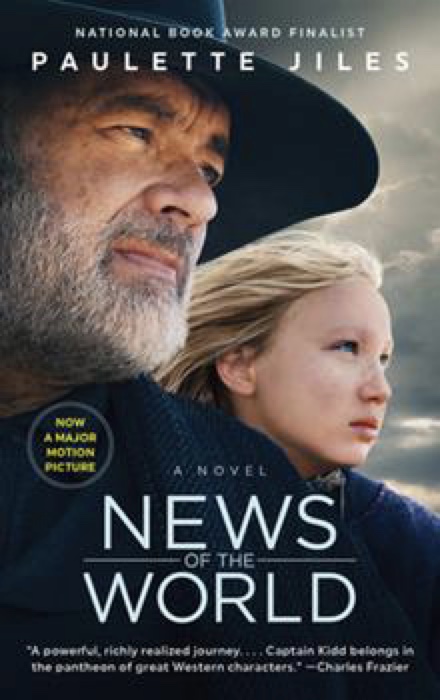
The Texas author paints a dramatic picture of the wild-west lives of the widely scattered adventurers and aboriginals of Texas in the 19th century in this well-researched novel. There are only two principal characters. One is a very young veteran of the War of 1812 and later of the Civil War, named Captain Jefferson Kyle Kitt, originally from Appalachia, who later becomes widowed, penniless, and jobless. The other is a southern Texas German girl orphaned at age six, by raiding Kiowa natives then abducted by them, then returned to white settlers by Indian Agents at age 10. Their lives become entwined as poverty-stricken Captain Kitt reluctantly contracts to return the sullen girl to relatives as he travels around Texas reading newspapers at local town gatherings. This is in a world of divided political loyalties, especially after the Civil War, lawlessness, poverty and violence.
The geography and wild west culture of Texas in that era is well depicted. The happy ending in the last chapter covers a whole generation after old Captain Kitt dies and is a welcome surprise.
A somewhat unrealistic gunfight in Durand with a pursuing child pornographer adds suspense, and the use of dimes that he collects from his readings, rammed into shotgun shells, proves to be deadly and unique.
The map of Texas in the front of the book is too small to be a readable useful guide does not enlarge with changing the font size.
The writing, in mostly short snappy sentences, flows smoothly and flawlessly with many memorable descriptions.
“Above and behind them the Dipper turned on its great handle as if to pour night itself out onto the dreaming continent and each of its seven stars gleamed from between the fitful passing clouds.”
“At the age he had attained with his life span short before him he had begun to look upon the human world with the indifference of a condemned man.”
This novel has now been adapted as a movie starring Tom Hanks and Helena Zengel that has got good reviews. I have not watched it but I cannot imagine it being as good as the book as movies based on books seldom are, in my opinion.
⭐️⭐️⭐️⭐️⭐️⭐️⭐️⭐️/10
Thanks, Lois.

Someone in our William’s Court Book Club 2 got this old novel about the shallow insular lives of the British aristocracy in the post-war 1940s on the list for this month. In the paperback edition I borrowed, there is no information about the author at all, except for a list of her books. When did providing ´About The Author’ information become popular with editors and publishers? I had to search online to find any info about the author, and discovered that this story is described as being semi-autobiographical.
Narrated by a young girl in an initially somewhat obscure relationship to complex, elite and confusingly interrelated British aristocratic families, she clearly presents their superficial, snobbish, and racist attitudes and lives of leisure and power. Almost every character lives in a world of hired maids, butlers, cooks, groundskeepers, and chauffeurs. It seems that most of them also have several lovers, often shared. The main obsession of parents seems to be to get their daughters married off before they turn 20- but only after ritualized courtship when a carefully assessed and approved suitor shows up. It is a world I have never known and cannot relate to.
The engagement of a young debutante to her much older widowed playboy uncle-by-marriage, who was also her mother’s former lover, gets tongues wagging furiously, particularly that of the girl’s very opinionated domineering mother, Lady Montdore. There also seems to be extensive inbreeding in the elite classes.
Part Two switches from Hampton to Oxford, where the author has become the poor wife of an Oxford don, although Lady Montdore, the grand dame of Hampton, is still featured, spouting her self-centred opinions about everything, on her frequent visits. Canadians are said to be unpolished bush-dwelling creatures, in the conversation with Lord Montdore’s long-estranged effeminate nephew from Nova Scotia via France, when he comes for a visit (and to be included in the Lord’s will in place of their now ostracized daughter). It seems obvious that he is a flaming gay, but this is never directly acknowledged.
At the end, the fate and fortune of several characters is left to the reader’s guesses. All the characters are grossly exaggerated caricatures. I suppose one could consider this story a parody of the British aristocracy of the era, but I don’t know whether or not the author, who was a member of that class, intended it as such.
⭐️⭐️⭐️⭐️/10
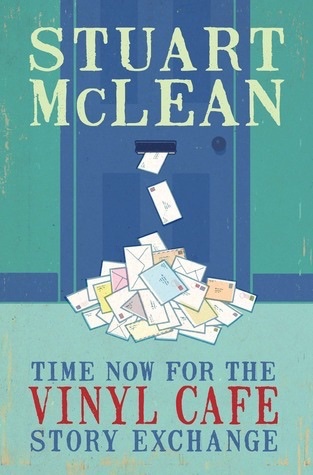
I suspect that most Canadian adults are familiar with this late entertainer and his longstanding radio program and his touring live performances. We never missed any of the latter when his road show took him to London, and never saw a disappointing performance by him and his crew of musicians. So rather than the several other books that emanated from those episodes, I chose to review the book of short stories that others contributed to his weekly Vinyl Cafe Story Exchange- 100 in all, over ten years, although thousands, including yours truly, sent in stories to be considered. The only stipulations were that they had to be short and true. When I finished reading this collection, in keeping with the apparent fondness for the number ten (ten stories per year over ten years), I picked out ten to highlight here, not necessarily ones I enjoyed the most, but ones that I could easily relate to.
Mr. Fisher, by Irene Wood. A profound brilliant lesson for schoolchildren about civic duty and the dire consequences of remaining silent about witnessing abuse from a genius teacher.
After The War, by Alan Nanders. A touching story when a young army cadet learns about about the resilience of wounded war veterans.
Good Catch. by A.J. Mittendorf. An hilarious story from a teenager with one of the best punch lines of them all.
A Proposal of Hope, by Michael Gallagher. A sad/joyous beautiful romance.
Class Picture, by Harley Hay. A lovely story about a schoolboy and his dog.
Erica, by Kurt Armstrong. Another sweet romance.
Te Quiero Mucho, by Diego Ibarra. A funny story related to language translation.
Fatso, The Cat, by Tony and Maureen Smith. Hilarious misunderstanding with a neighbour.
Stepping Out, by Margaret Walton Roberts. Getting stranded in a rundown section of Detroit at night. Been there, done that.
Discovering Dieppe, by Tyler Levine. A story of deep appreciation for the sacrifices of our military in WWII.
My choices here are arbitrary and do not include some others that are also fun to read. But some are banal and poorly written. Overall, this is a good read, but few of these stories are as enjoyable as the author’s inventive imagination came up with for his radio shows and live performances, featuring the antics of his fictional Dave and Morley.
⭐️⭐️⭐️⭐️⭐️⭐️⭐️/10
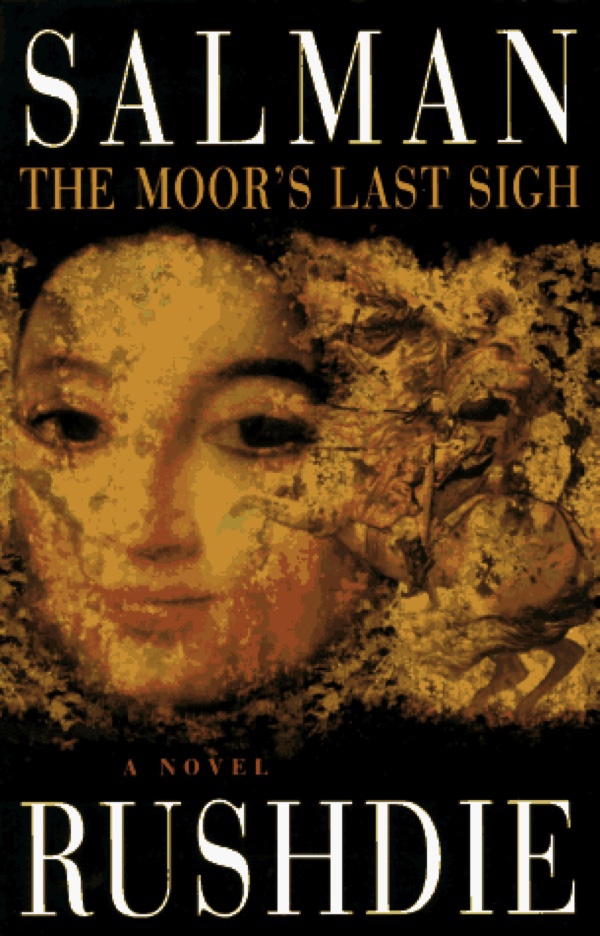
This tale is narrated from the historical perspective of the latest descendent in a dysfunctional family of Indian spice merchants in the latter half of the nineteenth century and through the 20th. It is not clear to me how much of this is autobiographical. But the era and place (Cochin, India) of the birth of the Moor of the title roughly mimic Rushdie’s. (I have read and quite enjoyed Rushdie’s 2012 autobiography Joseph Anton, but I can’t recall many details of it.)
Coverage of the three way conflicts between the brutal British rulers of India, the followers of Mahatma Gandhi, and those of Jawaharlal Nehru and the Congress Party is disjointed and scattered throughout the first half of the book.
The short family tree in the front is a very helpful reference but by the time I got to the following description of the first meeting of the author’s Christian mother and his wealthy Jewish father, I decided that I would have to take a break. “Way up there near the roof of Godown No 1, Aurora da Gama at the age of thirteen lay down on the pepper sacks, breathed in the hot spice-laden air, and waited for Abraham. He came to her as a man goes to his doom, trembling but resolute, and it is around here that my words run out, so you will not learn from me the bloody details of what happened when she, and then he, and then they, and after that she, at which he, and in response to that she, and with that, and in addition, for a while, and then for a long time, and quietly, and noisily, and at the end of their endurance, and after that, until…phew!” I suppose this is preferable to a vivid description of sex with an underage girl.
The author is Moor, his named sometimes shortened to Moo, born after Eney, Meeny and Miney, as a cute play on words, but his shortened gestation of only four and one half months but with a birth weight of ten pounds, is biologically impossible. He has syndactyly (fused fingers) of his right hand and accelerated aging, looking and feeling old at 36, this feature being repeatedly emphasized in the subsequent narrative. (There is a real genetic syndrome called progeria but he lives longer than those with those with this and has none of the associated features.) This may have been included as some kind of allegorical reference to a fast-paced life, but I am not sure of its meaning. Equally allegorical is the Sigh of the title, which is supposedly based on the painting of Moor’s famous mother, a domineering portrait artist and descendent of the Portuguese explorer Vasco da Gama. “A sigh isn’t just a sigh. We inhale the world and breathe out meaning.” There are also echos of Lear and Shylock with bargains with a Jew for a pound of flesh. There are other allegorical references and some of the magic realism that made Rushdie’s The Satanic Verses famous or infamous depending on your viewpoint. Many misinterpreted that book; others condemned it without reading it.
There are several unrealistically beautiful women and girls lacking any virtue or intelligence, who nevertheless hold complete control over the males and cause feuds among them. The narrator’s adopted crooked brother Adam Zogoiby, deals in arms and illegal financial schemes and is caught, leading to revelations of widespread corruption in high Bombay society and the downfall of the family business. The real independence riots of 1992 are outlined in detail and lead to Moor’s flight to Spain.
One interesting timely quote about religious conflicts: “There comes a point in the unfurling of communal violence in which it become irrelevant to ask ‘Who started it?’…..both sides shed the right of virtue.”
The run on sentences lasting for a third of a page, and the foreign names and phrases made it difficult for me to enjoy this tale and I found it impossible to keep the long list of peripheral characters straight. In the penultimate chapter, as Moor, in Spain, attempts to find and take back his late mother’s stolen famous The Moor’s Last Sigh painting, there are far more sentences ending with question marks than with periods. Even in the last chapter a new character is introduced but quickly dispensed with via a pistol shot.
I give Rushdie full marks for originality, developing unpredictable plot twists, and symbolism, but this was too wordy and foreign to my experience to be very enjoyable.
My gifted copy has found it’s way to my granddaughter’s front yard lending library.
⭐️⭐️⭐️⭐️⭐️/10
Thanks, Alana.
What are you most proud of in your life?
For years, I researched the chronic itch of some common liver diseases and proved that an old drug was an effective treatment.

The author of this book is hailed by reviewers for The New Yorker and Book Browse as funny, insightful, and “one of our wisest, wryest cultural critics.” Very early in the Introduction the author acknowledges that “It is impossible to claim that all people living through a period of history incontrovertibly share qualities across the board.”
In the first chapter, convoluted, arbitrary, and obscure generalizations about the supposed unique characteristics of Generation X (born1965-1980) left me a bit perplexed. What does the assertion that “What’s historically distinctive about the X era is the overwhelming equivocation toward its own marginalization.” mean in plain English?
Then it gets even more confusing. In Chapter Two there is endless linguistic hair-splitting over the meaning of the lyrics of then-popular 90s songs and films, most of which I had never heard of.
Chapter Three gives a welcome straightforward analysis of how George H. W. Bush managed to blow a massive lead over Bill Clinton in opinion polls in the 1992 presidential election in spite of a booming economy and having lead the country and allies into the popular First Gulf War. The drainage of votes from both Bush and Clinton by Ross Perot’s candidacy was probably balanced and of negligible consequence. There is obvious truth in the the quote:“An egoless presidential candidate cannot exist.”
By the time I got to page 100, after further generalities about changing attitudes about sex, emerging political correctness, and race relations in Chapter Four, with analysis of more songs, films and writings I had never heard of, I felt a need to take a break, but vowed to slog through this book later. Such assertions as “Every new generation tends to be intrigued by whatever generation existed twenty years earlier.” lack specificity and meaning for me.
The discussion in Chapter Five about the popularity of various violent Hollywood films in the 1990s likewise left me confused although the addendum about the convoluted decision-making process of picking a national champion in various sports is enlightening.The coverage of other Hollywood films resumes in Chapter Nine and I became more addled than ever. Klosterman seems addicted to pointing out contradictions in trends, as he sees them, and plays with words in ways that I just didn’t understand. “The past is a mental junkyard filled with memories that no one remembers.”
In Chapter Six discussion of the dramatic changes in the ways we communicate driven by the arrival of the internet is welcome and most insightful. In response to popular beliefs that the internet sped up changes, he states “It is possible that society is always changing and that the arrival of the Internet was a coincidental event that merely made that natural process more visible.” But it would seem to me that this conjecture is no longer tenable in the age of AI and ChatGDP when school essays and whole books are being written by nonhumans.
He describes the O.J. Simpson murders as the crime of the decade; this after discussing Tim McVeigh’s bombing of the Oklahoma federal building that instantly killed165 people. I realize that if the only measure of an event’s importance is how many Americans followed it, Klosterman may be right.
The 25-page Chapter 11 analysis of the Clinton presidency provides interesting insights into his flawed character and the American public’s love-hate relationship with him, with some details that I was not previously aware of. It, however, like the entire book, is so insular and American-centric as to make readers forget that there are other countries which underwent changes in the 1990s- unless they were allies with the United States in foreign wars, or they were holdover Cold War enemies they are not mentioned.
Klosterman goes of his way to express contrarian views and claim unlikely causal circuitous links. For example, he claims that Bill Clinton’s political ascension was in part caused by the three consecutive Super Bowl wins by the Dallas Cowboys.
There is throughout this disjointed and wordy account extensive reliance on U.S. opinion polls, (but with no mention of the significant and continuing decrease in religious affiliation that those polls document.) Perhaps I found this entire book disappointing only because I am so out of tune with what was and is happening in the world that I couldn’t enjoy it, but I can’t recommend it to anyone. And if there is any humour here, I totally missed it.
⭐️⭐️/10
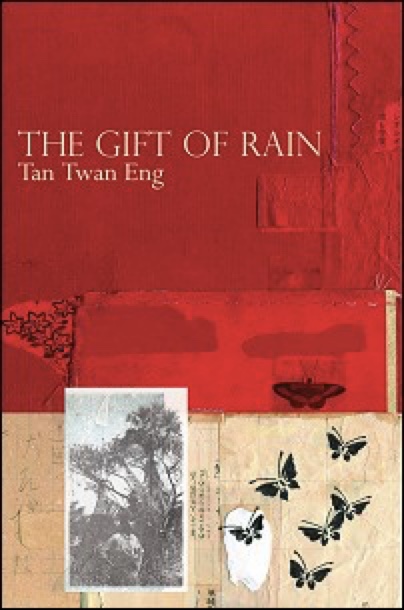
This rambling historical novel spans the period of more than eighty years beginning in the 1920s. It is set in Southeast Asia, chiefly in Panang, Malaya, a British colony until it gained independence as Malaysia in and narrated in the voice of Philip Hutton, the mixed race Chinese-British aristocrat whose family businesses in mining, rubber and timber have thrived and made him very rich. Some of the earlier family history is related to him by his grandfather who worked in the Ching Dynasty’s Imperial Court in the early 20th century. This gives readers a vivid view of the disastrous effects of the Opium Wars and the Boxer rebellion as well as the coinciding paranaoid backstabbing within the Chinese court.
There are many legends, mystical religious rituals to honour dead ancestors, and detailed descriptions of the marital arts that Philip has become expert at, thanks to his seemingly pacifist expat Japanese sensi (martial arts teacher) Endo-San. The anxiety throughout all of the surrounding peoples about Japanese militaristic expansionism and brutality in that era is detailed in Book I, and is fully justified by the gruesome details of the deeds of the Japanese invasion forces revealed in Book II. The invasion took place on December 8th, 1941, the day after the Pearl Harbour bombing. Not for the queasy, the details of the tortures, killings, and ritual suicides are hard to stomach, and are not confined to the Japanese. Still, Philip and Edno-san continue to meet and declare mutual love, raising the speculation among book reviewers about the two single men being gay, although there is no real hint of that in the text. But there is no subtlety to the revelation that at least one of the conquering Japanese Resident Counsellors is a predatory gay man.
The title comes from the likening of his life to the gift of rain by a fortune teller in his youth, and he notes, in his old age, that “ Like the rain, I had brought tragedy into many people’s lives, but, more often than not, it also brings, relief, clarity, and renewal.”
In discussion with his grandfather about the theology of a sixteenth century heretical monk who proposed that our salvation lay in exercise of free will, Philip remarks: “The fact that only certain choices are presented to us, does that not indicate that our options have already been limited by some other power?” The philosophical question of what degree of control we really have over our thoughts, beliefs, and actions recurs throughout the tale.
The writing flows beautifully with no characters unaccounted for and there are many memorable quotes:
“Anger and sorrow walked with me, joining hands with guilt- the three walls of my prison”.
“I have always felt a greater affinity for the sea at night. It is magnificent during the day, the waves strong and loud, slamming onto the beach, propelled by the force of the entire ocean behind it. But when night comes, that force is spent, and the waves roll to the shore with the detachment of a monk unfurling a scroll.”
“It only takes one letter of the alphabet to change reason to treason.”
I found it somewhat difficult to keep all the characters straight, with their foreign names and their shifting loyalties throughout the war, as double agents and betrayals abound. But as an introduction to twentieth century southern Asian history, cultures, geography, and people, this novel is hard to beat. The author has just published a new novel titled The House of Doors, which is now on my list of books to read
⭐️⭐️⭐️⭐️⭐️⭐️⭐️⭐️/10
Thanks, Neil.
If you had a million dollars to give away, who would you give it to?
We already have a charity established to support Doctors Without Borders, so that is my choice.
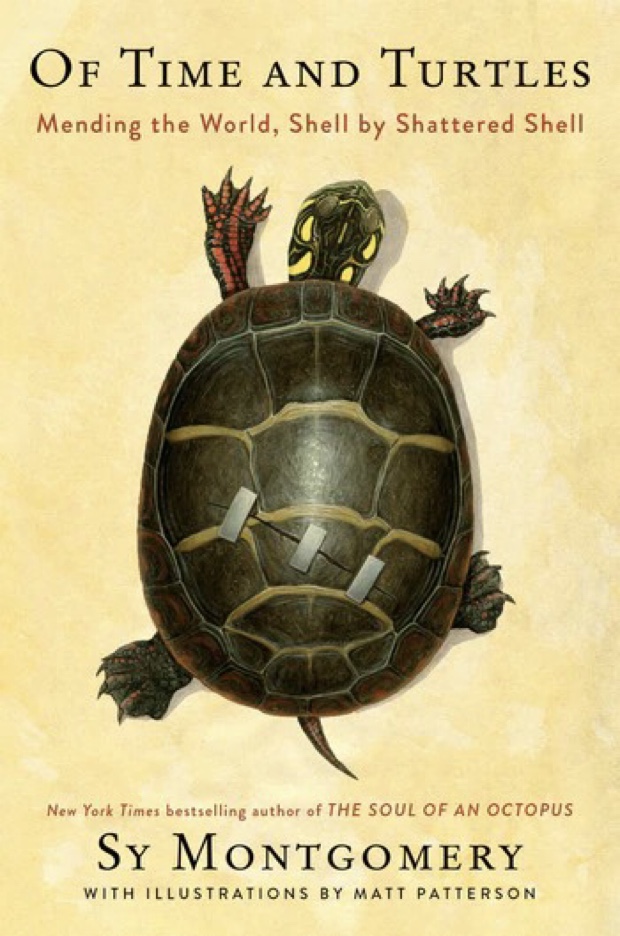
This prolific New Hampshire science writer of more than thirty books usually picks a single species, order, or family and documents their amazing feats. Prior to this her latest book was on octopuses. In this newest one, she enlightens readers about one of the most neglected and endangered reptiles and weaves into the story their importance to all of us and many other forms of life.
There is a very lucrative multimillion dollar illegal trade in all kinds of turtles, usually sold into China as pets, for food or for medical concoctions of unproven utility. This has endangered the survival of numerous species of turtles.
There is very educational information about how we differ from turtles in the way we experience the world, with very different modalities of sensory input. Turtles use two different senses of magnetism to assist them in navigation. Some land-based Musk turtles climb trees! The wintering-over of turtles called brumation, when they bury themselves in the mud in the bottom of a frozen lake or river was new to me. Some paraplegic turtles with completely severed spinal cords can regenerate nerves and regain normal mobility. The lengths the rehabilitation teams go to save injured turtles, such as constructing turtle wheelchairs, seems to know no limits.
The author weaves into the narrative some interesting scientific and philosophical musings about the concepts and the physics of time, which turtles which can live hundreds of years clearly must experience much differently than we do.
Some chapters, while enlightening, have little to do with turtles and deal more with emotional burnout in their human caregivers, brain plasticity, Covid-19, and anxiety about American elections. Two of the turtle rehab women finally come out to the unsuspecting author as transsexuals, but this fact seems peripheral to the thrust of the book.
I am not sure that the author and her fellow dedicated and enthusiastic turtle rescuers have fully thought through the potential longterm effects of their admirable enthusiasm for rehabilitating injured turtles. To keep them from them becoming roadkill or human food seems noble but protecting them from natural predators may harm other species who then suffer from a man-made distortion of the balance of nature. Turtles or turtle eggs are part of the diet of some frogs, fish, birds, raccoons, mink, skunks, foxes and even sharks. Are those turtle lovers interrupting that delicate food chain when they supply turtles with food and resources that many starving human beings desperately need? When they import foreign species of turtles from Asia or South America, are they not risking introducing a foreign species that is destructive to the native ones, (and potentially to us)? Are they oblivious to the harmful environmental effects of travelling long distances by car or plane to rescue a single turtle? We often intrude into the balance of nature without consideration of the knock-on effects. Will this author’s next book bemoan the blight of some other species deprived of their diet of turtle eggs?
Before reading this book, I had occasionally noticed several small snapping turtles in the nearby ponds on my daily early morning walks, but only after reading about their nesting behaviour did I notice the mounds of fresh soil beside the path, with the small round holes beside them, where the hatchlings emerge to return to the pond.
⭐️⭐️⭐️⭐️⭐️⭐️/10
Thanks, Goodreads.

The foundational plot of the poor child makes good novels, at least since the days of Moses in the Book of Exodus and Jesus in the gospels, is the abused or abandoned, unloved and often overworked and starving child who eventually carves out a good meaningful life for himself or herself. In modern times this usually includes a lot of alcohol and drug abuse by the teens and adults, along with unexpected deaths, and serial foster homes for the children as in this fiction set in Lee County in the southwestern Virginian Appalachian Mountains, the author’s home territory. This genre may have been developed most extensively by Dickens in his semi-autographical David Copperfield, which this novel is clearly modelled after. Some such stories are heart-rending autobiographies such as Tara Westover’s Educated, and Huosen Lee’s The Girl With Seven Names, but this one, like Nancy Johnson’s The Kindest Lie, is pure fiction.
Narrated in the first person singular by Damian Fields, nicknamed Demon Copperhead, the orphaned boy tells his story from his birth in the early 1990s (as related to him) to early abuse by a stepfather, and dealing with his mother’s ultimately fatal addictions when he was still a preteen.
After dealing with abuse and child labour in a series of foster homes, Demon is taken in by his high school football coach and becomes a star wide receiver, until he has a critical injury that interrupts his career and leaves him hooked on narcotics. His infatuations with a series of girls leaves him serially sure that he has found the love of his life. The sex with his drug-supplier girlfriend is described pretty graphically and the language throughout the book is hillbilly slang laced with vulgarity-not suitable for reading aloud in polite company.
Almost all of the young characters are addicts, mostly to narcotics, but also to tranquilizers, pot and alcohol. The pill mills, and the nefarious lies of the pharmaceutical company Purdue, makers of OxyContin, are accurately described. The drudgery of coal-mining and the historical exploitation of the locals by the coal companies does not escape notice and blame.
Everyone has an inventive nickname like Stoner, Fast Forward, Maggot, Swap-Out, and Hammer. There are numerous deaths from overdoses and from foolish adventures while stoned. The plot gets complicated as the story progresses, but, somewhat predictably, in the final few chapters, Demon comes clean after a prolonged stay in a rehab program and finds satisfaction and some degree of fame as a talented cartoonist and novelist. The stereotyping of the poor, rural, uneducated, hillbilly rednecks of the southern Appalachians is bemoaned by their more educated urban relatives and neighbours and by Demon after he becomes an urbanite himself, but the whole plot reinforces that stereotype for readers.
What saves this formulaic novel from being a total nonstarter for me is the writing style for which Kingsolver is rightly famous, with vivid descriptions of the people and places. Demon, working as a preteen in a Mini Mart, describes himself as “Mr. Golly’s trash can”, eating all the food heated under lamps but then unsold. Mr. Golly “looked like a little brown tree that somebody forgot to water.”
I previously enjoyed Kingsolver’s Unsheltered and particularly her Flight Behaviour, both much better reads than this one.
⭐️⭐️⭐️⭐️⭐️/10
Thanks, Alana.
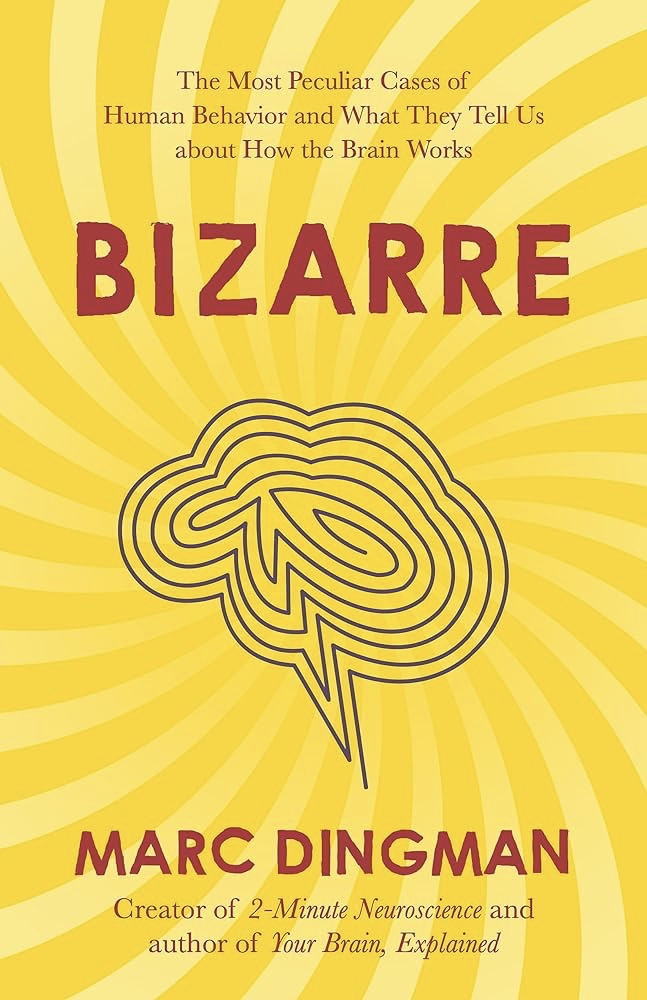
A professor of neurosciences at Pennsylvania University tries to make sense out of some of the weirdest documented actions of human beings by relating them to specific regions and functions of the brain. He does not hesitate to point out the many areas where there are simply no explanations or where the ones which neuroscientists offer are highly speculative and only provide partial explanations.
There are a wide variety of conditions discussed. For example, in Cotard’s syndrome, sufferers become convinced that they are dead, due to a failure of the brain’s ‘plausibility recognizing system’. In Capgras Syndrome sufferers believe relatives have been replaced by strangers and those with it may not recognize themselves and fight with their own image in the mirror. In Body Integrity Identity Disorder, sufferers may seek amputation of a perfectly healthy limb because they find amputees sexually attractive. In the chapter on obsessions, the author discusses being attracted to inanimate objects.
In lycanthropy people firmly believe they have transformed into another animal. Gerstmann Syndrome is characterized by an inability to write, to calculate, to recognize and use fingers appropriately and an inability to distinguish right from left. In Charles Bonnet Syndrome , visually-impaired people experience vivid visual hallucinations as do most others when subjected to prolonged sensory input deprivation. With Alice-In-Wonderland syndrome, people suddenly sense body distortions, becoming minuscule or enormous.
Hemispatial neglect and body schema disorders with weird Latin and Greek names such as somatoparaphrenia, anosognosia, and apotemophilia, are included in the term Body Integrity Identity Disorders. OCD, Savant Syndrome, objectophilia, agnosias, synesthesia, fetishism, Zoophilia, paraphilia, dissociative identity disorder (better known as multiple personality disorder), functional neurological disorder, aphasia, apraxia, aphonia, and alien hand syndrome, are other topics illustrated with examples here. The discussion of the placebo and nocebo effects is enlightening.
The book is logically divided into twelve chapters covering such topics as suggestibility, beliefs, and reality. The author avoids direct discussion of the question of free will which has kept philosophers debating for millennia. Do we have any agency over what we do, believe, and say? He discusses shared delusions, as in folie a deux and marginal religious cults but avoids any suggestion that such mainstream religious beliefs as the virgin birth, the resurrection of the body, and Hindu reincarnation may be shared delusions that represent a failure of the brain’s ‘plausibility recognizing system’. Perhaps this is to avoid offending the many readers with these shared delusions. In places he suggests that the brain is an almost entirely independent organ that tries to integrate and make sense of diverse inputs of information, but in other places emphasizes its integration with the body.
Ever since I had one of my earliest coauthored academic papers published delineating the localization of lesions causing aphasia, I have had an interest in neurosciences. This was reinforced by seeing patients with early hepatic encephalopathy who appeared to be normal but whose spatial apraxia was exposed only when they were asked to write something and would sometimes write in the air above the paper. But one need not be an academic of any sort to understand and appreciate this clearly written book.
A delightful, though-provoking read.
⭐️⭐️⭐️⭐️⭐️⭐️⭐️⭐️/10
Thanks, Bob McDonald of Quirks and Quarks.
List three jobs you’d consider pursuing if money didn’t matter.
1. Join Doctors Without Borders in some capacity.
2.volunteer in a public library.
3. Coach beginner curlers.
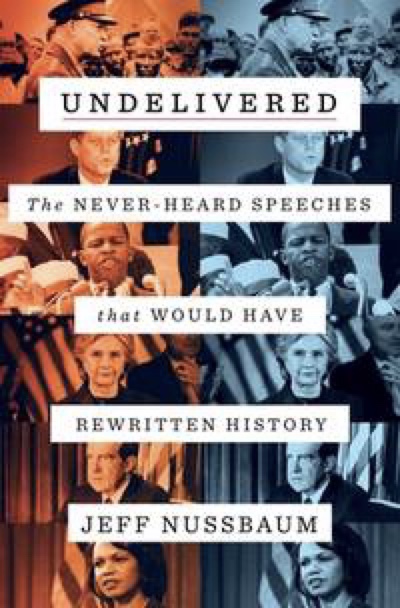
The New York-based former speechwriter for several American politicians including vice-president Al Gore and President Joe Biden, among many other notables, digs deeply into archives to retrieve speeches that were written but never delivered. But strangely, Al Gore”s acceptance speech when he thought he would win the 2000 presidential election is not included. Only three non-Americans are featured: King Edward VIII, Emperor Hirohito, and Pope Pius XI.
Nazi-sympathizer, womanizer King Edward VIII’s 1936 speech refusing to abdicate the throne to marry the equally philandering divorcee, Wallis Simpson, was never delivered but was supported for a time in that decision by none other than Winston Churchill. The chapter on Emperor Hirohito’s undelivered apology for Japanese war crimes comes across as splitting hairs over the nuanced meaning of different Japanese words when translated into English. Among the speeches undelivered because of the sudden death of the intended speaker is Pope Pius XI’s 1939 denunciation of fascism and Naziism at long last ending his warm relationship with Mussolini and Hitler. Others not delivered for the same reason include JFK’s Dallas address, FDR’s Jefferson Day address, and Einstein’s plea for peace and support for Israel. There must be others not cited here.
Most of the actual speeches that were never delivered are contained in the 27 page appendix, not in the wordy speculative text providing the background. Some undelivered speeches such as the powerful one of the aboriginal man, Wamsutta James, at the 350th anniversary of the Plymouth landing are included without any explanation as to why they were never delivered. For some, such as JFK’s undelivered speech announcing a 1963 invasion of Cuba, there is still dispute about who wrote it for the president. Richard Nixon’s 1974 undelivered speech refusing to resign reflects the confusion and chaos of the White House staff that summer.
Condoleezza Rice, George W. Bush’s National Security advisor, prepared a speech to be delivered on the afternoon of September II, 2001 for an audience at Johns Hopkins School for International Studies. The full speech remains classified but it is known that she would have strongly advocated for development of defensive antimissile systems and downplayed the risk from domestic or international terrorists.
In some ways, this is a discourse on the fine tuning of word combinations and nuances of meaning that make for a great speech, or a great piece of writing, that is able to persuade and stir people into action. The discussion of whether to use the passive or more powerful active voice in speaking or writing is ubiquitous in literature classes in all languages.
There are abundant bits of little-known history (mostly American) in this book, but I found it to be very poorly organized and had to frequently jump back and forth from the body of the text to the Appendix, the footnotes, and the bibliography to read in any logical sequence. There is no index to look for where such figures as Wamsuuta James are mentioned.
⭐️⭐️⭐️⭐️⭐️/10.
Thanks, The Atlantic.
 The Passionate Reader