A short review for this short beautiful novel by the acclaimed Irish writer. This is based on the life of an ordinary coal merchant, Bill Furlong, who never knew who his father was, in a small coastal town. His silent internal philosophical musings, as he reflects on doing nothing but working to support his family, eating, and sleeping are actually quite perceptive, He asks quite profound questions about the meaning of his life, like the Peggy Lee song Is That All There Is? “It seemed both proper and at the same time somehow deeply unfair that so much of life was left to chance.”
“Lately, he had begun to wonder what mattered….and could not help but wonder what the days were for.”
His encounter with a postpartum teen girl locked into the convent coal bin from the school for unwed mothers/laundry/jail shocks him into moral reckoning with himself and raises troublesome questions about the whole community almost totally under the control of the Catholic Church. It is based loosely on the real experiences of many of the Irish folk by their troubled relationship to Catholicism and the Madeline laundries operated by it until 1097. No easy answers are provided.
A beautifully written tale that is both simple and profound, inviting and appalling at the same time. Highly recommended.
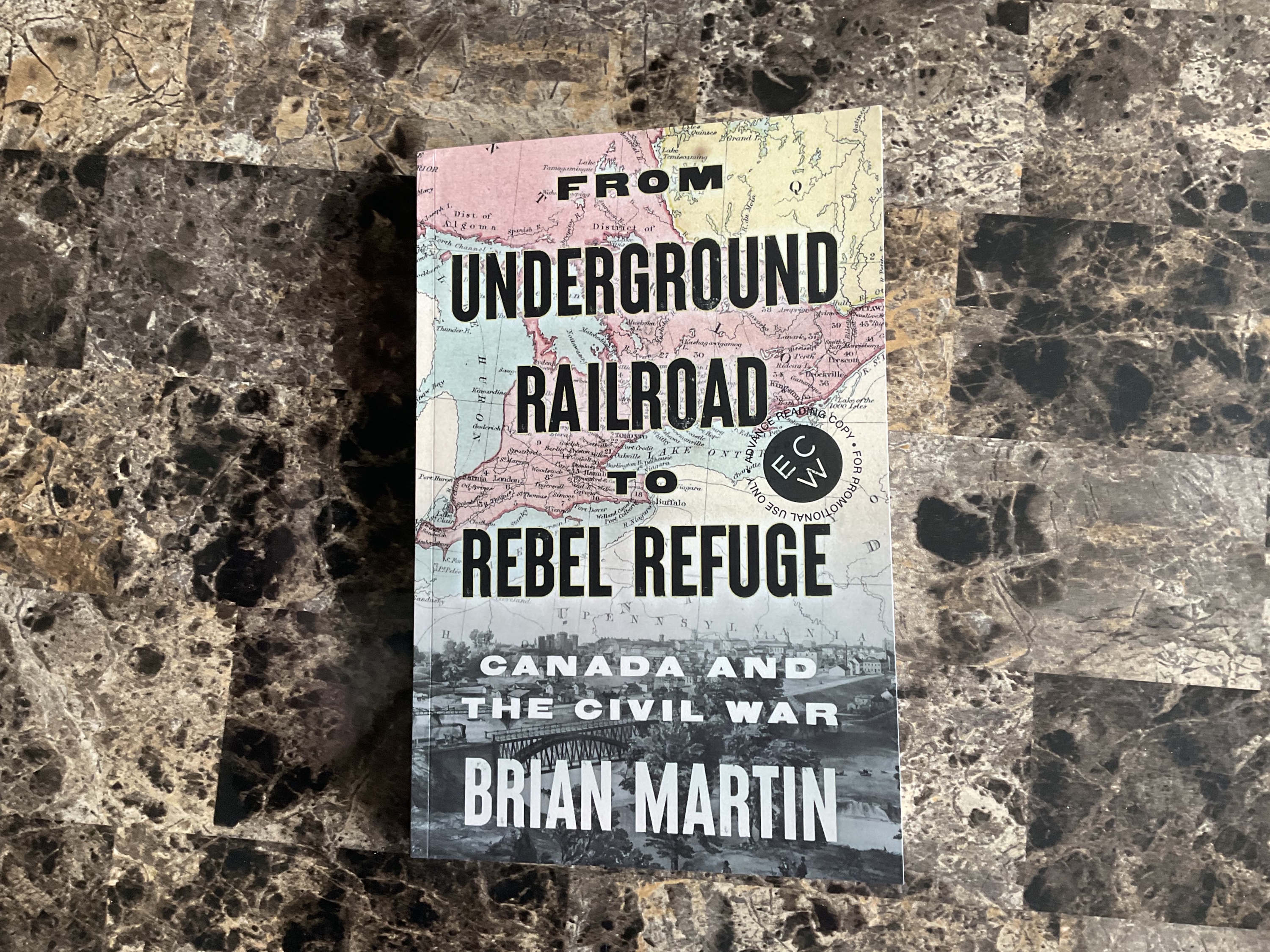
First a full disclosure. Whenever I am very disappointed on reading a book that has been given a rave review by persons unknown to me, I suspect that the review was written by a close relative or friend of the author, or worse, was paid for their praise. Such is the nature of marketing. The author of this history is an journalist/sports writer/biographer/historian, acquaintance of mine from my years in London, Ontario, and a friend on Facebook, but not a close personal friend. We both had previous book published by a small, now defunct Ontario publishing house. When I heard about this book to be published in October, I asked him if I could buy an advance copy for review, and the publicist at ECW Press was kind enough to send a free preprint ‘for promotional purposes only’. But I think I can still provide a relatively unbiased assessment of it. Hence this paragraph written before I even opened the gifted preprint.
Now my review.
All the 1850’s, 60s, and 70s Canadian and American history that we were never taught in high school or even in university, and should have been, is served up here in rich, scholarly, entertaining detail by the London, Ontario journalist/sportswriter/biographer/historian, extending the documentation briefly into the 1930s.
Far from passive bystanders watching the war from ‘America’s attic’ Canadians were intimately involved in far more complex ways than most of us heretofore appreciated. Before the war, Canadians were active participants in providing safe passage for escaping slaves to safety in the free north U.S. and southern Canada via the Underground Railroad. They usually settled in cities and towns close to the border, where they generally, but not always, were welcomed. Lucan, north of London, Ontario, was at that time named Wilberforce, after the British abolitionist.
The 1857 racist precedent-setting Dred Scott decision by the U.S. Supreme Court did much to precipitate the war. (Will another recent similar packed Supreme Court decision precipitate the next one?) Canadian adventurers, dedicated idealists, abolitionists, white supremists, many with American relatives and a few duped, drugged, or hijacked youths joined American forces on both sides and thousands of them never returned home. At least a few Canadian women disguised themselves as men to enlist on one side or the other to take up arms, probably unintentionally killing fellow Canadians. The border crossings, particularly at Detroit and Buffalo, became two-way thoroughfares with Canadians heading south to fight and thousands of Americans of various stripes, and for various reasons finding a usually friendly welcome in Canada. It was not just people who used this highway- farm produce from rich southwestern Ontario soil and fabric from its urban factories crossed the porous border with compliant, bribable guards to feed and clothe armies. Of particular interest to me was the arc of Bennett Young’s life from childhood poverty in Kentucky to Confederate soldier, to leader of a raid on St. Albans, Vermont from Lower Canada (Quebec) in an attempt to drag Britain into the war. He became a fugitive after the war living in Canada with clusters of former fellow Confederate bigwigs in sympathetic towns and cities. After education in Europe he then returned to Kentucky and a thriving law practice and founded Eastern Kentucky University where my daughter teaches theatre arts. Small world!
The various attempts by the Confederate forces to drag Britain into the war and open up a northern battlefront against the Unionist army fighting them in the south was a serious concern to Canadians in what was then pre-Confederation Upper and Lower Canada, as was worry about being annexed to the States at various times, a serious proposal endorsed by Lincoln’s Secretary of State, William Seward among others. Following the war, impoverished southern plantation owners deprived of their slaves, some of them former Ku Klux vigilantes (the forerunner of the KKK) found their way to Canada spewing hateful racist language, many of them setting in London, Ontario, where they thrived. Several families of them are buried under big monuments on Millionaire’s Row in Woodland Cemetery.there. Jefferson Davis, president of the Confederate State during the war, found temporary refuge in Montreal after it ended. John Wilkes Booth hatched his plans to kill Abe Lincoln in Quebec. The late attempts of a newer KKK to establish cells in Canadian cities succeeded briefly in the 1920s but floundered in part because the racist anti-Catholic Loyal Orange Lodge “had effectively cornered the market on bigotry…”
The book is divided logically into three parts covering the periods in the 1850’s just before the war to during it, and then after the war during Reconstruction. The writing is straightforward easy prose, and while there are far more names and places than I can possibly remember, there are also a surprising number that I am familiar with as many of the towns, streets and family names are common around southwestern Ontario.
I hope this enlightening book will become available in ebook and audiobook formats, as it can easily be widely appreciated even without the helpful photographs and maps.
This should be obligatory reading for serious Civil War, Canadian and international history buffs; I highly recommend it even for the Canadian and American general public as well. I learned a lot of unique Canadian history and enjoyed it immensely, something I cannot say about my high school history class.
The author, a Senior Research Associate in Surgery at University College London, divides the discussion chronologically and logically starting with mythological transplantation in the ancient world in the Prologue, then chapters dealing with skin in the ancient world and dark ages when noses were often reconstructed after being lost in conflicts (and later from syphilis), then Blood, first from animal to animal, then from animal to humans, then Teeth, then Organs -kidneys and hearts. There are no separate chapters for the numerous other organs that are now routinely transplanted, including livers, lungs, corneas, pancreases, islet cells, heart valves (usually from pigs), corneas, bowels, bone marrow, and stem cells. And the old adage that xenotransplantation (transplanting animal organs into humans) is just around the corner and always will be is no longer true, with some limited successes.
Many pioneers in transplantation were masters of self deception, seeing the impossible results that they hoped to see, such as the success of Europeans grinding up and eating dried skin of Egyptian mummies restoring their youthful appearances. The power of the placebo effect was not widely appreciated until the 1950s.They skirted issues of ethics such as the cruelty of vivisection, the economics of sale of organs, and use of organs from executed prisoners, some of which still plague transplant medicine in places.
In the mid 1600s there was intense rivalry between the English and the French over animal to human blood transfusion with opponents of interfering with the natural life forces symbolized by blood in both groups. Rivalry for the fame to be first continues to plague and impede progress in most areas of most sciences.
“ But 17th century transfusions were never supposed to provide a replacement for lost blood. The blood itself, still entangled with ancient humoral and religious ideas, was rather a vehicle for something “intangible and unquantifiable like youth, meekness or strength.”
Old vigorous philosophical debates about vitalism vs mechanical explanations of life that have wide implications are discussed in some detail here. Is the soul separate from the body? Pessimistic Hobbesian views of men lacking authoritarian control, even of their thought processes, living lives that were “solitary, poor, nasty, brutish, and short” crept into all developing fields of science with restrictions handed down through rigid hierarchy and church dogma, limiting what one was permitted to research or even think about.
“…during this time we went from seeing ourselves as essences to seeing ourselves as compositions.” Who “owns” my body?
The 54 page long chapter on teeth provides an intro to the world of the history of dentistry, first with dispensing of the belief in the nonexistent tooth worm as the cause of all dental problems. The cosmetic use of transplanted teeth from animals, poor children, and serfs to enhance the smile of both French and English social climbers in the early 1700s, presages the frowned-upon modern practice of selling organs for pecuniary gain. The 18th century also was when the separation of dentistry from mainstream medicine became established. Many “tooth drawers” were charlatans of various dubious backgrounds, performing extractions in public displays for profit. In view of these ethical considerations, the fact that few dental transplants worked seems irrelevant.
The fame and esteem of the collaborators Alexis Carrel of the famous Carell vascular patch fame and Charles Lindbergh in developing an organ perfusion pump, the precursor of the heart lung machine, is marred by their 1936 mutual enthusiasm for Nazism, racism, and eugenics.
I encountered dozens of familiar names from the history of medicine, going back to Galen, and learned details about them never taught in my history of medicine course. I was a tad disappointed that there was only one sentence about liver transplantation, the most technically challenging of all transplants.
I once met the late haughty, egocentric, playboy, Christiaan Barnard on his 1969 world lecture tour, touting his as the first human heart transplant, and got to know the humble and gracious Sir Roy Calne at liver conferences and on his visits to his illustrious former trainee, my colleague, Dr. Bill Wall at Western.
This is a very enlightening scholarly book on a subject dear to my heart. (Oops! There is one of many ingrained phrases falsely identifying the heart is the seat of emotions.)
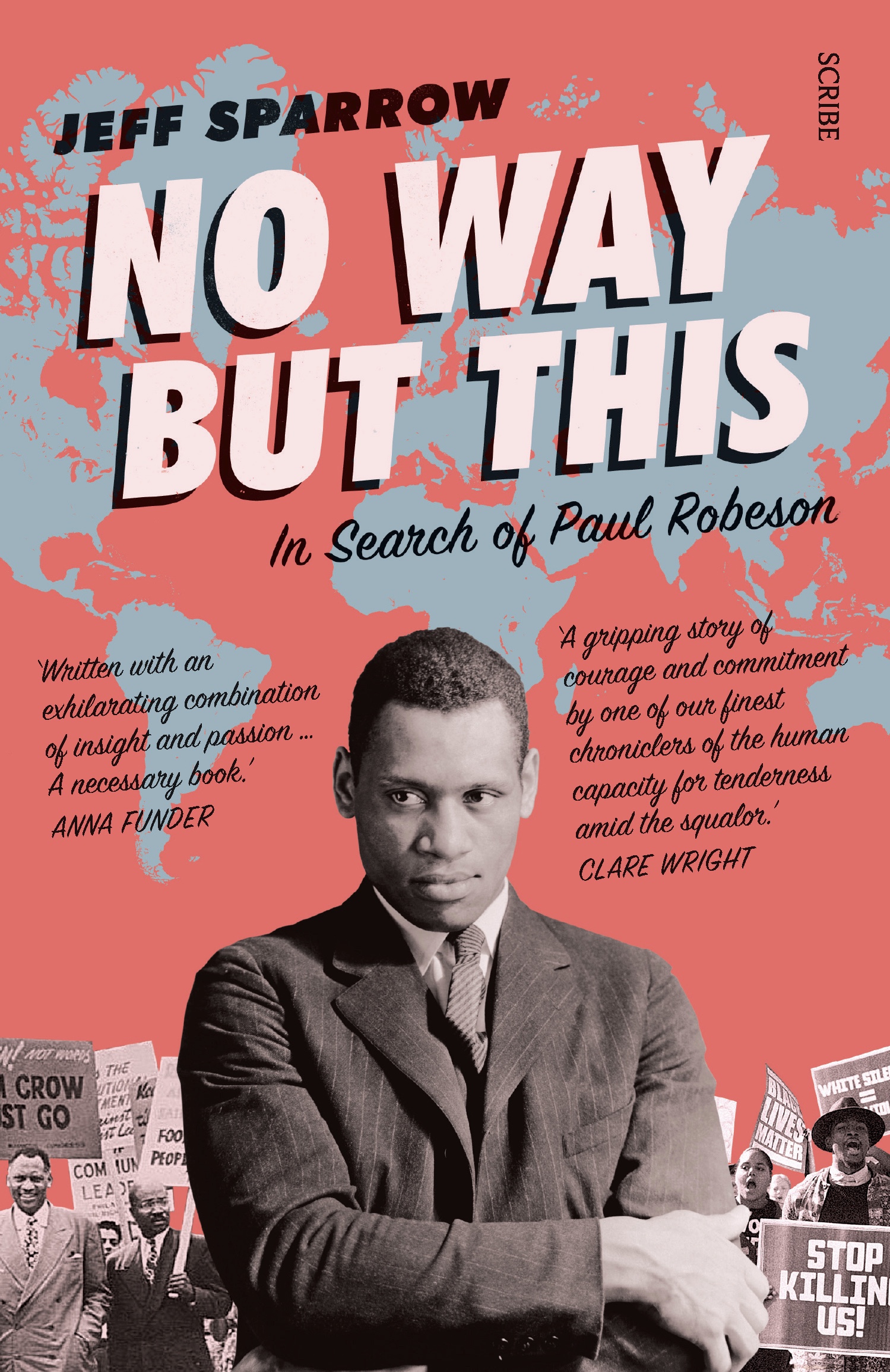
When I ran out of available appealing books to read recently, I searched for something about Paul Robeson, as he is one of my heroes . I had only vague memories of reading his 1958 autobiography and polemic, Here I Stand, many years ago. When I listen and watch him singing on one of many platforms, particularly his various renditions of Old Man River, from Showboat, as I have many times, it always brings tears of joy to my eyes and a chill up my spine as I marvel at his deep bass reverberating voice. His handsome face and expressive gestures as he sings are, in my opinion, unparalleled in the world of theatre, so I yearned to learn more about him-his radical political views, his unflinching championship for all oppressed people, his illustrious acting, including controversial stage productions of Othello, his championship sports career at Princeton and Rutgers and his private life, of which I knew only snippets. I had not realized that many of the songs and stage roles were changed as they were vilified as racist or politically unacceptable by both the blacks and whites and by the left and the right alike, until I read this book. It seems that the minefield of political correctness is not new.
He can be viewed as the successor of such black leaders as John Brown, Frederick Douglas, and Washington T. Booker and the forerunner of Malcolm X and Martin Luther King Jr. but on a more global scale. He championed the cause of Welsh coal miners, Australian construction workers, and the Republicans fighting the Fascists in the Spanish Civil War, where he risked his life to entertain and encourage the troops.
Put in the context of his poverty-stricken background as the son of a former slave who became a starving clergyman, and his experiences with overt American racism, his endorsement of communism that resulted in him twice losing his American passport and to hounding by McCarthyite red baiters in the 1950s is entirely understandable. He never denounced communism, but his late recognition of the terrors of Stalinism probably contributed to his late-life angst.
But he was also human, experiencing marital difficulties, yielding to temptations for affairs with numerous women who were seduced by his unequalled charisma, experiencing severe depression when one of them, British actress Yolanda Jackson, backed out of plans to move to America and marry him after he obtained a divorce. The divorce never transpired, although he and his wife thereafter led largely separate but supportive lives. He had some elements of the imposter syndrome, doubting that he deserved his fame and wealth. Late in his career, he experienced many further episodes of severe suicidal depression before succumbing to a stroke at age 75.
The Aussie author’s format of the book is to relay to readers the details of his own travels around the world as he tries to retrace those of his subject. But this fails to follow Robeson’s life accurately chronologically. The details related to the lives of those travels and interviews with locals who could shed light on Robeson’s life are distracting, and largely irrelevant. The first section of 95 pages presents a somewhat confusing maze of his family history and background history of slavery in the North Carolina, his youth in segregated Princeton, his athletic career there and at Rutgers and his rise in Harlem, mixed in with comments about current American racial conflicts.There is extensive name-dropping as Robeson’s encounters with the rich and famous in the arts and politics are recounted.
Although I learned a lot of world history, particularly about the Spanish Civil War, from this book, I was a bit disappointed in this biography because of the author’s lack of focus on his subject and inclusion of a lot of his own irrelevant personal details.
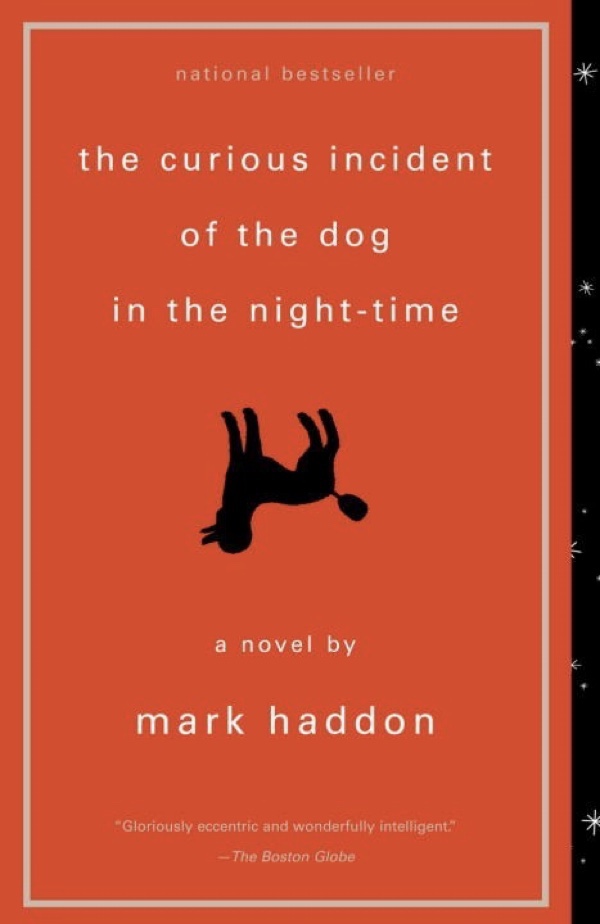
I am not sure when or how this novel, now also a TV movie that I have not seen, came to my attention. A 15 year old Swindon boy with autism and some combination of ADHD, OCD, and a hint of paranoia, is a student at a special needs school, living with his widowed father. In his night wandering he finds his neighbour’s dog named Wellington dead on her lawn with a garden fork through its body. He undertakes a detective search to find the killer, disobeying his father’s specific orders. To him everything is related to the precision of mathematics, sciences, and linguistics, as he is limited to literal logical thinking but is a genius in those fields. As the narrator, dreaming of becoming an astronaut, he is very precise in his likes and dislikes. He has a photographic memory and an aversion to anything yellow or brown, explaining these quirks in detail.
With impeccable logic, he cites historical details and old literature provides quirky interpretations, including a superb explanation of the meaning of Occam’s razor. By chapter 137, (In keeping with his mathematical genius, the chapters are numbered by prime numbers up to 233 rather than sequentially.) the plot becomes very complex and unpredictable with his late discovery of multiple enigmatic long letters addressed from a London address (that he naturally commits to memory), to him from his supposedly deceased mother, dated long after she died, among other twists that I won’t divulge.
The Oxford author has an uncanny ability to characterize the mental processes of the autistic idiot savant genius with his need for ritualistic unvarying routines and for the difficulties encountered by those living with them, to the point that I suspect that he has had close experience with such an individual. The narrator of the audiobook totally nails the dialects and voices. Although there is a lot of foul language and shouting, this seems to fit with the uncouth characters doing the cursing and shouting. The writing in the first person singular is mostly in the typical short dialogue and observations of an idiot savant. Likewise, the unusual gestures of someone with autism and OCD such as head banking curling up on the floor, and aversion to any intimacy or touching are frequently described. It reminded me of the films The Rain Maker and Forest Gump.
I really, really enjoyed this read and devoured it in one day. I will recommend it to our book club.
With our Rogers connection down last week, unable to figure out how to navigate my new iPad to download my digital subscriptions and the library not providing for downloading of e or audio books, I scanned our book shelves for something to waste my time on and this one sure is a waste or time. I can hardly believe that it survived our downsizing move five years ago. I suspect that it was a gift from my daughter ages ago, one I had not even checked out. Someone had yellow highlighted several sentences.
Long on ethereal, banal platitudes, parables, and allegories with no easy interpretations, and a lot of utter nonsense, at least this, unlike the Christian Bible and the Islamic Koran does not encourage followers of Buddhism to wage war against nonbelievers or against nature. The many fables with magical features never made any sense to me unlike Aesop’ fables. And it does not imply that Buddhism is the one and only true religion, nor does it claim exclusive insights and guidance. Like much of the teaching of Islam, there is a heavy emphasis on spiritual striving for perfection. There are abundant blatant inconsistencies and contradictions that I doubt can be explained away by difficulties in translation from Sanskrit to English.
Buddha is described as a fifth century B.C. aesthetic prince from central India or alternatively as an eternal spiritual presence within everyone and all of nature or a state of Enlightenment achieved by few. What seems clear is that he (women barely rate a mention in this book) was not one discrete individual unlike the founders of Christianity and Islamism. And as in all religions, Buddhism is not one religion, but many sects with different outlooks, as one would expect from any belief system based on oral traditions that became written texts only centuries after their founding. There is only passing reference to an afterlife, but I guess one does not need advance detailed description of what is in store for you if reincarnation is universal- just wait for the surprise. Unlike most flavours of Christianity and Islamism, there is apparently no expectation for aggressive evangelism but there are long lists of negatives to avoid.
“If the three ways of practice are analyzed, they will reveal the eightfold noble path, the four viewpoints to be considered, the four right procedures, the five faculties of power to be employed, and the perfection of six practices.”
Two more nonsense quotes and one of dubious advice:
“This conception of universal oneness- that things in their essential nature have no distinguishing marks- is called “Sunyata.” Sunyata means non-substantiality, the in-born, having no self-nature, no duality.”
“ The delusions of reasoning are based upon ignorance and the delusions of practice are based on desire, so that the two sets are one set after all and together they are the source of all unhappiness.”
“One must not kill any living creature.” Does this include insects and microbes that bring us disease? This admonition is later modified to include only sentient creatures. But determining which species are sentient is problematic. What do you eat if you do not kill any living creature?
This volume does convey hard to follow, common sense bits of advice on how to maintain your equanimity in the face of the slings and arrows of outrageous fortune but there is nothing of great importance. It’s message was even more lost on me than Jean-Paul Sarte’s Being and Nothingness. I cannot recommend it for anyone who already has a smidgeon of common sense.
Perhaps to round out my religious education, I should study texts of Hinduism, Shintoism, Sikhism, Judaism, or Zoroastrianism, but that is not likely to happen. Thus endeth today’s rant.
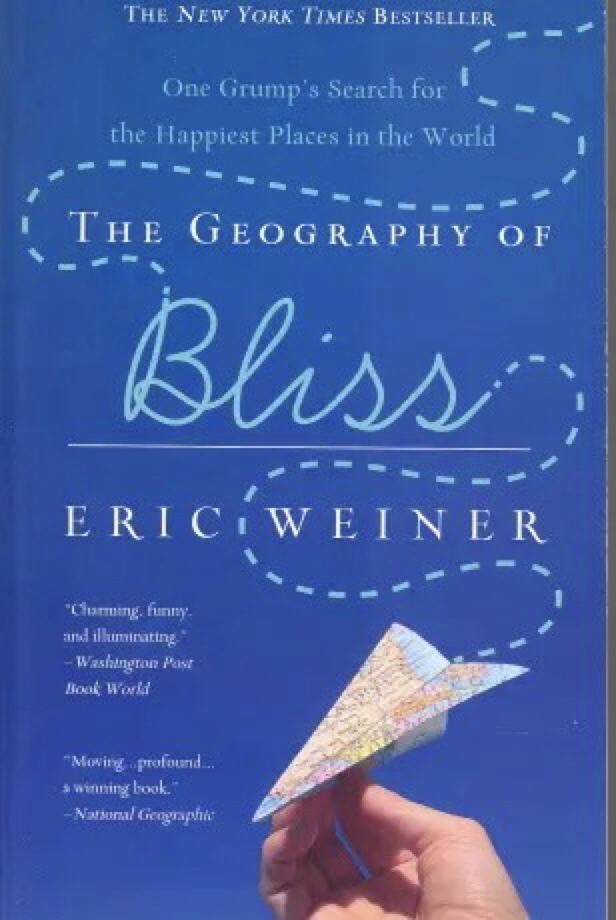
The grumpy self deprecating Miami-based NPR journalist goes on a personal quest for the source of happiness, visiting many countries, and interviewing locals and experts on the study of happiness. There is a surprisingly extensive scientific literature and research into what makes people happy and several official listings of countries based on data collected from surveys, the most common one being the World Happiness Report, updated annually.
Holland, Switzerland, Moldavia, Bhutan, Kuwait, Qatar, Iceland, Thailand, India, Great Britain and his native United States are the main countries he visits and discusses, but he includes notes and quotes from philosophers, scientists, and academics from many others, old and modern.
The very different cultures and norms of the countries he visits are captured with informative characterizations and unique comparisons.
He only obliquely acknowledges the problem of establishing linguistic equivalence of words for various emotional states across different languages, and the limitations of data comparisons based on the demographics of populations surveyed and the survey questions. One Moldavian interviewee claimed that happiness and unhappiness coexist in his brain. (I guess that is possible if one is fond of moroseness.) In English there are far more words to express unhappiness than for happiness.
The cultures of the countries he studies are described accurately as far as I can tell having only spent any appreciable time in three of them (Thailand, Qatar, and the U.S.) I enjoyed reading about the dour, trusting, humourless Swiss, the permissive Dutch, the morose despairing Moldavians, the happy atheistic weekend drunks of Iceland with many myths, the uptight regimented stiff upper lip Brits and the surprisingly happy spiritually-minded Indians, although these are all obviously generalizations and at best only a snapshot at one point in time.The Bhutanese monarchy encodes a dress code for men and the pursuit of Gross National Happiness as government policy.
The writing is full of apt analogies and metaphors with quirky twists. In an Indian Hindu ashram the lotus position is described as the HOV lane to bliss.
“God is currently not taking complaints. His inbox is full.”
“The problem with finding paradise is that others that might find it too.”
“Soviets did for architecture what Burger King did for fine cuisine.”
There is at least one error common to U.S. writers. The U.S. is described as the wealthiest country on earth. By any conventional measure Qatar is wealthier and has been for many years.
To check out the ranking of countries on the World Happiness Report go to World Happiness Report 2022. As usual, Finland is #1 with other Nordic countries, and Iceland, Luxembourg, Israel, and New Zealand also in the top ten. Canada has fallen to #15 of 145 but is still ahead of the U.S., Great Britain, Australia, and Ireland.
As an amateur but avid if only mediocre fly fisherman and fly tier, when I came across this new title reviewed on Goodreads, I knew I had to read it. The cover picture alone was enough to entice me to borrow it from the library. The B.C. environmental journalist conveys an infectious enthusiasm for fly fishing and his love of the outdoors with great elan.
The trajectory of his fishing experiences starting as a preteen with a homemade pole and dew-worms attached to a hook on a string, then progressing to spin casting and then to fly fishing mimics my own fishing history and probably that of most fly fishing aficionados. Many of us then become conservationists practicing catch and release fishing and championing the wider cause of protection of nature, opposing clearcutting of forests and lamenting the decline of the appreciation of our connection to all of nature. I related to this so intimately that I feel at liberty to tell some of my own fishing experiences, and adventures in the natural world, which were and are much less expert than his. For example, we found the biggest fattest dew worms by overturning the half-dry cow manure droppings in the pasture on the way to the stream where we fished with willow sticks, strings, and dew worms as he did.
As a teen, in the spring, we netted hundreds of small smelt that are similar to west coast Eulachon in the shallow Leigth River outside Owen Sound, bringing buckets full of them home, and gutting them by secretly putting them through mother’s old hand ringer on the washing machine. (The bones are soft enough to eat and mother cooked them well.) Both species are now greatly depleted.
Hume addresses the ethics of inflicting pain on fish when their mouths are pierced by a hook. He often uses barbless hooks to minimize this. When I joined the Humanist Association of London and Area and revealed that I had a fly fishing addiction, some members expressed dismay that I was being cruel to fish. I pointed out that I usually practiced catch and release, often with barbless hooks, and thought that the fish were so overcome with relief and joy when released that any pain from the hook was forgotten. And the whole question of whether or not they feel pain from the hook is debatable. I have several times caught the same fish on the same fly within a hour, hardly a ringing endorsement of their memory of painful experiences.
When I am fighting a trout, salmon, or bass on a fly I have tied, all the problems in the rest of the world seem trivial and are forgotten for a while until I can make eye contact with that beautiful creature.
I am familiar with and have tied and used many of the flies he describes tying and using, and the casting techniques he describes although some of the flies used in eastern rivers and lakes differ somewhat from those that work in the west, and the possibilities are endless. One of my favourite effective flies that I tie for trout and steelhead is one I invented that I call ‘roe caught in river snot’. He never mentions the difficult double haul casting manoeuvre for long casts that I have only partially mastered.
I never was able to instil a love of fly fishing in my daughters as he did with his, although my busy son goes with me on fly fishing outings whenever he can. I share the author’s concern about the destruction of the natural world, the decline of fish populations, and global warming. But I am more wary of wild predators than the author was, careful to yield to bears whenever I encounter one fishing in the same river as I am and have only once encountered a mountain lion in the wild.
The last 55 or so pages relating his fear of dying, anxiety as his daughters leave home for university, his prostate cancer scare and depression and dealing with the death of his mother and friends is a tad too sentimental and introspective for my taste.
The writing flows naturally like a quiet trout stream with natural twists and turns, deep pools interspersed with faster sections. One need not be a fly fisher to enjoy this beautiful memoir, as the technical aspects of the sport I love are kept to a minimum.
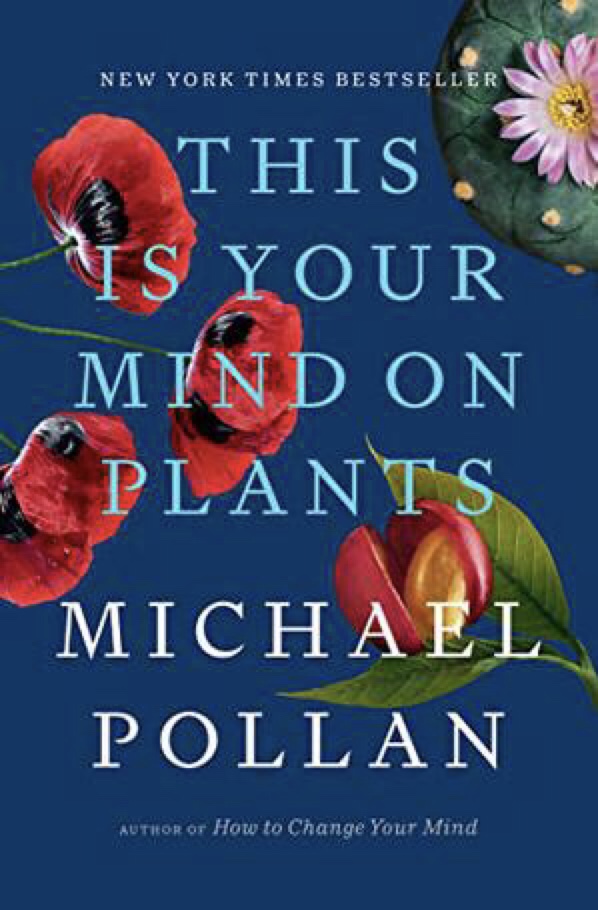
A quote from page 4 of the Introduction provides a hint of what is to come: “Evidently, normal everyday consciousness is not good enough for us humans; we seek to vary, intensify and sometimes transcend it and we have identified a whole collection of molecules in nature that allow us to do that.” Of the dozens of plant-derived mind-altering molecules, he chooses to discuss only three with which he has personal experience, namely opium, caffeine, and mescaline. He doesn’t completely ignore the longstanding love/hate relationship of humans to alcohol, capably discussed in Edward Slingerland’s 2021 book Drunk, and sees similarities between the hypocrisy of the 1990s ‘war on drugs’ and the 1920-33 prohibition laws.
The bulk of the discussion of opium is a reprint of a long article he had published in Harpers in 1996, with an added Prologue, an Epilogue and a section that he had deleted from the original for fear of litigation. A dedicated gardener living in Cornwall, Connecticut and Berkeley, California, he grew a variety of poppies whose seeds yield opium, a mixture of narcotic alkaloids, mostly morphine and codeine, in his garden, the seeds legally obtainable from a variety of seed catalogues. This was just when the Drug Enforcement Agency was ramping up their ‘war on drugs’ after the ‘war on poverty’ and before the ‘war on terror’. When will the U.S. government abandon military analogies to address their social ills? Criminal charges with heavy penalties and long jail terms were handed out to growers of such poppies even though they were bought legally and usually planted purely for their beauty. He notes that this was also the time when the Sackler’s Perdue Pharmacy, with FDA approval, was aggressively promoting their OxyContin with false claims of safety. That lead to the ongoing opioid epidemic that has killed thousands of Americans annually, though no Sackler has been put into prison. Only after the statute of limitations made it impossible to prosecute him, did he admit to a one-time use of the poppy seed extract as a tea which he found to be very bitter and the high not very euphoric and included that experience in this update. But one can still obtain narcotics by extracting them from legally grown poppies or from grocery store culinary seeds. But the rate of arrests for violation of drug laws in the U.S. has barely changed from 1,247713 in 1997 to 1,219,909 in 2019, not all related to narcotics.
The 62 page chapter on caffeine is equally loaded with multiple ironies. The history of how coffee and tea came to rule our daily lives, the exploitation of growers by imperial powers, and the positives and negatives of caffeine use in different cultures are explored in detail. His interview with fellow Berkeley researcher, Matthew Walker who wrote the insightful Why We Sleep is a wake-up call (pardon the pun) to the widespread prevalence of poor sleep quality and quantity in part attributable to the pharmacological effects of caffeine on our brains.
As the effects of his three month self-imposed abstinence from coffee take effect, Pollan notes: “I came to see how integral caffeine is to the knitting of ourselves back together after the fraying of consciousness during sleep.” There is no doubt that caffeine is an addictive drug even to bees that selectively pollinate plants that seductively lace their nectar with caffeine. In a Darwinian world do we or coffee plants benefit more from its addictive properties?
The final section on mescaline was a bit disappointing for me. Although there are reasonably well-controlled trials showing some benefits to the use of LSD and psilocybin in certain psychiatric conditions and addictions, there are none comparing mescaline to a placebo as far as I can tell, although a phase 1 trial is underway in Switzerland. Mescaline is readily available from several cactus species but can only be legally consumed, at least in the U.S., if you are a Native American on a reserve, and a member of the Native American Church, where it is used in sacred rituals. Nevertheless the author consumed it at least twice. He completely avoids discussion of the mechanism of mescaline effects on our brains but describes the effects in detail using woo woo mumbo jumbo spirit-world jargon that left me with a determination to avoid it at all costs. As a life-long scientist, my brain as long been programmed to linear concrete thinking and a world where plants give us advice and see and hear us is too foreign to take seriously.
The writing is scholarly and detailed that kept me fully engaged and I learned a lot. It is also very limited to a United States perspective. I have no idea what the legal status of mescaline or growing opium-producing poppies is in Canada.
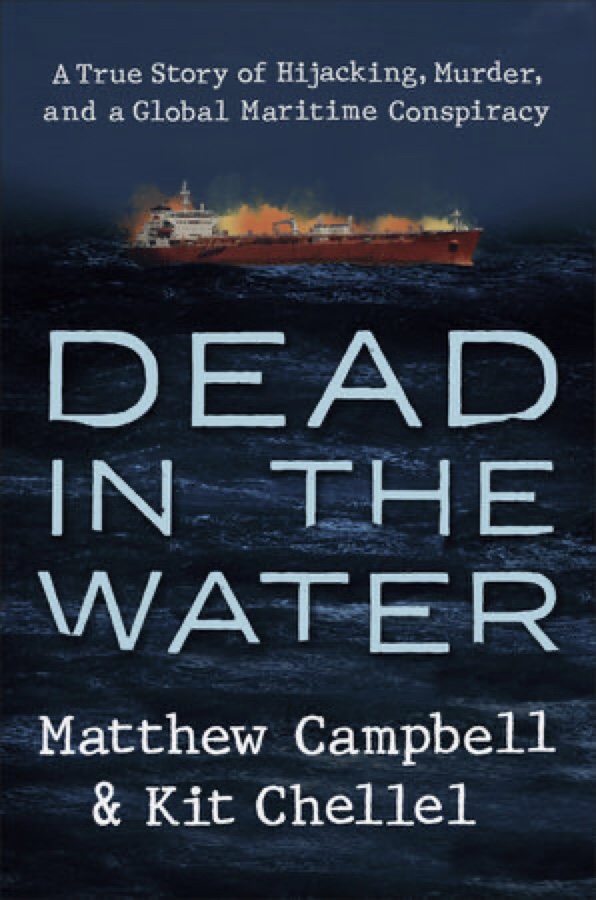
After the tanker Brilliante virtuoso with 100,000 tons of Ukrainian crude oil on its way to China was attacked and incapacitated off the coast of Yemen on July 5, 2011, unanswered questions piled up. By about one third of the way through this true crime murder mystery, most readers will begin to suspect that it was an inside job with some crew member(s) with criminal connections intimately involved.
The two Bloomberg BusinessWeek investigative reporters relate a tale of international intrigue and crime more complex than most spy novelists could dream up. This includes at least one murder, that of a British businessman working in Aden. The complex inner workings of stodgy Lloyds of London is exposed in a far from flattering way. Contrary to conventional characterization, Lloyds does not sell insurance but simply facilitates sales for a myriad of other ‘underwriters’. Corrupt lawyers, accountants and bankers, shell companies that conceal true ownership, fraud, conspiracies, tax evasion, and international criminal gangs were all involved in the carefully planned fate of the tanker, disguised to look like a pirate hijacking gone wrong, and it was almost certainly not the first planned maritime insurance fraud. The Greek oligarchs that are ultimate owners of much the modern cargo fleets, often registered in tax havens, are depicted as a cabal of amoral greedy thugs, although the authors do not state anything negative about the late Aristotle Onassis.
The most depressing conclusion for me from reading this tale is the suggestion that in the rarified realms of international shipping, banking, and insurance, crime pays big dividends and is seldom punished, and justice seldom prevails. The world isn’t fair and one should not expect it to be. Perhaps the fate of Hong Kong’s famous Jumbo Floating Restaurant which was losing money, is the latest attempt at marine insurance fraud.
The writing is straightforward and logical with easily understood time lines, although it takes careful reading to keep the names and roles of the many international players straight. This book will not suit many reader’s tastes but is enlightening and I quite enjoyed it.
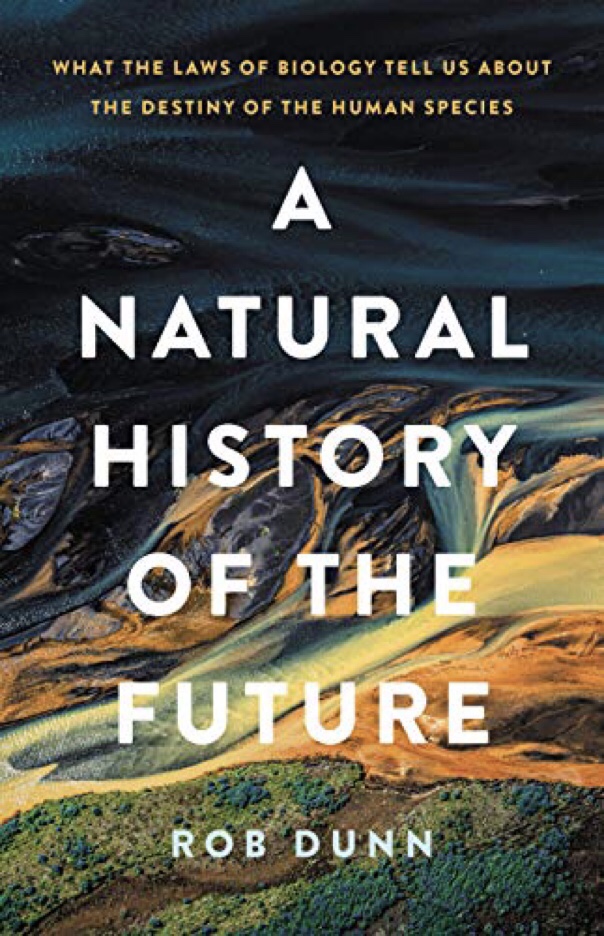
After reading a review in The Economist, I borrowed the 680 page Legacy of Violence by Caroline Elkins, a history of the British Empire, from the library. But after the first 50 pages, I found it to be the perfect cure for insomnia, a condition I have never experienced. Ergo, I returned it and downloaded the audio edition of this book instead. At least this is not entirely about the history of human cruelty to other humans. The North Carolina State University evolutionary biologist speculates about the effects of all the damage we have wrought to the planet and other life forms and what will emerge in the way of new life forms as a result.
The topics discussed are wide-ranging from the Mesopotamian and biblical stories of floods (Noah as the ultimate conservationist) to the rate of mutation of fast reproducing microbes and the demise of rubber production because rubber trees may become extinct within a generation.
Millions of species will have to move to find new islands of suitable ecology for them to survive and many won’t be able to. The concepts of limited niches for all life forms and of conservation corridors that we can somewhat facilitate as those change are hardly new. But the urban corridors are of limited value for many immobile species. We inadvertently provide transit corridors for smaller species such as microbes that can move with us in cars, trains and planes.
Some of the so called laws of nature cited seem to be just common sense restated. It is hardly new to point out that diversity in crops with evenly distributed portfolios of different plants and crop rotations are good for stabilizing the environment. The ‘law’ of escape from predators may express a fact of natural evolution, but we are often ignorant about what eats what.The hour-long chapter on bird adaptations is reminiscent of Jennifer Ackerman’s The Genius of Birds. The long list of diseases attributed to birthing by Caesarian section and the resulting lack of maternal microbial transfer seems exaggerated to me and may conflate correlation with causation. There are stretched analogies such as that of antibiotic resistance in E. coli bacteria and broken levees on the Mississippi. Seeding humans with microbes that we need from seed banks and knowledge of our unique genomes would seem to me to be risky and far-fetched and hardly compatible with leaving nature undisturbed.
The audio book is limited in that readers obviously lack access to the charts and graphs that the author refers to. The very expanded tree of life that is available as a PDF document includes some very odd organisms; we, and our hominid relatives are out on a very small vulnerable twig on that tree. “Our end is far nearer than the end of nature.” (The end of nature would seem to me to be a philosophical imponderable.)
There is a hectoring tone as the author bemoans all the damage we have done and continue to do to nature rather than provide insights into the future as suggested by the title. The narrator’s somewhat monotonous voice must invite many readers to nap as the story continues. Overall, although it provided a fresh perspective and I learned a few bits of new information, I was disappointed with this book.
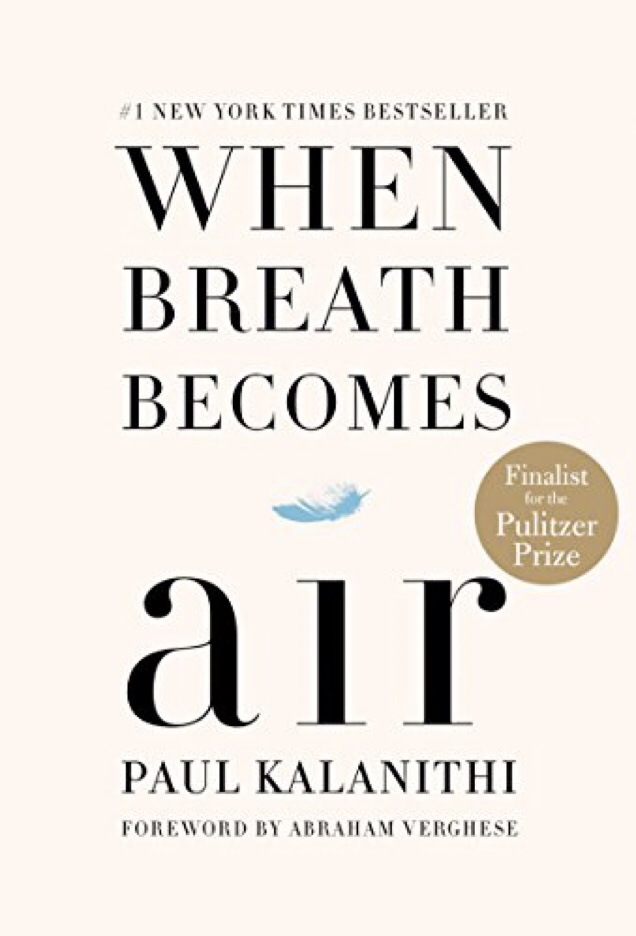
Born into a family of wealthy, privileged, American doctors, the late author of this autobiography was educated in classics, languages, and philosophy at Cambridge and undergraduate medicine at Yale. He married a fellow Eli, an internist now at UCLA, then pursued a career in academic neurosurgery at Stanford.
In Part 2 he waxes eloquently philosophical as he contemplates his own imminent death. Quoting poets and philosophers, he rejects determinism and, despite his experience seems to endorse the existence of a mind, or soul separate from the body. Paradoxically, at least from my viewpoint, he abandons scientific atheism and returns to a fervent if ephemeral Christianity in spite of the raw deal any hypothetical deity has dealt him, noting the limitations of what little meaning to life science can impart. However he never expresses any view about an afterlife. Unlike the advice given by fellow neurosurgeon Henry Marsh in Admissions, the author pursued every possible form of treatment even when his quality of life was awful and there was no hope of that improving. It seems his grasping-at-straws approach is more in line with that of Sanjay Gupta in Cheating Death. At one point near the end to his life his well-connected family had doctors from six different specialities caring for him. But it is never easy to know exactly when it is time to give up. Medical literature is rife with discussions of ‘futility’. He died in March, 2015, after writing the main part of this book leaving, one daughter, a toddler.
Before he outlines his privileged early life in Part 1, both a Forward by fellow Stanford physician Abraham Verghese (he of Cutting For Stone fame)and a Prologue by the author disclose that he was diagnosed with incurable metastatic lung cancer at age 36, just as he is finishing his training. There is just a whiff of self- congratulatory arrogance in Part 1 as he makes the case for neurosurgery being the noblest of all professions. He describes some of the life and death decisions he has to make, the intricacies of the operations, and dilemmas faced daily by brain surgeons-and the hard work and long hours required to reach such a pinnacle. But, apart from palliative care and transplant specialists, neurosurgeons do deal with death more often than most docs.
The epilogue written by his devoted wife is pathos personified and profiles him as the pinnacle of perfection. Perhaps that is how she remembers him, in spite of some mention earlier of marital difficulties. I am reminded of a quip from Garrison Keillor: “They say such kind things at one’s funeral that I am sorry I will miss mine by a few days.”
One memorable quote: “Humans are organisms, subject to physical laws, including, alas, the one that says entropy always increases. Diseases are molecules misbehaving…”
The writing is fluid and poetic. Hardly surprisingly, there is little humour and some scenes described are a bit melodramatic, at least for my taste. But this is a quite enjoyable read in spite of the morbid subject matter.
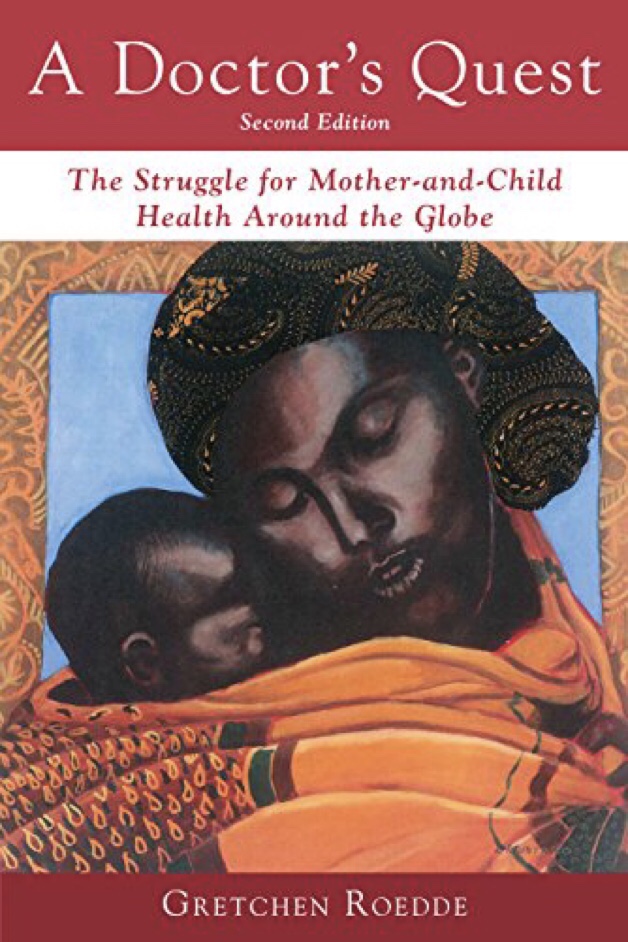
An autographed copy of this book was loaned to us by a friend who formerly lived as a neighbour of the author in Haileybury, in northern Ontario. (Both have now moved to southern Ontario.) A graduate of McMaster medical school, Dr. Roedde has divided her career between a practice and family in northern Ontario and working with a huge variety of government and donor agencies to improve the dreadful plight of pregnant women and young children in at least 30 third world countries, mostly in Africa and Southeast Asia.
This is not an enjoyable read, but it is not meant to be. It is rather a stark reminder of the horrible conditions, high maternal and infant mortality rates, inequalities, pervasive misogyny, malnutrition, and high prevalence of infectious diseases experienced by women in impoverished rural outposts, and the distorted priorities of often corrupt government leaders in the countries she visits. Loaded with data about programs to improve health outcomes, she seems to have appropriate priorities in emphasizing interventions for pregnant women and children, with improved family planning, access to education, contraception, abortion services, and emergency obstetrical interventions. A lapsed Catholic, she praises the work of Catholic priests who deliver condoms and support abortion services in defiance of official church dogma. The dominant cultural role of polygamous unscrupulous males who fail to do anything to help their wives, and who often marry 13 year old girls in exchange for a cow or goat is appropriately scorned. Many of them then infect their wives with AIDS. But such gender discrimination is deeply ingrained in many parts of the world.
The author’s altruism, passion and dedication shine through as she endures endless hardships and hazards visiting remote medical outposts lacking the most basic medical kit, or trained personnel, collecting data and writing up recommendations.
Her keen insights into the distorted priorities of many governments and international agencies, such as providing expensive drug treatment for AIDS rather than cheap preventive measures is acknowledged. With respect to Obama’s Global Health Initiative she notes that “ It was easier for the United States to come up with a $700 billion bailout for highly paid Wall Street gamblers, but we haven’t raised the $10.2 billion needed annually to save the lives of six million pregnant women and newborns.”
The writing is a bit disjointed and repetitive with the same sad tales of pregnant women and newborns needlessly dying for lack of very basic services reported from many countries, although she does include a chart showing where improvements have been made and where conditions for pregnant women and newborns have worsened.
An important sobering work, but not to be read by the despondent. I would love to hear the author provide an update ten years after this book was published.
Ingeniously formatted as an autobiography by Rosalind Franklin, covering the 11 years between 1947 and her deathbed experiences in 1958 at age 37, this is the engaging story, in 52 short, dated chapters, of her life as a female scientist in a paternalistic discriminatory male world.
Born into a wealthy but unpretentious philanthropic Jewish London family, all of her relatives expressed disappointment in her laser-focused pursuit of science instead of the family businesses of banking and publishing.
Shy, insecure, and humble, but brilliant, she discovers that the scientists at a lab in Paris treat her as a equal and eventually she develops a brief romantic relationship and lasting infatuation with her boss as she makes breakthrough discoveries in the rarified field of X-Ray diffraction crystallography of various materials- until she discovers that he is a married philanderer.
She returned to England and King’s College, London, in early 1951, disappointed by her failed romance, and was assigned work studying the structure of DNA by X-ray crystallography. There, Maurice Wilkins (at least as portrayed) was an arrogant, misogynistic, egotist who tried (and seemingly succeeded) to steal Franklin’s huge breakthrough discovery regarding the structure of DNA and claim it as his own, including the preliminary finding that it is a helix. He then collaborated and shared her findings with James Watson and Francis Crick at the Cavendish Laboratory in Cambridge, leading to the three of them being awarded a Nobel prize, without including the deceased Franklin, in 1962.
Many readers may interpret this story as an accurate historical record, but there seems to me to be a good reason that it is formatted and listed as novel, as the depiction of many men, including Nobel laureates James Watson, Francis Crick and Maurice Wilkins as thieves of intellectual property could now be seen as slanderous and libellous. But Wilkins and Crick are dead and Watson is 94, and is likely to rest on his undeserved laurels rather than risk a law suit for libel. Ironically, Watson’s negative portrayal of her character and work in The Double Helix a decade later lead to some recognition of her major contributions to science. Watson and Crick’s later lavish praise and recommendations for her funding when she was no longer a threat to their fame rings hollow.
Forced to leave Kings because of Wilkins’ betrayal, the remainder of her research career was at the rundown Birkbeck research centre with poor scientific equipment, studying the tobacco mosaic virus RNA. There, a visiting scientist confesses his love for her to her, too late, as she was dying of ovarian cancer, probably caused by her careless disregard for her radiation exposure. She regularly discarded her radiation monitor in her single-minded pursuit of science.
The Pittsburgh author has devoted several books to the admirable task of restoring the reputations of women in history and the sciences- those who have gone unrecognized in the records written by paternalistic, misogynous men, and she may have overemphasized the contributions of those women to some extent. I cannot asses that possibility nor vouch for the scientific accuracy of the processes presented here.
This is a graphic example of scientific research that is too frequently undertaken by men with huge egos, a constant rivalry to be first, and controversies. I never discovered anything of importance in my research career, but I do recall one manuscript I co-authored describing a heretofore unrecognized hereditary syndrome. Just before we sent it for publication, an almost identical report appeared in Paediatrics. That reportlead to the naming of the syndrome after the late French physician, Daniel Alligille.
Perhaps if this new book is ever adapted as a movie, the name Rosalind Franklin will finally get, posthumously, the recognition she richly deserved during her tragic short life.
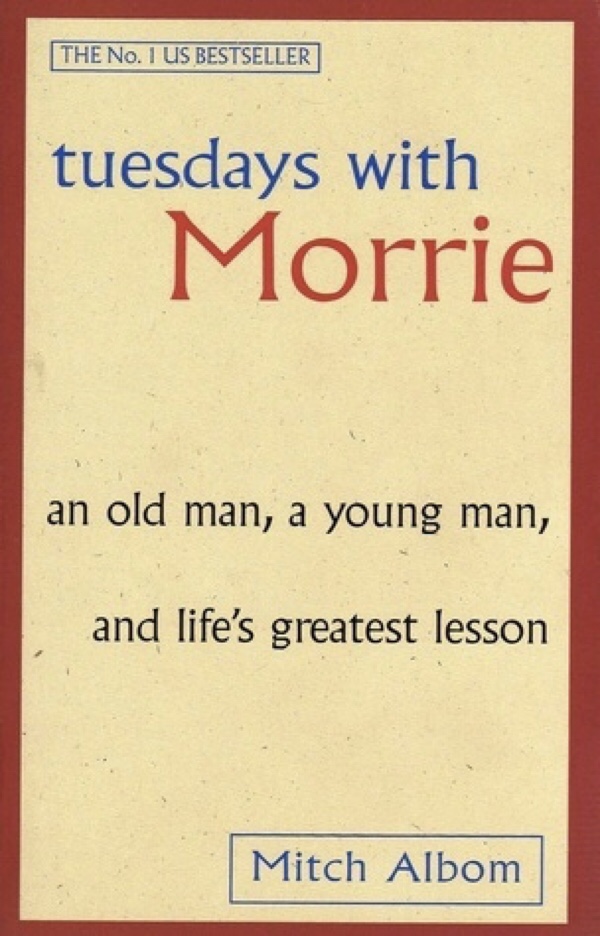
I’m back to a memoir about dying that I had earlier decided not to read after reading the same author’s latter Finding Chika. He explains the origin of this memoir better than I could. Morrie Schwartz, professor of sociology at Brandis University, died of ALS in 1995 at age 78. His last course given with the author as the only pupil, at their 14 weekly meetings as Morrie was dying a slow miserable death, covers “love, work, community, family, aging, forgiveness, and finally death….A funeral was held in lieu of graduation. Although no final exam was given, you were expected to produce a long report on what was learned. That paper is presented here”.
The author is a prolific Detroit-based sports writer, playwright, and musician who heard about his old prof’s terminal illness when it was featured on national television and decided to reconnect after 16 years of pursuing his own career, and flew to Boston every Tuesday for this Morrie’s final course.
The advice given by the wise Morrie is timeless, universally applicable, and loaded with sometimes overly sentimental and nostalgic aphorisms, but coveys wisdom seldom given or followed in the age of selfish mercenary capitalism and consumerism.“Giving makes me feel like I am living.” “Learn how to die and you learn how to live.” It certainly changed the attitudes and lifestyle of the author who became a selfless philanthropist running an orphanage in Haiti and adopting a dying Haitian girl.
As I read this, I began to feel guilty about the many connections with others I have inadvertently or deliberately severed and the selfish interests I have pursued over a life now almost as long as Morrie’s was, but I know he would advise me to forgive myself as well as others.
The book has been adapted as a Netflix movie that I have not yet watched and as a theatrical stage play. In spite of the morbid subject matter, it is interspersed with dry humour and snippets of both the professor’s and the student’s background life stories which provide critical context.
This memoir reminded me of another wonderful, very upbeat philosophical memoir that I read years ago, The Last Lecture, written by Randy Paush as he was dying of pancreatic cancer in 2003. tuesdays with Morrie is a very much more enjoyable read than Finding Chika.
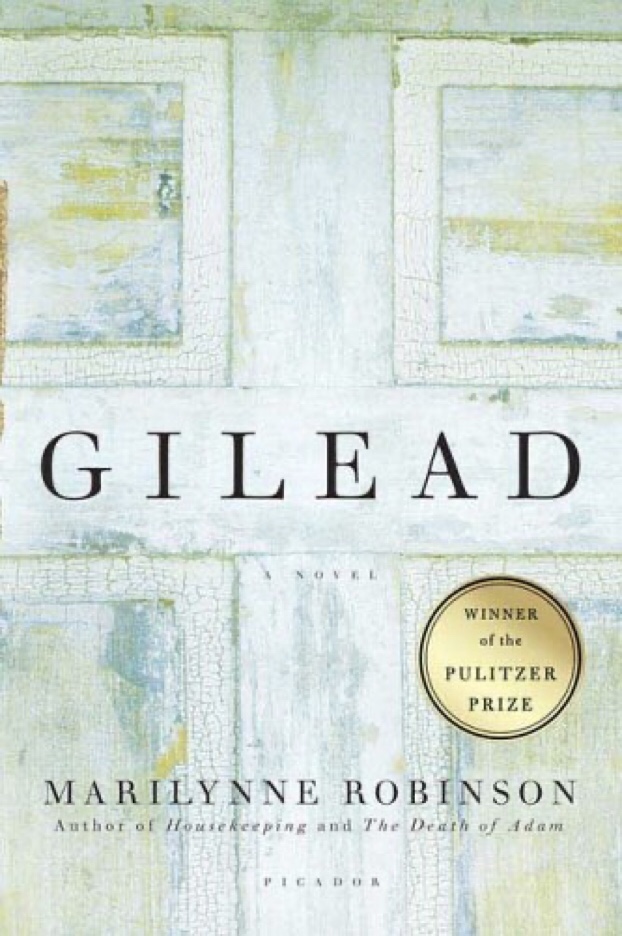
This Pulitzer Prize winning novel by a teacher at the University of Iowa Writer’s Workshop is on the list for our book club discussion for August. Otherwise, I would not have used up all of my stamina and determination to struggle through it to the end but I did so just so I will be able to make some semi intelligent comments about it when we discuss it.
An third generation Iowan preacher of an unspecified denomination (perhaps Congregationalist) born in 1888, now in his late 70’s, provides ethereal and ephemeral advice and food for thought to his preteen son by his 34 year old wife whom he married at age 67. This is in a first person singular rambling long monologue with no chapter divisions. It reads like a boring endless sermon sprinkled with introspective reminiscences, bits of family history, out-of-context Bible quotes, and frontier folklore.
The plot is skimpy and easy to follow and some of the dozen or so characters are interesting. I will acknowledge that the prose is eloquent, as one would expect from a teacher of creative writing, even if dominated by tireless, minute, self-analysis, but it is also humourless and wordy and some of it is inane nonsense: “There was even a bean salad, which to me looked distinctly Presbyterian, so anxiety had overfilled its denominational vessel.”
Once again my take on a book is at odds with the critics praise and I have lost any trust I once had in the choices of the panels of literati who choose novels for major awards. I will await our book club discussion to perhaps discover some redeeming feature that I have completely missed, but I am giving this one no stars.
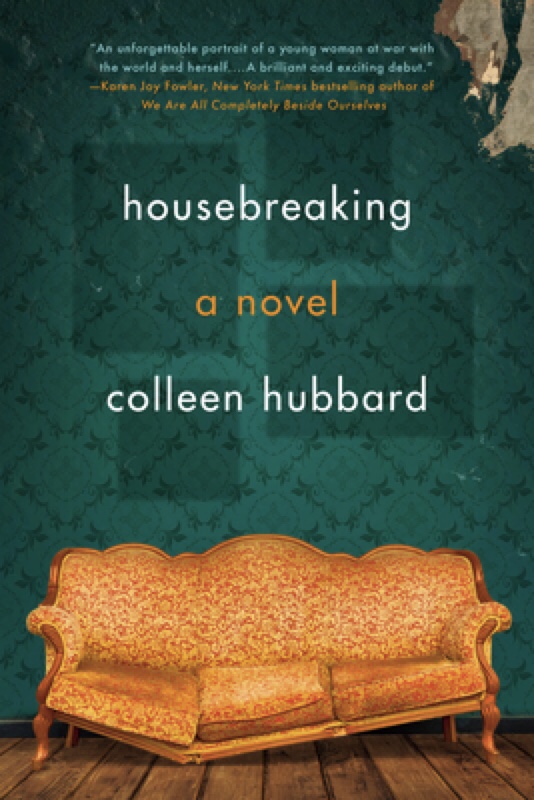
It takes a lot skill and imagination to make a chubby, lazy, promiscuous weed-smoking, gay man in his sixties lovable, but this British author succeeds doing that in this debut novel. But the main character of the story, set somewhere in a fictional decrepit small town in New England, is a restless, single, uneducated, stubborn woman whose relatives are reshaping the town with massive suburban housing developments. She resists their attempts to buy her out of the derelict house she has inherited from her deceased parents standing in the way of their plans and tries to wreck the house to achieve a better bargain from them -with a deadline to complete it between September, 1977 and March, 1978. There seems to be a nebulous subplot of escape from a troubled past into anonymity for several of the characters.
The only (rather weak) attempt to develop any suspense is in relation to to question as to whether or not she will succeed in completely tearing down the house and moving all the junk to the other side of a pond, in the face of multiple unforeseen obstructions, some from her relatives, and some from nature. I will never tell.
The prose is chronologically straightforward, sprinkled with bits of wry humour and lively, eccentric characters whom readers will have no difficulty in keeping straight. But I have no sense of what genre label would best fit this story. Certainly not suspense thriller, fantasy, romance, young adult, crime, humour, horror, or mystery.
There are a few good quotes about sleepy small town life that I can relate to, having grown up outside just such a town. “Some families had already placed wreaths on their doors. It was only November. They probably had to leap from holiday to holiday to holiday because waiting to die in a town like this was so incredibly dull.”
First a note about page numbers in various versions of books. The e book of this one is listed as 1012 pages, but that includes 344 that are not text, and they are really only half pages so I imagine the real number is about 322. The Libby Library says I took 17 hours and 13 minute to read it.(It seemed longer.)
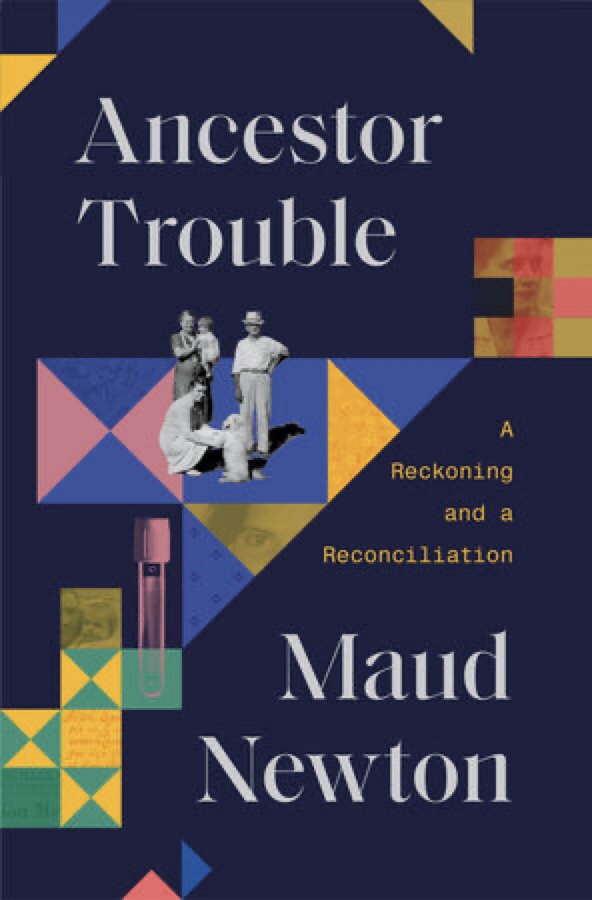
No novelist could ever conjure up a family as dysfunctional as the author alleges her Southern U.S. extensive clan was and still is. This family is replete with rabid racists, religious extremists, people with schizophrenia (in keeping with Weijun Wang’s advice in The Collected Schizophrenia, I’ll avoid using the derogatory word schizophrenic as a noun), criminals, misogynists, eugenicists, sexual predators, pedophiles, and suicidal depressives. No one, including the author, could remotely be considered entirely sane and rational at least by modern psychiatric standards. But then again, could anyone? This leads the author to research and muse extensively about the age-old dilemma of nature vs nurture, from the views of Aristotle to those of current day geneticists and philosophers.
The discussion on epigenetics is up-to-date, detailed and the best exploration of all the uncertainties and controversies surrounding its importance and heritability that I have read. The hazards and false claims of connections between specific genotypes and character traits and disease susceptibility are discussed in detail.
There is a thorough discussion of the very long history of genealogical searches, and their ties to ancestor worship in many ancient and some modern cultures. The very confusing chapter on her searches on such sites as 23andMe and AncestryDNA exposes a thriving industry preying on people’s desire for connection to their remote ancestors and assigning them to dubious arbitrary geographic groupings. Many of us tote around some Neanderthal genes and that is, after all, a compliment as 60,000 years ago they were at least as intelligent as Homo sapiens, and perhaps more so.
In spite of the family history, or perhaps because of it, in 2019 the Brooklyn author built an altar to worship and pray for her long-dead ancestors and has what can only be described as harmless schizophrenic delusions and hallucinations as she connects with ancestors from the first century A.D. At least that is the label modern western psychiatrists with their DSM-V bibles would apply.
The assertion that “In terms of DNA, we are no more related to most of our ancestors than we are to people around us on the train or at a baseball game.” Is seemingly contradicted a few pages later when she acknowledges after discussing some relatives “These are my relatives, Of course, I am crazy.”.
This story is wordy with far too much speculations about the lives of relative she knew only from searches in various archives going back to the 1600s. As you can imagine, the names, activities and relationships of relatives over four centuries are impossible to keep straight and of borderline importance to the story. Her drunken grandfather’s ten short marriages and divorces and many failed enterprises take up more than 30 pages in the paper book or double that in the ebook. And the details of every trinket and piece of jewelry she inherited from distant relatives will interest few readers, although there may be some mystic symbolism in rings.
This is really two books in one: a scholarly overview of modern concepts of genetics and connectedness and a rambling, boring, introspective account of her own troubled family history, (minus any details of her own marriage and offspring.)
I have resisted learning about distant long-dead relatives lest they include, for example, horse thieves, bank robbers, and illegitimate children, perhaps from slave women.
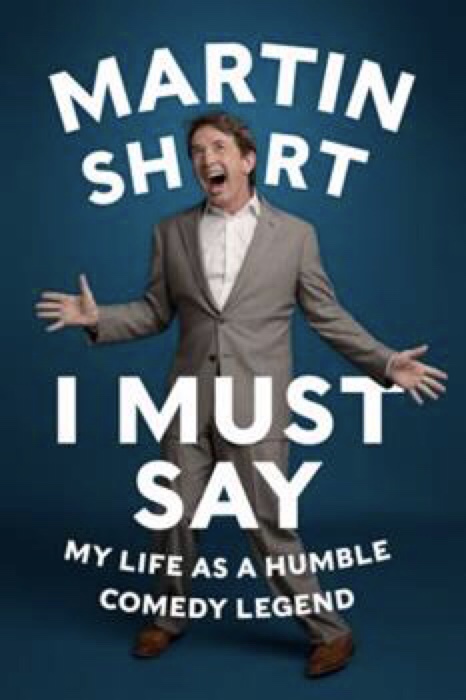
In this detailed autobiography, the 72 year old very talented Hamilton-born comedian, singer, writer, and actor provides an unabashed portrait of his life among an endless string of pop culture stars, almost all of whom he claims as best friends. His career started in Improv in Toronto, progressing to Second City TV, then to a great variety of roles in entertainment including writer and actor on Saturday Night Live and then in film and TV movies, on Broadway, and later as a celebrity touring comedian.
The characterization of dozens of volatile, insecure, and explosive personalities in the entertainment world, all seeking publicity, fame, and wealth gives readers an rare inside glimpse into the shallowness that plagues the whole entertainment industry. The very prevalent substance abuse and promiscuity are acknowledged, but not in any judgemental tone. It strikes me that the necessary itinerant lifestyles, flitting around the world from one engagement to another and associating and working transiently with glamorous idols must contribute to these problems. And a hugely disproportionate number of the entertainers in Hollywood and New York, like the author, are Canadian-born. Why does Canada continue to export most of our best talented entertainers? The lure of wealth, fame, and a luxurious lifestyle in the U.S. seem irresistible to these exported Human Resources .
His devotion to his native country is perhaps best demonstrated by his continuing to vacation at a cottage north of Toronto on Lake Rousseau where his late wife’s ashes are scattered.
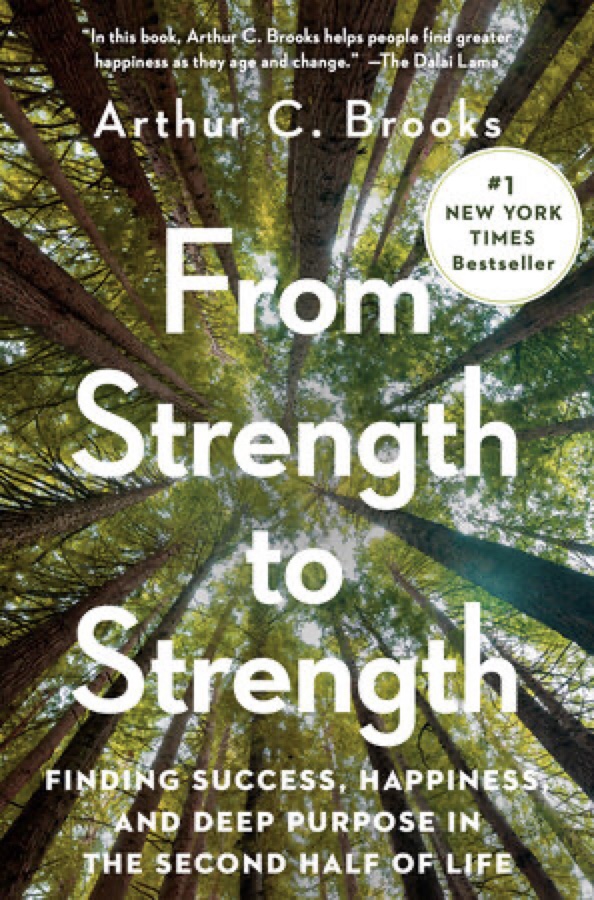
His Nine Categories for weekly self-evaluation provides more useful self-help advice in 14 pages than Arthur C. Brooks does in 224 pages in From Strength to Strength.
His public persona is balanced by unusually philosophical reflections and a rare devotion to his family. His grief from the 2010 death of his longtime wife uncovers a depth of emotion and character well hidden from most of his fans.
Never a fan of the inane slapstick comedy that he is famous for nor of most over-hyped Hollywood productions, I found the endless name-dropping of famous entertainers that he assumes readers will know all about a bit confusing. I never pay any attention to the Credits of any productions, so most of the names of behind-the-scenes workers that he acknowledges were unfamiliar to me.
My daughter must think that I am in need of advice on how to live my life after retirement, and perhaps she is right. But I have a deep-seated distrust of self-help books, with a firm, perhaps misplaced, belief that I alone am best qualified to determine what is most likely to make me happy, productive and useful at any and all ages, so I approached this book she gave me with a fair degree of scepticism.That scepticism was strengthened when I realized that the author was until recently the president of the influential conservative American Enterprise Institute, a Washington think tank funded to the tune of many millions by corporate America, including Exxon Mobile and the billionaire, Charles Koch, and he is still listed as on their staff. There is something ironic about a rich professional in that capacity advocating the abandonment of the striving corporate culture of always acquiring more material goods, money, power, or prestige. As an aside, I am not sure if nonprofit think tanks, like America’s Heritage Foundation or Canada’s Fraser Institute are a net positive influence on societies, but, in the age of mass misinformation, one needs to know their background and funding to interpret their prodigious output of data and opinions accurately.
This Washington,D.C. social scientist and writer addresses the common problem of how to maintain happiness, a sense of purpose, relevance, and usefulness to society after you have passed your best before date, or the time when your skills in your primary occupation begin to decline, which he claims comes earlier than most people believe, particularly for high achievers.
The whole premise of this advice is based on the 60 year old distinctions made by the psychologist Raymond Cattell between fluid intelligence used in early careers and crystalline intelligence after the inevitable decline of those, and his resultant fuzzy two curve model of the trajectory of everyone’s life, as though everyone’s life Is neatly divided into two discrete time frames each with exclusive priorities and needs. Where do many modern workers who careen through several different careers fit into this model?
I don’t want to disparage everything this author has to say and he dispenses a lot of good advice that would have been helpful to me years ago, when I struggled with the doldrums that commonly plague the adjustment to retirement. What valuable advice there is would seem to me to apply mainly to executive and professional workers and not to, for example, Newfoundland fishermen, African subsistence farmers or Asian factory workers who have little choice about the trajectory of their lives. But much of it is simple common sense which is apparently in short supply and may be more abundant in those Newfoundland fishermen than in corporate CEOs and striving professionals. And if someone deliberately decides to follow Dylan Thomas’s advice to “Rage, rage against the dying of the light”, to slide into the grave shouting “what a helluva ride” rather than even trying to adjust to inevitable limitations of aging, should they be judged harshly? There is no one-size-fits-all model of what constitutes a life well lived.
The chapter on spirituality is doubly confusing, combining the author’s rigid Catholicism with an admiration for Tibetan Buddhism, meditation, and an Indian Hindu guru’s version of ashram which divides life stages into four phases, rather than two. There is no mention of the horrors, incredible cruelty, and the millions who have died over many centuries because of religious zealotry, nor the religious intolerance currently ripping Indian society apart.
This book illustrates almost everything I dislike about the self-help genre, not only in literature but on social media and television (think Dr. Oz) and in the growing industry of self-appointed life coaching: far reaching generalizations from temporally limited social science surveys of populations that may not be representative, artificial distinctions, foregone conclusions that fit the writer’s biases, trite aphorisms, uncritical acceptance of unduplicated and possibly biased studies and surveys, endless psychobabble, and, in spite of proclaimed humility, a self-appointed supposition that the author knows how everyone else should live their lives, i.e just like he does.




 The Passionate Reader