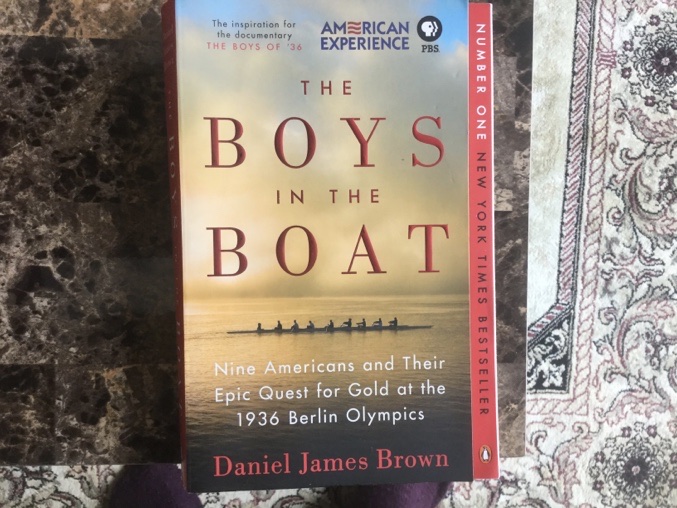
This is the account of the nine extraordinary men from varied and usually very humble backgrounds who tenaciously pursued their dreams to become Olympic champions in the world of rowing. Though interviews with a few of them in old age and many of their families as well as searching archival records more than seventy years later, Brown reconstructs a story of extraordinary perseverance, determination, and teamwork. The climax of the story is known to the reader from the start – the come-from-behind unlikely gold medal Olympic win against the favoured German rowers in front of Hitler at the Olympics, but, like most sports reporters, he manages to build suspense by carefully withholding details until the last second.
I strongly suspect that in spite of his very extensive interviews and research, there is considerable imaginative licence in relating conversations, emotions, and activities that cannot possibly be entirely accurate when related eighty or ninety years later often without a written record. Like sportscasting and sports writing always and everywhere there is much hyperbole, a load of cliches, and too many superlatives along with considerable exaggeration. For example, the coach feels the need to teach national champions “how to get an oar in and out of the water without splashing half of Lake Washington into their shell.” And the boat builder describes the rings of cedar plank that “spoke of years of bitter struggle.” Cedar trees may “struggle” to survive, but I doubt that they feel bitter about it.
Coach Al Ulbrickson’s edict that the lads forego alcohol and tobacco and that they stay in bed from 10 p.m. until 7 a.m may have had something to do with their remarkable abilities to concentrate and work as a single body, if you accept the thesis presented in my other book review this week.
In many ways, this is the remarkable story of one poor abandoned abused child whose devotion to rowing helped him to become an unrecognized national hero in an age when sports was inseparable from the worsening political tensions leading up to WW11.
My wife detected some rhythmic, almost poetic lilt in the writing as Brown described the various races, like the rhyming dipping of oars in water, but I did not pick this up.
I am not a rah-rah fan of any sports team and seldom follow any sports closely but I still enjoyed this book.
Thanks, Vera.


